


 Deutsch
 English
 Español
 Français
 Nederlands
 Português


 Share
Share




The February 2026 closure of the Strait of Hormuz following US-Israeli strikes on Iran has triggered the largest oil supply disruption in history, sending Brent crude past $144 per barrel and causing fertilizer prices to surge over 60% as LNG supplies were severed. As of July 2026, renewed Iranian attacks on Gulf vessels and ongoing disruptions keep the crisis active, structurally reshaping energy policy, food supply chains, and alliance realignments in real time — making this the most consequential strategic development of the year. This article analyzes the multi-domain consequences of the Strait of Hormuz crisis, from Asia's stagflation risk to the acceleration of non-fossil fuel investment in Europe.
The Largest Oil Supply Disruption in History
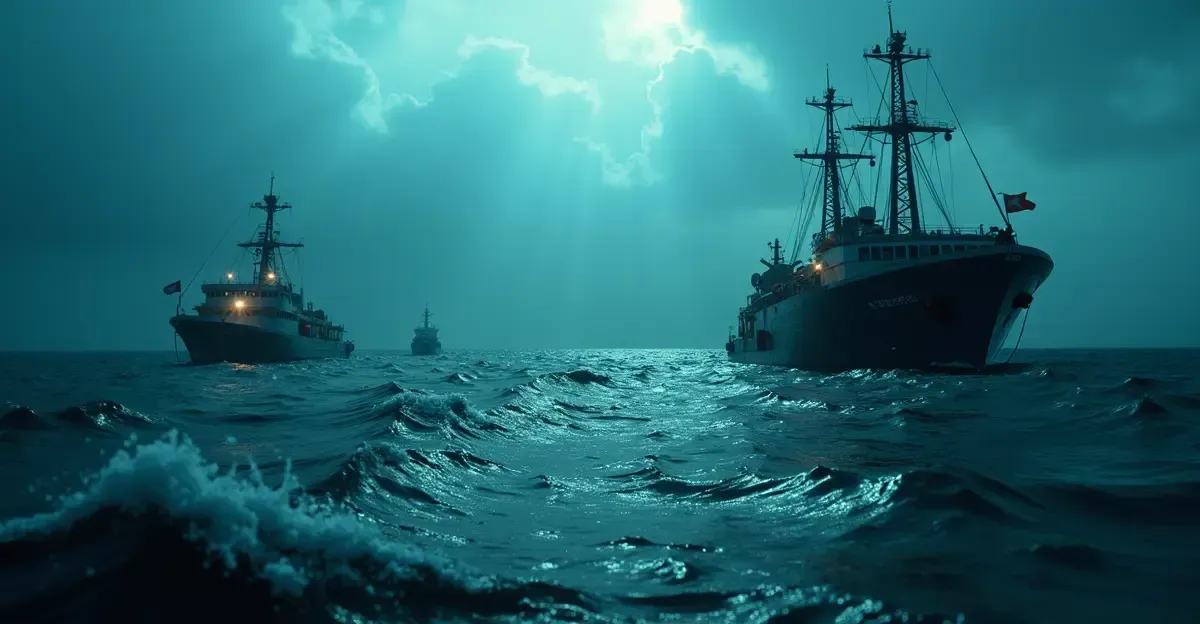
On February 28, 2026, the United States and Israel launched Operation Epic Fury, a coordinated multi-domain precision strike campaign against Iranian military and nuclear infrastructure. The operation targeted hundreds of missile and air defense sites, and eliminated key layers of Iranian leadership, including Supreme Leader Ayatollah Ali Khamenei. In retaliation, Iran declared the Strait of Hormuz closed to maritime traffic on March 4, 2026. The strait, through which approximately 20 million barrels per day (20% of global consumption) transited in 2025, was effectively shut, reducing exports to less than 10% of pre-conflict levels.
Brent crude, which traded around $72 per barrel before the conflict, surged to a peak above $144 per barrel — levels not seen since the 2008 financial crisis. The Dallas Federal Reserve estimates the disruption is 3 to 5 times larger than the 1973 or 1979 oil shocks. Goldman Sachs revised its full-year Brent average forecast to $85 per barrel, with tail risks pointing to $135–150 per barrel should the strait remain closed into mid-May. As of mid-2026, the strait remains effectively closed, with sporadic reopenings and renewed attacks.
The IEA strategic petroleum reserve release was historic in scale. On March 11, 2026, the International Energy Agency's 32 member countries unanimously agreed to release 400 million barrels of oil from emergency reserves — the largest coordinated stock release in history. IEA members hold over 1.2 billion barrels in emergency stockpiles, but cumulative lost barrels could exceed 800 million under a base case scenario. This is the sixth such coordinated action in the IEA's history, following previous releases in 1991, 2005, 2011, and twice in 2022.
Fertilizer Crisis and Global Food Security
Beyond the immediate energy shock, the Strait of Hormuz closure has cascade effects on global food systems. Approximately one-third of the global seaborne fertilizer trade passes through the strait. According to a May 2026 World Bank blog post, the World Bank's fertilizer price index rose over 12% in Q1 2026 and reached its highest level since October 2022 by April. Urea prices climbed above $850 per metric ton — up 80% since February — following halted production in Iran and Qatar, and reduced output from India due to lower LNG supplies. DAP prices rose over 10% in April, while MOP prices increased over 5% in Q1.
The FAO Chief Economist, Máximo Torero, warned that the ongoing disruption to the Strait of Hormuz trade corridor is triggering one of the most severe shocks to global commodity flows in recent years, with significant implications for food security, agricultural production, and global markets. The FAO identified 45 at-risk food-importing nations — primarily in Africa, South Asia, and Southeast Asia — that face acute food insecurity if the crisis persists into the next planting season. The global food supply chain vulnerabilities exposed by this crisis mirror those seen during the COVID-19 pandemic, but with a sharper geographic concentration.
Iranian strikes on Qatar's LNG facilities knocked out approximately 17% of global LNG capacity, further tightening energy supplies needed for fertilizer production. The disruption threatens Asia's agriculture sector particularly hard, as the region relies heavily on Middle Eastern fertilizer imports.
Asia's Stagflation Risk
Asian economies are bearing the brunt of the crisis. The IMF's April 2026 Regional Economic Outlook for Asia and the Pacific warned that the region's economic resilience is being severely tested by the Middle East war and ensuing energy shock. Higher fuel prices are raising inflation and squeezing budgets, exposing the region's reliance on imported energy. Approximately 80% of Asia's oil imports pass through the Strait of Hormuz.
Countries like Vietnam (less than 20 days of oil reserves), Pakistan, Indonesia (about 20 days), India, Thailand, and the Philippines (about two months) face severe energy shortages. Governments have implemented emergency measures: India redirected LPG supplies and saw inflation rise to 9.2%; Thailand ordered work-from-home policies; Bangladesh imposed fuel caps and deployed troops at oil depots; South Korea introduced its first fuel cap in three decades; and Japan released national oil reserves and entered a technical recession. China, however, is better positioned due to strategic stockpiles (estimated at 1.4 billion barrels), pipeline gas from Russia, and continued access to Iranian oil through alternative channels.
The Asia stagflation risk 2026 is now a central concern for global markets. The IMF's World Economic Outlook, titled 'Global Economy in the Shadow of War,' projects lower growth and higher inflation across the region. India's inflation at 9.2% and Japan's recession are early warning signs of a broader economic slowdown.
Strategic Responses: Pipelines, Renewables, and Reserve Reassessment
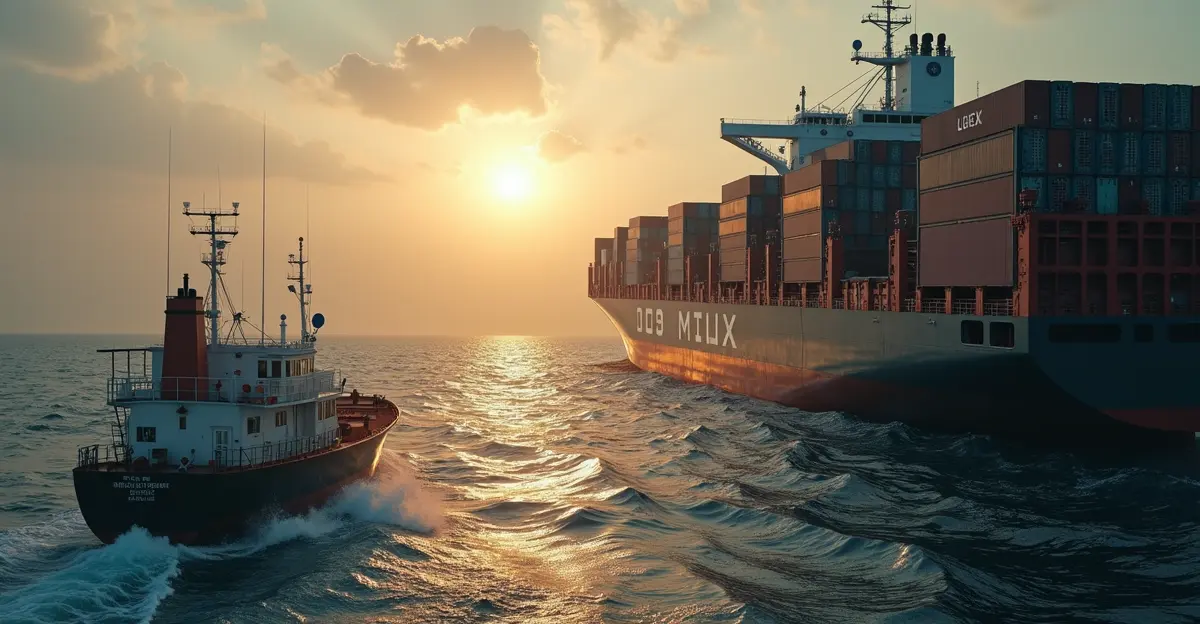
The crisis has triggered a fundamental reassessment of global energy independence timelines. Middle Eastern oil and gas producers are scrambling to find and expand alternative export routes. Saudi Arabia and the UAE have bypass pipelines — the East-West pipeline and the Habshan–Fujairah pipeline — but these can only handle a fraction of the roughly 20 million barrels per day that previously transited the strait. Capacity expansion is underway, but challenges include massive infrastructure costs, time, transnational agreements, and security vulnerabilities. Iran has already attacked Saudi Arabia's pipeline and the UAE's Fujairah port.
In Europe, the crisis has accelerated the push for renewable energy independence. The European Commission announced a €50 billion clean energy investment package in March 2026, aiming to unlock over €75 billion in financing over three years for grids, innovative technologies, and efficiency. A strategy for small modular reactors targets deploying the first operational units by the early 2030s. The REPowerEU plan, originally launched in 2022 to phase out Russian fossil fuels, has been expanded and accelerated. Over 47% of EU electricity now comes from renewables, and the EU aims to stop all Russian pipeline and LNG imports by November 2027.
The energy chokepoint vulnerability 2026 has also prompted a global reassessment of strategic petroleum reserves. The IEA's record 400-million-barrel release has drawn down reserves significantly, raising questions about replenishment timelines and whether reserve sizes are adequate for future disruptions. Some nations, including Japan and South Korea, are considering doubling their strategic reserve requirements.
Expert Perspectives
"The Strait of Hormuz closure is not just an oil crisis — it is a food crisis, a fertilizer crisis, and a systemic threat to global economic stability," said Dr. Fatima Al-Sayed, a geopolitical risk analyst at the Middle East Institute. "The post-2026 world order will treat energy chokepoints as the single greatest systemic vulnerability of the decade."
"We are witnessing the largest supply disruption on record, bigger than the oil shocks of the 1970s and the loss of Russian pipeline gas after 2022," said an IEA spokesperson. "The coordinated reserve release is unprecedented, but it is a bridge, not a solution. The world must diversify its energy sources and supply routes."
Máximo Torero, FAO Chief Economist, warned: "The clock is ticking for global food systems. Ships carrying critical agricultural inputs must start moving through the Strait of Hormuz as soon as possible to ward off the risk of a dangerous spike in food price inflation later this year."
FAQ: Strait of Hormuz Crisis 2026
What caused the Strait of Hormuz closure in 2026?
The closure was triggered by Iran's retaliation to Operation Epic Fury, a US-Israeli military strike on February 28, 2026, that targeted Iranian military and nuclear infrastructure and killed Supreme Leader Ayatollah Ali Khamenei. Iran declared the strait closed on March 4, 2026.
How much oil passes through the Strait of Hormuz daily?
Approximately 20 million barrels per day, representing about 20% of global oil consumption and 25% of global seaborne oil trade.
What was the IEA's response to the crisis?
The IEA coordinated the largest-ever strategic petroleum reserve release of 400 million barrels across 32 member countries on March 11, 2026.
How has the crisis affected fertilizer prices?
Fertilizer prices surged over 60%, with urea climbing above $850 per metric ton (up 80% since February 2026). The World Bank's fertilizer price index rose over 12% in Q1 2026.
Which countries are most at risk from food insecurity?
The FAO identified 45 at-risk food-importing nations, primarily in Africa, South Asia, and Southeast Asia, including Pakistan, Bangladesh, Vietnam, Indonesia, and the Philippines.
Conclusion: A New Geopolitical Reality
The Strait of Hormuz crisis of 2026 has fundamentally reshaped global energy and food security paradigms. The post-2026 world order energy security will be defined by the race to diversify away from chokepoint-dependent supply chains. The crisis has accelerated investment in alternative pipeline routes, renewable energy, and strategic reserve expansion. However, as long as the strait remains contested, the global economy operates under a shadow of vulnerability. The question is no longer whether energy chokepoints are the greatest systemic vulnerability of the decade, but how quickly the world can adapt to a reality where they are.



Follow Discussion