


 Deutsch
 English
 Español
 Français
 Nederlands
 Português


 Share
Share




The February 2026 escalation in the Middle East triggered the largest oil supply disruption in history, cutting roughly 10 million barrels per day as Strait of Hormuz traffic collapsed. The World Bank projects a 24% surge in energy prices for 2026, with Brent crude averaging $86 per barrel, while the IEA warns of cascading risks to global growth, fertilizer costs spiking 31%, and up to 45 million more people pushed toward acute food insecurity. This article examines the strategic implications for energy transition timelines, the resilience of global supply chains, and whether alternative energy corridors can mitigate the structural shock.
The Largest Oil Supply Shock in History
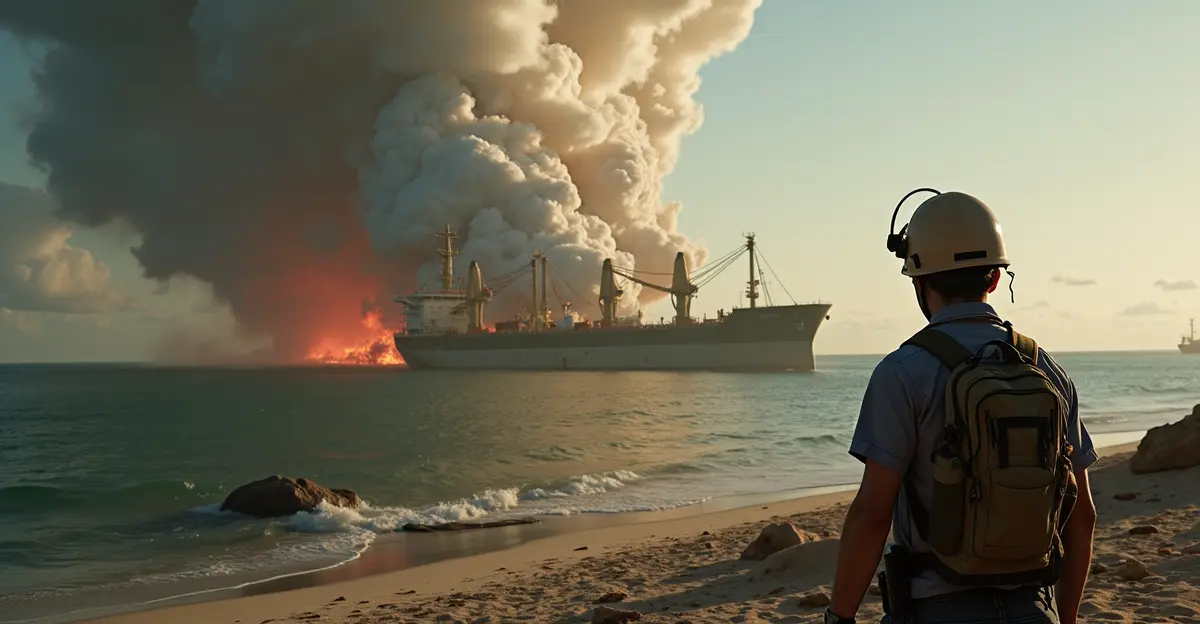
On February 28, 2026, the United States and Israel launched Operation Epic Fury—nearly 900 joint strikes in 12 hours targeting Iranian military infrastructure and leadership. The assassination of Supreme Leader Ali Khamenei triggered immediate retaliation. Iran's Revolutionary Guard Corps (IRGC) issued warnings forbidding passage through the Strait of Hormuz, boarded merchant ships, and laid sea mines. Within days, tanker traffic through the strait—which normally carries about 20 million barrels of oil per day, or roughly 25% of global seaborne oil trade—plummeted by 70%, then fell to near zero.
According to the International Energy Agency's April 2026 Oil Market Report, global oil supply plummeted by 10.1 million barrels per day in March to 97 million barrels per day, marking the largest disruption in the history of the oil market. OPEC+ production fell by 9.4 million barrels per day. Brent crude prices surged past $100 per barrel on March 8 for the first time in four years, peaking at $126 per barrel. The World Bank's April 2026 Commodity Markets Outlook projects Brent averaging $86 per barrel in 2026, up from $69 in 2025, with a worst-case escalation scenario pushing prices to $115 per barrel.
Global Economic Fallout
Energy Price Surge and Inflation
The World Bank forecasts a 24% surge in energy prices for 2026, the largest increase in four years. Overall commodity prices are projected to rise 16%. Inflation in developing economies is expected to average 5.1%, with growth revised down to 3.6%. World Bank Chief Economist Indermit Gill warned that 'war is development in reverse,' with the poorest people hit hardest. The IMF-World Bank joint response has established a coordination group to maximize institutional responses to the crisis.
Fertilizer Crisis and Food Security
The disruption has hit fertilizer markets especially hard. The Strait of Hormuz carries about one-third of global seaborne fertilizer volumes. Countries in the region account for 13% of global nitrogen and 9% of phosphate fertilizer exports. The World Bank projects fertilizer prices will rise 31% in 2026. The UN has established a task force led by UNOPS Executive Director Jorge Moreira da Silva to facilitate safe passage of fertilizers for humanitarian purposes, warning that up to 45 million more people could be pushed toward acute food insecurity. Countries like Sudan, Somalia, Mozambique, Kenya, and Sri Lanka are especially vulnerable as high importers of fertilizers from the region.
Natural gas prices have roughly doubled in Asia and Europe, directly pushing up fertilizer production costs since natural gas is a key input for nitrogen-based fertilizers. Tanker freight rates have surged over 90%, and insurance premiums have skyrocketed. The UNCTAD food security analysis warns that higher fertilizer costs ultimately affect planting decisions, crop yields, and food availability worldwide.
Strategic Implications for Energy Transition
The crisis has created a paradoxical dynamic for the global energy transition. On one hand, the spike in fossil fuel prices provides a powerful economic incentive for accelerated investment in renewable energy and energy efficiency. On the other hand, governments facing energy shortages and inflation are turning to short-term fossil fuel solutions, including increased coal burning and emergency oil stockpile releases.
The IEA's alternative prolonged-conflict scenario warns that sustained high energy prices could derail climate commitments as nations prioritize energy security over emissions reductions. However, the crisis has also exposed the vulnerability of concentrated fossil fuel supply chains, strengthening the case for decentralized renewable energy systems. The energy transition investment trends will be closely watched in the coming months.
Alternative Energy Corridors
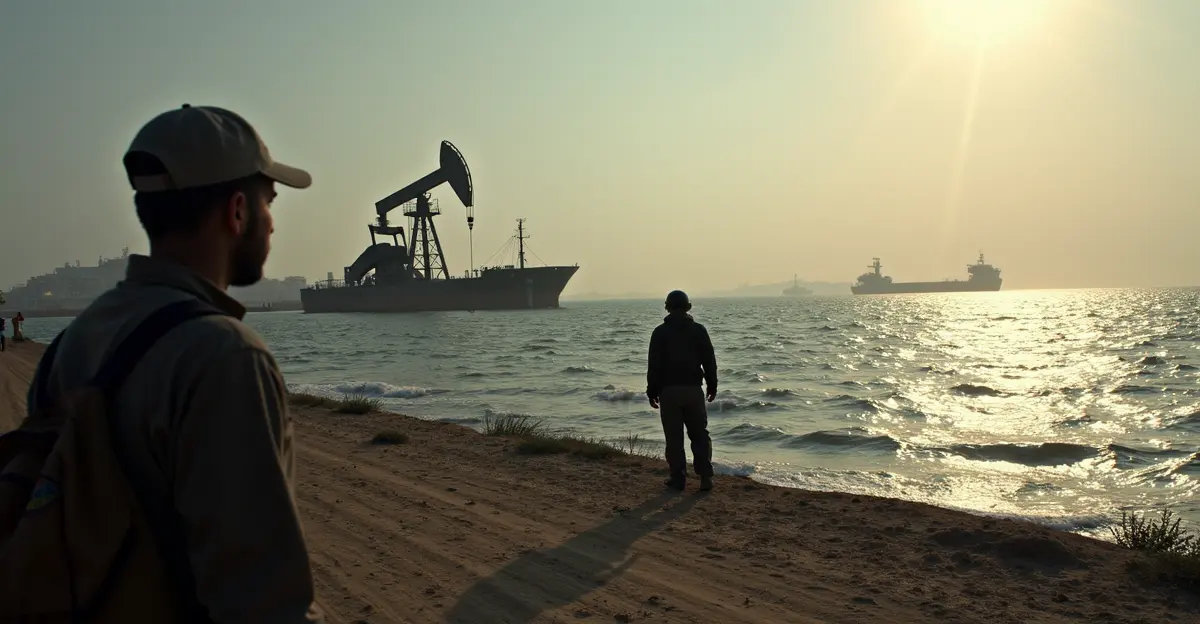
With the Strait of Hormuz effectively closed for over 50 days, Gulf states and global energy companies are accelerating efforts to develop alternative supply routes. Existing pipelines offer some relief: Saudi Arabia's East-West Petroline has a capacity of 5-7 million barrels per day, and the UAE's Abu Dhabi Crude Oil Pipeline (ADCOP) can carry 1.8 million barrels per day to Fujairah on the Gulf of Oman, bypassing the strait entirely.
More ambitious proposals include new Saudi pipelines to Red Sea ports, a potential second UAE pipeline to Fujairah, and multi-country corridors linking Iraq to Mediterranean ports via Jordan, Syria, or Turkey. The India-Middle-East-Europe Economic Corridor (IMEC) is also being discussed as a long-term strategic alternative. However, analysts warn that pipelines cannot fully replace maritime routes in the short term. Costs range from $5 billion for simpler routes to $20 billion for multi-country corridors, with significant technical, security, and political coordination hurdles.
Reuters reports that while these alternatives can mitigate some supply pressure, prolonged disruptions could force production cuts across the Gulf. The alternative Middle East oil routes remain a critical area of infrastructure development.
Expert Perspectives
World Bank Chief Economist Indermit Gill stated: 'The combination of energy price spikes, fertilizer shortages, and supply chain disruptions is creating a perfect storm for developing economies. We are looking at the most serious commodity shock since the 1970s.'
IEA Executive Director Fatih Birol commented: 'This is the largest oil supply disruption in history, and its effects will be felt for years. The crisis underscores the urgent need to diversify energy sources and accelerate the transition to clean energy.'
UN Secretary-General António Guterres called for immediate humanitarian corridors for food and fertilizer shipments, warning that 'the ripple effects of this conflict threaten to push millions into hunger and poverty.'
FAQ
What caused the Strait of Hormuz closure in 2026?
The closure was triggered by the US-Israeli air war against Iran on February 28, 2026 (Operation Epic Fury), which included the assassination of Supreme Leader Ali Khamenei. In retaliation, Iran blocked the strait by issuing warnings, attacking vessels, and laying sea mines.
How much oil supply was disrupted?
Global oil supply fell by 10.1 million barrels per day in March 2026, the largest disruption in history. OPEC+ production dropped by 9.4 million barrels per day.
What is the impact on food security?
Fertilizer prices are projected to rise 31%, threatening food security for up to 45 million additional people. The Strait of Hormuz carries about one-third of global seaborne fertilizer trade.
What are the alternative routes to bypass the Strait of Hormuz?
Existing pipelines include Saudi Arabia's East-West Petroline (5-7 million bpd capacity) and the UAE's ADCOP (1.8 million bpd). Proposed new corridors include pipelines to Red Sea ports and the India-Middle-East-Europe Economic Corridor (IMEC).
How long is the crisis expected to last?
The World Bank's baseline scenario assumes stability returns by 2027, with Brent averaging $70 per barrel. However, a prolonged conflict scenario could keep prices at $95-$115 per barrel. A temporary ceasefire was agreed on April 8, 2026, but the situation remains highly volatile.
Conclusion and Future Outlook
The 2026 Strait of Hormuz crisis represents a watershed moment for global energy economics. The disruption has exposed the fragility of concentrated fossil fuel supply chains and the deep interconnectedness of energy, fertilizer, and food markets. While alternative corridors are being explored, no short-term solution can fully replace the strait's capacity. The crisis is likely to accelerate investments in renewable energy and energy efficiency, but the immediate economic pain—particularly for developing countries—will be severe. The global energy security 2026 outlook will depend on diplomatic resolutions, infrastructure investments, and the pace of the energy transition.
Sources
- World Bank, Commodity Markets Outlook, April 2026
- IEA, Oil Market Report, March and April 2026
- Reuters, 'World faces largest-ever oil supply disruption on Middle East war,' March 12, 2026
- UNCTAD, 'Gas, grain, fertilizer disruptions raise risks for food security and trade,' 2026
- UN News, 'Strait of Hormuz crisis: UN task force for fertilizer shipments,' April 2026
- Britannica, '2026 Iran war'
- Wikipedia, '2026 Strait of Hormuz crisis'



Follow Discussion