


 Deutsch
 English
 Español
 Français
 Nederlands
 Português


 Share
Share




The closure of the Strait of Hormuz following the outbreak of military conflict between the United States, Israel, and Iran on February 28, 2026, has triggered the most severe energy supply disruption in modern history. By effectively removing nearly 20% of global oil supplies from the market — a shock three to five times larger than the 1973 oil crisis or the 1990 Gulf War — the crisis has sent oil prices surging past $119 per barrel, collapsed ship transits by 95%, and forced the IMF and UN to project cascading effects on trade, inflation, and sovereign debt. This article analyzes the strategic, economic, and geopolitical ripple effects reshaping energy markets, global supply chains, financial stability, and the accelerating energy transition.
Background: The Strait of Hormuz and the February 2026 Conflict
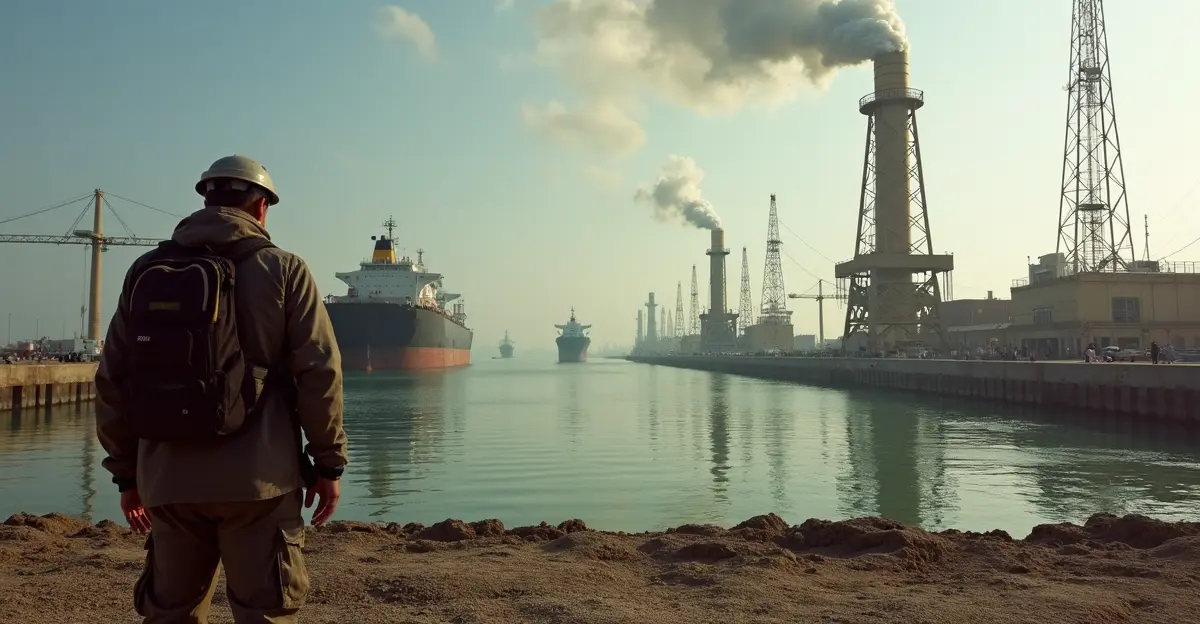
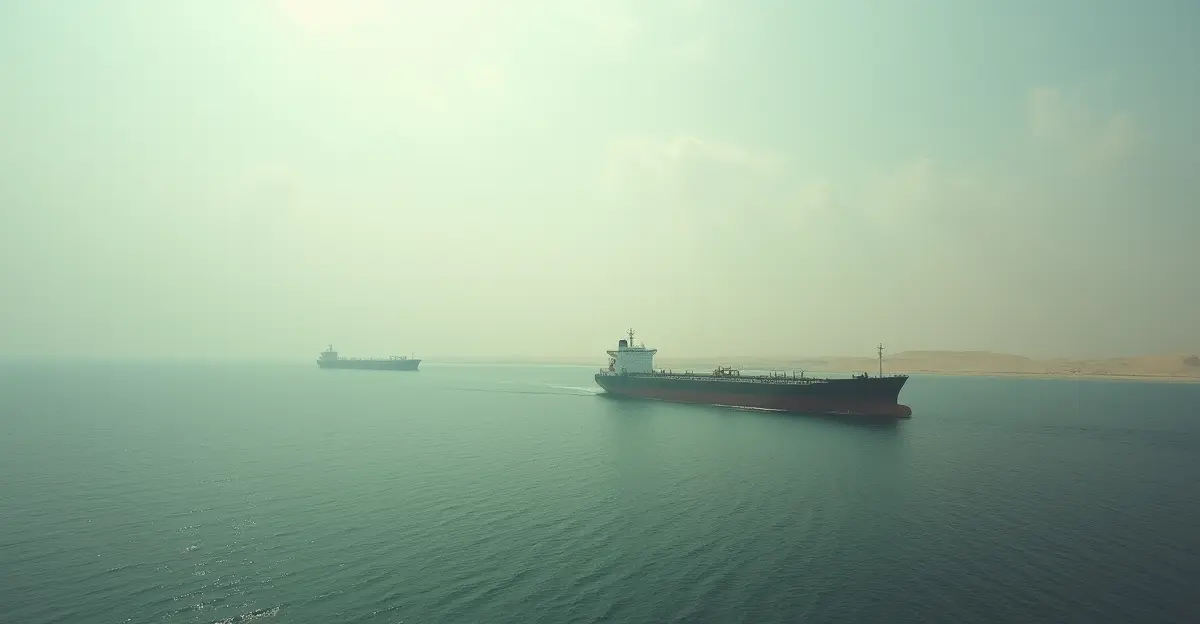
The Strait of Hormuz, a 34-kilometer-wide maritime chokepoint between Iran and Oman, handles approximately 20 million barrels of oil per day — roughly 20% of global seaborne oil trade and 25% of the world's LNG. On February 28, 2026, coordinated US and Israeli air strikes under Operations Epic Fury and Roaring Lion targeted Iranian military infrastructure. In retaliation, Iran's Revolutionary Guard Corps (IRGC) issued warnings forbidding passage through the strait, boarded and attacked merchant ships, and laid sea mines. Tanker traffic ground to a halt, stranding an estimated 20,000 mariners and 2,000 ships in the Persian Gulf.
The 2026 Iran conflict quickly escalated into a dual blockade: Iran blocked the strait while the US Navy blockaded Iranian ports. By March 27, the IRGC declared the strait closed to vessels traveling to and from US, Israeli, and allied ports. Brent crude surpassed $100 per barrel on March 8 for the first time in four years, peaking at $126 — the largest-ever monthly oil price increase.
Economic Fallout: A Shock Three to Five Times Larger Than 1973
Oil Prices and Market Disruption
West Texas Intermediate (WTI) crude surged to an intraday high of $119.43 per barrel on March 9, 2026, with Brent hitting $119.46 — the highest since mid-2022. WTI recorded a 35% weekly gain (the largest since 1983) and a 78% surge from pre-war levels. Market backwardation hit a record $36 premium for front-month Brent over six-month deliveries, signaling severe expected shortages. OPEC producers including Saudi Arabia, Iraq, Kuwait, and the UAE were forced to slash output as storage filled.
Global Growth Projections
The Dallas Federal Reserve, using a formal economic model, estimated that a one-quarter closure would raise WTI to $98 per barrel and lower global real GDP growth by an annualized 2.9 percentage points in Q2 2026. If the closure extends to two or three quarters, oil prices could reach $115–$132 per barrel, with growth remaining negative through 2026. The IMF's April 2026 World Economic Outlook projected global growth at 3.1% and headline inflation at 4.4% under a short-lived conflict scenario. However, an adverse scenario — with oil averaging $100 per barrel and Asian and European gas prices up 160% — would pull global growth down to 2.5% and inflation to 5.4%. A severe extended conflict could push growth to just 2.0% and inflation above 6%, approaching recession levels.
The global economic impact of oil shocks is being felt unevenly. The US economy has proven more resilient due to its shift from net importer to net exporter since 2019, and oil expenditures as a share of GDP falling from 8% in 1980 to 3% in 2024. The Dallas Fed found that the impact on US real GDP growth from a 15% supply disruption is only 0.3 percentage points — one-twentieth of what it would have been in 1980. However, the rest of the world faces six times greater GDP losses.
Supply Chain and Trade Disruption
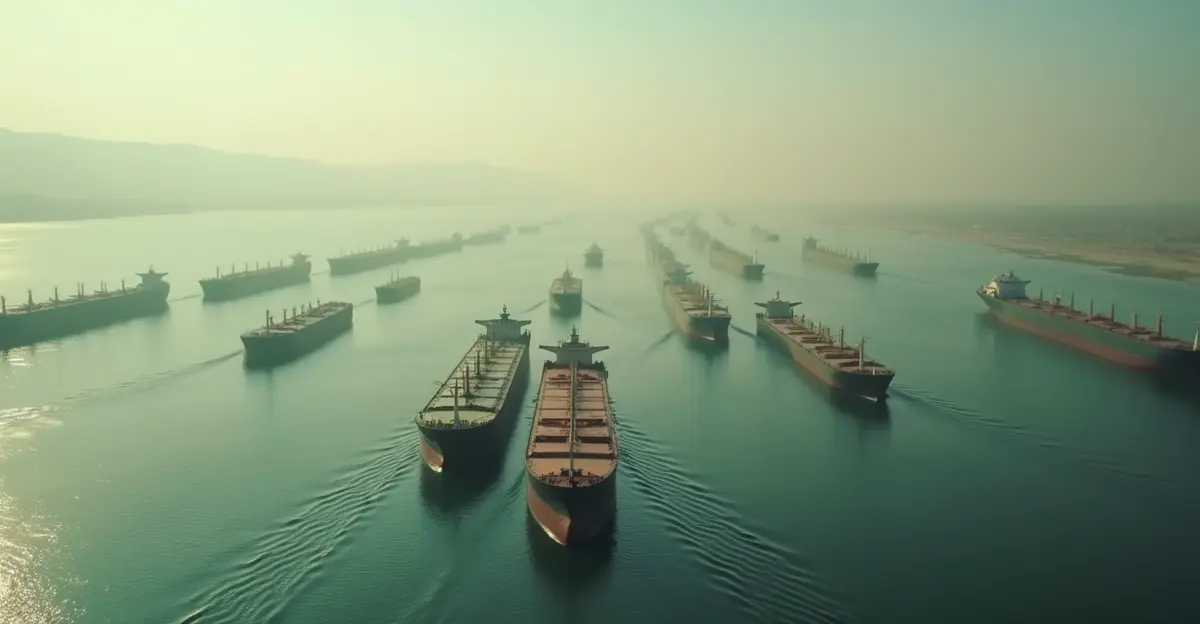
UNCTAD reports that ship transits through the Strait of Hormuz collapsed by approximately 95%, from 130 per day in February to just 6 in March 2026. Global merchandise trade growth is projected to decelerate from 4.7% in 2025 to between 1.5% and 2.5% in 2026. Fuel prices and oil transport costs have risen sharply, feeding through supply chains and raising production costs worldwide. Fertilizer prices jumped 31%, threatening food security, while aluminum and helium markets also suffered severe supply disruptions.
Major carriers like Maersk began rerouting via the Cape of Good Hope, adding weeks to transit times and significantly increasing shipping costs. Marine insurers withdrew or dramatically repriced coverage for strait transits, effectively shutting down commercial shipping insurance for the region. The global supply chain resilience is being tested as never before, with developing countries bearing the brunt of higher import costs, weaker currencies, tighter financial conditions, and rising borrowing costs.
Financial Stability and Sovereign Debt Risks
The oil shock is rapidly translating into a debt crisis for vulnerable developing nations. Boston University researchers identified 12 countries facing a "double challenge" of rising bond spreads and above-median debt payments due in 2026, including Cote d'Ivoire, Egypt, Ghana, Kenya, and Mongolia. Countries like Uzbekistan, Egypt, and Mongolia face a "triple stress" due to additional fuel subsidy burdens. Net petroleum importers like Ukraine have seen borrowing costs spike, while exporters have benefited unevenly.
UNCTAD warns that if disruptions persist, the situation could evolve into a cascading crisis with increased risks of debt distress, food insecurity, and broader financial instability. The IMF has urged central banks to look through energy-price surges only if inflation expectations remain anchored, and recommends targeted, temporary fiscal support rather than broad subsidies, while preserving price signals to encourage supply responses.
Accelerating the Energy Transition
Paradoxically, the crisis is accelerating the global shift away from fossil fuels. The IEA's 2026 Energy Crisis Policy Response Tracker documents several governments actively promoting fuel switching — including shifts from gas to coal in the short term, but also scaling up renewable energy supply and accelerating electrification. Nearly half of surveyed oil executives now view future disruptions as "very likely" within five years, driving investment toward diversified energy routes and renewable deployment.
The energy transition acceleration 2026 is evident in record renewable energy installations in China, Europe, and the US, as governments seek to reduce dependence on volatile fossil fuel markets. However, the short-term pivot to coal in some regions highlights the tension between energy security and climate goals.
Geopolitical Ramifications and Diplomatic Efforts
The crisis triggered a flurry of diplomatic activity. Failed ceasefire talks in Islamabad (the "Islamabad Talks") were followed by the US launching Operation Project Freedom on May 4, a naval escort mission that was paused on May 6 due to "great progress" toward an agreement. On June 17, President Trump and Iranian President Masoud Pezeshkian signed a memorandum of understanding to end the war and blockades. However, on June 20, Iran re-closed the strait, citing Israeli ceasefire violations in southern Lebanon — a claim denied by the US military.
The geopolitical risk in the Middle East remains elevated, with the Joint Maritime Information Center (JMIC) announcing a widened route through the strait near Oman on June 27, challenging Iran's control. The crisis has fundamentally altered global perceptions of energy security and the reliability of critical maritime chokepoints.
FAQ
What caused the Strait of Hormuz closure in 2026?
The closure began on February 28, 2026, when Iran blocked shipping through the strait in retaliation for US and Israeli air strikes against Iranian military targets. Iran's Revolutionary Guard Corps issued warnings, attacked merchant ships, and laid sea mines, effectively halting tanker traffic.
How much oil passes through the Strait of Hormuz daily?
Approximately 20 million barrels of oil per day transit the strait, representing roughly 20% of global seaborne oil trade and 25% of the world's LNG. About 84% of crude oil and condensate shipments through the strait are destined for Asian markets.
What has been the impact on oil prices?
Brent crude surged past $100 per barrel on March 8, 2026, peaking at $126 — the largest-ever monthly oil price increase. WTI hit $119.43 on March 9. Prices remained elevated above $100 for months, with backwardation reaching a record $36 premium for front-month deliveries.
How has the crisis affected developing countries?
Developing nations face higher import costs, weaker currencies, tighter financial conditions, and rising borrowing costs. Twelve countries face a "double challenge" of rising bond spreads and high debt payments. Fertilizer prices jumped 31%, threatening food security in vulnerable regions.
Is the energy transition being accelerated by this crisis?
Yes. The IEA reports that governments are actively promoting renewable energy and electrification in response to the crisis. Nearly half of oil executives surveyed view future disruptions as very likely, driving investment toward diversified energy routes and renewables.
Conclusion
The Strait of Hormuz closure of 2026 represents the most severe energy supply shock in modern history, with consequences far exceeding the 1973 oil crisis or the 1990 Gulf War. While the US economy has shown relative resilience due to its shale revolution and reduced oil dependence, the global economy — particularly developing nations — faces prolonged pain from higher energy costs, supply chain disruption, and mounting debt pressures. The crisis has fundamentally reshaped geopolitical alliances, accelerated the energy transition, and underscored the vulnerability of critical maritime chokepoints. As diplomatic efforts continue and the strait partially reopens, the world must grapple with the lasting implications of this unprecedented disruption for energy security, economic stability, and the global order.


Follow Discussion