


 Deutsch
 English
 Español
 Français
 Nederlands
 Português


 Share
Share




US Launches Fresh Strikes on Iran After Strait of Hormuz Closure
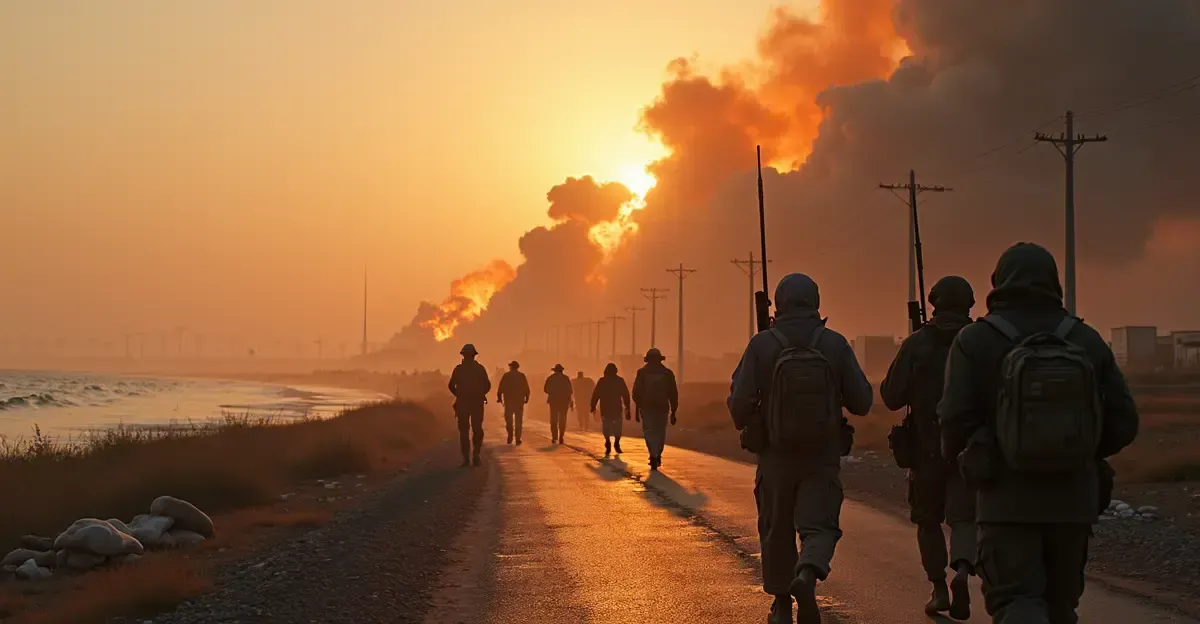
The United States unleashed a new wave of military strikes against Iranian targets on July 12, 2026, after Tehran's Islamic Revolutionary Guard Corps (IRGC) declared the Strait of Hormuz closed to commercial shipping, escalating the already devastating conflict that has disrupted global energy markets for months. Secretary of War Pete Hegseth declared, 'Iran made a poor choice. Now they pay,' as CENTCOM confirmed strikes against 140 military installations including missile sites, naval infrastructure, and communication networks across southern Iran.
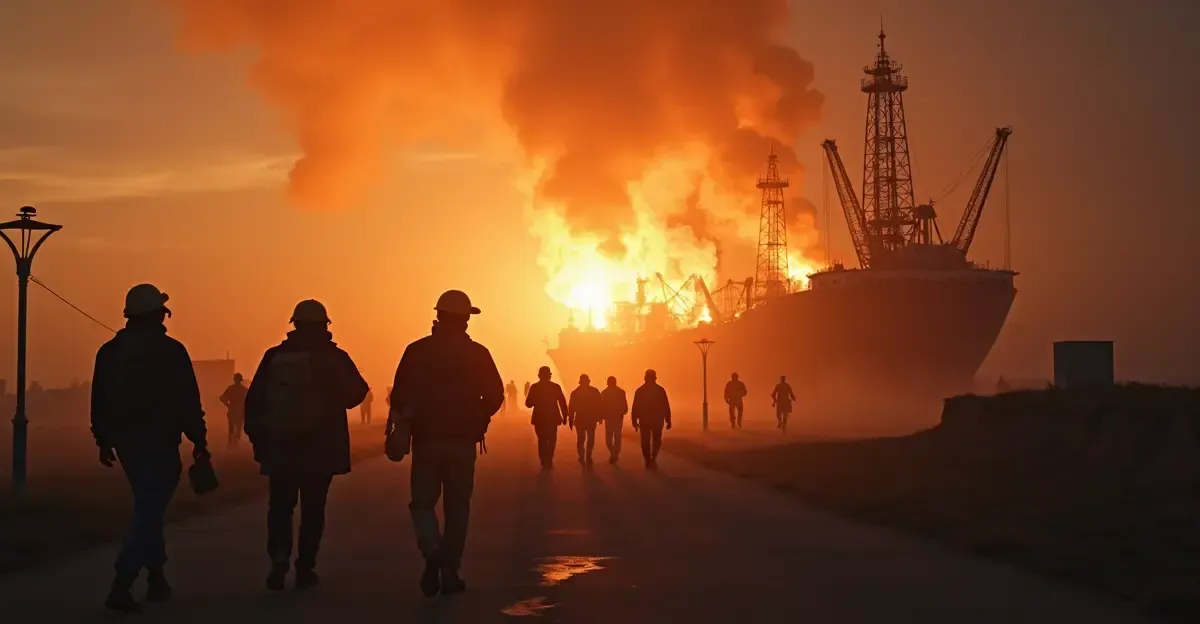
The 2026 Iran war has entered its 135th day, with the Strait of Hormuz — through which approximately 20% of the world's oil and 25% of LNG passes — effectively shut down since Iran's IRGC Navy declared it closed following a US ceasefire violation accusation. Brent crude oil traded at $76.01 per barrel on July 12, up 5.6% from pre-crisis levels, though analysts warn prices could spike further if the blockade continues.
Background: The Road to War
The conflict began on February 28, 2026, when US and Israeli airstrikes killed former Iranian Supreme Leader Ali Khamenei. Since then, the US has conducted Operation Epic Fury, striking over 300 targets across Iran. A temporary ceasefire brokered in June partially unraveled after Iran attacked three commercial vessels near the Strait on July 6, prompting President Donald Trump to declare the ceasefire 'over' and order renewed military operations.
Iran retaliated by launching strikes on US allies including the UAE, Jordan's Prince Hassan Air Force base, and Qatar. The IRGC declared the Strait of Hormuz closed, blaming the US for violating the interim peace agreement. According to the Strait of Hormuz Live Tracker, commercial transit through the waterway has fallen to just 39% of pre-crisis volume, with war-risk insurance for tankers soaring to $2.5 million per very large crude carrier (VLCC) — eight times pre-crisis levels.
Global Energy Markets in Turmoil
The Strait of Hormuz crisis 2026 has triggered what the International Energy Agency (IEA) calls the 'largest supply disruption in history.' Approximately 20 million barrels per day (mb/d) — 20% of global consumption — has been disrupted since the strait's effective closure in March. Brent crude surged from ~$72 per barrel pre-conflict to a peak above $144 per barrel, later stabilizing near $102 after the June ceasefire, before spiking again with the renewed hostilities.
The IEA coordinated a record release of 400 million barrels from strategic petroleum reserves across 30 nations, but supply remains tight. European gas prices rose 5% in July, and Qatar — a key LNG exporter — declared force majeure on contracts after attacks on its Ras Laffan complex caused a 17% production reduction. China, India, Japan, and South Korea have been hit hardest as they rely heavily on Persian Gulf crude.
Impact on Global Shipping
Of 990 tracked vessels in the Gulf area, 48 are flagged as high-risk, and 16 tankers are currently operating with AIS transponders dark to avoid detection. Eight of the nine largest container carriers are rerouting vessels around the Cape of Good Hope, adding 10–14 days to transit times and imposing surcharges ranging from $600 to $1,200 per TEU. The IMF PortWatch data from July 5 shows only 34 vessels transiting the strait daily versus a typical 88.
Human and Military Toll
According to the Iran War Casualties 2026 tracker, total estimated deaths across all parties range from 8,962 to 18,297. US military fatalities stand at 13–16 confirmed killed in action (CENTCOM figures), while Iranian military deaths are disputed between 1,800 (IRNA) and 7,650 (IDF estimates). Civilian deaths are estimated at 1,779–3,757 across Iran, Iraq, and Gulf states. US equipment losses are estimated at $5.14 billion.
Iran's Health Ministry reported that the latest US strikes on July 11 killed 17 and injured 115 across six cities. The IRGC has launched retaliatory attacks on US assets in the Middle East, and Iran's new Supreme Leader, Mojtaba Khamenei, has vowed revenge for his father's assassination.
Diplomatic Efforts Falter
The UN Security Council held an emergency session on July 2, and again on July 10, where UN peace affairs chief Rosemary DiCarlo warned of a 'lost continuity of knowledge' on Iran's nuclear programme. The United States has demanded Iran issue a public statement opening the Strait of Hormuz, forswear tolls, end attacks on shipping, and hand over its stockpile of highly enriched uranium (over 900 pounds) for any deal. Switzerland has reportedly offered to host new US-Iran negotiations, but with President Trump stating 'Let's just finish the job,' prospects for a diplomatic resolution appear dim.
Satellite imagery suggests Iran may be attempting to rebuild nuclear and missile facilities in potential violation of commitments, further complicating any path to peace. The global fuel crisis 2026 continues to deepen as the world watches for any sign of de-escalation.
Frequently Asked Questions
Why did Iran close the Strait of Hormuz?
Iran's IRGC declared the Strait of Hormuz closed on July 11, 2026, accusing the United States of violating the temporary ceasefire agreement by launching strikes on Iranian positions. Iran had previously attacked a container ship, which the US used as justification for renewed military operations.
How much oil flows through the Strait of Hormuz daily?
Approximately 20 million barrels per day of oil and petroleum products, plus significant volumes of LNG, pass through the strait — representing about 20% of global oil consumption and 25% of seaborne LNG trade. The disruption is the largest supply shock in 50 years.
What has been the impact on oil prices?
Brent crude surged from ~$72 per barrel pre-conflict to a peak above $144, stabilizing near $102 after a June ceasefire. As of July 12, 2026, Brent trades at $76.01 per barrel, with analysts warning prices could spike again if the blockade persists or if further escalation occurs.
How many people have died in the 2026 Iran War?
Total estimated casualties range from 8,962 to 18,297 killed, including 13–16 US military personnel, 1,800–7,650 Iranian military, and 1,779–3,757 civilians across all sides. These figures are sourced from government and independent trackers and remain disputed.
Is there any hope for a ceasefire?
Diplomatic efforts continue, with Switzerland offering to host negotiations. However, President Trump has declared the previous ceasefire 'over' and ordered intensified strikes. The UN Security Council has called for de-escalation, but with both sides deeply entrenched, a quick resolution appears unlikely.
Sources
Information compiled from CENTCOM press releases, the Strait of Hormuz Live Tracker, the Iran War Casualties 2026 tracker, UN Security Council briefings, IEA reports, and reporting from The New York Times, The Washington Post, Al Jazeera, and The Guardian.



Follow Discussion