


 Deutsch
 English
 Español
 Français
 Nederlands
 Português


 Share
Share




The 12-month window for breaking China's critical minerals stranglehold is closing fast. With Beijing's 15th Five-Year Plan (2026–2030) now in force, projections show China will control over 60% of refined lithium and cobalt and roughly 80% of battery-grade graphite and rare earths by 2035. In February 2026, the U.S. launched FORGE, a 54-nation alliance, and Project Vault, a $10 billion strategic reserve, while the EU selected 60 Strategic Projects. Analysts warn Western nations have only 12 to 18 months to build viable alternatives before dependence becomes irreversible.
What Is Driving China's Critical Minerals Dominance?
China's leverage is rooted in processing, not mining. It controls about 90% of rare earth processing, 80% of tungsten, and 60% of antimony. Its phased export controls from October 2025 triggered sixfold rare earth price spikes, and European licensing approvals fell below 25% in late 2025, with only 19 of 141 applications cleared, according to China rare earth export controls analysts. Premier Li Qiang's 2026 Government Work Report elevated resource security, with provinces setting output targets for rare earths, lithium, cobalt, nickel, and tungsten.
How the West Is Responding: FORGE and Project Vault
FORGE: A 54-Nation Preferential Trade Zone
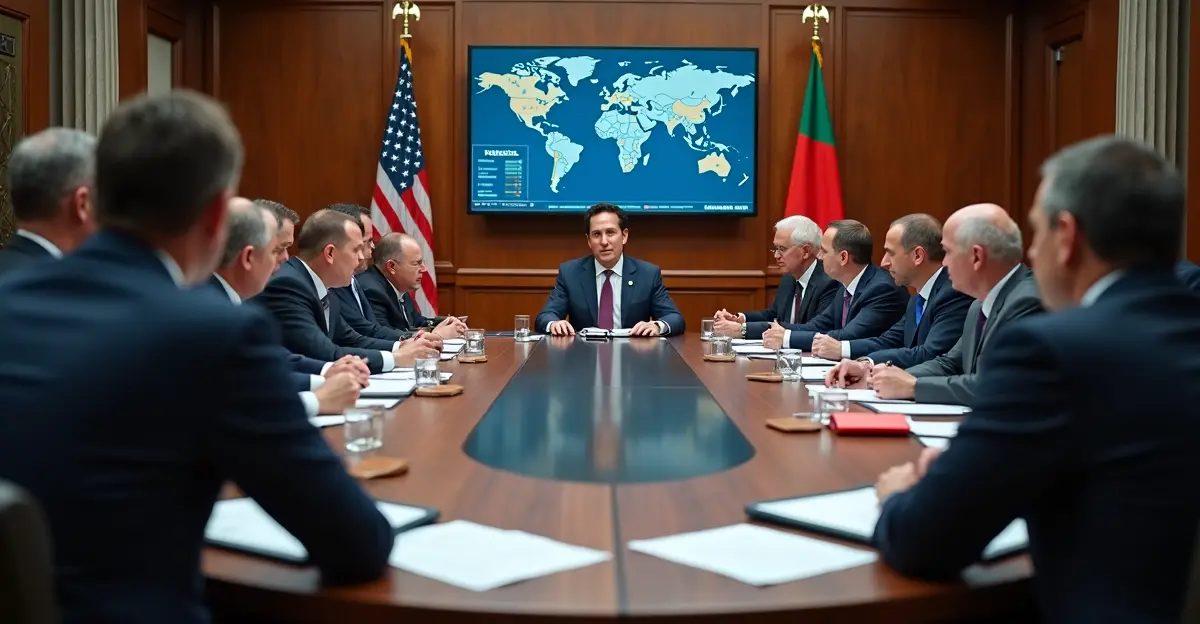
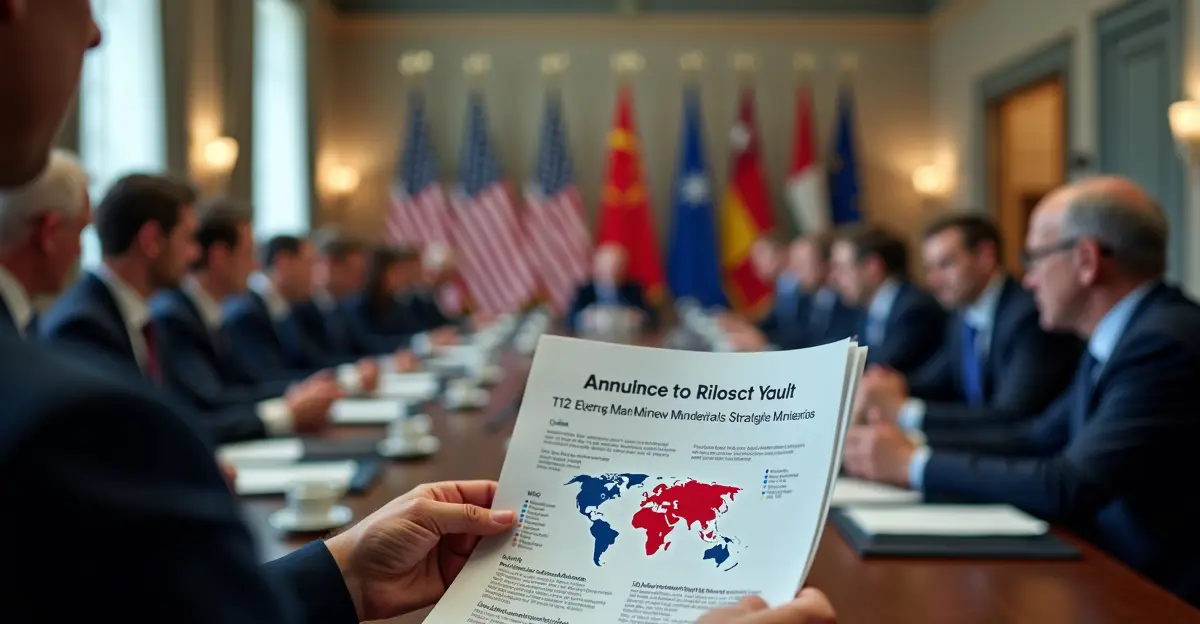
On February 4, 2026, the U.S. State Department convened 54 nations and the European Commission in Washington to launch FORGE, the Forum on Resource Geostrategic Engagement, succeeding the Minerals Security Partnership. FORGE creates a preferential trade zone with coordinated price floors and tariff adjustments, backed by over $30 billion in U.S. financing and 21 bilateral frameworks, including 11 new deals. South Korea chairs FORGE through June 2026. The goal is to counter China's 60–80% dominance in processing lithium, cobalt, and rare earths, building on the US critical minerals strategy.
Project Vault: A $10 Billion Strategic Reserve
Two days earlier, President Trump announced Project Vault, a $10 billion Export-Import Bank-backed public-private partnership establishing the U.S. Strategic Critical Minerals Reserve. It covers all 60 USGS critical minerals—rare earths, cobalt, graphite, lithium, nickel, and titanium—with about $2 billion in private capital from OEMs such as Boeing, GE Vernova, and Clarios.
Europe's Critical Raw Materials Act and 60 Strategic Projects
The EU's Critical Raw Materials Act took effect on May 23, 2024, and by June 2025 selected 60 Strategic Projects with €3 billion in funding under the ReSourceEU plan. The projects span 14 raw materials, including lithium, graphite, rare earths, cobalt, nickel, and copper. Yet over 80% of European firms still depend on Chinese supply, and the European Court of Auditors' February 2026 report on EU Critical Raw Materials Act implementation warns that scale remains years away.
New Entrants: Saudi Arabia and the UAE Reshape the Map
Saudi Arabia and the UAE are deploying over $100 billion to secure lithium, copper, and rare earths. Saudi Arabia's Manara Minerals aims to mobilize $100 billion in mining investment by 2035 and is negotiating with MP Materials and Lynas on domestic rare earth processing. The UAE's $1.8 billion Orion Critical Mineral Consortium, backed by the U.S. DFC and ADQ, targets copper, nickel, cobalt, and rare earths. Both market themselves as neutral processing hubs, as detailed in Saudi critical minerals investment reporting.
Why the 12–18 Month Window Matters
Analysts say rebuilding Western processing capacity could take 20–30 years, far exceeding the 12–18 month window. Three paths are emerging:
- Managed dependence: accept Chinese supply with stockpiles.
- Costly independence: accelerate domestic mining and refining.
- Hybrid resilience: pair Western financing with Gulf and Latin American hubs.
China's dual pricing already penalizes foreign buyers—neodymium hit $205/kg abroad versus about $125 domestically in 2025, while dysprosium reached $931 and terbium $4,029. These premiums force the West to choose between uncertain investment and critical minerals supply chain resilience strategies that may not scale in time.
FAQ
What is FORGE?
FORGE is the Forum on Resource Geostrategic Engagement, a 54-nation preferential trade zone launched in February 2026 to counter China's dominance with coordinated price floors and bilateral deals.
What is Project Vault?
Project Vault is a $10 billion U.S. strategic critical minerals reserve financed by the Export-Import Bank, covering all 60 USGS critical minerals and backed by Boeing and GE Vernova.
How dependent is the West on Chinese minerals?
China controls about 90% of rare earth processing, 80% of tungsten, and 60% of antimony; over 80% of European firms depend on Chinese supply.
What is the 12–18 month window?
Western nations have 12–18 months to finance and build alternative supply chains before structural dependence on China becomes effectively irreversible.
Outlook
The February 2026 simultaneous launch of China's Five-Year Plan, FORGE, and Project Vault marks a decisive inflection point. Whether the West can turn policy into operating mines and refineries within 12–18 months will determine whether the energy transition critical minerals timeline slips or succeeds.


Follow Discussion