


 Deutsch
 English
 Español
 Français
 Nederlands
 Português


 Share
Share




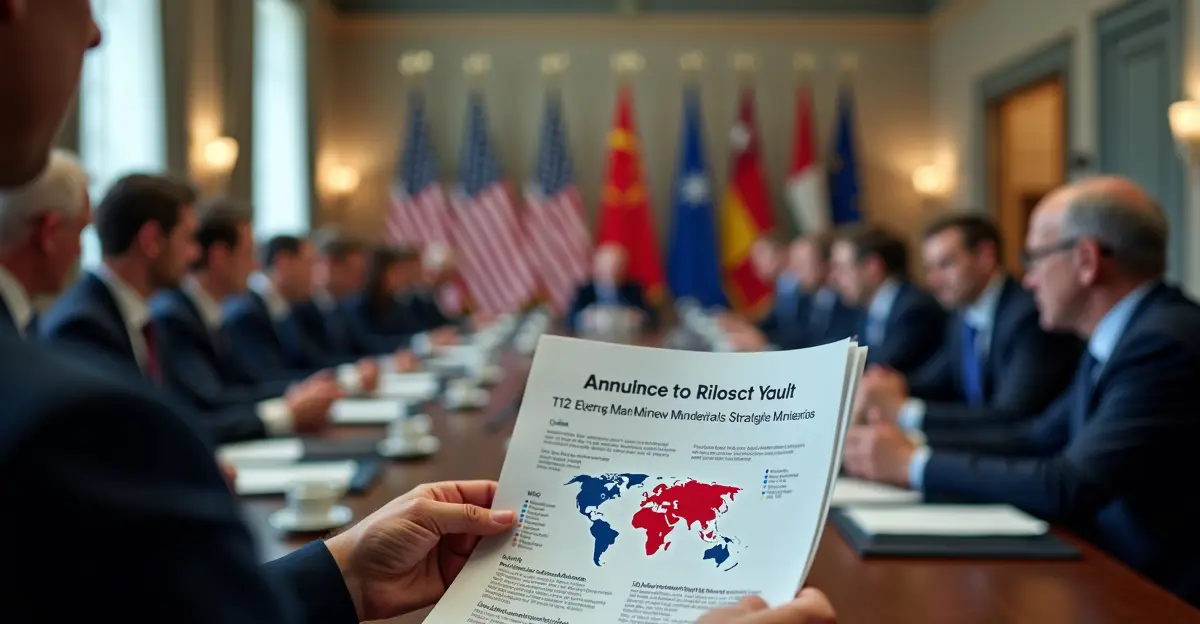
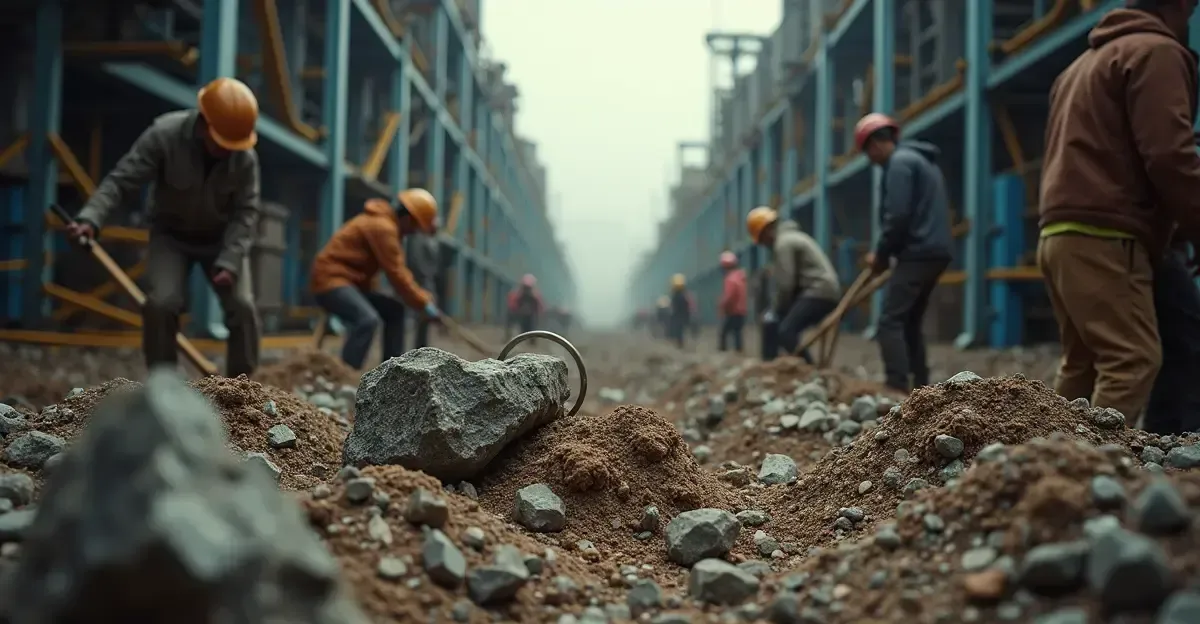
The global critical minerals chessboard entered its most dangerous phase in February 2026, when Beijing tightened export controls on rare-earth processing technology and know-how—the sharpest escalation yet in a campaign to weaponize its dominance over materials powering electric vehicles, defense systems and artificial intelligence. China controls roughly 90% of rare-earth processing, 60% of lithium and cobalt refining, and 80% of battery-grade graphite, leaving Western policymakers with what analysts describe as a 12-to-18-month window to diversify before structural dependencies lock in for decades.
The 2026 inflection point: Beijing's processing hammer
China's 15th Five-Year Plan doubles down on midstream processing dominance, and its cumulative export controls have already reshaped global trade. Tungsten prices surged sixfold and yttrium oxide jumped 4,400% outside China in 2025, according to trade data. The International Energy Agency warns that full enforcement of China rare earth export controls could put $6.5 trillion of downstream production at risk, with the United States and Europe accounting for nearly half. In February 2026, restrictions on rare-earth separation technology and know-how signaled that Beijing is targeting not just minerals but the capability to process them.
FORGE and the West's counteroffensive
The United States responded on February 4, 2026, by launching FORGE—the Forum on Resource Geostrategic Engagement—as the successor to the Minerals Security Partnership. The coalition, which includes 54 nations plus the European Commission, mobilized more than $30 billion in financing and signed 11 new bilateral agreements, according to the U.S. State Department. South Korea chaired FORGE through June 2026, with the United States assuming the chairmanship in July. Central to the effort is Project Vault, a $10 billion to $12 billion public-private strategic minerals reserve.
Europe's liquidity crunch
The European Union's EU Critical Raw Materials Act has set 2030 benchmarks of 10% domestic extraction, 40% processing and 25% recycling, with no more than 65% of any strategic raw material sourced from a single country. Yet the European Commission has selected 60 strategic projects, of which 23 face liquidity issues and only €1.7 billion has been mobilized—far short of the financing needed to challenge China's scale.
Resource nationalism and the Gulf's third pole
Producer nations are exploiting their leverage. Indonesia cut nickel production by about 25% and extended downstream processing mandates, mirroring its 2020 raw-ore Indonesia nickel export ban. Chile has made lithium non-concessionable and requires state partnership in new projects. The Democratic Republic of Congo capped cobalt exports at 7,250 tonnes per month, doubling prices. Meanwhile, Saudi Arabia and the UAE are deploying more than $100 billion through sovereign wealth funds: Manara Minerals took a 10% stake in Vale Base Metals for $2.5 billion, ADQ formed the $1.8 billion Orion Critical Minerals Consortium, and Mubadala joined the U.S.-led Pax Silica framework. These Gulf sovereign wealth funds are positioning themselves as a neutral third pole between Beijing and Washington.
Can the West actually diversify?
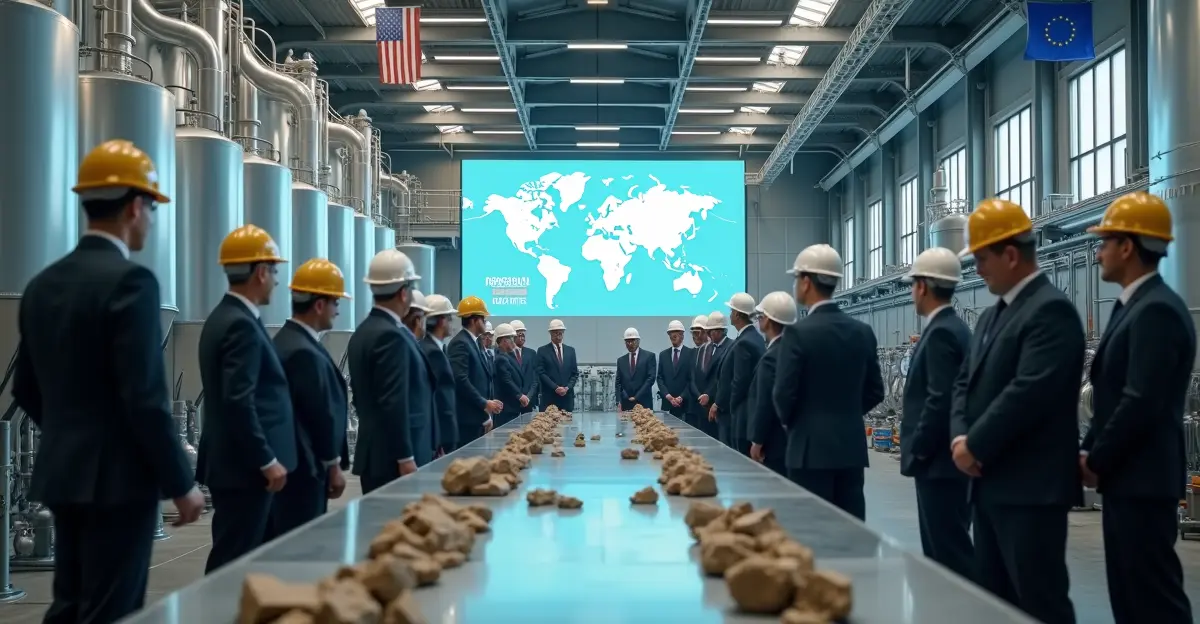
The UNCTAD's June 2026 Global Trade Update documents shifting critical minerals trade dynamics, but the arithmetic remains daunting. Rebuilding critical minerals processing capacity outside China could take five to seven years at best—and up to 20 to 30 years for full independence—with Western costs running two to four times higher. NATO stockpiles cover only six to nine months of high-intensity conflict, and lithium demand is projected to rise 353% by 2040. The World Economic Forum ranks critical minerals as the top short-term global risk.
FAQ: Critical minerals supply chain security
What are critical minerals?
Critical minerals are non-fuel materials essential to energy, defense and technology that have vulnerable supply chains, including lithium, cobalt, nickel, graphite and rare-earth elements.
Why is 2026 the decisive year?
China's February 2026 export controls, the launch of the 55-nation FORGE coalition and UNCTAD's June 2026 report converged to create a 12-to-18-month window before dependencies harden for decades.
How much rare-earth processing does China control?
China controls about 90% of global rare-earth processing and roughly 60% of lithium and cobalt refining.
What is FORGE?
FORGE, the Forum on Resource Geostrategic Engagement, is a coalition of 54 nations plus the European Commission that replaced the Minerals Security Partnership in February 2026 to secure diversified critical minerals supply chains.
Can the West fully replace China's processing?
Not in the near term. Analysts estimate full independence would take at least five to seven years and cost two to four times more, making the current 12-to-18-month diversification window critical.
Outlook: A narrowing window
If Western nations cannot convert financing into operational mines, refineries and separation plants within the next year and a half, today's strategic scramble may harden into a permanent structural dependency on Beijing's processing infrastructure. The chessboard is set; the clock is running.
Follow Discussion