


 Deutsch
 English
 Español
 Français
 Nederlands
 Português


 Share
Share




The critical minerals arms race has entered a decisive phase in 2026, as control over lithium, rare earths, cobalt, and graphite—not just extraction but smelting, separation, and magnet production—now determines great-power leverage. Resource nationalism, from China's export controls to Chile's lithium nationalization and Indonesia's nickel ban, is redrawing global power lines faster than trade agreements. On February 4, 2026, Washington hosted a 54-country Critical Minerals Ministerial and launched FORGE, while China's 15th Five-Year Plan doubled down on processing dominance. The result is a paradigm shift: midstream infrastructure, not mines, has become the true battlefield.
What Is Driving the 2026 Critical Minerals Arms Race?
Critical minerals include lithium, rare earths, cobalt, graphite, nickel, and copper—essential for EV batteries, wind turbines, solar panels, semiconductors, and defense systems. Demand is soaring: UNCTAD projects lithium demand to rise more than 350% and graphite more than 130% by 2040. Yet China controls roughly 90% of global rare earth processing, 60% of lithium and cobalt refining, and 80% of battery-grade graphite. This concentration has turned rare earth processing into a geopolitical lever. Resource nationalism has also moved far beyond royalty disputes, now encompassing export bans, quota systems, processing mandates, and extraterritorial technology controls, according to Gibson Dunn. The critical minerals supply chains that underpinned globalization are fracturing along political lines.
China Tightens the Screws: Processing, Not Extraction
Beijing's 15th Five-Year Plan (2026–2030) explicitly reinforces rare earth leadership and export controls. October 2025 decrees placed 12 of 17 rare earth elements under licensing and end-use disclosure, while State Council Order No. 839, effective June 15, 2026, centralizes state control over mining, smelting, separation, production quotas, strategic reserves, and traceability. On July 1, 2026, China added a whistleblower mechanism targeting illegal exports and smuggling. The International Energy Agency warns that full enforcement could threaten $6.5 trillion of downstream global production. Gallium, germanium, and antimony prices spiked sixfold, and approval rates for European firms fell below 25%. China rare earth export controls are now as much foreign policy as trade policy.
The West Fights Back: FORGE and $30 Billion
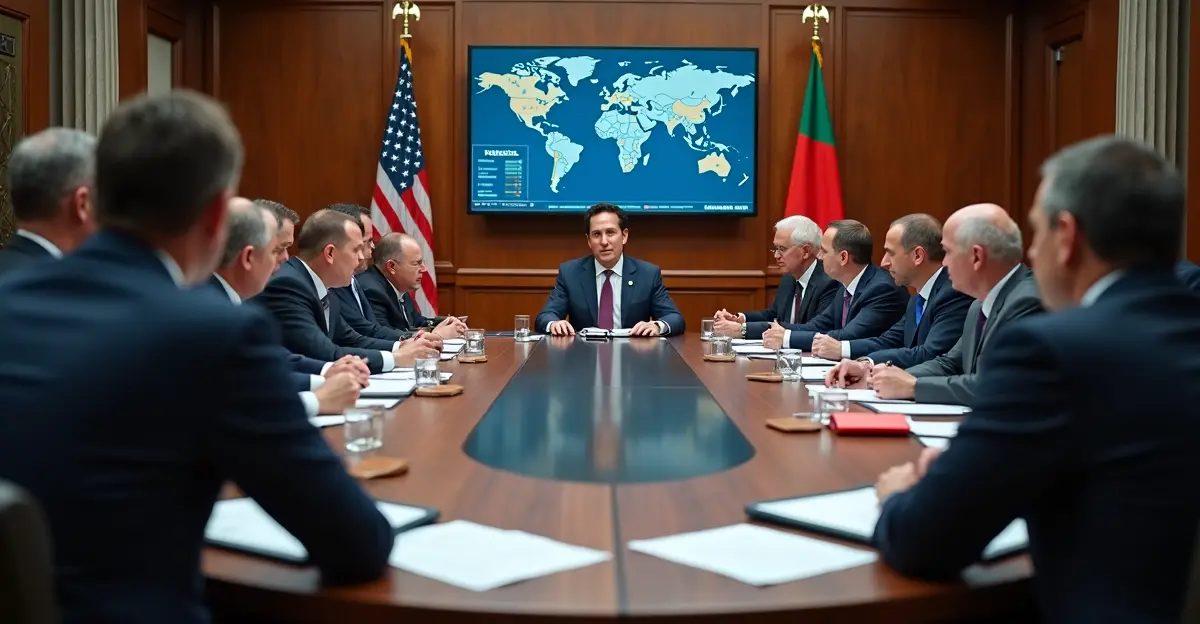
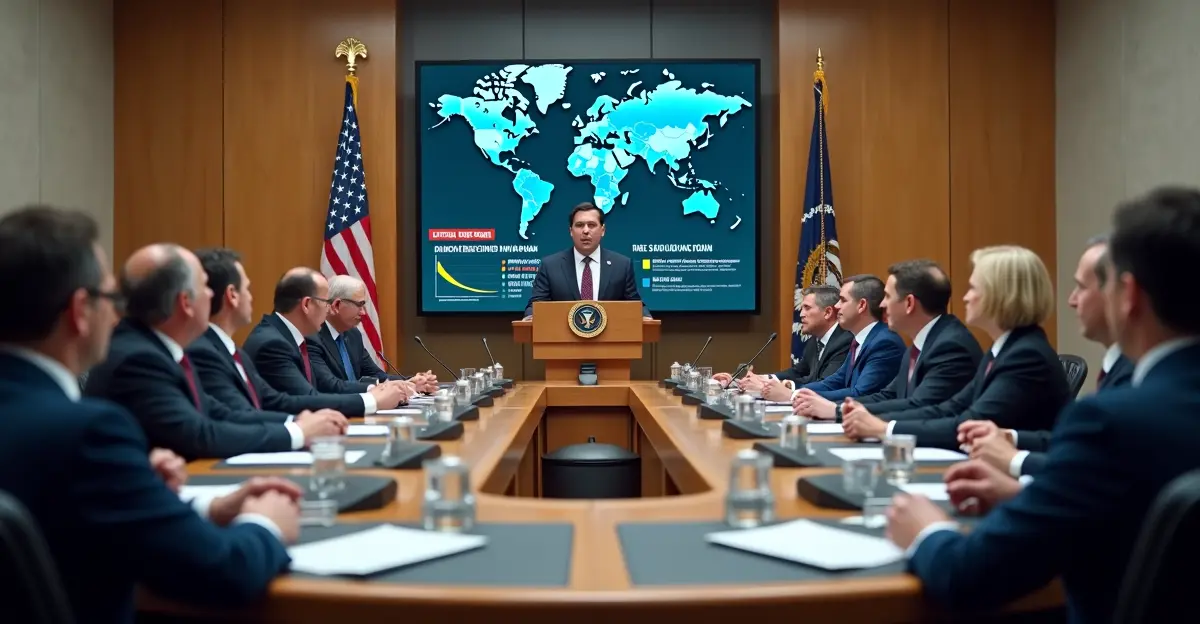
On February 4, 2026, the United States hosted the Critical Minerals Ministerial in Washington, D.C., with 54 countries and the European Commission, including 43 foreign ministers. Secretary of State Marco Rubio announced FORGE—the Forum on Resource Geostrategic Engagement—chaired by South Korea, replacing the Minerals Security Partnership. "Our goal is to reshape a concentrated market into one that is secure, diversified, and resilient," Rubio said. The U.S. signed 11 new bilateral frameworks or MOUs with Argentina, the Cook Islands, Ecuador, Guinea, Morocco, Paraguay, Peru, the Philippines, the UAE, the UK, and Uzbekistan, bringing the total to 21 deals in five months. Washington is mobilizing over $30 billion, including EXIM's $10 billion Project Vault for a domestic strategic minerals reserve and a $12 billion public-private reserve backed by Boeing, GM, and GE Vernova. The US critical minerals financing package is the largest state-led push since the Cold War, while the new FORGE alliance aims to create a preferential trade zone with price floors.
Resource Nationalism's Front Lines: Indonesia, Chile, DRC
Resource-rich nations are asserting control, but outcomes vary. Indonesia's nickel ore export ban, now the 21st century's most successful act of resource nationalism, lifted processed exports from $3.3 billion in 2017 to $33.9 billion in 2024; Jakarta cut permitted nickel output by about 25% in March 2026. Chile keeps lithium non-concessionable, and the Codelco-SQM joint venture NovaAndino Litio, launched in December 2025, gives the state majority control of the Atacama salt flat through 2060. The Democratic Republic of Congo, supplier of 76% of global cobalt, capped exports at 7,250 tonnes monthly—half of pre-ban levels—spiking cobalt hydroxide prices 245%. These moves show why Indonesia nickel export ban and Chile lithium nationalization are becoming templates for other producers.
What It Means for Energy Transition and Global Economic Stability
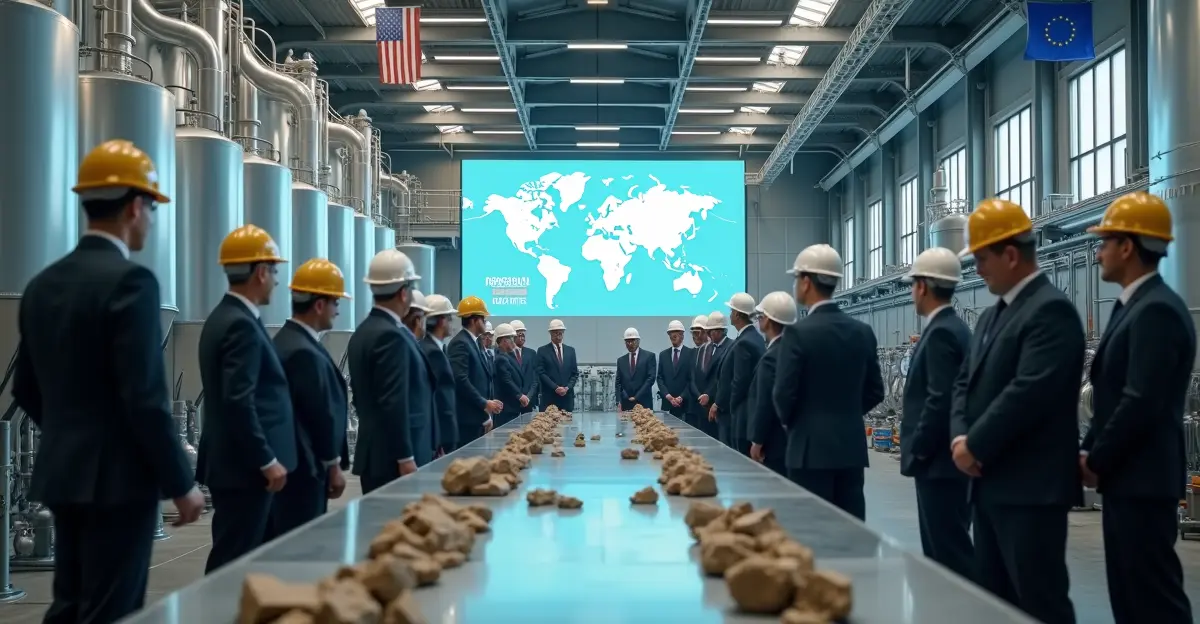
Analysts see a 12–18-month window for Western diversification before shortages bite, while full supply-chain independence could take 20–30 years. Mining and processing lead times of 10–15 years mean recycling and substitution are critical stopgaps. The EU's Critical Raw Materials Act targets 10% extraction, 40% processing, and 25% recycling by 2030, but financing gaps persist. Higher prices and supply fragmentation threaten energy transition timelines and could delay EV and grid-storage adoption, raising costs for manufacturers and consumers alike.
Expert Perspectives
"The legal terrain for lithium and rare earth investors is shifting as quickly as the political one," a Gibson Dunn analysis warned. Trade lawyers now advise contract updates and political-risk insurance as standard practice. Meanwhile, Saudi Arabia and the UAE have emerged as a third pole, deploying over $100 billion via sovereign wealth funds.
FAQ: Critical Minerals Arms Race 2026
What is the critical minerals arms race?
The critical minerals arms race is the geopolitical contest to control mining, processing, and trade of lithium, rare earths, cobalt, graphite, and other minerals essential to clean energy, AI, and defense. In 2026, processing infrastructure matters more than extraction.
Which country dominates critical mineral processing in 2026?
China dominates roughly 90% of rare earth processing, 60% of lithium and cobalt refining, and 80% of battery-grade graphite, giving it outsized leverage over global supply chains.
What is FORGE?
FORGE, the Forum on Resource Geostrategic Engagement, is a U.S.-led coalition launched on February 4, 2026, succeeding the Minerals Security Partnership. Chaired by South Korea, it aims to build a preferential trade-and-investment zone with coordinated price floors for critical minerals.
How do China's export controls affect global prices?
China's export controls have caused sixfold price spikes in gallium, germanium, and antimony, and cobalt hydroxide prices rose 245% after DRC export caps. These restrictions increase costs for batteries, magnets, and semiconductors.
Can the West replace China in rare earth processing by 2030?
Most analysts say no. Western processing projects will not scale until around 2035, and full independence could take 20–30 years. Recycling, substitution, and diversified sourcing are the most realistic near-term strategies.
Conclusion: A New Geopolitical Axis
In 2026, resource nationalism has replaced trade as the primary axis of great-power competition. Control over smelters, separators, and magnet plants now confers more leverage than control over mines. As China tightens export controls and the West builds FORGE, the energy transition's timeline—and global economic stability—will hinge on whether midstream capacity can be diversified before shortages become structural.
Follow Discussion