


 Deutsch
 English
 Español
 Français
 Nederlands
 Português


 Share
Share




What is Austria's new headscarf ban for schools?
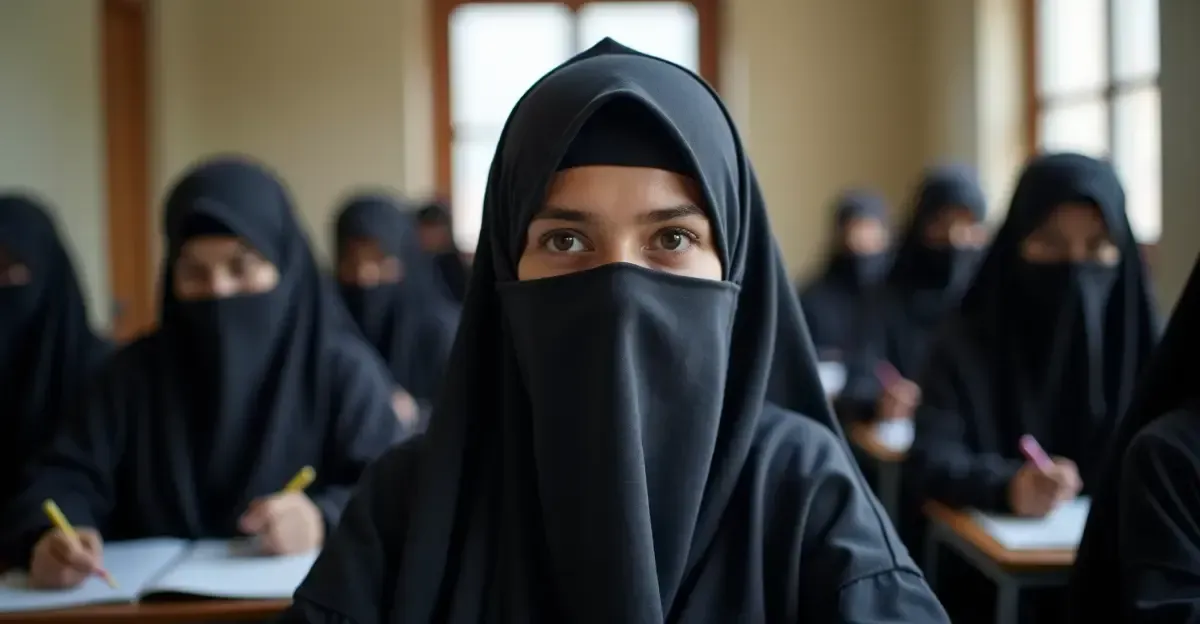
Austria is implementing a controversial headscarf ban for girls under 14 in all public and private schools, set to take full effect in September 2026. The law, passed in December 2025 with broad parliamentary support, prohibits wearing head coverings 'according to Islamic traditions' — including hijabs and burqas — for girls up to age 14. An awareness phase began in February 2026, during which teachers, parents, and children are informed about the ban without penalties. From September 2026, enforcement kicks in with fines of €150 to €800 for parents who repeatedly violate the law, and teachers face legal consequences for failing to report infractions.
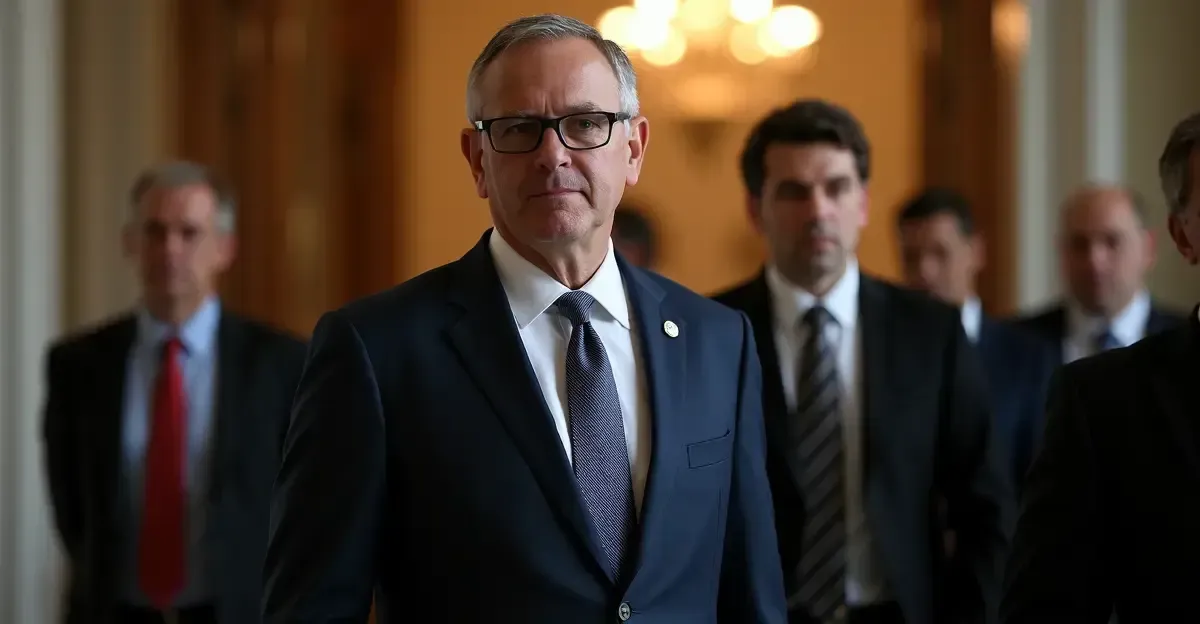
Integration Minister Claudia Plakolm of the conservative ÖVP defended the measure, stating: 'The headscarf is not an innocent piece of fabric; it is a symbol of oppression.' The government argues the ban protects young girls from gender-based oppression and promotes integration according to Austrian secular values.
Background and political context
This is not Austria's first attempt at a headscarf ban. In 2019, the country introduced a similar ban for girls under 10 in primary schools. However, Austria's Constitutional Court struck it down in 2020, ruling that it violated the principle of equality by specifically targeting Muslims while allowing other religious head coverings like Jewish kippahs and Sikh turbans.
The new law attempts to circumvent that ruling by explicitly stating its goal is to prevent 'gender-related oppression' — a justification the government argues does not apply to other religious headwear. The law was approved by the three-party coalition government (ÖVP, SPÖ, and Neos) with support from the far-right Freedom Party (FPÖ). Only the Green Party voted against it, citing concerns about constitutionality and enforcement.
Similar debates are unfolding across Europe. The European headscarf bans in schools have been implemented in France, Belgium, and parts of Germany, though Austria's version is among the most restrictive for young girls.
Impact on schools, teachers, and students
Approximately 12,000 girls are expected to be affected by the ban. In Vienna, where 38.5% of students are Muslim (compared to 37% Christian), the impact is particularly acute. School principals are now preparing for the new reality.
Gerd Bauer, director of a Mittelschule (for ages 10-14) in Vienna-Simmering, a diverse district, told NOS: 'Some girls indicate they will take off the headscarf; with others, we have to wait and see. It will be difficult, especially on the first school day when it is already hectic.'
Teachers' union FCG Vienna chairman Thomas Krebs expressed concern: 'Teachers have a relationship of trust with their students. That relationship is now damaged. Teachers will have to act as law enforcement officers, leading to major problems and conflicts in the classroom.'
The law requires teachers to report violations to school authorities, who then engage in discussions with the girl and her guardians. If violations continue, child and youth welfare services become involved, and parents face fines. The ban does not apply to school events outside school premises, such as ski trips or field trips.
Criticism and constitutional challenges
Critics argue the ban is discriminatory, unconstitutional, and fuels anti-Muslim racism. Sarah Dakhli of the student union AKS Vienna, who has worn the headscarf since age 10, said: 'It is symbolic politics targeting Muslim women. They talk about self-determination and freedom, but the opposite happens when you ban something.'
The Islamic Religious Community in Austria (IGGÖ) has commissioned a legal opinion from Professor Markus Vašek of Johannes Kepler University Linz, which concluded the ban is unconstitutional for violating religious neutrality and equality principles. The IGGÖ plans to challenge the law at the Constitutional Court. Amnesty International Austria called the ban 'blatant discrimination' and an expression of anti-Muslim racism.
According to a 2024 EU Fundamental Rights Agency report, Muslims in Austria face the highest rates of discrimination in the European Union. Rights groups warn that the rise of anti-Muslim discrimination in Europe is exacerbated by such legislation.
Hundreds of protesters gathered in Vienna in February 2026, with further demonstrations planned. The 2025 Vienna protests against headscarf ban drew widespread attention to the issue.
FAQ: Austria's headscarf ban in schools
Who does the ban apply to?
The ban applies to all girls under 14 years old in public and private schools across Austria.
What head coverings are banned?
The law prohibits wearing headscarves that 'cover the head according to Islamic traditions,' including hijabs and burqas. Jewish kippahs and Sikh turbans are explicitly exempted.
What are the penalties for violations?
During the awareness phase (February to August 2026), no penalties apply. From September 2026, parents face fines of €150 to €800 for repeated violations, or up to two weeks of substitute imprisonment. Teachers who fail to report violations also face legal consequences.
Is the ban constitutional?
A similar 2019 ban was overturned by Austria's Constitutional Court in 2020. Legal experts and the IGGÖ argue the new ban also violates the constitution. The case is expected to reach the Constitutional Court.
When does the ban take effect?
An awareness phase started in February 2026. Full enforcement with sanctions begins at the start of the 2026-2027 school year in September 2026.




Follow Discussion