


 Deutsch
 English
 Español
 Français
 Nederlands
 Português


 Share
Share




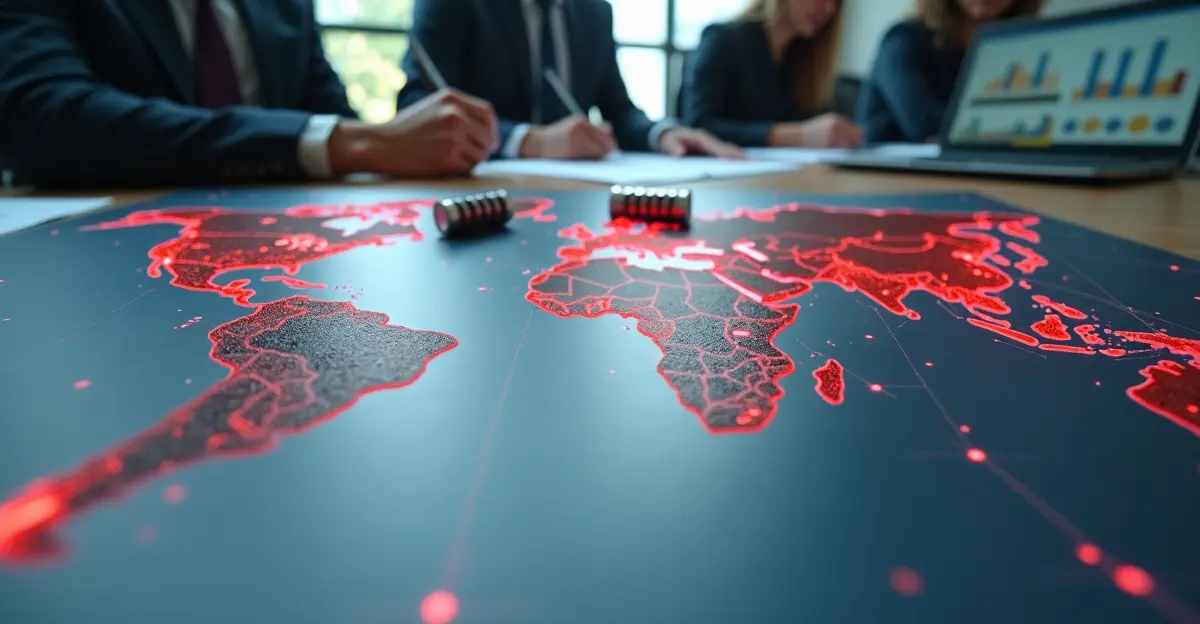
In 2026, critical minerals have become the new oil — the central axis of geoeconomic confrontation reshaping global power. China's stranglehold on rare-earth processing (90%) and refined lithium and cobalt (over 60%) has turned these resources into strategic weapons. As the World Economic Forum's Global Risks Report 2026 ranks geoeconomic confrontation as the top global risk, the race to secure supply chains for lithium, cobalt, rare earths, and copper defines a new era of resource diplomacy. The February 2026 Critical Minerals Ministerial in Washington, which produced 11 bilateral deals and over $30 billion in new financing, marks the defining strategic shift of the year.
China's Processing Dominance: A Strategic Chokepoint
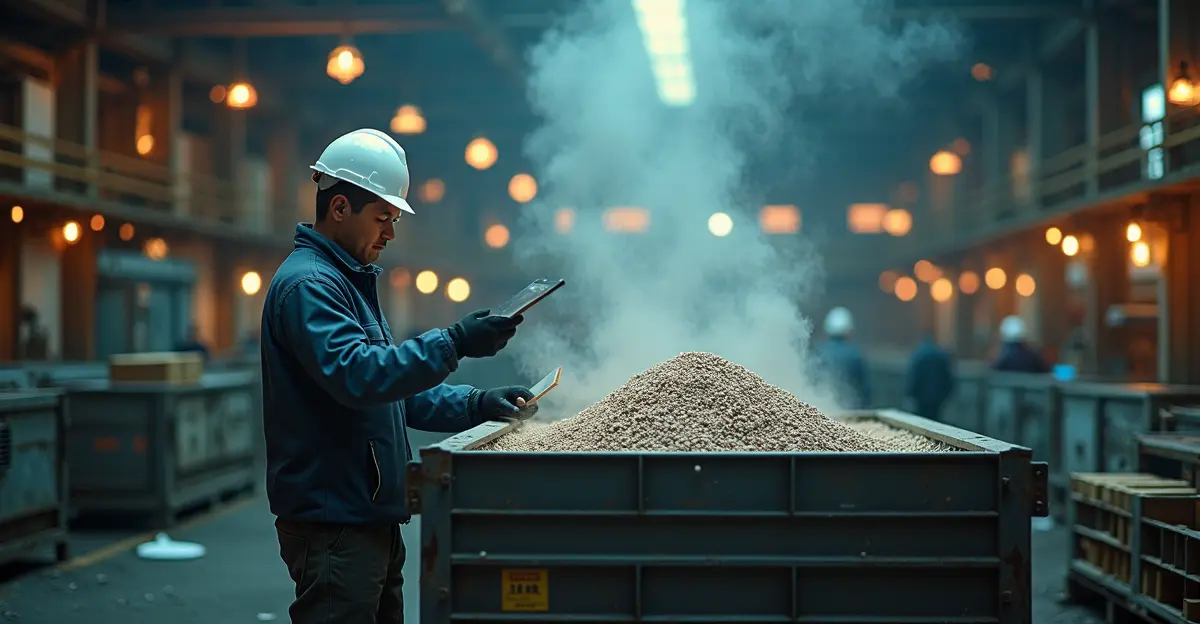
China's control over critical mineral processing is the result of deliberate state-driven industrial policy spanning three decades. Beijing controls roughly 90% of global rare earth refining capacity, 80% of tungsten processing, and 60% of antimony production — materials essential for F-35 fighter jets, missile guidance systems, electric vehicle batteries, and wind turbines. In 2025-2026, China imposed export controls on rare earths, tungsten, antimony, and silver, triggering price spikes of up to sixfold outside China. European licensing approval rates for these materials fell below 25%, and over 80% of European firms remain dependent on Chinese supply chains.
According to a multi-institutional analysis drawing from the European Parliament Research Service, OECD, and CSIS, Beijing is weaponizing control — not scarcity — by using temporary, reversible restrictions to maintain pricing power and extract strategic concessions while discouraging Western alternative investment. The China rare earth export controls have become a central tool in Beijing's geoeconomic arsenal.
The US Response: FORGE and Project Vault
The United States has launched an unprecedented counteroffensive. On February 4, 2026, the U.S. Department of State hosted the 2026 Critical Minerals Ministerial, bringing together 54 countries and the European Commission. Secretary of State Marco Rubio, joined by Vice President JD Vance and six Cabinet members, announced the creation of FORGE (Forum on Resource Geostrategic Engagement) as the successor to the Minerals Security Partnership, chaired by South Korea.
Key outcomes included 11 new bilateral critical minerals frameworks or MOUs with countries including Argentina, Morocco, the Philippines, the UAE, and the UK. The U.S. is mobilizing over $30 billion in financing, including EXIM Bank's Project Vault — a $10 billion initiative to establish a domestic strategic reserve for critical minerals. The reserve will store essential raw materials as an independently governed public-private partnership. Vice President Vance described using adjustable tariffs to maintain reference prices for critical minerals at each production stage, creating a preferential trade-and-investment zone.
The US FORGE initiative critical minerals represents a shift from bilateralism to plurilateral coordination, aiming to link disparate agreements into a functioning system covering two-thirds of the global economy.
The 12-to-18 Month Window
Analysts warn that Western nations face a narrow 12-to-18 month window to diversify critical supply chains before vulnerabilities become structurally entrenched. Rebuilding independent supply chains would require 20-30 years under normal circumstances, but the current crisis has accelerated investment. NATO holds only 6-9 months of defense stockpiles for key minerals. The West faces a strategic trilemma: accept managed dependence, pursue costly independence ($30-50 billion over 5-7 years), or adopt a hybrid resilience model.
Europe's Scramble: The Critical Raw Materials Act
The European Union's Critical Raw Materials Act (CRMA), in effect since May 2024, sets ambitious targets: by 2030, the EU aims to extract 10%, process 40%, and recycle 25% of its annual strategic raw material needs domestically, with no more than 65% from any single third country. In December 2025, the European Commission adopted the RESourceEU Action Plan to strengthen supply, including a European Critical Raw Materials Centre and a Raw Materials Platform for joint purchasing and stockpiling by early 2026.
Up to €3 billion will be mobilized over 12 months to support alternative supply projects. The EU aims to reduce supply dependencies by up to 50% by 2029 through expanded cooperation with 15 existing Strategic Partnerships, including new talks with Brazil and investment frameworks with Ukraine and the Western Balkans. However, the EU remains heavily dependent: 100% of its heavy rare earths come from China, 99% of boron from Turkey, and 63% of cobalt from the DRC.
The EU Critical Raw Materials Act targets face significant headwinds as permitting delays and capital costs slow progress.
The Rise of Gulf State Mineral Diplomacy
Saudi Arabia and the UAE are emerging as decisive new forces in the critical minerals race. Saudi Arabia has upgraded its estimated mineral wealth to $2.5 trillion and aims to mobilize $100 billion in mining investments by 2035 through Vision 2030. Its investment vehicle, Manara Minerals (a PIF-Ma'aden joint venture), targets global copper, nickel, lithium, and rare earth assets. The UAE is deploying sovereign funds as intermediaries, including the $1.8 billion Orion Critical Mineral Consortium.
Gulf states are positioning themselves as reliable, geopolitically neutral hubs for critical mineral processing, offering Western markets alternatives to Chinese-dominated supply chains. However, they must balance ties with China — their largest oil customer — while aligning with Western de-risking efforts. Their combination of patient capital, strategic geography, and diplomatic agility gives them a unique advantage in reshaping the global resource map.
New Resource Diplomacy: Mineral-Rich Nations Gain Leverage
The critical minerals race has empowered resource-rich nations from Argentina to the Democratic Republic of Congo. Argentina, with its vast lithium reserves in the Lithium Triangle, signed a bilateral framework with the U.S. at the February Ministerial. The DRC, which supplies 63% of the world's cobalt, is leveraging its position to demand greater value addition domestically. Countries like Chile, Peru, Indonesia, and the Philippines are also using their mineral endowments to negotiate better terms.
This new resource diplomacy echoes the petro-state era but with key differences: the energy transition creates demand for multiple minerals simultaneously, and processing concentration in China gives Beijing outsized leverage. The Argentina lithium DRC cobalt geopolitics dynamic illustrates how mineral wealth is reshaping North-South relations.
Expert Perspectives
"The rest of Asia probably just has to keep taking it off China for now," says mining executive Mick McMullen, highlighting the technological barriers. Specialized processing technology remains largely controlled by China, and it could take a decade for other nations to build competitive rare earth industries.
Analysts at the Atlantic Council note that FORGE represents a shift from bilateralism to plurilateral coordination, but operational details remain sparse. The crowded multilateral landscape — with overlapping initiatives like the G7 Production Alliance — risks fragmentation. Sustained coordination across diverse partners will be critical for success.
FAQ
What are critical minerals?
Critical minerals are raw materials designated by governments as essential for economic and national security, with vulnerable supply chains. They include rare earth elements, lithium, cobalt, nickel, graphite, and copper — vital for green energy, defense, and digital technologies.
Why does China dominate critical mineral processing?
China invested billions since the 1980s to build integrated supply chains through state-driven industrial policy, including the Belt and Road Initiative, subsidies, and vertical integration. It now controls 90% of rare earth processing and over 60% of lithium and cobalt refining.
What is the FORGE initiative?
FORGE (Forum on Resource Geostrategic Engagement) is a U.S.-led plurilateral coalition launched in February 2026 as the successor to the Minerals Security Partnership. It aims to create a preferential trade-and-investment zone for critical minerals with coordinated price floors, involving 54 countries.
What is Project Vault?
Project Vault is a $10 billion EXIM Bank initiative to establish the U.S. Strategic Critical Minerals Reserve, an independently governed public-private partnership that will store essential raw materials to buffer against supply disruptions.
How long does the West have to diversify?
Analysts estimate a 12-to-18 month window in 2026-2027 before Chinese processing dominance becomes structurally entrenched. Building alternative capacity typically takes 5-7 years, requiring unprecedented investment and coordination.
Conclusion: The Defining Strategic Shift of 2026
The critical minerals race is reshaping global power in real time. With geoeconomic confrontation topping the WEF Global Risks Report 2026, the February Ministerial's $30 billion in financing and 11 bilateral deals represent an unprecedented mobilization. Yet the gap between ambition and execution remains wide. The next 12-18 months will determine whether the West can break China's processing dominance or whether critical minerals become a permanent axis of vulnerability. The critical minerals deadline 2026 is not just an economic challenge — it is the defining strategic test of the decade.


Follow Discussion