


 Deutsch
 English
 Español
 Français
 Nederlands
 Português


 Share
Share




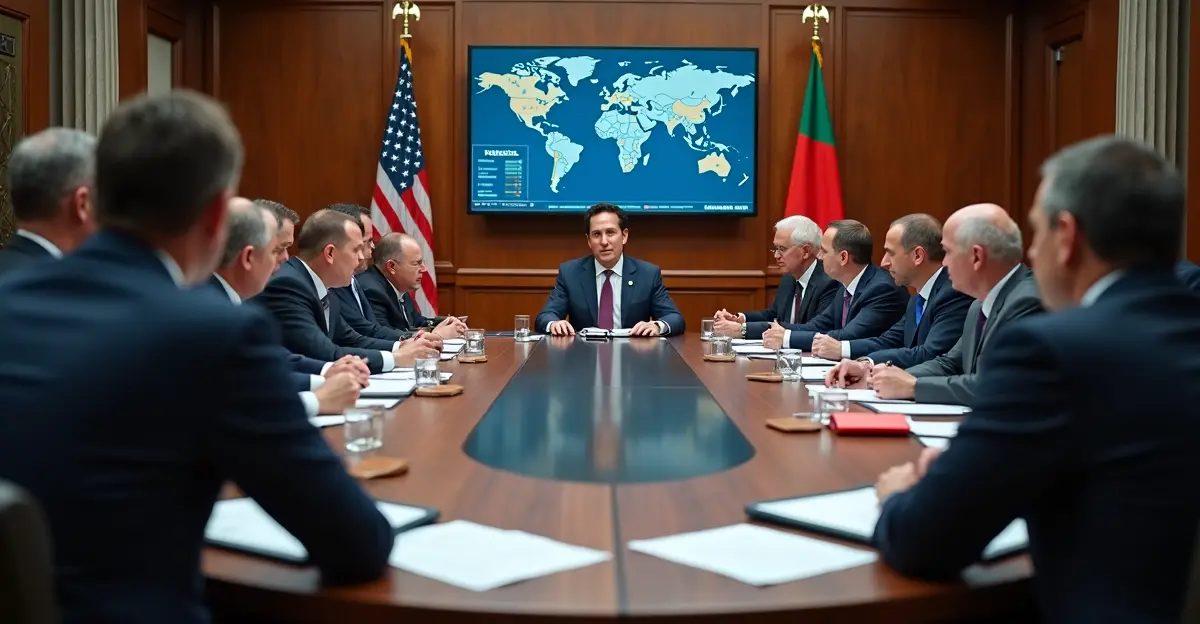
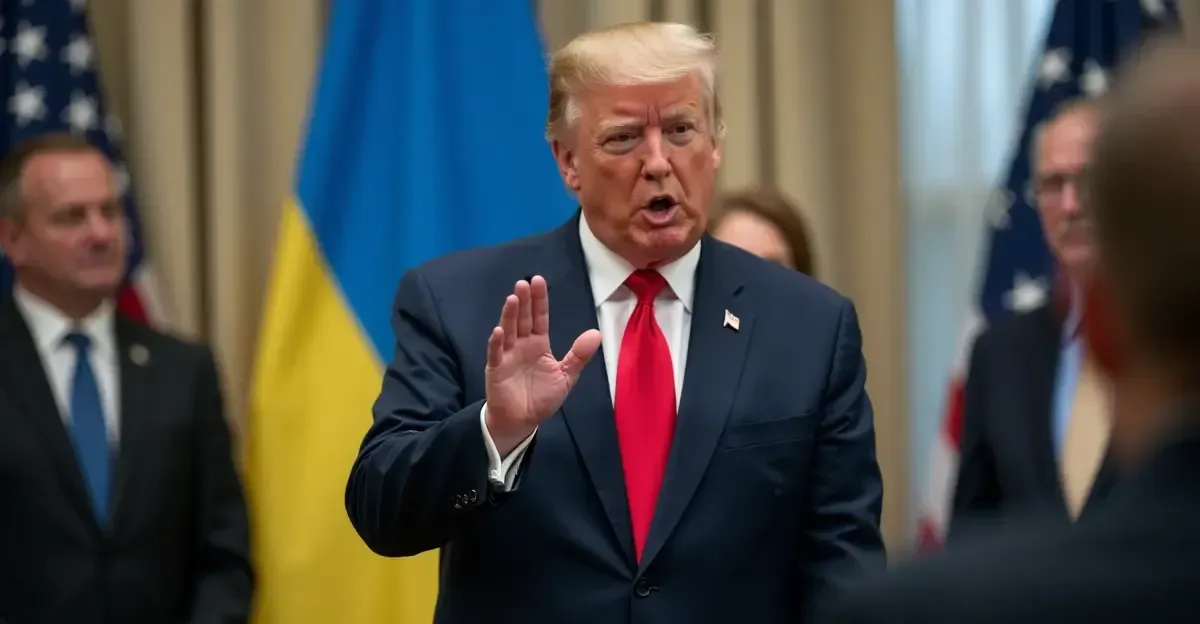
On February 4, 2026, the United States launched its most ambitious effort yet to break China's stranglehold on the global critical minerals supply chain. At the 2026 Critical Minerals Ministerial in Washington, D.C., Secretary of State Marco Rubio, Vice President JD Vance, and five other cabinet officials unveiled FORGE (Forum on Resource Geostrategic Engagement) and Project Vault, a $10 billion strategic domestic reserve for critical minerals. With representatives from 54 countries and the European Commission in attendance, the event marked a turning point in the geopolitical struggle over the raw materials essential for AI, electric vehicles, defense systems, and the global energy transition.
China's Dominance: The Numbers Behind the Leverage
China currently controls approximately 90% of global rare earth processing, 80% of tungsten refining, and 60% of antimony production. It also dominates the processing of lithium, cobalt, and graphite — materials critical for batteries and advanced electronics. According to a multi-institutional analysis published in early 2026, China's export controls on rare earths and critical minerals have triggered price spikes of up to sixfold outside China, while licensing approval rates for European firms have dropped below 25%. Over 80% of European companies remain dependent on Chinese supply chains for materials essential to defense, EVs, and renewable energy.
The US-China trade war has accelerated these dynamics. Beijing has weaponized control — not scarcity — using temporary, reversible restrictions to maintain pricing power and extract strategic concessions while discouraging Western investment in alternative supply chains. Experts warn that rebuilding independent processing capacity would take 20 to 30 years, far exceeding the current geopolitical window. Western nations face a narrowing 12-to-18-month window to act decisively or accept prolonged vulnerability.
FORGE: A New Multilateral Framework
FORGE succeeds the Minerals Security Partnership (MSP) and will be initially chaired by the Republic of Korea until June 2026. The forum aims to coordinate critical mineral policy, pricing, and project development across allied nations. Vice President JD Vance announced that the bloc will establish reference prices serving as floors, maintained through adjustable tariffs — a mechanism designed to stabilize markets and incentivize investment outside China.
The United States signed 11 new bilateral critical minerals frameworks or MOUs at the Ministerial, adding to 10 previous pacts. New signatories include Argentina, the Cook Islands, Ecuador, Guinea, Morocco, Paraguay, Peru, the Philippines, the United Arab Emirates, Uzbekistan, and the United Kingdom. These agreements cover investment security, infrastructure development, and technology transfer to build end-to-end supply chains.
Project Vault: A $10 Billion Strategic Reserve
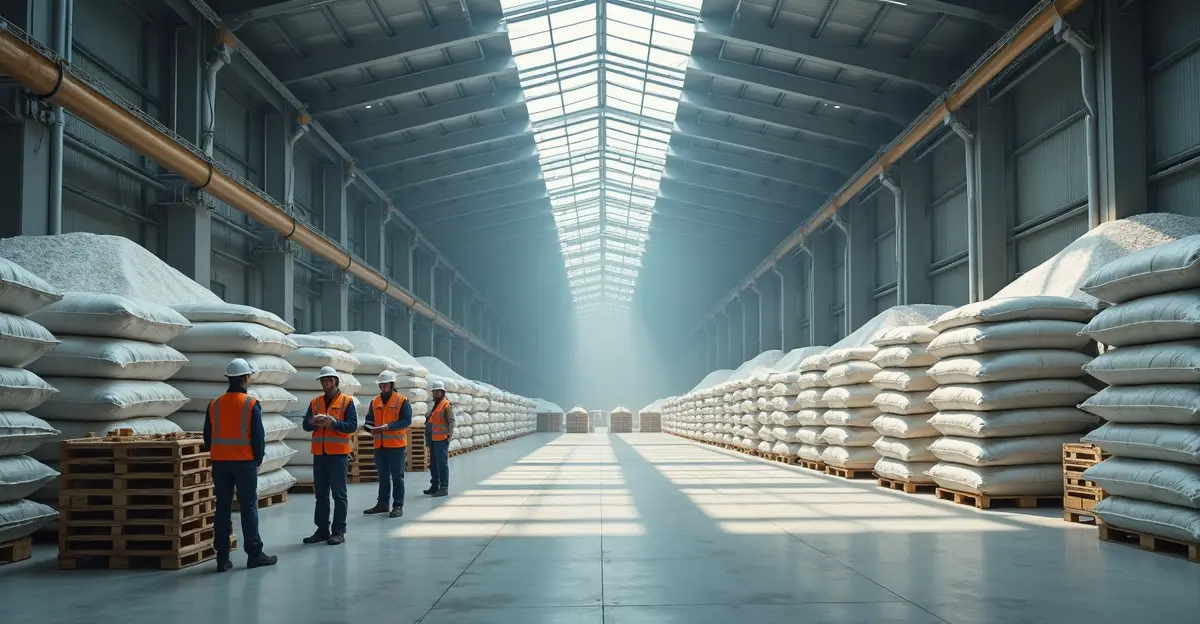
Project Vault, backed by the Export-Import Bank of the United States (EXIM), establishes a domestic strategic critical minerals reserve valued at $10 billion. The initiative aims to reduce concentration risks by stockpiling rare earths, lithium, copper, and other materials essential for national security and advanced manufacturing. The New York Times reported on February 2, 2026, that the Trump administration's $12 billion stockpile plan — slightly larger than the EXIM figure — is intended to reduce U.S. reliance on China for key technology components.
The U.S. government has mobilized over $30 billion in letters of interest, investments, loans, and other support for critical mineral supply chain projects over the past six months. This includes partnerships with private sector entities through the Pax Silica initiative, which focuses on securing the global technology supply chain from critical minerals to semiconductors and AI infrastructure. A $250 million Pax Silica Fund has been established for critical minerals and infrastructure projects, with signatories including Australia, India, Japan, South Korea, and the United Kingdom.
Can Alternative Supply Chains Be Built in Time?
The central question facing policymakers is whether the US-led coalition can build viable alternative supply chains within the 12-to-18-month window that experts say remains before Chinese leverage becomes irreversible. The global energy transition depends on rapid diversification: the International Energy Agency projects that demand for critical minerals will quadruple by 2040 under net-zero scenarios.
Challenges are formidable. China's dominance was built through decades of strategic government policies, including the "Made in China 2025" strategy, battery subsidies for domestic producers, off-take contracts with mines abroad, and aggressive acquisitions totaling $7.9 billion in lithium M&A deals since 2018. Chinese companies like CATL command 35% of the global lithium-ion battery market. Even as Western nations invest, China's upcoming 15th Five-Year Plan is expected to reinforce its dominance, with projections showing it will supply over 60% of refined lithium and cobalt by 2035.
However, there are signs of progress. The United States and Australia are the world's second- and third-largest rare earth producers, accounting for 13.1% and 7.4% of global production in 2025, respectively. Brazil holds the second-largest reserves of rare earths. The EU's Critical Raw Materials Act, which came into effect in May 2024, sets targets of 10% domestic extraction and 40% processing capacity by 2030. Saudi Arabia and the UAE are deploying over $100 billion in investments, pivoting from oil to mineral leverage.
Expert Perspectives
"The 2026 Critical Minerals Ministerial represents the most significant Western effort yet to rewire critical mineral supply chains," said a senior State Department official who spoke on condition of anonymity. "FORGE and Project Vault give us the institutional framework and financial firepower to compete. But time is not on our side."
Analysts at the Center for Strategic and International Studies (CSIS) noted that the crowded multilateral landscape — including the G7's Production Alliance, the EU's Critical Minerals Club, and now FORGE — risks duplication of effort. Coordination among allies will be essential to avoid fragmenting demand and diluting negotiating power.
The World Economic Forum Global Risks Report ranks geoeconomic confrontation as the top global risk for 2026, underscoring the stakes involved. As one ODI analyst put it: "The competition among the US, EU, China, and new actors like the UAE and Saudi Arabia is intensifying, with supply chain security and geopolitical leverage at stake."
FAQ: Critical Minerals and the 2026 US Initiatives
What is FORGE?
FORGE (Forum on Resource Geostrategic Engagement) is a new international forum launched by the U.S. Department of State on February 4, 2026, to succeed the Minerals Security Partnership (MSP). It coordinates critical mineral policy, pricing, and project development among allied nations, initially chaired by the Republic of Korea.
What is Project Vault?
Project Vault is a $10 billion initiative backed by the Export-Import Bank of the United States to establish a domestic strategic reserve for critical minerals, including rare earths, lithium, and copper. It aims to reduce U.S. reliance on Chinese supply chains.
How much does China control critical mineral processing?
China controls approximately 90% of global rare earth processing, 80% of tungsten refining, 60% of antimony production, and dominates processing of lithium, cobalt, and graphite used in batteries.
What is the 12-to-18-month window?
Experts warn that Western nations have a narrow 12-to-18-month window to build alternative supply chains before Chinese leverage becomes irreversible. Rebuilding independent processing capacity would take 20-30 years under normal circumstances.
Which countries signed new bilateral frameworks with the US?
The United States signed 11 new bilateral critical minerals frameworks or MOUs at the 2026 Ministerial with Argentina, the Cook Islands, Ecuador, Guinea, Morocco, Paraguay, Peru, the Philippines, the United Arab Emirates, Uzbekistan, and the United Kingdom.
Conclusion: A Defining Geopolitical Contest
The launch of FORGE and Project Vault, alongside $30 billion in mobilized financing and 11 new bilateral agreements, represents the most significant Western effort to date to counter China's critical minerals dominance. Whether these initiatives can deliver viable alternative supply chains within the narrowing 12-to-18-month window will determine not only the future of the global energy transition but also the balance of technological and military power for decades to come. The critical minerals race is now the defining geopolitical-economic story of early 2026, and its outcome will shape the 21st century.
Follow Discussion