


 Deutsch
 English
 Español
 Français
 Nederlands
 Português


 Share
Share




The global race for critical minerals has reached a strategic inflection point in 2026. With demand for lithium, cobalt, rare earths, and graphite projected to surge four- to sixfold by 2040, control over supply chains has become the central arena of great-power rivalry. The World Economic Forum's Global Risks Report 2026 ranks geoeconomic confrontation as the top near-term risk, and multiple major policy initiatives are converging this year, making it the most consequential window for critical minerals policy since the energy transition began.
What Is Driving the Critical Minerals Geopolitics in 2026?
Critical minerals geopolitics refers to the strategic competition among nations to secure access to raw materials essential for defense, clean energy, and advanced technologies. These include rare earth elements (REEs), lithium, cobalt, nickel, graphite, and tungsten. As the International Energy Agency (IEA) notes, global demand for critical minerals could nearly triple by 2030 and quadruple by 2050. The energy transition supply chains are now at the heart of national security strategies worldwide.
US Project Vault and FORGE: A $30 Billion Counteroffensive
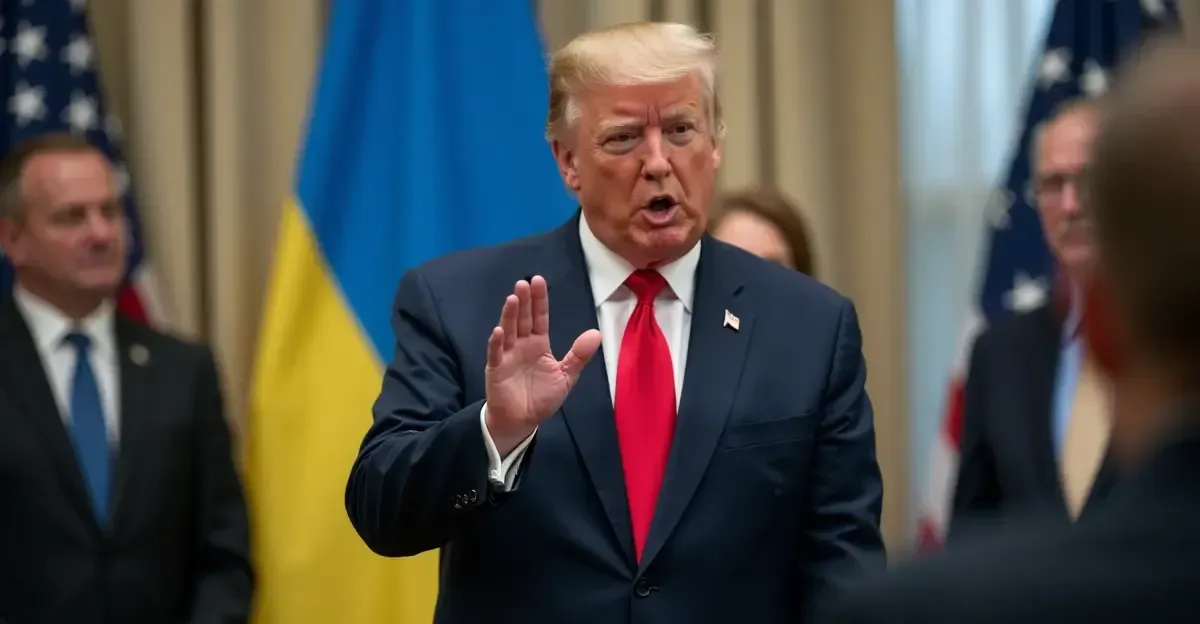
On February 2, 2026, the Trump administration launched Project Vault, a $12 billion public-private initiative to establish the U.S. Strategic Critical Minerals Reserve. Backed by a $10 billion Export-Import Bank loan and nearly $2 billion in private capital, Project Vault is the most aggressive U.S. stockpiling effort since the Korean War. Minerals will be stored in secure domestic facilities, with release governed by predefined market-disruption criteria rather than political authorization.
Just two days later, on February 4, the U.S. hosted the 2026 Critical Minerals Ministerial with 54 countries and the European Commission. Secretary of State Marco Rubio and Vice President JD Vance unveiled the Forum on Resource Geostrategic Engagement (FORGE), the successor to the Minerals Security Partnership. FORGE is designed as a plurilateral coalition creating a preferential trade-and-investment zone for critical minerals, with coordinated price floors to counter adversarial market manipulation. The ministerial produced 11 new bilateral framework agreements, bringing the total to 21 in five months. The administration has mobilized over $30 billion in letters of interest, investments, and loans for critical minerals projects.
Project Vault: Key Details
- Total funding: $12 billion ($10 billion EXIM loan + $2 billion private capital)
- Participating OEMs: Boeing, General Motors, GE Vernova, Clarios, Hartree, Traxys
- Storage: Secure U.S. facilities with independent governance
- Release criteria: Market-disruption triggers, not political authorization
EU Critical Raw Materials Act: Ambition vs. Financing Gaps
The European Union's Critical Raw Materials Act (CRMA), in effect since May 2024, sets ambitious 2030 benchmarks: 10% extraction, 40% processing, and 25% recycling within the EU, with no more than 65% of any strategic raw material from a single third country. In early 2026, the European Commission selected 60 Strategic Projects from nearly 170 proposals—47 within the EU and 13 in third countries. However, only ten projects fell into the recycling category, highlighting a gap in circular economy capacity.
The second call for applications closed on January 15, 2026, covering all 17 strategic raw materials. Commission Executive Vice-President Stéphane Séjourné called it "another key step towards European sovereignty." Yet the EU struggles to scale financing compared to the U.S. and China. The EU Critical Raw Materials Act financing remains a critical bottleneck, with industry leaders warning that without a dedicated sovereign fund, Europe risks falling further behind.
China's Dominance and Export Control Strategy
China maintains an iron grip on critical mineral processing, controlling over 60% of global lithium and cobalt refining and over 90% of rare earth processing. In 2025–2026, Beijing tightened export controls on rare earths, tungsten, and antimony, triggering price spikes of up to sixfold outside China. European licensing approval rates have fallen below 25%. Analysts describe this as a strategy of weaponizing control rather than scarcity—using temporary, reversible restrictions to maintain pricing power and extract strategic concessions.
China's 15th Five-Year Plan (2026–2030), unveiled in March 2026, emphasizes "enhancing energy and resource supply security" and calls for optimizing critical mineral supply chains. Provinces like Guangxi, Jiangxi, and Yunnan are aligning with national priorities, setting output targets and fostering industrial clusters for rare earths and strategic minerals. The plan signals continued state-directed investment in processing capacity, further entrenching China's dominance.
New Entrants: Saudi Arabia and the UAE
The Gulf states are emerging as decisive new players. Saudi Arabia has upgraded its estimated mineral wealth to $2.5 trillion and aims to mobilize $100 billion in mining investments by 2035 through Vision 2030. Its investment vehicle Manara Minerals—a joint venture between the Public Investment Fund (PIF) and Ma'aden—acquires strategic stakes in copper, nickel, lithium, and rare earth assets globally. The UAE's ADQ launched a $1.8 billion critical mineral consortium alongside the U.S. International Development Finance Corporation (DFC) and Orion Resource Partners. Mubadala Investment also joined a supply chain resilience consortium in 2026.
These Gulf entrants offer alternatives to Chinese-dominated financing but must balance deepening ties with China—their largest oil customer—and Western de-risking efforts. Their role as intermediaries adds further complexity to an already fragmented landscape. The Gulf critical minerals investment strategy is reshaping global resource supply chains for the energy transition era.
Impact on Defense, EVs, and Decarbonization Timelines
The stakes are immense. Each F-35 fighter jet requires approximately 400 kilograms of rare earths. Every non-Chinese electric vehicle now costs roughly $500 more due to price spikes from Chinese export controls. Supply chain disruptions threaten to delay decarbonization timelines, as wind turbines, solar panels, and battery storage all depend on critical minerals.
Analysts estimate a 12- to 18-month window for Western nations to begin meaningful diversification. However, full supply chain independence could take 20–30 years. The critical minerals supply chain security challenge is thus both urgent and long-term.
Expert Perspectives
"We are witnessing the most aggressive strategic stockpiling initiative since the Korean War," said a senior analyst at the Center for Strategic and International Studies (CSIS). "Project Vault and FORGE represent a fundamental shift in U.S. thinking—from free-market reliance to active state intervention in mineral supply chains."
European industry leaders remain cautious. "The CRMA is a good framework, but without dedicated financing at scale, the 2030 benchmarks will remain aspirational," noted a Brussels-based trade association representative.
Frequently Asked Questions
What are critical minerals?
Critical minerals are non-fuel raw materials essential for national economies and security, with vulnerable supply chains. They include rare earths, lithium, cobalt, nickel, graphite, and tungsten, vital for defense, clean energy, and advanced technologies.
Why is 2026 a pivotal year for critical minerals geopolitics?
Multiple major policy initiatives converge in early 2026: the U.S. launched Project Vault and FORGE, the EU selected 60 Strategic Projects under the CRMA, and China unveiled its 15th Five-Year Plan. The WEF's Global Risks Report ranks geoeconomic confrontation as the top risk, making this a strategic inflection point.
How does China control critical mineral supply chains?
China controls over 60% of global lithium and cobalt refining and over 90% of rare earth processing. Through export controls introduced in 2025–2026, Beijing has triggered sixfold price spikes and reduced European licensing approval rates below 25%, using temporary restrictions to maintain leverage.
What is Project Vault?
Project Vault is a $12 billion U.S. public-private initiative launched in February 2026 to create a Strategic Critical Minerals Reserve. Funded by a $10 billion EXIM loan and private capital, it stockpiles essential minerals in secure domestic facilities to protect against supply shocks.
Can the West reduce dependence on China for critical minerals?
Analysts estimate a 12- to 18-month window to begin diversification, but full supply chain independence could take 20–30 years. Initiatives like FORGE, Project Vault, and the EU CRMA aim to accelerate this process, but significant financing and infrastructure gaps remain.
Conclusion: A Fragmented and Volatile Future
The critical minerals landscape in 2026 is defined by fragmentation, strategic competition, and rapid policy evolution. The U.S. is building a plurilateral alliance system, the EU is pursuing regulatory-driven sovereignty, China is tightening its grip, and Gulf states are emerging as swing players. Supply chain security, decarbonization timelines, and strategic autonomy all hang in the balance. The next 12–18 months will determine whether the West can begin to break free from dependency or faces prolonged vulnerability in the defining resource competition of the 21st century.


Follow Discussion