


 Deutsch
 English
 Español
 Français
 Nederlands
 Português


 Share
Share




The global competition for critical minerals—rare earths, lithium, cobalt, and graphite—has become the defining theater of US-China strategic rivalry in 2026, with supply chain security now treated as a national security imperative by both Washington and Beijing. According to the World Economic Forum's Global Risks Report 2026, geoeconomic confrontation ranks as the top global risk, and rare earth prices have spiked sharply in early 2026, making this the most strategically urgent resource conflict shaping the global order. China continues to control roughly 68% of global rare earth processing and over 80% of heavy rare earths, while the US, EU, and allies scramble to diversify through the Minerals Security Partnership, bilateral deals with Australia and Ukraine, and domestic stockpiling.
China's Dominance and Export Controls
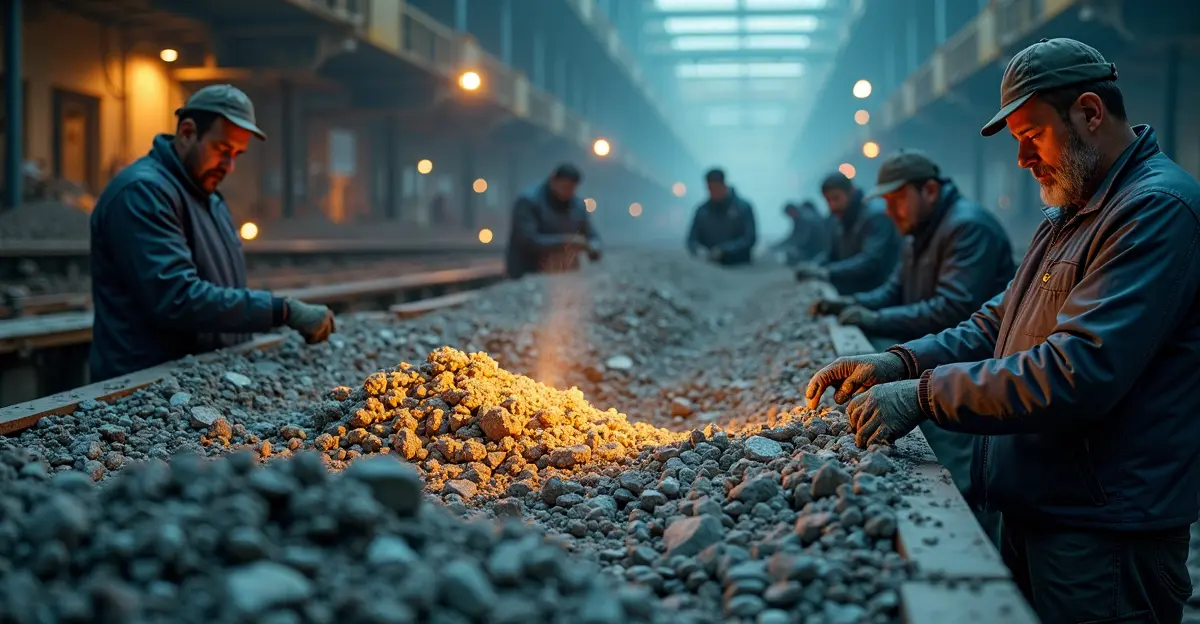
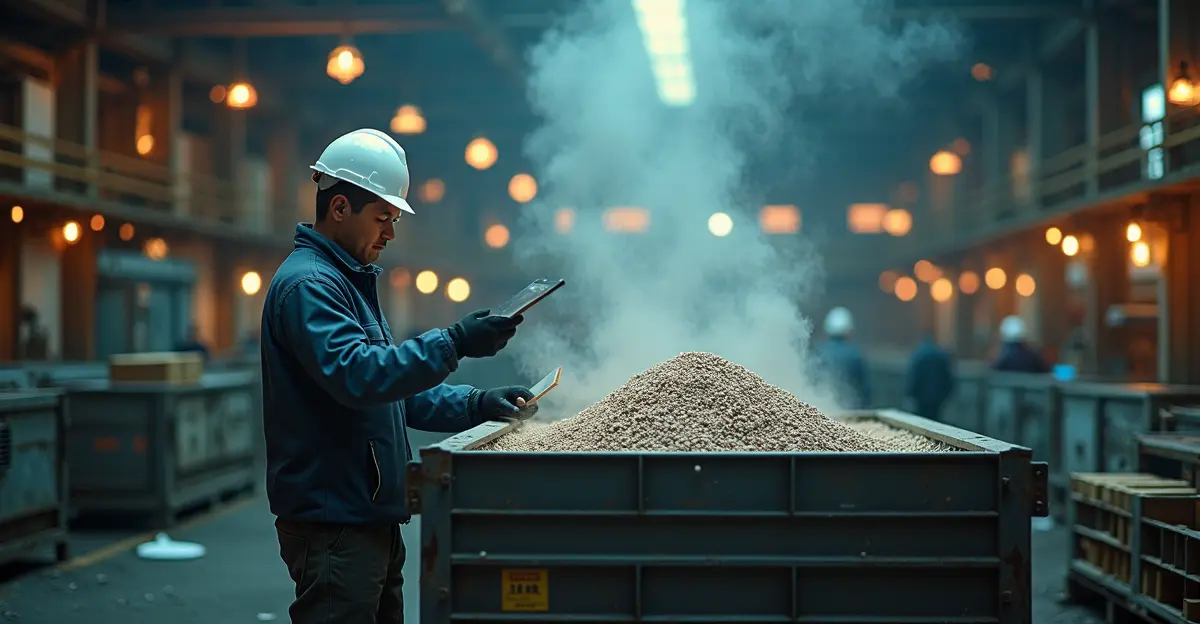
Beijing's stranglehold on critical mineral supply chains is unprecedented. China controls approximately 90% of global rare earth processing, 80% of tungsten, and 60% of antimony. In 2025-2026, China imposed sweeping export controls on rare earths and critical minerals, triggering price spikes of up to sixfold outside China. Export licensing approval rates for European firms have fallen below 25%, according to industry analysts. The rare earth supply chain remains heavily concentrated, with China's Bayan Obo mine in Inner Mongolia producing over 50% of the country's output. Heavy rare earth separation is 99% concentrated in China, and the nation supplies 80% of US rare earth imports and 70% of Japan's needs.
Neodymium prices have surged 34% in early 2026 alone, driven by export restrictions and soaring demand from electric vehicles, wind turbines, and defense applications. Praseodymium-neodymium oxide prices jumped 10-15% following China's suspension of six rare earth export controls in November 2025, now trading at RMB 557,500 per ton. A supply-demand gap of 4.6% is projected for 2026, according to industry forecasts.
Western Countermeasures: FORGE and Project Vault
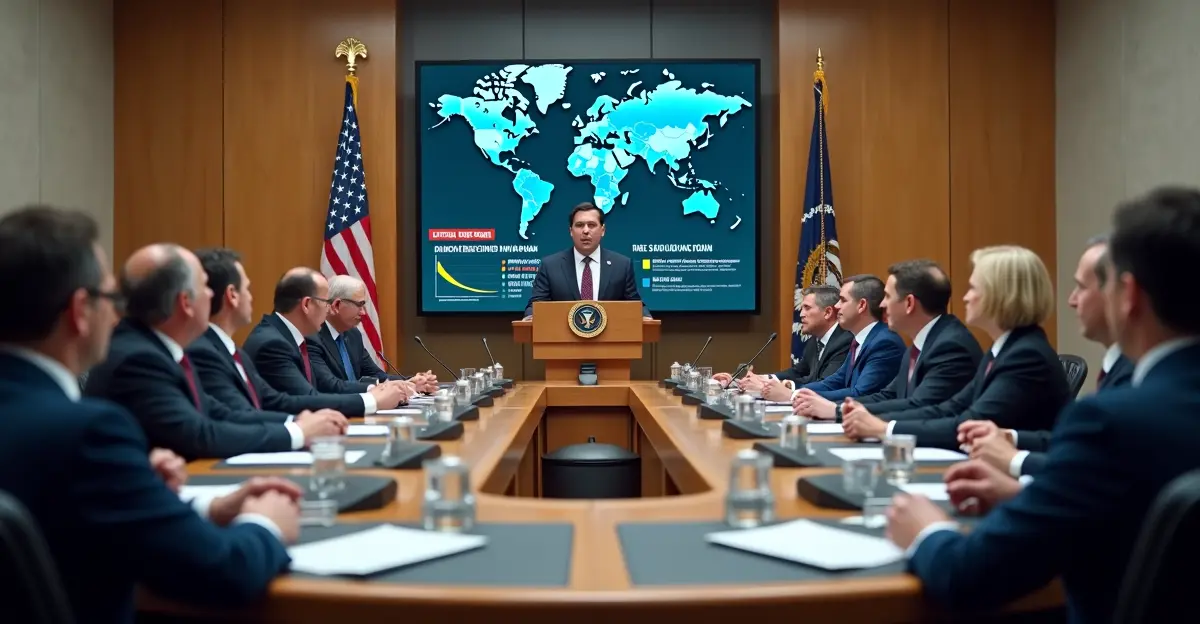
In response, the United States has launched an aggressive strategy to break China's grip. On February 4, 2026, the US Department of State hosted the 2026 Critical Minerals Ministerial, bringing together Secretary of State Marco Rubio, Vice President JD Vance, and representatives from 54 countries plus the European Commission. The centerpiece was the launch of the Forum on Resource Geostrategic Engagement (FORGE), chaired by the Republic of Korea, as the successor to the Minerals Security Partnership. FORGE aims to coordinate critical mineral policy and projects across allied nations, mobilizing over $30 billion in US government financing support for strategic minerals projects.
At the ministerial, the US signed eleven new bilateral critical minerals frameworks with countries including Argentina, Morocco, the UAE, and the UK, building on ten existing pacts. Vice President Vance announced reference prices for critical minerals at each production stage, functioning as price floors maintained through adjustable tariffs—a mechanism designed to stabilize markets and incentivize domestic production.
Complementing FORGE is Project Vault, a $12 billion public-private initiative ($10 billion EXIM Bank loan plus nearly $2 billion in private capital) to establish the US Strategic Critical Minerals Reserve. Unlike the Strategic Petroleum Reserve, Project Vault is a hybrid of a futures market and strategic reserve, where private firms pay subscription fees for access during disruptions. The Peterson Institute for International Economics has recommended mandatory participation with scaled fees to ensure the program's viability, warning that voluntary participation risks excluding small firms.
President Trump's administration has also pursued bilateral deals, including the US-Ukraine critical minerals agreement signed on April 30, 2025, which establishes a jointly-owned Reconstruction Investment Fund with Ukraine contributing 50% of royalties from new resource projects. Ukraine holds significant deposits of rare earths, titanium, lithium, and graphite.
European Union's Critical Raw Materials Act
The European Union has activated the Critical Raw Materials Act (CRMA), which came into effect on May 23, 2024. In 2026, the EU selected its first 60 Strategic Projects under the CRMA with €3 billion in funding, targeting at least 10% domestic extraction, 40% processing, and 25% recycling by 2030. However, the EU faces a €22.5 billion funding gap and remains 100% dependent on China for heavy rare earths. European defense contractors report critical shortages of neodymium magnets for munitions, while analysts warn that building alternative supply chains would take 20-30 years—far exceeding the current geopolitical window to counter Chinese dominance.
The Gulf States: A Third Pole Emerges
Adding further complexity, new entrants like Saudi Arabia and the UAE are investing aggressively in mining assets, positioning themselves as geopolitically neutral processing hubs. Saudi Arabia's Manara Minerals, backed by the $2.5 trillion mineral wealth estimate under Vision 2030, and the UAE's Orion Critical Mineral Consortium ($1.8 billion joint venture with US DFC and ADQ) are deploying over $100 billion combined to acquire lithium, copper, and rare earth assets across Africa, Latin America, and Central Asia.
Saudi Arabia has announced it possesses $2.5 trillion in mineral reserves, including critical and rare earth elements like dysprosium, terbium, neodymium, and praseodymium. The kingdom increased its exploratory mining budget by 595% between 2021 and 2025, and state-owned Maaden plans to invest $110 billion in metals and mining over the next decade. A notable deal includes a partnership with US company MP Materials and the Department of Defense to build a new rare earths refinery in the kingdom. Analysts view this as a long-term geopolitical strategy to elevate Saudi Arabia's global influence, though challenges remain including regional instability and environmental concerns.
The Gulf states market themselves as "safe pairs of hands," providing patient capital with fewer strings attached than China or the US. This introduces a third pole in the critical minerals landscape, breaking the binary US-China dynamic while Gulf nations pursue critical minerals diversification strategies rather than outright decoupling.
Impact on Defense and Clean Energy
The supply bottlenecks threaten both the clean energy transition and defense manufacturing. Rare earth magnets are essential for electric vehicle motors, wind turbine generators, and precision-guided munitions. The US Department of Defense has identified rare earth supply as a critical vulnerability, with neodymium magnets used in everything from F-35 fighter jets to missile guidance systems.
Analysts warn of a narrow 12-to-18-month window before Western dependencies become structurally entrenched, as building new processing facilities typically takes 10-15 years. The geoeconomic confrontation risks highlighted by the WEF are already materializing, with critical minerals becoming a primary tool of strategic coercion.
Expert Perspectives
"We are witnessing the most significant resource conflict since the oil crises of the 1970s," said Cullen S. Hendrix, senior fellow at the Peterson Institute for International Economics. "The difference is that critical minerals are not a single commodity but dozens of differentiated materials, each with its own supply chain vulnerabilities. Project Vault is a step in the right direction, but it needs mandatory participation and a focus on processed materials, not just raw ore."
"China's export controls have exposed the fragility of Western supply chains," noted a senior European Commission official speaking on condition of anonymity. "We are 100% dependent on China for heavy rare earths, and there is no quick fix. The CRMA targets are ambitious, but without significantly more funding, we will miss our 2030 goals."
Frequently Asked Questions
What are critical minerals?
Critical minerals are raw materials essential for national economies and security, with vulnerable supply chains. They include rare earth elements, lithium, cobalt, graphite, and others used in clean energy, defense, and advanced technologies.
Why does China dominate critical mineral processing?
China invested heavily in rare earth processing infrastructure over the past three decades, leveraging low labor costs and lax environmental regulations. It now controls 68-90% of global processing capacity, with heavy rare earth separation at 99%.
What is FORGE?
The Forum on Resource Geostrategic Engagement (FORGE) is a 54-nation coalition launched in February 2026 as the successor to the Minerals Security Partnership. It coordinates critical mineral policy and projects, backed by over $30 billion in US financing.
How are Gulf states impacting the critical minerals landscape?
Saudi Arabia and the UAE are investing over $100 billion in mining assets globally, positioning themselves as neutral processing hubs. They offer Western markets an alternative to Chinese-dominated supply chains, creating a third pole in the geopolitical competition.
What is Project Vault?
Project Vault is a $12 billion US public-private initiative to create a Strategic Critical Minerals Reserve. It functions as a hybrid futures market and strategic stockpile, with private firms paying subscription fees for access during supply disruptions.
Conclusion: The Race Against Time
The critical minerals geopolitics of 2026 represent a new frontline in US-China strategic competition, with implications for global security, economic prosperity, and the clean energy transition. While Western nations have launched ambitious initiatives—FORGE, Project Vault, the EU's CRMA—the timeline for building alternative supply chains remains dauntingly long. The Gulf states' emergence as a third pole offers new possibilities but also introduces additional complexity. As the WEF Global Risks Report 2026 warns, geoeconomic confrontation is now the top global risk, and critical minerals are at its epicenter. The next 12-18 months will be decisive in determining whether the West can break China's stranglehold or whether dependencies become structurally entrenched for decades to come.

Follow Discussion