


 Deutsch
 English
 Español
 Français
 Nederlands
 Português


 Share
Share




As the World Economic Forum's 2026 Global Risks Report ranks geoeconomic confrontation as the top short-term global risk, critical minerals have moved from trade statistics to national security doctrine. China controls roughly 90% of rare earth processing and over 60% of lithium and cobalt refining, according to the International Energy Agency, and the resulting scramble is redrawing alliances, trade rules, and investment maps in 2026.
What Is Driving the Critical Minerals Confrontation?
The roots lie in refining concentration. The IEA's Global Critical Minerals Outlook 2026 finds the top refining country now averages 72% across all strategic minerals. Chinese export controls have tripled since 2023, and targeted restrictions have pushed tungsten prices up sixfold while yttrium oxide surged 4,400% outside China between January and November 2025. Those shocks hit downstream manufacturers from GE Vernova to Siemens and put an estimated $6.5 trillion of annual production at risk. Critical mineral supply chains have become the new fault line of industrial policy, while rare earth processing remains the most concentrated choke point.
2026 Countermoves: FORGE, Project Vault and the EU
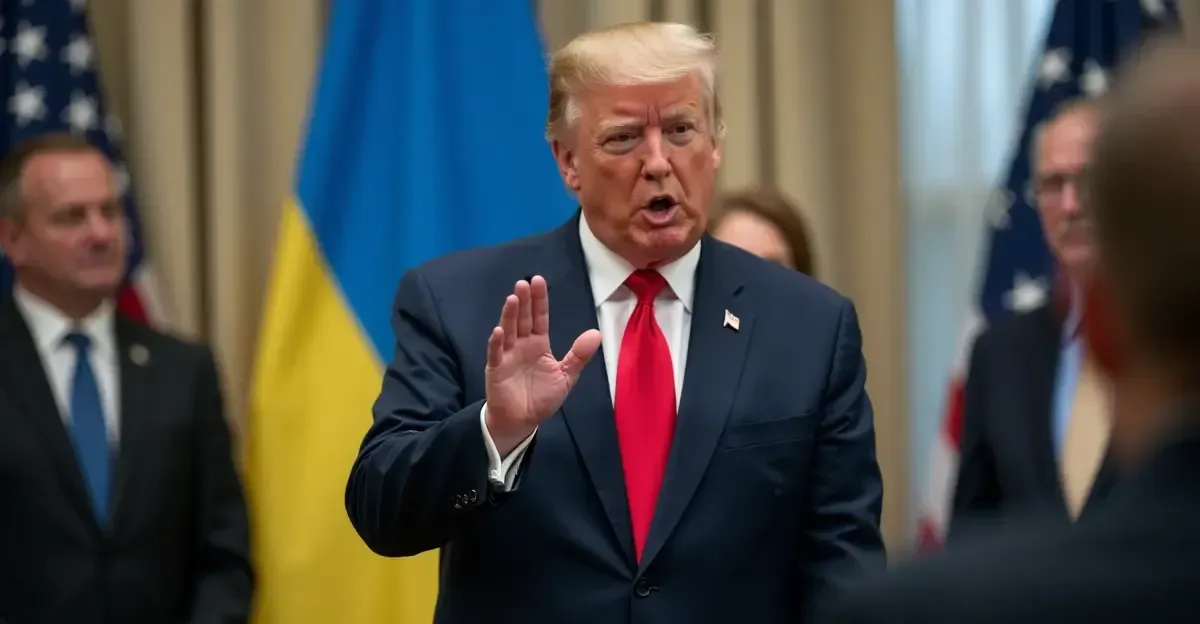
Washington answered with two rapid initiatives in early February 2026. On February 2, President Donald Trump announced Project Vault, a $10 billion EXIM-backed U.S. Strategic Critical Minerals Reserve involving Boeing and GE Vernova. Two days later, Secretary of State Marco Rubio launched FORGE, the Forum on Resource Geostrategic Engagement, a 54-nation coalition plus the European Commission that replaces the Minerals Security Partnership. FORGE has signed 21 bilateral deals, mobilized over $30 billion in government support, and proposed coordinated price floors enforced by tariffs on non-members. US critical minerals strategy now hinges on speed and allied coordination.
The EU is moving in parallel. The EU Critical Raw Materials Act selected 60 strategic projects in 2025 and opened a second round in January 2026, drawing over 160 applications. Yet financing remains the weak link: 23 of the 60 designated projects have warned of liquidity or market-access problems, and the Commission has mobilized only €1.7 billion through existing instruments—no direct payments—leaving final investment decisions stalled. Analysts say the bloc's 10% extraction, 40% processing, and 25% recycling targets for 2030 remain aspirational without a dedicated funding mechanism.
Gulf Capital and Resource Nationalism
Gulf states are deploying more than $100 billion into mineral assets, treating mining as Saudi Arabia's third pillar under Vision 2030. The UAE's ADQ anchors the $5 billion Orion Critical Mineral Consortium, while Saudi Maaden partners with MP Materials and the Pentagon on a rare earth refinery. Yet the Gulf is hedging rather than decoupling: China remains its largest trading partner. Rather than decouple from China, the Gulf pursues hedging and diversification, argues Ahmed Aboudouh of ORF Middle East.
Resource-rich nations are pressing their advantage. Indonesia, Chile, and the Democratic Republic of Congo are using resource nationalism to demand domestic processing. The DRC's cobalt export quotas have created a new supply gap and pushed cobalt prices up roughly 130% in 2025, according to the IEA. These moves complicate Western diversification, adding new dependencies on Argentina for lithium and Morocco for cobalt.
The 12-to-18-Month Window and Lithium Demand
Analysts warn that Western nations have a narrow 12-to-18-month window to diversify before dependencies become structurally entrenched. The timeline is tight because full independence could take five to seven years, according to the State Department's own estimates. Meanwhile, UNCTAD projects lithium demand to rise 353% by 2040, and the IEA sees copper and lithium deficits persisting to 2035. Lithium demand forecast data makes delay costly; each year of inaction locks in longer contracts, port infrastructure, and processing capacity.
FAQ: Critical Minerals Geopolitics in 2026
Why are critical minerals a top geopolitical risk?
The WEF's 2026 Global Risks Report ranks geoeconomic confrontation as the top short-term risk, and critical minerals sit at its center because refining is highly concentrated in China.
What is Project Vault?
Project Vault is a $10 billion EXIM-backed U.S. strategic reserve for critical minerals, announced on February 2, 2026, with Boeing and GE Vernova among participants.
How many nations joined FORGE?
FORGE includes 54 countries plus the European Commission, succeeding the Minerals Security Partnership and mobilizing over $30 billion in support.
What is the EU's financing gap?
The EU selected 60 strategic projects but has no dedicated funding mechanism; 23 projects report liquidity problems, with only €1.7 billion mobilized through existing instruments.
How fast is lithium demand growing?
UNCTAD projects lithium demand will rise 353% by 2040, making supply diversification urgent for batteries, defense, and clean energy.
Conclusion: A Chessboard Without a Referee
The critical minerals chessboard in 2026 has no neutral referee. China's processing dominance, U.S. coalition-building, EU regulatory ambition, Gulf capital, and producer-country nationalism are all moving simultaneously. The next 12 to 18 months will determine whether Western economies build a genuinely diversified supply chain or simply replace one dependency with another.

Follow Discussion