


 Deutsch
 English
 Español
 Français
 Nederlands
 Português


 Share
Share




The global critical minerals market is witnessing one of the most pronounced divergences in modern commodity history. While copper prices have surged past $13,000 per metric ton amid a deepening structural deficit, lithium remains mired below $10,000 per metric ton, crushed by persistent oversupply and tepid electric vehicle (EV) demand growth. This asymmetric supply crunch, confirmed by S&P Global's January 2026 study, is reshaping investment flows, mining strategies, and geopolitical leverage — with copper emerging as a strategic resource on par with oil, while lithium producers face consolidation and project cancellations.
The Copper Deficit: A Structural Crisis
Copper is entering what analysts describe as a structural deficit that could reach 10 million metric tons by 2040. According to S&P Global's January 8, 2026 report, global copper demand is projected to surge 50% to 42 million metric tons by 2040, driven by four key pillars: core economic growth, electrification, AI-powered data centers, and high-tech defense spending. The study warns that this shortfall represents a 'systemic risk to global industries, technological advancement, and economic growth.'
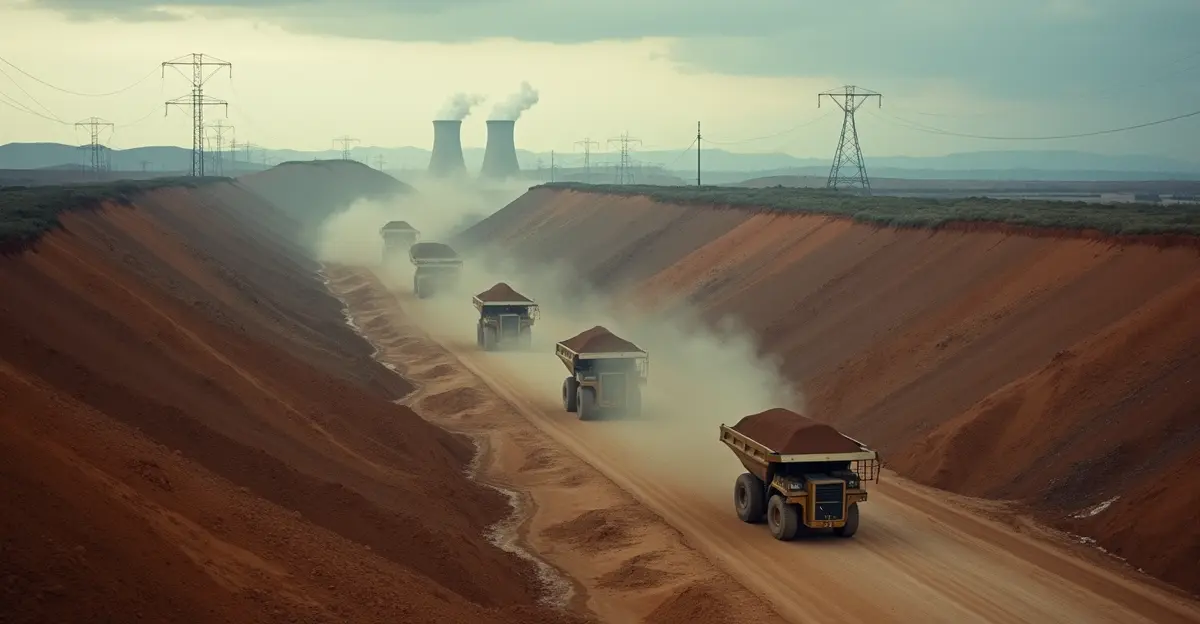
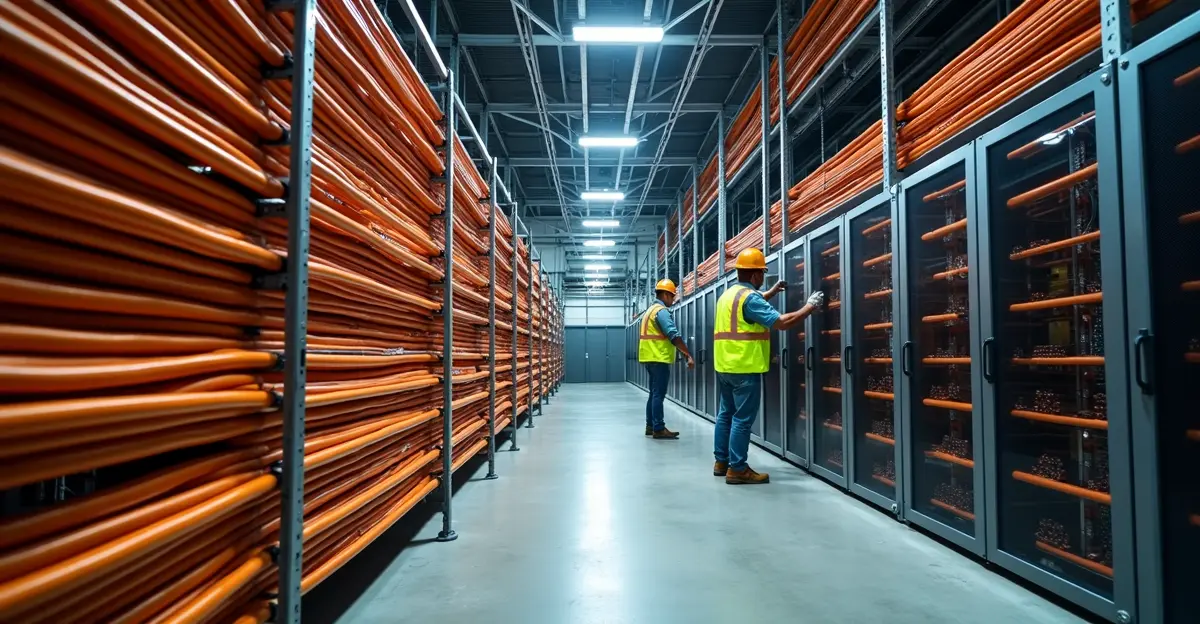
AI data centers alone are emerging as a wildcard demand driver. Global data center electricity consumption is projected to double to 945 TWh by 2030, with US demand growing 133% to 426 TWh. Each data center requires vast amounts of copper for electrical wiring, cooling systems, and grid connections. The AI infrastructure buildout is colliding with chronic underinvestment in new mines, which take an average of 17 years to bring online.
Supply Constraints and Price Surge
Copper prices have already jumped from around $8,000 per ton in early 2025 to over $13,000 per ton in early 2026, according to Citigroup forecasts. The rally is fueled by supply disruptions including a seismic incident at Kamoa-Kakula in the DRC, a landslide at Indonesia's Grasberg mine, and operational issues at Chile's Quebrada Blanca. In August 2025, the US imposed 50% tariffs on copper imports under Section 232, citing national security concerns — a move that has triggered an arbitrage trade draining supply from global hubs into US warehouses.
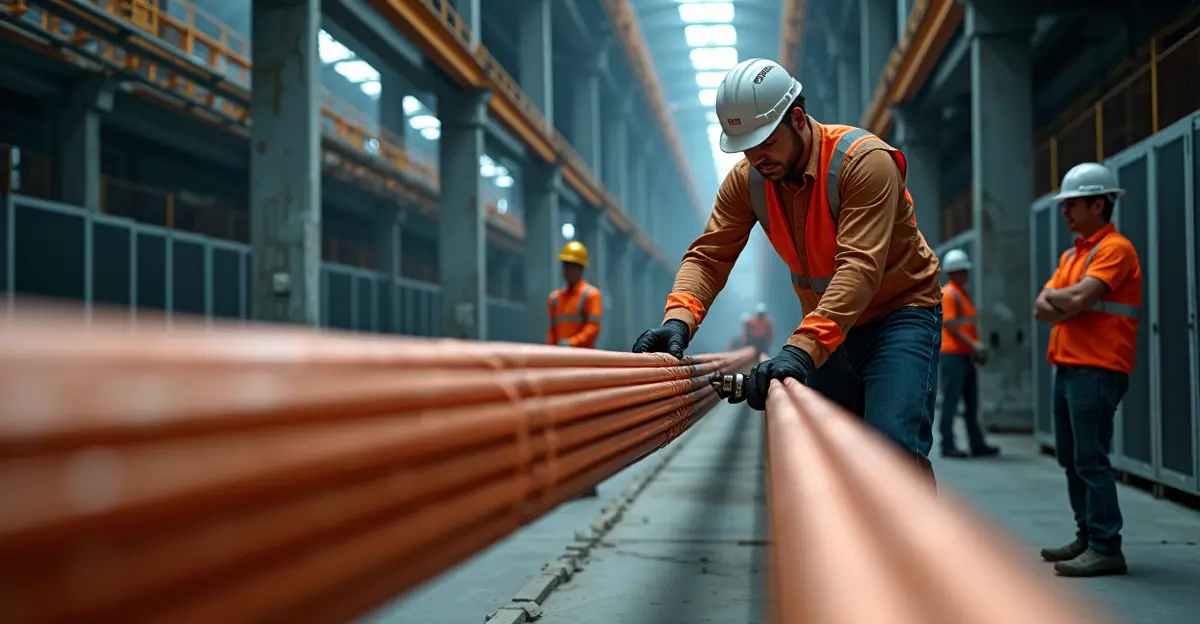
Global copper production is expected to peak at 33 million metric tons in 2030, after which output will decline without major new discoveries. China controls 40% of global smelting capacity, creating additional supply chain vulnerabilities. The copper supply chain concentration risk has prompted Western governments to accelerate domestic mining projects and recycling initiatives.
Lithium Glut: From Boom to Bust
In stark contrast, lithium markets are reeling from a historic price crash. After peaking above $80,000 per metric ton in late 2022, lithium carbonate prices collapsed to below $10,000 per metric ton by 2025 and remain depressed in early 2026. A surplus of approximately 141,000 metric tons of lithium carbonate equivalent (LCE) in 2025 is forecast to narrow only modestly to ~109,000 metric tons in 2026, according to industry data.
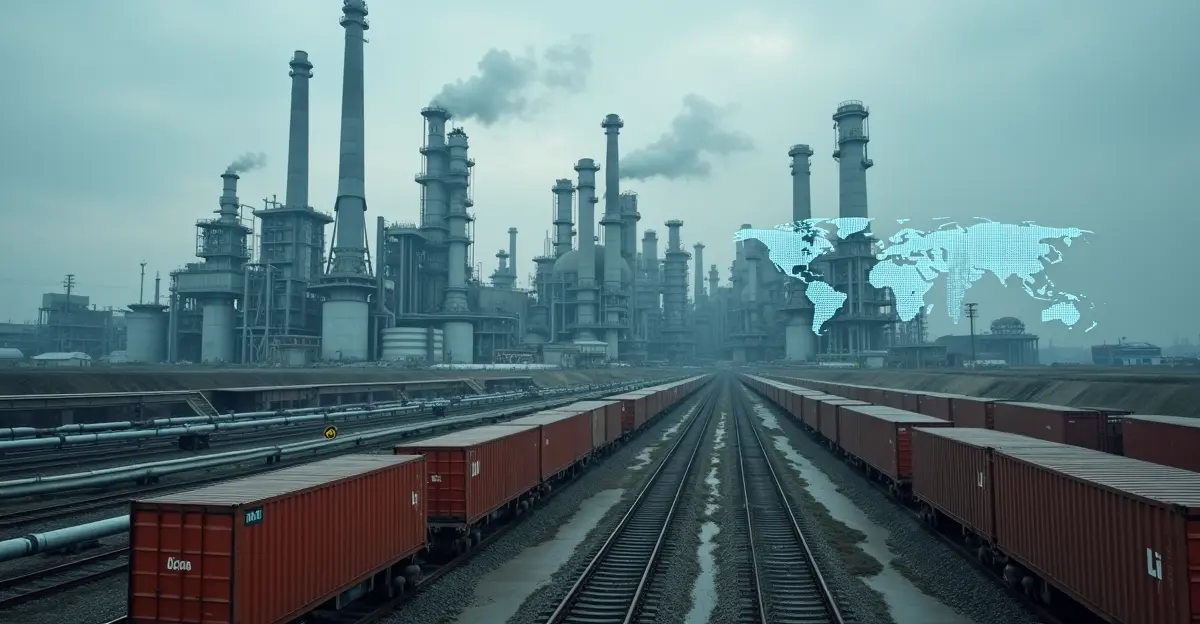
The oversupply stems from aggressive Australian spodumene expansion and Chinese converter overcapacity. China dominates roughly 60% of global lithium refining capacity, with capacity potentially exceeding 2 million metric tons LCE annually. Global inventories sit at approximately 350,000 metric tons LCE, creating a hidden buffer that continues to suppress prices.
Consolidation and Project Cancellations
The price crash is forcing painful adjustments. Albemarle Corporation, the world's largest lithium producer, announced in February 2026 that it would idle remaining operations at its Kemerton lithium hydroxide plant in Western Australia, removing 48,000 tonnes of LCE capacity from the market. The decision, driven by a structural cost gap of $4-5/kg compared to Chinese operations, results in approximately 250 job losses. More than half of battery metal supply agreements between Western automakers and miners have been delayed, renegotiated, or canceled, according to Benchmark Mineral Intelligence data analyzed by the Financial Times.
Three producer archetypes have emerged: low-cost brine producers in South America (cash costs $5,000-8,000/mt) remain resilient; mid-tier hard-rock miners are struggling; and marginal assets above $12,000-15,000/mt face the highest risk of curtailment. The lithium market consolidation trend is expected to accelerate through 2026, with smaller Australian, Canadian, and early-stage Direct Lithium Extraction (DLE) projects most vulnerable.
Investment Flows and Mining Strategies Diverge
The copper-lithium divergence is reshaping capital allocation. Global investment in critical minerals is expected to surpass $500 billion by 2030, but the distribution is increasingly lopsided. Copper projects are attracting premium valuations and government co-financing, while lithium developers struggle to secure funding. Major mining companies are rotating portfolios toward copper, with BHP, Rio Tinto, and Freeport-McMoRan expanding copper exposure through acquisitions and brownfield expansions.
In the lithium sector, only the lowest-cost producers with strategic partnerships are surviving. Albemarle generated $692 million in free cash flow in 2025 despite market headwinds, but smaller players face existential threats. The critical minerals investment landscape is bifurcating between haves and have-nots.
Geopolitical Implications: Copper as the New Oil
Copper is increasingly viewed as a strategic resource on par with oil. The 2026 Critical Minerals Ministerial concluded with 11 new bilateral agreements, representing the most significant restructuring of global mineral supply chains in decades. The US launched the Forum on Resource Geostrategic Engagement (FORGE) in February 2026 as the successor to the Minerals Security Partnership, aiming to strengthen diversified and secure critical minerals supply chains.
Countries possessing copper reserves now hold elevated geopolitical leverage. The Democratic Republic of Congo, Chile, Peru, and Zambia are seeing renewed strategic interest from both Western and Chinese investors. Meanwhile, lithium-rich nations like Australia, Chile, and Argentina face a more complex landscape as low prices reduce the urgency of securing supply.
The geopolitics of critical minerals is entering a new phase where copper scarcity commands attention, while lithium abundance creates opportunities for downstream processing nations.
Expert Perspectives
'Copper is the new oil — it's the backbone of electrification, digitalization, and national defense,' said a senior analyst at S&P Global in the January 2026 report. 'The widening supply gap represents a systemic risk that requires urgent multilateral cooperation.'
On the lithium side, Albemarle's management remains bullish on long-term demand, projecting 15-40% growth in 2026 driven by stationary energy storage expansion. However, as one industry executive noted, 'The market is transitioning from oversupply to deficit, but the timing depends on how quickly demand absorbs the surplus.'
FAQ
Why is copper in deficit while lithium is in surplus?
Copper faces structural supply constraints due to long mine development timelines (17 years average), declining ore grades, and surging demand from AI data centers, defense, and electrification. Lithium, meanwhile, experienced aggressive capacity expansion during the 2022 price boom, creating a supply glut that has yet to be absorbed despite growing EV and energy storage demand.
What is the copper price forecast for 2026?
Citigroup forecasts copper prices above $13,000 per metric ton by Q2 2026, driven by supply disruptions, US tariffs, and structural demand growth. Some analysts see prices potentially reaching $15,000 per ton if supply constraints worsen.
Will lithium prices recover in 2026?
Most analysts expect lithium prices to remain below $10,000-12,000 per metric ton through 2026, with a potential recovery to $12,000-16,000 per ton only if demand accelerates significantly. A swing to deficit is possible by late 2026 if energy storage installations continue to double annually.
How are governments responding to the copper shortage?
The US imposed 50% tariffs on copper imports in August 2025 and launched FORGE to secure supply chains. The EU's Critical Raw Materials Act and similar initiatives in Australia and Canada are accelerating domestic mining projects, permitting reforms, and recycling investments.
Which lithium producers are most at risk?
High-cost hard-rock miners with cash costs above $12,000-15,000 per metric ton are most vulnerable, particularly smaller Australian and Canadian producers. Early-stage DLE projects also face financing challenges. Low-cost brine producers in South America and integrated Chinese groups like Ganfeng and Tianqi are better positioned.
Conclusion: A Tale of Two Minerals
The great critical minerals divergence of 2026 underscores a fundamental asymmetry in the energy transition. Copper scarcity is becoming a bottleneck for AI, electrification, and defense, while lithium abundance offers a window for cost reduction in battery storage. Policymakers must navigate this complex landscape with targeted investments, trade policies, and international cooperation. As S&P Global's study makes clear, the copper supply gap is not just a market issue — it is a strategic vulnerability that demands immediate attention.


Follow Discussion