


 Deutsch
 English
 Español
 Français
 Nederlands
 Português


 Share
Share




The AI-Copper Nexus: How Artificial Intelligence Infrastructure is Reshaping Global Commodity Markets
Copper prices have surged toward $12,000 per metric ton in 2025-2026 as artificial intelligence infrastructure creates unprecedented demand for the industrial metal, transforming it into a strategic commodity essential for the digital age. According to S&P Global research, AI data centers are driving 12-16% annual power demand growth through 2030, fundamentally reshaping energy and commodity markets while exposing critical supply vulnerabilities in the global copper supply chain.
What is the AI-Copper Nexus?
The AI-copper nexus refers to the critical relationship between artificial intelligence infrastructure development and copper demand. Copper's superior electrical conductivity makes it indispensable for powering AI data centers, electrical systems, and cooling infrastructure. As AI technologies expand rapidly, this relationship has become a defining feature of global commodity markets, with copper demand projected to rise 50% to 42 million metric tons by 2040 according to S&P Global analysis.
The Supply-Demand Dynamics: A Perfect Storm
The global copper market faces a structural mismatch between constrained supply and explosive AI-driven demand. Data centers alone are projected to consume approximately half a million tons of copper annually by 2030, according to Forbes analysis. This represents a significant portion of global production and creates unprecedented pressure on supply chains.
Key Demand Drivers
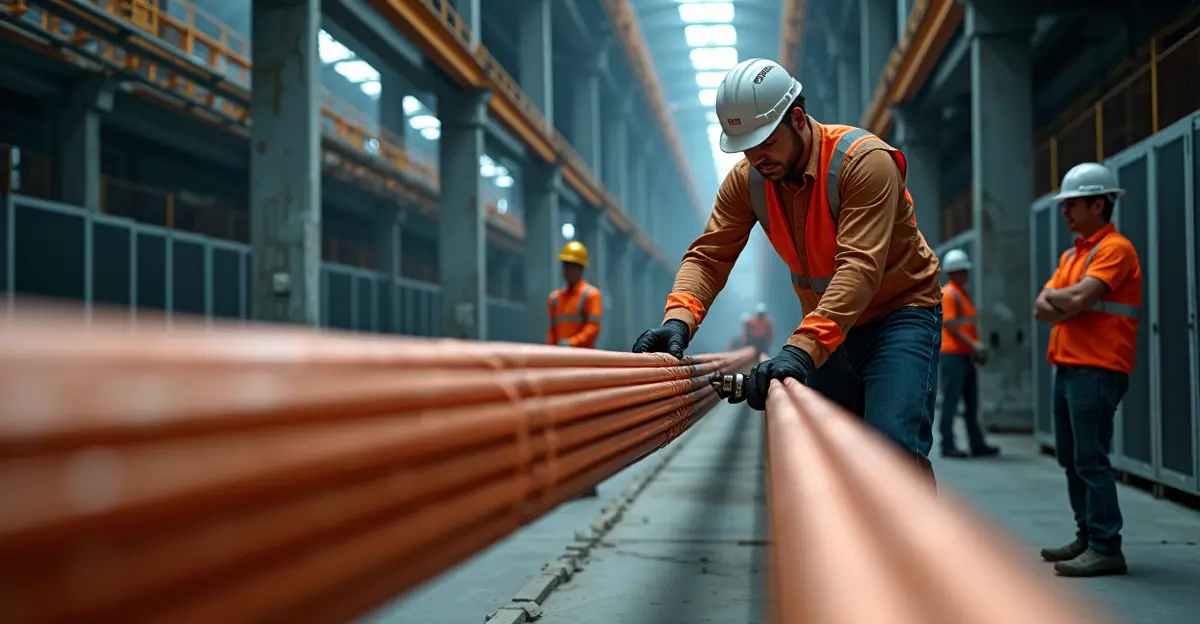
- AI Data Centers: Each data center requires extensive copper cabling for power distribution, with AI facilities needing 2-3 times more copper than traditional data centers
- Power Infrastructure: AI's massive energy requirements (12-16% annual growth 2025-30) necessitate expanded electrical grids and transformers
- Cooling Systems: Advanced cooling infrastructure for AI servers requires substantial copper components
- Renewable Energy Integration: The global energy transition requires copper for solar panels, wind turbines, and energy storage
Supply Constraints
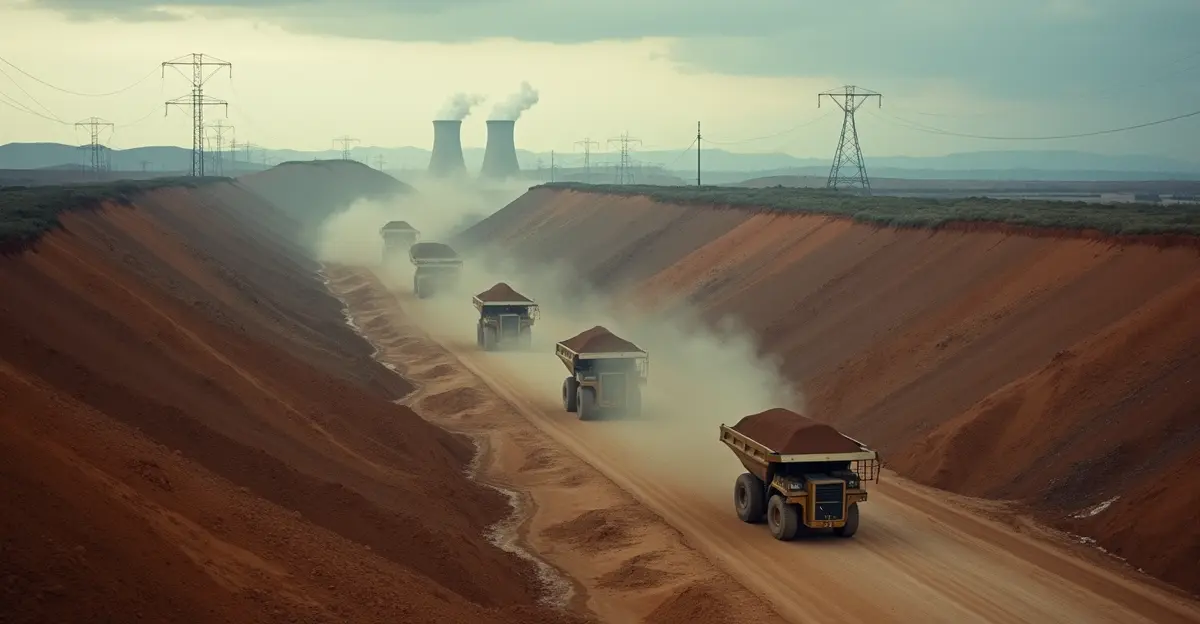
Copper supply faces multiple challenges, including a 17-year average timeline to develop new mines and concentration of production in just six countries. The UNCTAD Global Trade Update (May 2025) emphasizes that over half of global copper reserves are concentrated in just five countries, creating significant supply chain vulnerabilities.
Geopolitical Implications of Copper Supply Concentration
The strategic competition for critical minerals has intensified as nations recognize copper's importance for both economic and national security. China currently controls approximately 40% of global smelting capacity, creating dependencies that have prompted Western nations to reconsider their supply chain strategies.
The International Institute for Strategic Studies (IISS) analysis of new constraints in the global copper market highlights how geopolitical tensions are shaping resource competition. This has led to increased focus on securing critical mineral supply chains through strategic partnerships and domestic investment.
The 'Copper Crunch' and Economic Implications
Morgan Stanley forecasts a significant supply deficit of 590,000 tons in 2026, with S&P Global warning of a potential 10 million ton shortfall by 2040. This 'copper crunch' represents what Fortune describes as a 'systemic risk' to the global economy, affecting everything from consumer electronics to national defense systems.
Price Impact and Market Response
Copper prices have surged from approximately $8,000 to over $13,000 per metric ton in recent years, driven by tariffs, mining disruptions, and AI-driven demand. This price volatility has forced industries to reconsider their material strategies and investment timelines.
Strategic Responses and Future Outlook
Nations and corporations are implementing multiple strategies to address the copper supply challenge:
- Investment in New Mining Operations: The UNCTAD report estimates $250 billion investment needed by 2030 to develop approximately 80 new mines
- Enhanced Recycling Infrastructure: Recycling currently accounts for 20% of copper output and offers potential to bridge some supply gaps
- Supply Chain Diversification: Countries are seeking to reduce dependence on concentrated production regions
- Technological Innovation: Research into alternative materials and more efficient copper usage
The global industrial policy landscape is evolving rapidly as nations recognize copper's strategic importance. According to Reuters analysis, the combination of tight supply constraints and surging AI demand has created a perfect storm in copper markets that will likely persist through the decade.
Expert Perspectives on the Copper-AI Relationship
'We're witnessing a fundamental transformation of copper from an industrial commodity to a strategic asset,' notes Lucas Schneider, author of this analysis. 'The AI revolution is creating demand pressures that traditional supply mechanisms cannot quickly address, forcing a reevaluation of global resource management strategies.'
The HSF Kramer 2026 Global M&A Report highlights how geopolitical tensions and evolving regulations are shaping the mining industry, particularly around strategic minerals essential for clean energy technologies and national security. This reflects broader recognition that copper has become central to both economic competitiveness and technological sovereignty.
Frequently Asked Questions
Why does AI require so much copper?
AI infrastructure requires extensive electrical systems, cooling infrastructure, and power distribution networks, all of which rely on copper's superior conductivity. Data centers supporting AI operations need 2-3 times more copper than traditional facilities due to higher power requirements and advanced cooling needs.
How much will copper demand increase by 2040?
According to S&P Global projections, copper demand is expected to increase by 50% to approximately 42 million metric tons by 2040, up from roughly 28 million tons today. This growth is driven primarily by AI infrastructure, renewable energy, and electrification trends.
What countries control most copper production?
Over half of global copper reserves are concentrated in just five countries, with production dominated by Chile, Peru, China, the Democratic Republic of Congo, and the United States. China controls approximately 40% of global smelting capacity, creating significant supply chain dependencies.
Can recycling solve the copper shortage?
While recycling currently accounts for 20% of copper output and offers important supply contributions, it cannot fully bridge the projected 10 million ton supply gap by 2040. Enhanced recycling infrastructure combined with new mining investment is needed to address the structural shortage.
What are the alternatives to copper for AI infrastructure?
Aluminum has been largely abandoned for data center use due to performance issues with conductivity and heat management. While research continues into alternative materials, copper remains irreplaceable for high-performance electrical applications in AI infrastructure.
Conclusion: A New Era for Commodity Markets
The AI-copper nexus represents a fundamental shift in global commodity markets, transforming copper from a cyclical industrial metal into a strategic asset essential for technological advancement and economic competitiveness. As nations grapple with supply chain vulnerabilities and strategic dependencies, the future of energy security will increasingly depend on securing reliable copper supplies. The coming decade will test whether global supply mechanisms can adapt quickly enough to meet the unprecedented demands of the AI revolution, with significant implications for economic growth, technological development, and geopolitical stability.



Follow Discussion