


 Deutsch
 English
 Español
 Français
 Nederlands
 Português


 Share
Share




The global economy is facing an unprecedented resource constraint as surging demand from artificial intelligence data centers collides with structurally constrained copper supply. S&P Global warns that the copper deficit could reach 10 million metric tons by 2040, with AI-related copper demand surging nearly 60% while mine supply growth slows to just 1.4% in 2026. With copper prices surpassing $13,000 per metric ton in early 2026 and the U.S. launching its $10 billion Project Vault strategic minerals reserve in February 2026, the copper supply crisis has moved from analyst warnings to active government policy intervention.
The Scale of the Copper Deficit
According to a January 2026 S&P Global study, copper demand is projected to reach 42 million metric tons by 2040—a 50% increase from current levels—while supply is expected to peak at just 33 million tons in 2030. This creates a structural shortfall of 10 million metric tons, or roughly 25% below projected demand. The global copper supply chain is being stretched to its limits.
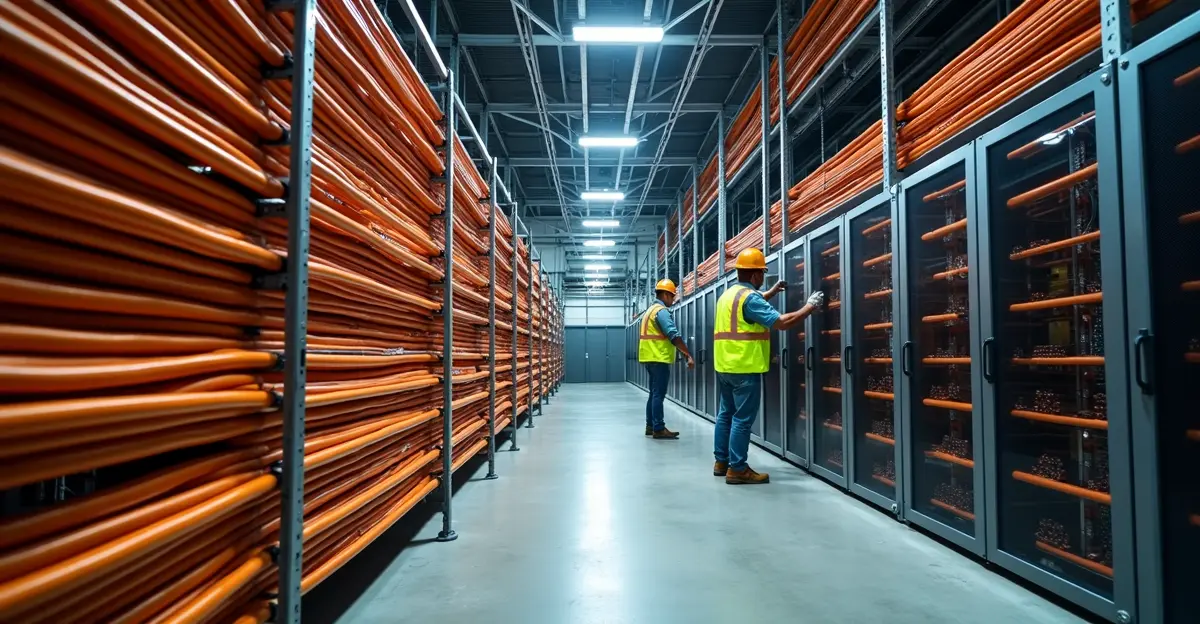
Four key demand drivers are converging: core economic growth, the energy transition (electric vehicles and renewables), AI-powered data centers, and rising defense spending. AI training data centers alone are forecast to consume 2.5 million metric tons of copper annually by 2040, up from 1.1 million tons in 2025. A single 100 MW AI data center can absorb several thousand tonnes of copper, with large campuses using 27–33 tonnes per megawatt of installed capacity.
Why Supply Cannot Keep Up
Mine Development Timelines
New copper mines now take an average of 17.9 years from discovery to production globally, according to S&P Global. In the United States, the timeline stretches to nearly 29 years. Of 239 major copper discoveries analyzed, 148 remain undeveloped and only 15 have reached construction. This copper mine development bottleneck means that even if prices remain elevated, new supply cannot arrive quickly enough to meet demand.
Declining Ore Grades
Legacy mines report ore grades down approximately 40% since 1991. Major producers face significant constraints: Codelco's production stagnated at 1.332 million tons, Indonesia's Grasberg mine lost roughly 500,000 tons from a mudslide, and Peru saw a 12% production decline. The International Energy Agency projects that existing and planned mines will meet only about 70% of 2035 copper demand.
Geopolitical Exposure: China's Smelting Dominance
China controls roughly 40% of global copper smelting capacity, and according to some estimates, over 50% of global refining. In March 2026, Chinese smelters reached a record active capacity of 10.73 million tonnes with a 96.1% utilization rate—far exceeding the global average of 88.3%. This concentration creates acute geopolitical risk. Any disruption to Chinese smelting operations—whether from policy shifts, energy shortages, or trade tensions—would ripple through global supply chains instantly.
China's top smelters have already agreed to cut production by more than 10% in 2026 to address industry overcapacity, with roughly 2 million tonnes of planned capacity suspended. Meanwhile, spot treatment charges have fallen to approximately -$78.50 per tonne, indicating severe concentrate shortages. The China copper smelting capacity dynamic is a critical factor in global supply security.
Policy Response: Project Vault and Strategic Reserves
In February 2026, the Trump administration announced Project Vault—formally the U.S. Strategic Critical Minerals Reserve—a $12 billion public-private partnership backed by a $10 billion EXIM loan and nearly $2 billion in private investment. The initiative will store essential raw materials in secure facilities across the U.S. to protect American manufacturers from supply shocks. Industry leaders from GE Vernova, Mercuria, Traxys, Hartree, Clarios, and Boeing have expressed strong support.
This marks a significant shift: copper has moved from a cyclical commodity to a strategic national security asset. The US strategic minerals reserve policy signals that Washington views copper supply as a matter of economic competitiveness and defense readiness.
Systemic Implications for the Global Economy
The copper bottleneck threatens to derail multiple technology roadmaps simultaneously. AI infrastructure buildout, electric vehicle adoption, renewable energy deployment, and defense modernization all depend on affordable copper. S&P Global warns that without massive investment in new mines and expanded recycling, copper will shift from being an enabler of progress to a bottleneck for global innovation.
Copper prices have already climbed from roughly $8,500 per tonne two years ago to over $13,000 in early 2026—a 50% increase. J.P. Morgan expects elevated prices through 2026 as mine disruptions coincide with rising demand. The ICSG projects a 150,000-ton deficit for 2026, while J.P. Morgan estimates 330,000 tons. With demand outpacing supply and institutional rotation into base metals, analysts at The Oregon Group suggest $15,000 per tonne is increasingly plausible.
Expert Perspectives
The convergence of AI infrastructure demand, electrification, and constrained mining supply is transforming copper from a cyclical commodity into a strategic bottleneck with systemic implications, said Evelyn Nakamura, a commodities analyst covering critical minerals. We are witnessing the first true resource constraint of the AI era, and its effects will be felt across technology investment roadmaps and national security planning for decades.
Wood Mackenzie forecasts a 304,000-tonne refined-copper deficit in 2025 and an even wider gap in 2026. Transformer lead times have reached 128 weeks, illustrating how copper shortages cascade through industrial supply chains.
FAQ
What is causing the copper shortage?
The copper shortage is driven by surging demand from AI data centers, electric vehicles, renewable energy, and defense spending, combined with constrained mine supply due to long development timelines (17+ years), declining ore grades, and geopolitical concentration of smelting capacity in China.
How much copper do AI data centers consume?
AI data centers use 27–33 tonnes of copper per megawatt of installed capacity. A single 100 MW site can absorb several thousand tonnes. Total data center copper demand is forecast to rise from 1.1 million metric tons in 2025 to 2.5 million tons by 2040.
What is Project Vault?
Project Vault is a $12 billion U.S. Strategic Critical Minerals Reserve announced in February 2026, backed by a $10 billion EXIM loan and private investment, designed to stockpile essential raw materials including copper to protect American manufacturers from supply shocks.
How long does it take to open a new copper mine?
New copper mines take an average of 17.9 years from discovery to production globally, and up to 29 years in the United States, due to lengthy permitting processes, regulatory hurdles, and community engagement requirements.
What is China's role in copper supply?
China controls roughly 40–50% of global copper smelting and refining capacity. In March 2026, Chinese smelters operated at a record 96.1% utilization rate, making any disruption to Chinese operations a major global supply risk.
Conclusion
The copper bottleneck represents one of the most significant structural challenges to the global economy in the AI era. With demand accelerating faster than supply can respond, and geopolitical risks concentrated in China's smelting dominance, the transition of copper from a cyclical commodity to a strategic asset is now complete. The coming decade will test whether governments, miners, and technology companies can cooperate to avert a resource crisis that could slow innovation and economic growth worldwide.




Follow Discussion