


 Deutsch
 English
 Español
 Français
 Nederlands
 Português


 Share
Share




The Copper Conundrum: How AI's Energy Demand is Reshaping Global Supply Chains and Geopolitics
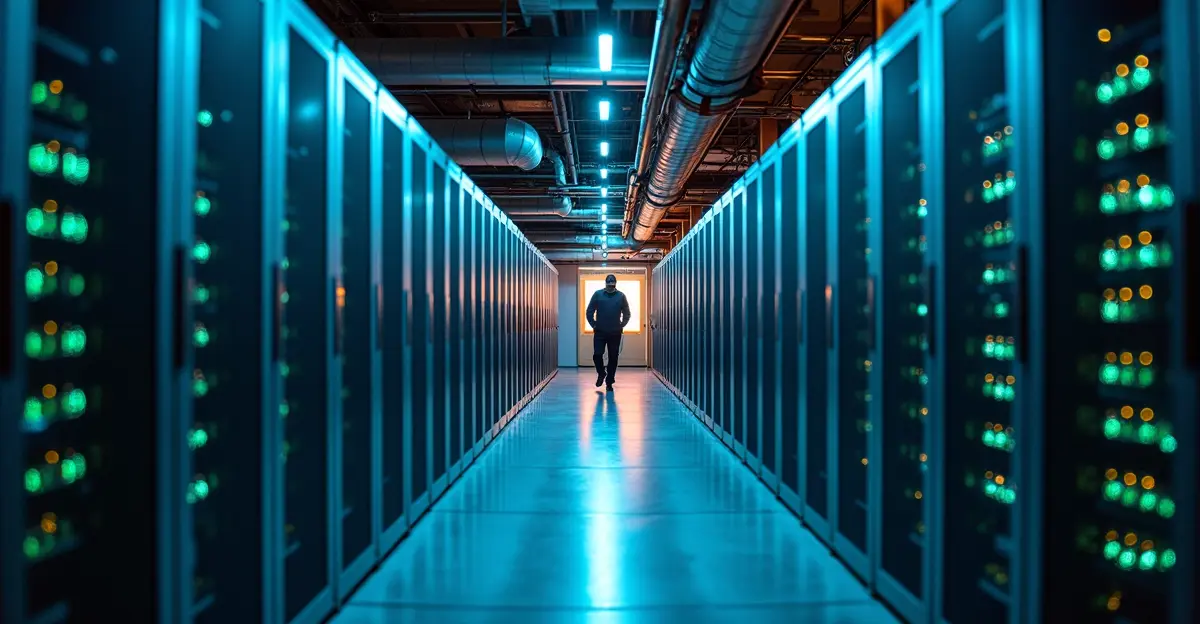
The explosive growth of artificial intelligence data centers is creating unprecedented demand for copper, fundamentally altering global supply chains and creating new geopolitical tensions. Recent S&P Global research reveals that data center power demand could grow 12%-16% annually through 2030, while global copper demand is projected to rise 50% to 42 million metric tons by 2040, creating immediate supply chain pressures that are already affecting strategic infrastructure projects worldwide. This convergence of digital transformation and energy transition has transformed copper from a cyclical commodity into a structural constraint affecting multiple strategic sectors simultaneously.
What is the Copper Conundrum?
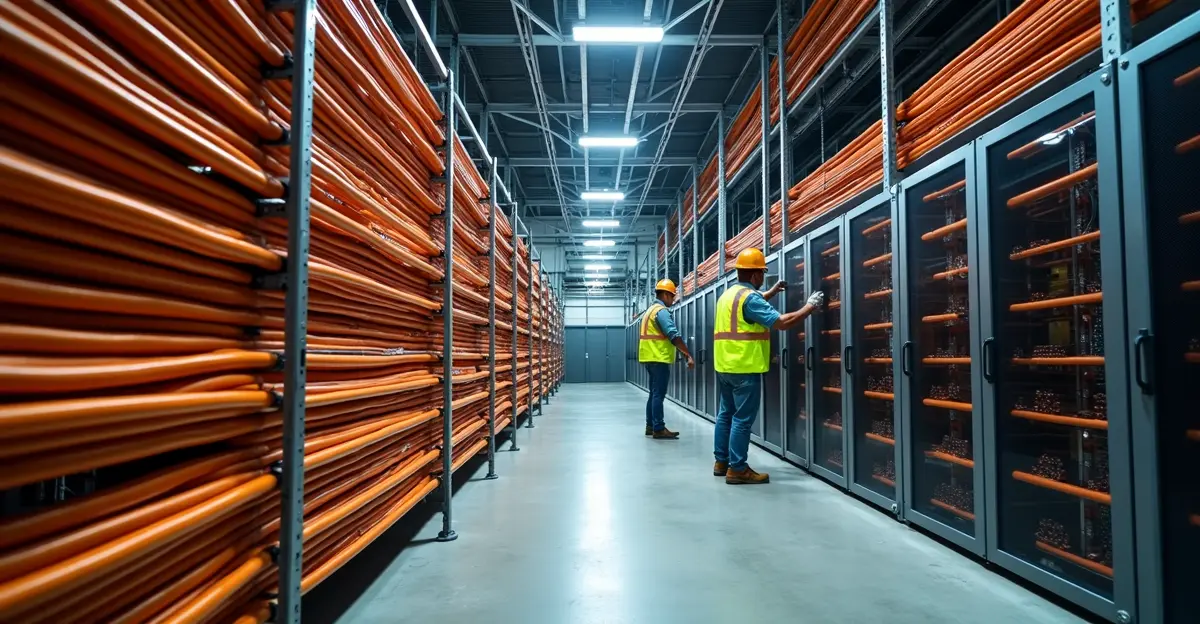
The copper conundrum refers to the simultaneous surge in demand from three critical sectors: AI data centers, renewable energy infrastructure, and electric vehicles, all competing for limited copper supplies. According to Wood Mackenzie, there will be a 304,000-tonne refined-copper deficit in 2025, widening further in 2026. AI data centers require substantial copper - approximately 27-33 tonnes per megawatt of installed capacity, meaning a single 100-megawatt site can absorb several thousand tonnes. This demand surge coincides with legacy mines reporting 40% lower ore grades since 1991 and major new projects facing delays due to permitting battles, community opposition, and environmental challenges.
AI Infrastructure vs. Traditional Energy Transition Needs
The specific copper requirements of AI infrastructure differ significantly from traditional energy transition needs. While both sectors require massive amounts of copper, AI data centers demand high-purity copper for electrical wiring, cooling systems, and power distribution with exacting specifications. A single 1 GW wind turbine requires 2,866 tons of copper, translating to processing nearly 500,000 tons of ore, but AI facilities need continuous, reliable power infrastructure that often requires more complex copper applications. The renewable energy transition and AI expansion are now competing for the same limited copper resources, creating unprecedented market pressures.
Key Copper Demand Drivers
- AI Data Centers: 27-33 tonnes per megawatt capacity
- Electric Vehicles: 2-4 times more copper than traditional vehicles
- Renewable Energy: Wind turbines require 2,866 tons per GW
- Grid Infrastructure: Transformer and transmission line upgrades
China's Strategic Dominance in Copper Refining
China has established strategic dominance over the global copper refining supply chain, controlling over 50% of global refined copper production capacity. This concentration results from decades of deliberate industrial policy, state-backed investment, and structural advantages including subsidized energy costs and economies of scale. China processes over 12 million tonnes annually, with four of the world's five largest copper smelting facilities located within its borders. The country imports approximately 70% of its copper concentrate needs, transforming raw materials from global mines into refined products for export. This creates significant supply chain vulnerabilities, as Western nations like the United States import over 40% of their refined copper despite domestic mining operations. The concentration mirrors patterns seen in rare earth processing, where China also controls over 85% of global capacity, highlighting strategic dependencies that affect global availability, pricing, and security for critical minerals essential to defense and renewable energy infrastructure.
The Transformer Crisis: 24-48 Month Lead Times
The 'transformer crisis' represents a critical bottleneck where 24-48 month lead times are delaying both renewable energy projects and data center connections. U.S. power transformer lead times have reached 128 weeks (2.5 years) in 2025, up dramatically from just a few months in 2020. This shortage is structural rather than cyclical, driven by three converging forces: aging grid infrastructure requiring replacement, renewable energy build-out demands, and the AI data center supercycle. Power transformer demand has surged 116% since 2019 while domestic supply covers only a fraction of that need, with imports accounting for an estimated 80% of U.S. supply. The shortage is delaying billion-dollar data center projects and creating significant financial ripple effects, with three major companies (GE Vernova, Eaton, and Siemens Energy) positioned as primary beneficiaries of this decade-long supply crunch.
Transformer Market Statistics
| Metric | 2020 | 2025 | Change |
|---|---|---|---|
| Lead Times | 3-6 months | 128 weeks | +800% |
| Power Transformer Demand | Base 100 | 216 | +116% |
| Prices | Base 100 | 177 | +77% |
| Import Dependency | 60% | 80% | +20% |
From Cyclical Commodity to Structural Constraint
Copper has shifted from a cyclical commodity to a structural constraint affecting multiple strategic sectors simultaneously. Copper prices have surged to over $11,000 per tonne from $8,500 two years ago, and analysts expect elevated prices through 2026 as AI-driven electrical infrastructure competes with traditional grid suppliers for limited copper supplies. The International Energy Agency projects that existing and planned mines will meet only about 70% of projected 2035 demand. This structural deficit is driving fundamental changes in how nations approach critical mineral security, with copper now classified as a strategic material alongside traditional defense-related minerals.
Strategic Responses from Western Nations
Western nations are developing strategic responses to secure critical mineral supply chains while maintaining technological competitiveness. The 2026 Critical Minerals Ministerial, hosted by U.S. Secretary of State Marco Rubio and attended by representatives from 54 countries and the European Commission, marked a major initiative to reshape the global critical minerals market. The U.S. signed 11 new bilateral critical minerals frameworks/MOUs with countries including Argentina, Cook Islands, Ecuador, Guinea, Morocco, Paraguay, Peru, Philippines, UAE, UK, and Uzbekistan, building on 10 other agreements signed in the previous five months. The U.S. government is mobilizing over $30 billion in support for critical minerals projects, including EXIM Bank's $10 billion Project Vault initiative to establish a domestic strategic reserve.
Key Western Strategies
- Diversification: Building partnerships with resource-rich nations outside China's sphere
- Investment: $30+ billion in government support for secure supply chains
- Innovation: Developing substitute materials and advanced recycling technologies
- Stockpiling: Establishing strategic reserves through initiatives like Project Vault
- Friendshoring: Coordinating with allies to create alternative supply networks
Geopolitical Implications and Future Outlook
The geopolitical implications of copper supply chain concentration are profound. China's dominance in copper refining creates significant vulnerabilities for Western nations, particularly as AI development becomes increasingly tied to national security and economic competitiveness. The Carnegie Endowment analysis notes that even under optimistic scenarios, by 2035 domestic production could only meet projected demand for zinc and molybdenum, leaving the country dependent on imports for copper, graphite, lithium, silver, nickel, and manganese. Success requires strategically coordinated domestic and international efforts, with guaranteed price contracts providing investment certainty rather than relying solely on tariffs. The global energy transition and digital transformation are now inextricably linked through copper supply chains, creating both challenges and opportunities for strategic realignment.
Frequently Asked Questions
Why is copper so important for AI data centers?
Copper is essential for AI data centers because it provides superior electrical conductivity for power distribution, cooling systems, and server connections. AI facilities require massive amounts of reliable electricity, and copper wiring ensures minimal energy loss and maximum efficiency in power delivery systems.
How much copper does an AI data center use compared to traditional facilities?
AI data centers use significantly more copper than traditional facilities - approximately 27-33 tonnes per megawatt of installed capacity compared to 10-15 tonnes for conventional data centers. This increased demand comes from higher power requirements, more extensive cooling systems, and denser electrical infrastructure.
What is the transformer crisis and how does it affect AI development?
The transformer crisis refers to the severe shortage of electrical transformers with lead times extending to 24-48 months. This bottleneck delays both data center connections and renewable energy projects, creating a $64 billion grid bottleneck that's delaying AI data center timelines by 2-6 years and threatening technological advancement.
Can aluminum substitute for copper in AI infrastructure?
While aluminum has been considered as a substitute, it has been largely abandoned for data center wiring due to performance issues including higher electrical resistance, thermal expansion problems, and connection reliability concerns. Copper remains the preferred material for critical AI infrastructure.
What are Western nations doing to secure copper supplies?
Western nations are pursuing multiple strategies including diversifying supply chains through international partnerships, investing $30+ billion in critical minerals projects, developing substitute materials, establishing strategic reserves, and coordinating with allies through initiatives like the 2026 Critical Minerals Ministerial.


Follow Discussion