


 Deutsch
 English
 Español
 Français
 Nederlands
 Português


 Share
Share




The AI-Energy Nexus: How Artificial Intelligence is Reshaping Global Energy Security and Geopolitics
The explosive growth of artificial intelligence computing demands is fundamentally altering global energy security calculations, creating new geopolitical dependencies on critical minerals, and forcing nations to reconsider their energy infrastructure strategies. Recent reports from December 2024 and January 2025 highlight how AI's unprecedented energy demands are forcing grid operators to revise long-term load forecasts and creating new geopolitical tensions around critical mineral supply chains, particularly as China dominates key mineral processing essential for AI infrastructure.
What is the AI-Energy Nexus?
The AI-energy nexus represents the complex intersection between artificial intelligence's massive electricity consumption and the global energy systems that must support it. This emerging dynamic creates a feedback loop where AI development drives energy demand, which in turn shapes energy policy, infrastructure investment, and geopolitical strategy. As AI systems become more sophisticated and widespread, their energy requirements are growing exponentially, creating what experts call a "new era of energy geopolitics" where computational power becomes a strategic national asset.
The Staggering Energy Demands of AI Infrastructure
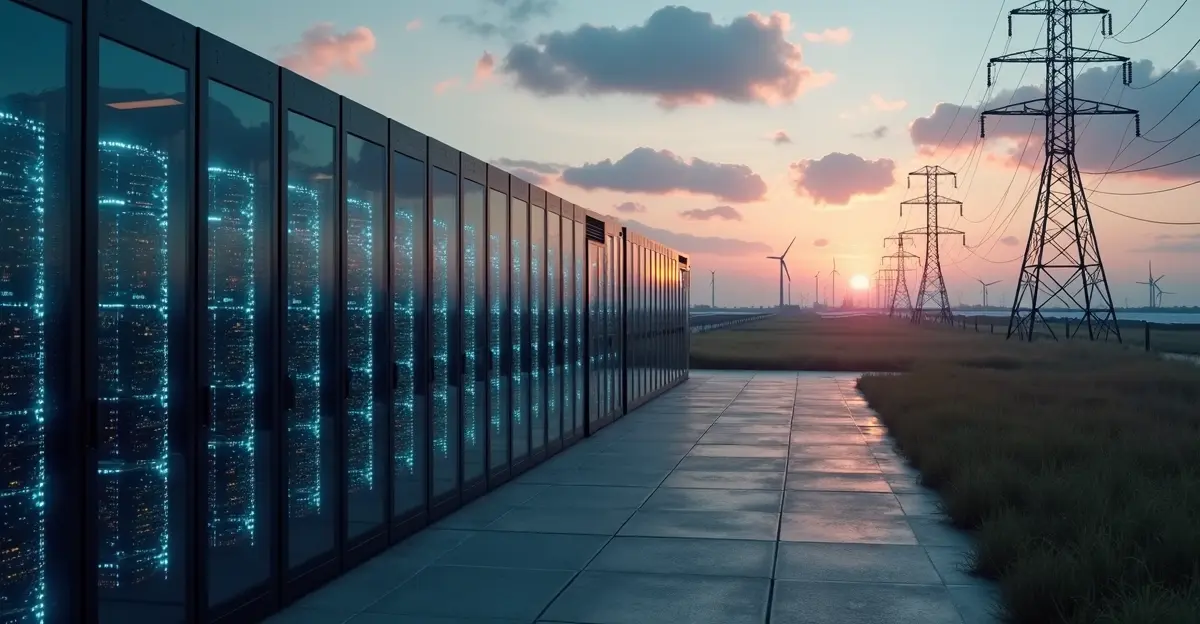
Current data reveals an alarming trend in AI's energy consumption. According to the International Energy Agency (IEA), data centers currently consume about 415 TWh of electricity annually, representing 1.5% of global electricity consumption in 2024. However, with AI accelerating deployment of high-performance servers, electricity consumption is projected to double to 945 TWh by 2030, representing nearly 3% of global electricity demand. In the United States, the situation is particularly acute, with AI data centers consuming 176 TWh annually as of March 2026, accounting for 4.4% of total US electricity consumption.
Regional Impact and Grid Strain
The concentration of AI infrastructure in specific regions is creating unprecedented strain on local power grids. Virginia, home to major data center clusters, now sees these facilities consuming 20% of the state's electricity. This rapid growth has caused electricity prices to spike 42% since 2019, with projections showing data centers could account for 9-17% of US electricity consumption by 2030. The US energy grid infrastructure faces severe challenges, with power shortages projected to become a major bottleneck by 2027-2028.
Critical Mineral Supply Chain Vulnerabilities
Beyond electricity consumption, AI infrastructure depends heavily on critical minerals that face significant supply chain vulnerabilities. China dominates global production of key minerals, controlling 98% of primary gallium production and 60% of germanium refining. These strategic metals are essential for semiconductor manufacturing, defense systems, and telecommunications infrastructure supporting AI development.
Geopolitical Risks and Economic Impact
The concentration of mineral processing in China creates major geopolitical risks. A 30% disruption in gallium supplies could cause a $600 billion reduction in U.S. economic output, according to FP Analytics. China's export controls on gallium and germanium, implemented in 2023, represent strategic leverage in the global technology competition. The U.S. produces no gallium and less than 2% of germanium, creating dangerous dependencies that mirror the semiconductor manufacturing supply chain vulnerabilities exposed during recent global chip shortages.
| Mineral | Primary Use in AI | China's Market Share | Supply Risk Level |
|---|---|---|---|
| Gallium | Semiconductor substrates, LEDs | 98% | Extreme |
| Germanium | Fiber optics, infrared optics | 60% | High |
| Rare Earth Elements | Magnets, lasers, displays | 85% | High |
| High-Purity Alumina | LED substrates, semiconductors | 70% | Moderate-High |
Emerging Geopolitical Alliances and Strategic Responses
The AI-energy nexus is reshaping global alliances as nations seek to secure their technological futures. Major powers are pursuing distinct strategies:
- United States: Investing in nuclear power solutions, with Microsoft leading a $1.6 billion restart of the Three Mile Island reactor to secure dedicated energy for AI infrastructure.
- European Union: Implementing strict AI Act compliance while diversifying mineral supply chains through partnerships with resource-rich nations.
- China: Leveraging mineral dominance while exporting AI infrastructure to Africa and Southeast Asia to build strategic influence.
- Quad Countries: Coordinating on supply chain security and cyber intelligence to counter Chinese dominance in critical technologies.
The global geopolitical strategies around AI are creating new fault lines in international relations, with technological self-sufficiency becoming a national security priority.
National Security Implications and Policy Responses
Energy security is increasingly viewed through a national security lens in the age of AI. The Atlantic Council identifies eight key ways AI will reshape geopolitics in 2026, including the rise of "sovereign AI" capabilities and intensified US-China competition. Nations are developing comprehensive strategies that address both energy and mineral security simultaneously.
Key Policy Initiatives
Several policy frameworks are emerging to address these challenges:
- CHIPS Act: Provides $280 billion for semiconductor manufacturing but lacks provisions for mineral supply chain diversification.
- Inflation Reduction Act: Spurs investment in EV battery minerals, creating a model for AI mineral security.
- EU Critical Raw Materials Act: Aims to secure access to strategic minerals through diversification and recycling.
- National AI Strategies: Over 60 countries have developed AI strategies that increasingly incorporate energy and mineral security components.
Future Outlook and Technological Solutions
The industry is exploring multiple technological pathways to address the AI-energy nexus challenge. Advanced nuclear solutions like Small Modular Reactors (SMRs) are projected 8-10 years from commercialization, while quantum computing remains a distant possibility requiring 15-20+ year technological leaps. More immediately, operators are investing in water-efficient closed-loop cooling systems and exploring renewable energy integration strategies to address community concerns and regulatory hurdles.
"The AI-energy nexus represents one of the most significant geopolitical challenges of our time," says Sofia Martinez, technology analyst. "Nations that successfully navigate both the energy demands and mineral dependencies of AI will gain strategic advantages in the coming decades, while those that fail to adapt risk technological and economic marginalization."
Frequently Asked Questions
How much electricity do AI data centers consume?
AI data centers currently consume about 415 TWh of electricity annually globally, with projections showing this could double to 945 TWh by 2030. In the US, they account for 4.4% of total electricity consumption as of March 2026.
Why are gallium and germanium so important for AI?
Gallium and germanium are critical minerals essential for semiconductor manufacturing, which forms the foundation of AI hardware. Gallium is used in semiconductor substrates and LEDs, while germanium is crucial for fiber optics and infrared optics in AI infrastructure.
What percentage of critical minerals does China control?
China controls 98% of primary gallium production, 60% of germanium refining, and approximately 85% of rare earth element processing, creating significant supply chain vulnerabilities for AI-dependent nations.
How is the AI-energy nexus affecting electricity prices?
The rapid growth of AI infrastructure has caused electricity prices to spike 42% since 2019 in affected regions, with data center-heavy areas like Virginia experiencing the most significant increases due to concentrated demand.
What are countries doing to address AI energy security?
Nations are pursuing diverse strategies including nuclear power investments, mineral supply chain diversification, international alliances for critical technology security, and development of "sovereign AI" capabilities to reduce dependencies.

Follow Discussion