


 Deutsch
 English
 Español
 Français
 Nederlands
 Português


 Share
Share




AI Energy Demand Reshaping Global Geopolitics: Complete Analysis of 2025 Strategic Shifts
The explosive growth in artificial intelligence computing power has reached a critical inflection point, transforming energy security into a fundamental national security priority and fundamentally reshaping global geopolitical dynamics. According to J.P. Morgan's groundbreaking 'Power Rewired' report, AI-driven energy demand has created a new strategic landscape where countries are racing to develop self-sufficiency across solar, wind, and nuclear technologies while forming unprecedented alliances through interconnected electricity grids. This energy transformation is creating new economic interdependencies and strategic vulnerabilities, with control over critical minerals emerging as a powerful geopolitical tool in the emerging energy security age.
What is AI-Driven Energy Demand?
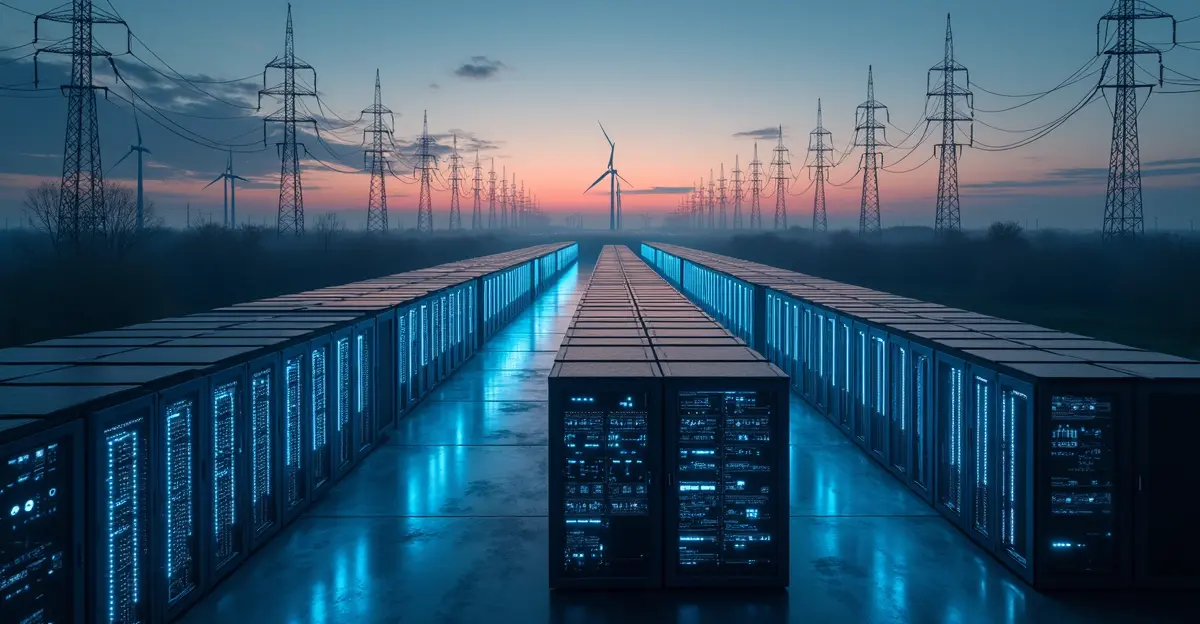
AI-driven energy demand refers to the massive electricity consumption required to power artificial intelligence systems, particularly data centers running large language models and inference operations. According to the IMF's April 2025 working paper 'Power Hungry: How AI Will Drive Energy Demand,' AI-producing sectors in the U.S. have grown nearly three times faster than the private non-farm business sector, with electricity costs for vertically integrated AI companies nearly doubling between 2019-2023. Global data center electricity consumption reached approximately 415 TWh in 2024, accounting for about 1.5% of total global electricity use, with projections suggesting this could double to 945 TWh by 2030 – equivalent to Japan's current energy demand.
The Geopolitical Transformation of Energy Security
The J.P. Morgan 'Power Rewired' analysis reveals a fundamental shift in how nations perceive energy security. No longer merely an economic concern, energy has become a core national security issue as countries position themselves for the 2025 strategic landscape. 'Financial success will depend on understanding how these geopolitical shifts impact future investments, with opportunities emerging in this new Energy Security Age,' explains Dr. Sarah Kapnick, J.P. Morgan's Global Head of Climate Advisory.
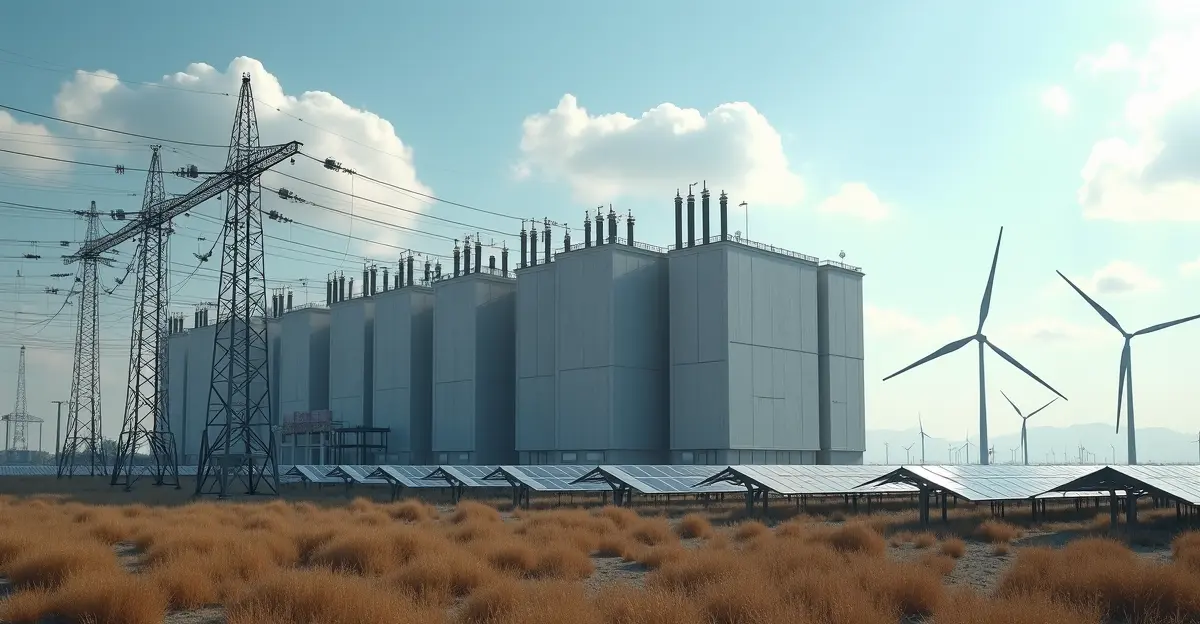
This transformation is creating new technological alliances and infrastructure dependencies. Asian and Middle Eastern nations are developing interconnected electricity grids that make economies interdependent, creating a new form of geopolitical leverage. The Iran War's impact on energy security has accelerated this trend, with Asian nations dramatically reshaping their strategies in response to Middle Eastern instability. Japan is leading a nuclear energy comeback despite public skepticism, with Prime Minister Takaichi Sanae aiming for 100% energy self-sufficiency, while China is fast-tracking plans for 23 new nuclear reactors.
Critical Minerals: The New Strategic Battleground
The control over critical minerals has emerged as a central geopolitical tool in the AI energy era. China dominates global production of key minerals, controlling 98% of gallium and 60% of germanium refining, creating significant supply chain vulnerabilities. According to FP Analytics, AI infrastructure demands these minerals for high-performance chips, data centers, and energy systems, with data center expansion projected to increase global demand by 2% for copper, 3% for rare earths, and up to 11% for gallium by 2030.
Australia maintains leadership in raw material production, creating a strategic division where China controls processing capabilities while Australia dominates extraction. This dynamic has created new forms of economic leverage, with even a 30% disruption in gallium supplies potentially causing a $600 billion reduction in U.S. economic output according to recent analyses. The critical minerals supply chain has become a primary focus of international diplomacy and trade negotiations.
Regional Energy Grids and New Alliances
The fragmentation of the global energy order is accelerating as nations develop regional electricity grids that create new economic interdependencies. In Asia, countries are responding to Middle Eastern instability by building interconnected energy infrastructure that reduces reliance on traditional fossil fuel imports. South Korea is considering breaching a 2015 civil nuclear agreement with the US to pursue domestic uranium enrichment, while Vietnam and the Philippines are accelerating their nuclear development programs.
These regional grids are creating new diplomatic relationships and trade flows, with energy infrastructure becoming a tool of soft power and economic influence. The interconnected nature of modern energy systems means that localized disruptions trigger worldwide price volatility, as demonstrated during recent Middle Eastern tensions that curtailed production from Qatar, one of the world's largest LNG exporters.
Investment Implications and Economic Competitiveness
The IMF's analysis using the IMF-ENV model projects that AI-driven data center growth will lead to manageable but varying increases in energy prices and emissions. Under constrained renewable energy growth and limited transmission infrastructure expansion, U.S. electricity prices could rise by 8.6%, while U.S. and global carbon emissions would increase by 5.5% and 1.2% respectively under current policies.
This creates significant implications for investment strategies and economic competitiveness. Deloitte's 2025 analysis reveals that while data centers currently account for only about 2% of global electricity consumption (536 TWh in 2025), generative AI is dramatically increasing power demands, with AI-driven data center electricity consumption potentially doubling to 1,065 TWh by 2030. The tech industry is responding by optimizing infrastructure, redesigning chips for efficiency, and investing in carbon-free energy sources, but the global energy transition faces unprecedented challenges from AI's exponential growth.
Expert Perspectives on the New Geopolitical Landscape
Energy analysts and geopolitical strategists agree that we are witnessing a fundamental reordering of international relations around energy security. 'The traditional energy order is fragmenting, replaced by technology alliances and infrastructure dependencies that transcend traditional political boundaries,' notes a senior analyst from J.P. Morgan's Center for Geopolitics. The Minerals Security Partnership (MSP), launched in April 2024, represents one response to these challenges, bringing together nations to secure stable supplies of raw materials critical for green and digital transitions.
The European Union's Critical Raw Materials Act, which came into effect in May 2024, specifies a list of 34 critical raw materials, including 17 considered strategic, highlighting the growing recognition of mineral security as a geopolitical priority. The EU remains heavily dependent on imports for these minerals, with 100% of its supply of heavy rare-earth elements coming from China and 99% of its boron from Turkey.
Frequently Asked Questions
How much energy does AI actually consume?
AI data centers consumed approximately 415 TWh globally in 2024, about 1.5% of total electricity use. This is projected to potentially double to 945 TWh by 2030, with AI operations consuming over 40% of data center power by 2026 according to Deloitte.
Why are critical minerals so important for AI?
Critical minerals like gallium, germanium, copper, and rare earth elements are essential for AI infrastructure including high-performance chips, data centers, and renewable energy systems. China controls 98% of gallium and 60% of germanium refining, creating significant supply chain vulnerabilities.
How is AI changing energy geopolitics?
AI's massive energy demands are transforming energy security into a national security priority, forcing countries to develop energy self-sufficiency and creating new alliances through interconnected electricity grids. Control over critical minerals has become a strategic geopolitical tool.
What are the investment implications of AI energy demand?
Financial success in the coming decade will depend on understanding how geopolitical energy shifts impact investments. Opportunities exist in renewable energy infrastructure, critical mineral supply chains, and energy-efficient AI technologies.
How are countries responding to AI energy challenges?
Nations are pursuing diverse strategies including nuclear energy expansion (Japan, China), interconnected regional grids (Asia, Middle East), and securing critical mineral supplies through alliances like the Minerals Security Partnership.
Future Outlook and Strategic Considerations
The intersection of AI development and energy security represents one of the most significant geopolitical transformations of the 21st century. As nations navigate this new landscape, strategic decisions about energy infrastructure, mineral security, and technological alliances will determine economic competitiveness and national security for decades to come. The 2025 strategic landscape requires unprecedented cooperation and innovation to balance AI advancement with sustainable energy systems, creating both challenges and opportunities in the emerging global order.

Follow Discussion