


 Deutsch
 English
 Español
 Français
 Nederlands
 Português


 Share
Share




AI's Energy Hunger Explained: How Data Centers Are Reshaping Global Power Dynamics
The explosive growth of artificial intelligence is creating unprecedented electricity demand that could reach 3% of global consumption by 2030, forcing nations to reassess energy security strategies and potentially reshaping global alliances. According to recent IEA and Deloitte reports, AI data center electricity demand is projected to surge more than thirtyfold by 2035, creating urgent geopolitical and energy security challenges that are transforming how nations compete in the digital age.
What is AI's Energy Hunger?
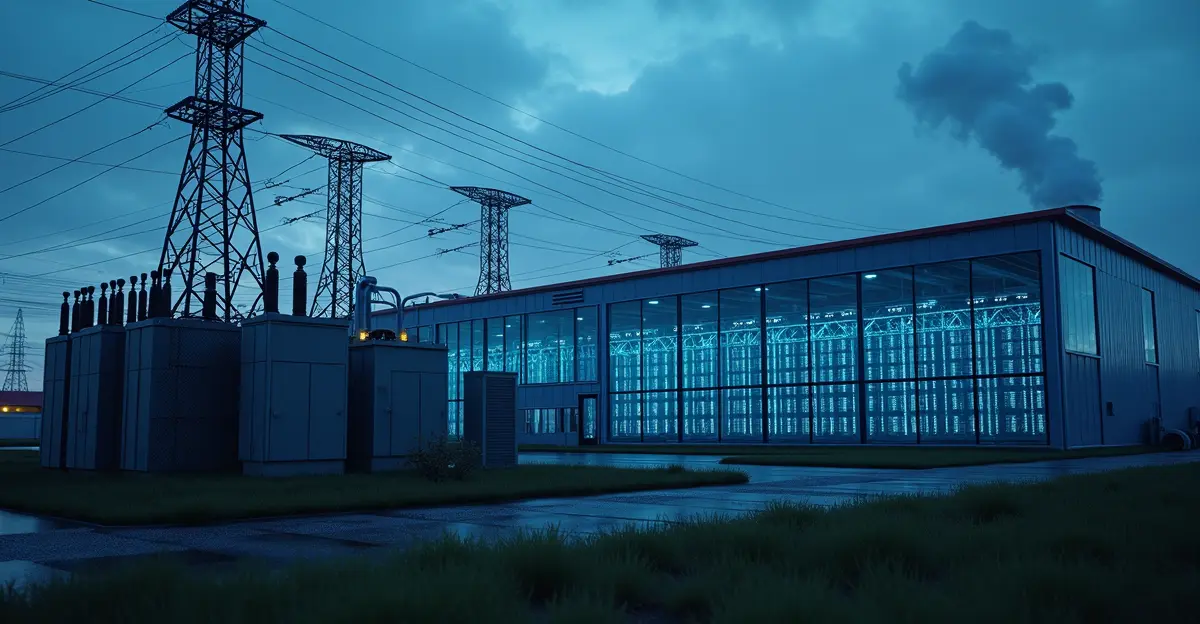
AI's energy hunger refers to the massive electricity consumption required to power artificial intelligence systems, particularly the data centers that train and run large language models and other AI applications. Currently, data centers account for about 2% of global electricity consumption (536 TWh in 2025), but this could roughly double to 1,065 TWh by 2030 due to AI growth. AI data centers alone are expected to consume 90 TWh by 2026, a tenfold increase from 2022 levels. This exponential growth presents significant infrastructure challenges, with 72% of surveyed executives viewing power and grid capacity constraints as very or extremely challenging for data center buildout.
The Geopolitical Shift: Energy-Rich Nations Become Strategic Hubs
Countries with abundant, low-cost electricity are emerging as strategic locations for AI infrastructure, creating new geopolitical advantages. Nations like Norway, Canada, and parts of the Middle East are positioning themselves as ideal hosts for energy-intensive AI operations.
Norway and Canada: Hydroelectric Advantage
Scandinavian countries and Canada benefit from abundant hydroelectric power, offering both renewable energy and stable electricity prices. These nations are attracting significant AI infrastructure investments as tech giants seek reliable, carbon-free power sources. The Nordic energy market has become particularly attractive for data center operators facing power constraints elsewhere.
Middle Eastern Paradox
The Middle East presents a complex geopolitical picture. While countries like the UAE and Saudi Arabia offer cheap energy and government support, recent Iranian attacks on AWS facilities in the UAE and Bahrain have highlighted data centers as potential military targets. According to CNBC reports, tech giants like Microsoft, Oracle, Nvidia, and Cisco have been pouring billions into Middle Eastern data centers, but geopolitical risks are forcing reconsideration of expansion plans.
The Nuclear Power Renaissance
The AI energy crisis is accelerating nuclear power adoption worldwide. Microsoft and Amazon are increasingly turning to nuclear energy to meet the massive demands of their AI operations. As Forbes reports, nuclear power offers reliable, carbon-free energy that can support 24/7 AI infrastructure operations where traditional renewables may fall short.
Small Modular Reactors (SMRs) are expected to enter the energy mix after 2030, helping reduce coal-fired generation while providing the high-density power needed for continuous AI operations. This nuclear renaissance represents a significant shift in energy policy and creates new dependencies between tech giants and energy producers.
Critical Minerals: The Hidden Supply Chain Battle
The AI revolution is creating unprecedented demand for critical minerals, creating significant supply chain vulnerabilities. According to FP Analytics, AI infrastructure depends heavily on minerals like gallium (98% controlled by China), germanium (60% controlled by China), copper, palladium, and rare earth elements.
Key mineral dependencies include:
- Gallium: Essential for advanced semiconductors, 98% controlled by China
- Germanium: Critical for fiber optics and infrared optics, 60% controlled by China
- Copper: Fundamental for electrical infrastructure and data transmission
- Rare Earth Elements: Vital for magnets in motors and generators
The report highlights that even a 30% disruption in gallium supplies could cause a $600 billion reduction in U.S. economic output, demonstrating the strategic importance of mineral security in the AI era.
Climate Goals vs. AI Expansion
The tension between climate commitments and AI expansion represents one of the most significant geopolitical challenges. Currently, coal (30%), renewables (27%), natural gas (26%), and nuclear (15%) power global data centers. While renewables are the fastest-growing source—meeting nearly 50% of additional demand growth through 2030—fossil fuels will still meet over 40% of new demand until 2030.
The United States and China dominate the market, with the US relying heavily on natural gas (40%) and China on coal (70%). By 2035, low-emissions sources are expected to supply over half of US data center electricity and nearly 60% in China. However, the rapid growth of AI infrastructure threatens to undermine climate goals if not managed strategically.
Digital Colonialism: A New Geopolitical Reality?
The AI-energy nexus is creating what some analysts call a new form of digital colonialism, where tech giants from developed nations establish energy-intensive infrastructure in resource-rich but technologically developing regions. This creates complex dependencies and raises questions about sovereignty, economic benefit distribution, and long-term strategic control.
Countries implementing data localization laws and building domestic data center capacity are attempting to protect national interests, but the capital requirements and technological expertise needed for AI infrastructure create inherent advantages for established tech powers. The global digital divide may widen as energy-rich but technologically limited nations become mere hosts rather than controllers of critical AI infrastructure.
Expert Perspectives on the Energy-AI Nexus
Industry analysts warn that the current trajectory is unsustainable. "The exponential growth in AI power demand represents both an unprecedented challenge and opportunity for global energy systems," notes one energy analyst. "We're witnessing the emergence of energy as the primary constraint on AI development, which fundamentally changes how nations compete in the digital age."
The tech industry plans to invest $1 trillion in US manufacturing of AI supercomputers and chips over the next 4 years, while energy utilities face similar capital expenditure requirements. This massive investment race creates new alliances between technology companies, energy producers, and governments—reshaping traditional geopolitical relationships.
Future Outlook and Strategic Implications
Looking ahead to 2030 and beyond, several key trends will shape the geopolitical landscape:
- Energy Security as National Security: Nations will increasingly treat reliable electricity supply as critical infrastructure, similar to traditional energy resources.
- Regional Power Blocs: Energy-rich regions may form new alliances based on shared infrastructure and resource advantages.
- Technology-Energy Partnerships: Cross-sector collaboration between tech companies and energy providers will become essential for national competitiveness.
- Regulatory Innovation: New policies will emerge to balance AI development with climate commitments and energy security.
The energy transition policies of major economies will significantly influence which nations emerge as leaders in the AI era. Countries that successfully integrate renewable energy expansion with AI infrastructure development will gain strategic advantages, while those facing grid constraints may fall behind in technological competitiveness.
Frequently Asked Questions
How much electricity do AI data centers currently consume?
AI data centers are expected to consume 90 TWh by 2026, a tenfold increase from 2022 levels. Currently, all data centers account for about 2% of global electricity consumption (536 TWh in 2025).
Which countries benefit most from AI's energy demands?
Countries with abundant, low-cost electricity like Norway (hydroelectric), Canada (hydroelectric), and parts of the Middle East (oil and gas) are becoming strategic locations for AI infrastructure due to their energy advantages.
How is AI affecting nuclear power development?
AI's energy demands are accelerating nuclear power adoption, with tech giants like Microsoft and Amazon turning to nuclear energy for reliable, carbon-free power. Small Modular Reactors (SMRs) are expected to enter the energy mix after 2030 specifically to support AI infrastructure.
What critical minerals are most important for AI infrastructure?
The most critical minerals include gallium (98% controlled by China), germanium (60% controlled by China), copper, palladium, indium, tantalum, rare earth elements, silicon, and high-purity alumina—all essential for advanced semiconductors and energy systems.
Is AI development compatible with climate goals?
There's significant tension between AI expansion and climate commitments. While renewables are growing fastest, fossil fuels will still meet over 40% of new data center electricity demand until 2030, potentially undermining climate targets without strategic energy planning.

Follow Discussion