


 Deutsch
 English
 Español
 Français
 Nederlands
 Português


 Share
Share




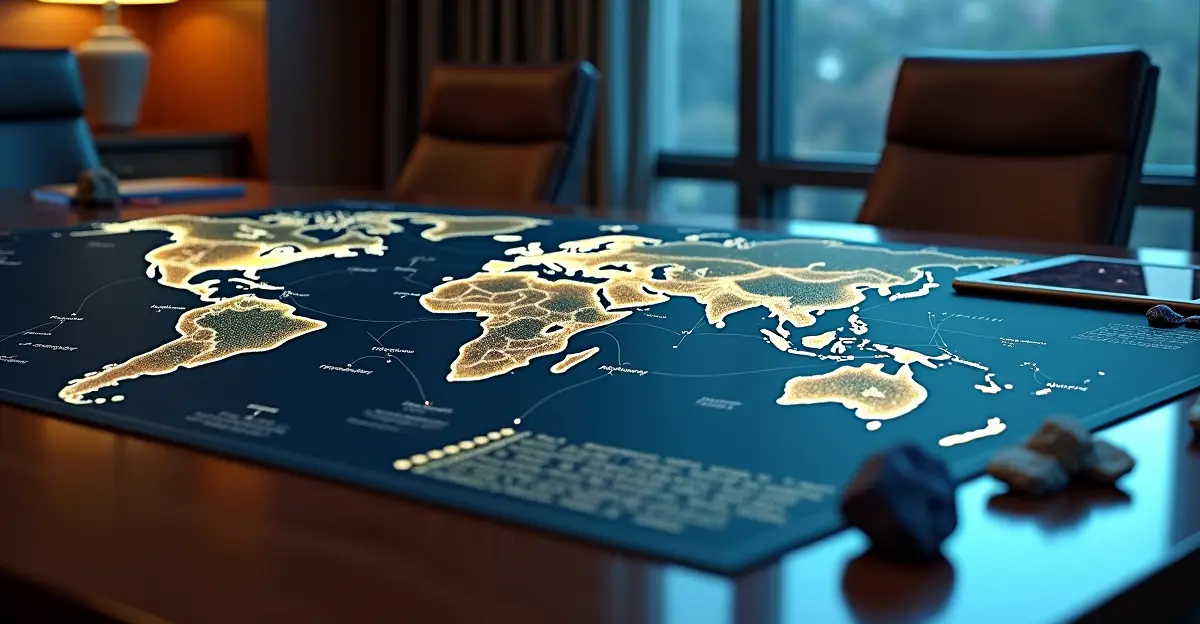
The World Economic Forum's 2026 Global Risks Report, released in January 2026, ranks geoeconomic confrontation as the top global risk for the first time, signaling an unprecedented escalation in the battle for critical minerals. With China projected to control over 60% of refined lithium and cobalt and roughly 80% of battery-grade graphite and rare earths by 2035, the United States under its second Trump administration and the European Union are racing to diversify supply chains before structural dependency becomes irreversible. This analysis examines the narrowing 12-to-18-month window for Western nations and the emerging role of Gulf states in reshaping the global critical minerals landscape.
China's Dominance: The 800-Pound Gorilla
China's stranglehold on critical mineral supply chains is the defining feature of the current geopolitical landscape. According to the International Energy Agency (IEA), China is set to supply over 60% of refined lithium and cobalt, and around 80% of battery-grade graphite and rare earth elements by 2035. Already, China controls roughly 70% of rare-earth mining and 91% of processing, and its export controls have triggered sixfold price spikes on certain materials. European licensing approval for rare earths has fallen below 25%, according to industry reports.
In March 2026, China's legislature approved the 15th Five-Year Plan (2026–2030), which elevates energy and resource security to a national priority. The plan emphasizes upgrading industrial chains, enhancing self-sufficiency, and moving beyond raw material extraction toward higher-value products. Provincial governments in Guangxi, Jiangxi, Guizhou, and Yunnan are aligning with national goals to consolidate China's processing dominance. The China critical minerals strategy under the 15th FYP signals Beijing's intent to maintain its leverage over global supply chains for the next decade.
Project Vault: America's $10 Billion Answer
On February 2, 2026, the Export-Import Bank of the United States (EXIM) approved a Direct Loan of up to $10 billion to Project Vault, a public-private partnership establishing the U.S. Strategic Critical Minerals Reserve. The initiative, backed by nearly $2 billion in private-sector investment, will store essential raw materials in secure facilities across the country. Participating original equipment manufacturers include Clarios, GE Vernova, Western Digital, and Boeing, with suppliers including Hartree Partners, Mercuria Americas, and Traxys.
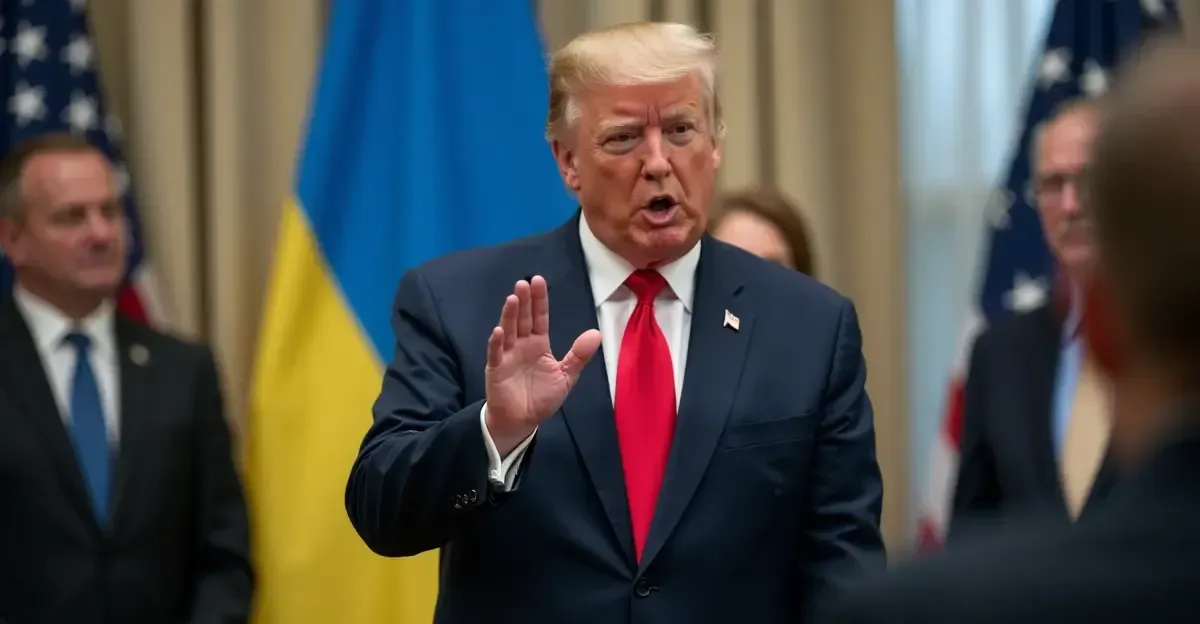
EXIM Chairman John Jovanovic joined President Trump to announce the initiative, which aims to protect domestic manufacturers from supply shocks while delivering a net positive return for U.S. taxpayers. The announcement came alongside the 2026 Critical Minerals Ministerial, hosted by Secretary of State Marco Rubio with representatives from 54 countries. The event launched FORGE (Forum on Resource Geostrategic Engagement) as the successor to the Minerals Security Partnership and announced over $30 billion in U.S. government financing support for strategic minerals projects. Eleven new bilateral critical minerals frameworks were signed with countries including Argentina, Morocco, the Philippines, and the UAE.
However, analysts caution that Project Vault alone cannot reverse China's decades-long head start. The US critical minerals policy 2026 faces structural challenges, including permitting delays that average 16 years from discovery to production in the United States.
Europe's Critical Raw Materials Act: Ambition Meets Reality
The European Union's Critical Raw Materials Act (CRMA) has selected 60 Strategic Projects from nearly 170 proposals, including 47 projects within the EU and 13 in third countries. The CRMA sets 2030 benchmarks of 10% domestic extraction, 40% processing capacity, and 25% recycling for strategic raw materials. The European Commission's ReSourceEU Action Plan, announced in December 2025, allocates up to €3 billion (US$3.5 billion) in funding for 2026.
Priority projects include Vulcan Energy's lithium extraction in Germany, receiving €250 million from the European Investment Bank, and Greenland Resources' molybdenum mine. The EU will also impose export restrictions on scrap permanent magnets and aluminium in early 2026, and ban exports of waste lithium-ion batteries to non-OECD countries by September 2026. A new European Critical Raw Materials Centre, modeled on Japan's JOGMEC, will finance projects, provide market intelligence, and manage stockpiling.
Despite these efforts, the EU struggles to scale financing amid competition from China and new actors like the UAE and Saudi Arabia. The EU Critical Raw Materials Act impact remains limited by funding gaps and the sheer scale of Chinese processing capacity.
The Gulf Pivot: Saudi Arabia and UAE Enter the Arena
Saudi Arabia and the United Arab Emirates are deploying over $100 billion in mineral investments, pivoting from oil to critical minerals leverage. Saudi Arabia claims $2.5 trillion in mineral reserves, including gold, zinc, copper, lithium, and rare earths like dysprosium, terbium, neodymium, and praseodymium. State-owned Maaden announced $110 billion in mining investments over the next decade, while the kingdom increased its exploratory mining budget by 595% between 2021 and 2025.
Saudi Arabia is positioning as a regional refining hub, partnering with the US and MP Materials to build a new rare earth refinery. The kingdom aims to begin lithium production by 2027. The UAE, meanwhile, has signed critical minerals partnerships with the US and is investing in African and Australian mining projects. Experts say the Gulf states' reliable energy supply and Aramco's expertise could help displace China's dominance in processing, though instability in the Middle East and environmental concerns remain challenges.
The 12-to-18-Month Window
Multiple analysts, including those at the ODI and S&P Global, warn that Western nations have a narrowing 12-to-18-month window to diversify supply chains before structural dependency on China becomes irreversible. China's 15th Five-Year Plan locks in processing capacity expansions, while Western projects face permitting delays, financing gaps, and technical hurdles. The critical minerals supply chain diversification efforts must accelerate dramatically to meet this timeline.
What is working includes Albemarle's direct lithium extraction technology (90% recovery, 80% less water), Redwood Materials' battery recycling (95%+ recovery rates, 20-30% cost savings vs. virgin materials), and Australia's Critical Minerals Strategy. What is not working includes the slow pace of permitting, unresolved human rights issues in artisanal cobalt mining in the DRC, and Chinese processing dominance that is not declining fast enough.
Expert Perspectives
"The window for meaningful diversification is closing rapidly. If Western nations cannot bring online significant processing capacity within 18 months, China's structural advantage will become nearly impossible to overcome," said Dr. Maria Torres, a senior fellow at the ODI and author of the 2026 critical minerals geopolitics analysis.
"Project Vault is a historic step, but it's a down payment, not a solution. We need a whole-of-government approach that includes permitting reform, workforce development, and sustained investment," said EXIM Chairman John Jovanovic at the Critical Minerals Ministerial.
FAQ
What are critical minerals?
Critical minerals are raw materials essential for energy transition technologies (EVs, wind turbines, solar panels), defense systems, and advanced electronics. Key examples include lithium, cobalt, rare earth elements, graphite, and nickel.
Why does China dominate critical mineral supply chains?
China invested heavily in processing infrastructure over the past two decades, leveraging low labor costs, lax environmental regulations, and strategic state planning. It now controls 60-90% of global processing for most critical minerals.
What is Project Vault?
Project Vault is a $10 billion U.S. initiative, backed by EXIM, to establish a Strategic Critical Minerals Reserve through public-private partnerships, storing essential raw materials to protect domestic manufacturers from supply shocks.
What is the EU Critical Raw Materials Act?
The CRMA is a European Union regulation that sets 2030 targets for domestic extraction (10%), processing (40%), and recycling (25%) of strategic raw materials, and has selected 60 Strategic Projects to boost supply security.
Can Gulf states replace China in critical minerals?
Gulf states like Saudi Arabia and the UAE are investing over $100 billion in mining and processing, but experts say it will take at least a decade to build capacity that could meaningfully challenge China's dominance.
Conclusion: A Race Against Time
The critical minerals chessboard is being reshaped in real time. China's 15th Five-Year Plan, the US Project Vault, the EU's 60 Strategic Projects, and the Gulf states' $100 billion pivot all represent moves in a high-stakes geopolitical game. The WEF Global Risks Report 2026 makes clear that geoeconomic confrontation is now the top global risk, and critical minerals are at its center. The next 12 to 18 months will determine whether Western nations can break China's grip or whether structural dependency becomes the new normal. The outcome will shape not only the energy transition but the balance of global power for decades to come.
Follow Discussion