


 Deutsch
 English
 Español
 Français
 Nederlands
 Português


 Share
Share




The 2026 Critical Minerals Ministerial: A Watershed Moment
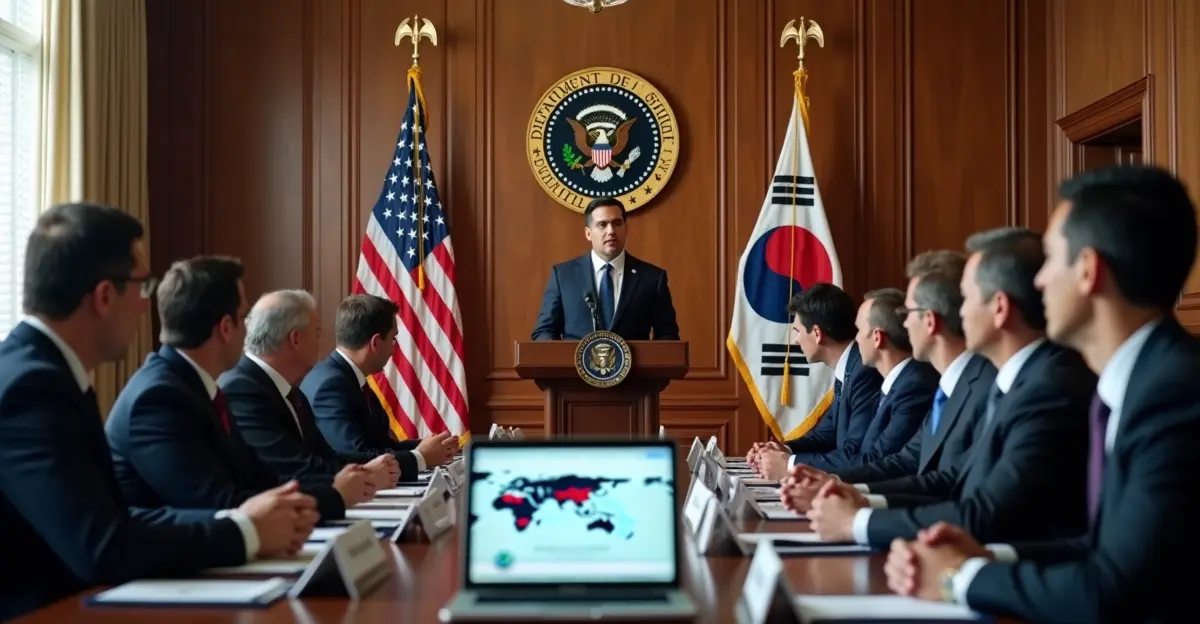
On February 4, 2026, U.S. Secretary of State Marco Rubio and Vice President JD Vance convened representatives from 54 nations and the European Commission in Washington, D.C., for the inaugural Critical Minerals Ministerial. The event marked the launch of the Forum on Resource Geostrategic Engagement (FORGE), the successor to the Minerals Security Partnership (MSP), alongside the signing of 11 new bilateral critical mineral frameworks and the mobilization of over $30 billion in financing. These moves represent the most ambitious Western effort yet to counter China's stranglehold on rare earth and battery mineral processing — a dependency that the World Economic Forum's Global Risks Report 2026 ranks as the top geoeconomic confrontation risk facing the world today.
What Is FORGE and Why Does It Matter?
FORGE — the Forum on Resource Geostrategic Engagement — is a plurilateral coalition designed to create a preferential trade-and-investment zone for critical minerals. Unlike the MSP, which focused on project-level collaboration among 14 member countries, FORGE operates on a 'membership by trade' model, conditioning participation on shared trade rules rather than joint capital deployment. Chaired by the Republic of Korea, FORGE aims to link bilateral agreements into a functioning system covering two-thirds of the global economy. Vice President Vance described the mechanism as including 'reference prices' maintained through adjustable tariffs — effectively a coordinated price floor system to counter adversarial market manipulation by China.
The Minerals Security Partnership evolution from a small club to a broad-based trade framework reflects a strategic pivot: the U.S. now seeks to build a parallel ecosystem of allied supply chains rather than simply funding individual mines.
The $30 Billion Mobilization: Project Vault and Beyond
The centerpiece of the financing package is Project Vault, a $12 billion public-private partnership ($10 billion in EXIM financing plus nearly $2 billion in private capital) to establish the U.S. Strategic Critical Minerals Reserve. This reserve will store essential raw materials — including lithium, cobalt, rare earths, and graphite — in secure facilities nationwide, shielding American manufacturers from supply shocks. Companies such as Boeing, GE Vernova, and Clarios have already signed on as partners.
Beyond Project Vault, the $30 billion figure encompasses letters of interest, loans, and investments across the critical minerals supply chain, including the $250 million Pax Silica initiative to secure semiconductor supply chains. The U.S. critical minerals strategy now spans mining, processing, stockpiling, and recycling — a comprehensive approach absent just two years ago.
Can Western Supply Chains Scale Before 2030?
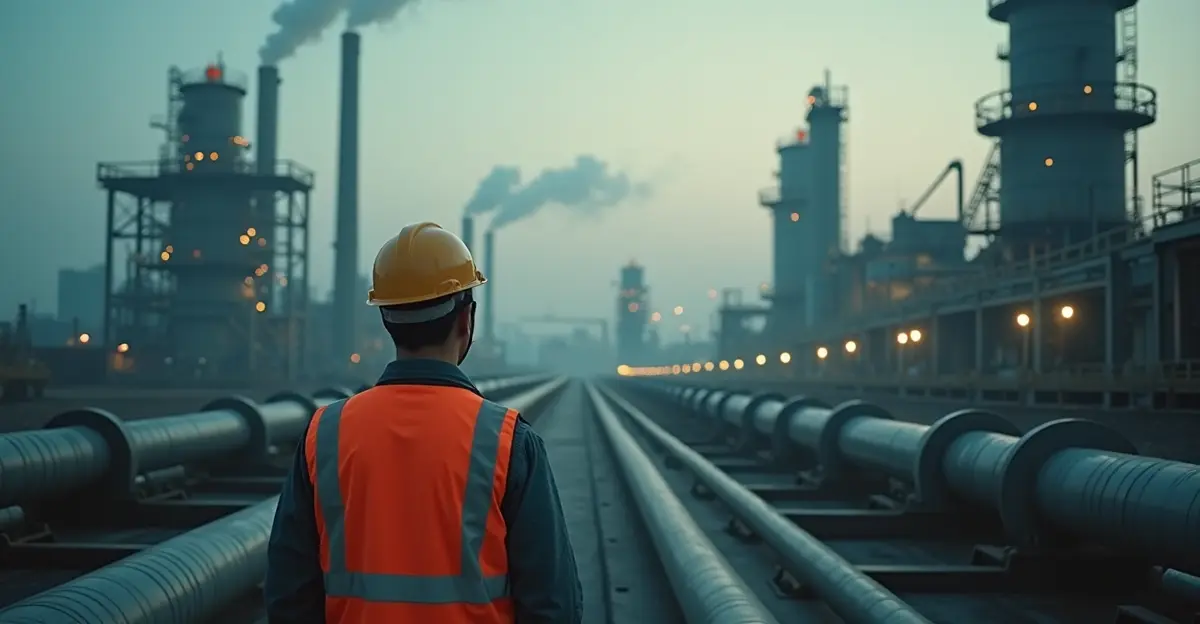
The central question remains: can these efforts realistically reduce dependence on China before the end of the decade? The numbers are sobering. China controls approximately 90% of rare earth processing capacity, 80% of tungsten refining, and 60% of antimony production. In 2025, Beijing imposed export controls on key elements like samarium and dysprosium, triggering price spikes of up to sixfold and licensing approval rates below 25% for European firms. While those controls were later suspended as part of a trade truce, the message was clear: China can weaponize its processing dominance at will.
According to a multi-institutional analysis published in early 2026, rebuilding independent Western supply chains would take 20–30 years under current trajectories. The IEA's Global Critical Minerals Outlook 2025 warns that even with record investment, the world faces a structural deficit in lithium and cobalt by 2030 if demand growth continues at projected rates.
The Price Paradox
A critical paradox complicates the picture: short-term price collapses are deterring new mining investment even as bullish long-term demand forecasts point to massive supply gaps. Lithium prices fell by over 60% from their 2022 peaks through 2025, while cobalt prices dropped by more than 40%. This price volatility makes it difficult for new mining projects — which typically require 10–15 years from discovery to production — to secure financing. The critical minerals price volatility impact on investment decisions is a growing concern for policymakers.
FORGE's price floor mechanism is designed to address this paradox by providing revenue certainty for producers, but critics argue that government-mandated price supports could distort markets and create inefficiencies.
The Rise of New Players: Saudi Arabia and the UAE
One of the most significant developments in the critical minerals landscape is the emergence of Gulf states as major players. Saudi Arabia's state-owned mining giant Maaden announced a $110 billion investment plan in January 2026 to triple phosphate and gold production and double aluminum output. Notably, Maaden formed a joint venture with U.S.-based MP Materials and the U.S. Department of Defense to build a rare earths refinery in Saudi Arabia, with Maaden holding a 51% stake.
The United Arab Emirates, meanwhile, signed a bilateral critical minerals framework with the U.S. during the February ministerial, positioning itself as a processing and trading hub. These moves align with the Gulf states' broader strategies to diversify beyond oil and gas — a shift that could reshape global supply chains in ways that neither fully align with nor oppose Western interests.
The Saudi Arabia critical minerals strategy represents a wildcard in the geopolitical chessboard, potentially offering an alternative processing route that bypasses both China and traditional Western supply chains.
Expert Perspectives
'FORGE represents the most serious attempt yet to create a rules-based alternative to China's state-directed mineral monopoly,' said a senior fellow at the Atlantic Council's Global Energy Center. 'But the timeline is the enemy. China has been planning this for 40 years. We are trying to catch up in four.'
Others are more skeptical. 'The energy transition will not simply swap dependence on Middle Eastern oil for dependence on Chinese-processed minerals — it will create a more complex, multipolar dependency landscape,' warned a JPMorgan Chase geopolitical analyst. 'The question is whether FORGE can coordinate enough allies to create genuine competition.'
FAQ: Critical Minerals and FORGE
What is FORGE?
FORGE (Forum on Resource Geostrategic Engagement) is a plurilateral coalition launched in February 2026 as the successor to the Minerals Security Partnership. It aims to create a preferential trade-and-investment zone for critical minerals with coordinated price floors to counter China's market dominance.
How much money is the U.S. committing?
The U.S. government has mobilized over $30 billion in letters of interest, loans, and investments, including $10 billion for Project Vault — a strategic critical minerals reserve managed by the Export-Import Bank.
Can the West reduce dependence on China by 2030?
Most experts say no. China controls roughly 90% of rare earth processing, and building alternative supply chains typically takes 20–30 years. However, FORGE's coordinated approach could accelerate progress if sustained politically and financially.
What role are Gulf states playing?
Saudi Arabia and the UAE are emerging as critical minerals players, with Saudi Arabia investing $110 billion through Maaden and building a rare earths refinery in partnership with U.S. companies. Their role could provide alternative processing routes outside both China and traditional Western supply chains.
Why are mineral prices falling despite high demand?
Short-term oversupply and demand slowdowns in China have caused lithium, cobalt, and nickel prices to collapse from 2022 peaks. This price volatility deters new mining investment, creating a paradox where today's low prices threaten tomorrow's supply security.
Conclusion: A Race Against Time
The launch of FORGE and the mobilization of $30 billion represent a genuine inflection point in the geopolitics of critical minerals. For the first time, the U.S. and its allies have a coordinated framework that combines trade policy, financing, and strategic stockpiling. Yet the structural challenges remain immense: China's decades-long head start in processing, the long lead times for new mines, and the paradox of low prices discouraging investment all threaten to undermine the initiative.
The WEF Global Risks Report 2026 ranks geoeconomic confrontation as the top short-term risk — a finding that underscores the urgency of the moment. Whether FORGE can deliver on its promise before 2030 will determine not just the fate of the energy transition, but the balance of global economic power for decades to come.
Sources
- U.S. Department of State, '2026 Critical Minerals Ministerial,' February 4, 2026
- Atlantic Council, 'U.S. Critical Minerals Policy Goes Collaborative with FORGE,' February 2026
- World Economic Forum, Global Risks Report 2026
- IEA, Global Critical Minerals Outlook 2025
- EXIM Bank, 'Project Vault Announcement,' February 2026
- Rare Earth Exchanges, 'China's 2026 Export Controls Redraw the Global Supply Chain Map,' 2026
- Fortune, 'China's Rare Earth Processing Dominance,' March 2026
- Bipartisan Policy Center, 'Project Vault and FORGE,' February 2026



Follow Discussion