


 Deutsch
 English
 Español
 Français
 Nederlands
 Português


 Share
Share




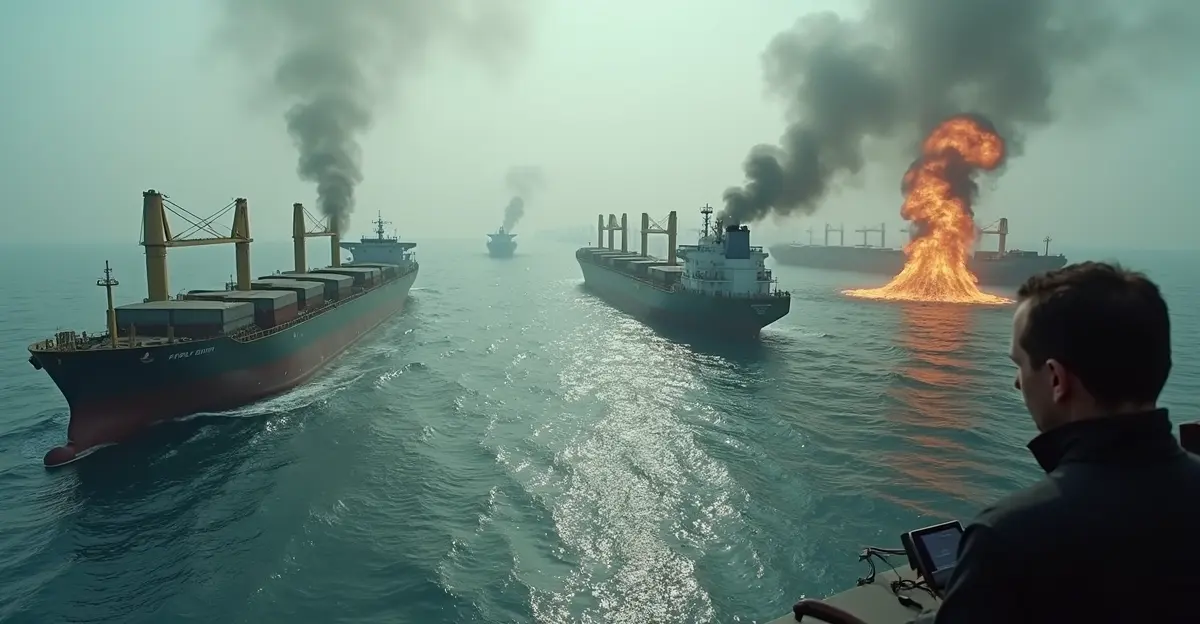
Since late February 2026, the Strait of Hormuz closure has triggered the largest oil supply shock in modern history. U.S. and Israeli military strikes on Iran shut the world's most important energy chokepoint, cutting roughly 20% of global oil flows — three to five times larger than any previous geopolitical disruption. Brent crude surged past $126 per barrel, global merchandise trade growth slowed from 4.7% to as little as 1.5%, and container shipping rates spiked by up to 900%. As of mid-2026, a fragile ceasefire has not restored normal transit, leaving 138 vessels and 470,000 TEUs trapped in the Persian Gulf.
What Is the Strait of Hormuz and Why Does It Matter?
The Strait of Hormuz is a 167-km waterway between Iran and Oman linking the Persian Gulf to the open ocean. Before 2026, it carried about 20 million barrels per day — roughly 20% of global petroleum and 25% of seaborne oil — plus 20% of the world's LNG. The Persian Gulf energy chokepoints had never seen a prolonged closure until February 2026. Reuters reported that Saudi Arabia, Iraq and Kuwait cut production as storage filled.
The 2026 Supply Shock: How the Crisis Unfolded
The closure followed U.S. and Israeli strikes on Iran on February 28, 2026. Transits collapsed by about 95% within weeks, removing close to 10 million barrels per day from global supply. A Dallas Fed study called the disruption three to five times larger than the 1973, 1979, 1980 and 1990 shocks, writing: "This is the first time the Strait has closed, making this disruption three to five times larger than any previous geopolitical oil shock." The Iran oil export disruption hit Asia hardest: 80% of Hormuz-bound crude goes to Asian buyers.
Brent Crude Past $126 and Diesel at $200
Brent surged about 65% in one month, from $76 to more than $126 per barrel, while diesel hit $200 and Asian demand fell 2 million barrels per day, according to US Baseline. The Brent crude price forecast 2026 remains uncertain: by late September Brent traded near $97, still 35% above baseline, with full normalization not expected until early 2027.
Container Shipping Rates Spike Up to 900%
The crisis also paralyzed container traffic. Global container shipping rates spiked up to 900% as war-risk premiums created a soft blockade. Discovery Alert reported 138 vessels carrying 470,000 TEUs trapped in the Persian Gulf, disrupting supply chains from Dubai to Jebel Ali.
Global Trade Growth Slows from 4.7% to 1.5%
Global merchandise trade growth has slowed from 4.7% to as little as 1.5%, according to Informed Clearly. The Dallas Fed models a one-quarter closure raising WTI to $98 and cutting annualized global GDP growth by 2.9 percentage points; a three-quarter closure could push oil to $132. Cascading effects include fertilizer prices up 31% and 45 million more people facing food insecurity, strategic reserves offsetting only 5–5.5 million barrels per day, and 3.4 billion people in debt-stressed economies facing energy and fiscal crises.
Strategic Realignment: Energy Security After Hormuz
The strategic question is whether this chokepoint crisis accelerates a permanent realignment of energy supply chains. Governments are prioritizing pipelines, reserves and accelerated renewable energy investment. As of mid-2026, a fragile ceasefire allows partial reopening, but Hormuz Monitor shows Brent still elevated. The crisis has exposed the limits of allied energy security frameworks.
FAQ: Strait of Hormuz Closure 2026
What caused the Strait of Hormuz closure in 2026?
U.S. and Israeli military strikes on Iran in late February 2026 triggered an Iranian blockade and the first prolonged closure of the strait, cutting roughly 20% of global oil flows.
How much oil normally passes through the Strait of Hormuz?
About 20 million barrels per day — around 20% of global petroleum and 25% of seaborne oil trade — plus 20% of the world's LNG.
What happened to oil prices after the closure?
Brent crude surged about 65% in one month to more than $126 per barrel, with diesel reaching $200 per barrel, before retreating to around $97 by late September 2026.
How has the closure affected global trade and shipping?
Global merchandise trade growth slowed from 4.7% to as little as 1.5%, container rates spiked up to 900%, and 138 vessels carrying 470,000 TEUs were trapped in the Persian Gulf.
Conclusion
The 2026 Strait of Hormuz closure is a structural test of the global order. With 20% of oil flows disrupted and trade growth nearly halved, the crisis has forced governments and companies to reprice geopolitical risk. Whether it accelerates a permanent realignment of energy supply chains, shipping routes and allied security frameworks — or becomes another cycle of crisis and complacency — remains the defining question.

Follow Discussion