


 Deutsch
 English
 Español
 Français
 Nederlands
 Português


 Share
Share




What Is the Strait of Hormuz Crisis of 2026?
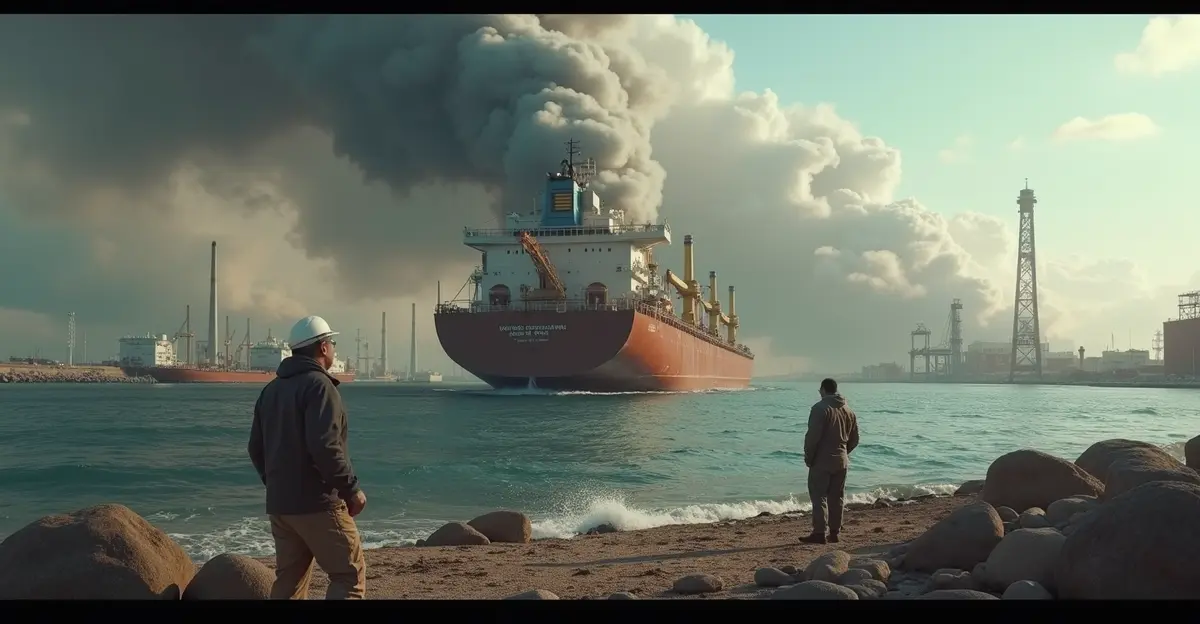
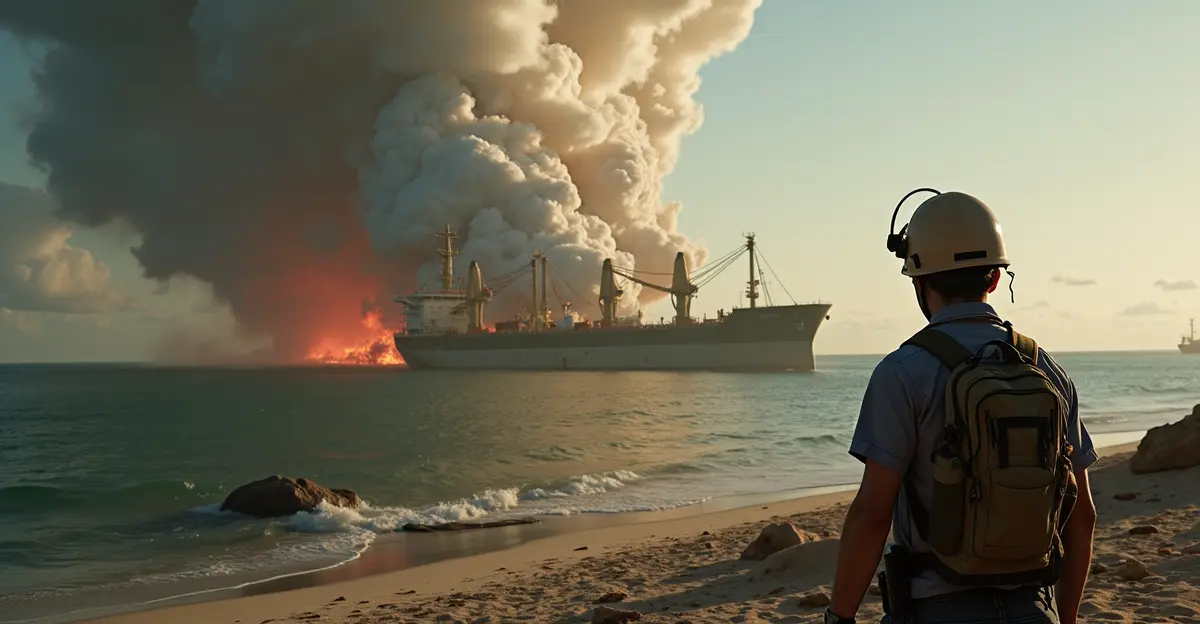
The near-total closure of the Strait of Hormuz following the escalation of conflict in the Middle East has triggered the largest oil supply disruption in history, cutting global supply by roughly 10 million barrels per day and sending energy prices up 24% in 2026. The Strait of Hormuz, a 167-kilometer waterway between Iran and Oman, normally carries about 20.5 million barrels of oil per day — roughly 21% of global petroleum consumption. Since late February 2026, transits have collapsed by approximately 95%, dropping from 130 ships per day to just six in March, according to UNCTAD. This article analyzes how the crisis is reshaping global supply chains, accelerating renewable energy investment as a strategic hedge, and forcing developing economies to confront a brutal trade-off between energy affordability and fiscal stability.
Context: The Defining Economic Shock of 2026
The Strait of Hormuz disruption is the defining economic shock of 2026. Oil prices posted their largest monthly rise on record in March 2026, with Brent crude surging 51% since the start of the month to $112.57 per barrel — surpassing the previous record of 46% set in September 1990. The World Bank, UNCTAD, and IMF all issued urgent revised forecasts in April–May 2026, marking this as a structural inflection point for global trade and energy policy. The 2026 global energy crisis has forced multilateral institutions to downgrade growth projections across nearly every region.
According to the International Energy Agency (IEA), the coordinated release of 400 million barrels from strategic petroleum reserves — the largest in history — is providing only temporary relief, estimated at roughly 3.3 million barrels per day. However, with alternative pipeline routes such as Saudi Arabia's East-West Pipeline (capacity ~4.5 million bpd) and the UAE's Abu Dhabi Crude Oil Pipeline (~1.5 million bpd) able to reroute only about 5–5.5 million bpd, the net shortfall remains approximately 10 million barrels per day. The EIA's April 2026 Short-Term Energy Outlook estimates that 7.5 million barrels per day of crude oil production from Iraq, Saudi Arabia, Kuwait, UAE, Qatar, and Bahrain were shut in during March, rising to 9.1 million b/d in April.
Impact on Global Trade and Supply Chains
Merchandise Trade Growth Slows Sharply
UNCTAD projects global merchandise trade growth will slow from 4.7% in 2025 to just 1.5–2.5% in 2026. The energy shock is driving up fuel and transport costs, feeding through supply chains worldwide. Overall economic growth is expected to decelerate from 2.9% to 2.6%, with developing countries most exposed. The global supply chain disruption 2026 is particularly acute for energy-intensive industries, including petrochemicals, shipping, and manufacturing.
Fertilizer Crisis Threatens Food Security
Fertilizer price surges of 31% threaten to push an additional 45 million people into acute food insecurity. The World Bank's fertilizer price index rose over 12% in Q1 2026, reaching its highest since October 2022. Urea prices surged 80% since February to above $850/metric ton in April 2026, as Middle East exports — nearly one-quarter of global urea — were disrupted. Iran halted ammonia production, and Qatar suspended urea and ammonia output. DAP prices rose over 10% in April, and MOP prices rose over 5% in Q1. The Strait carries roughly one-third of global seaborne fertilizer trade. The World Food Program estimates 260 million people were already facing acute food insecurity before this crisis. Yara International's CEO estimates the shortage is costing the world approximately 10 billion meals per week.
Energy Markets and the Renewable Hedge
The crisis has dramatically accelerated renewable energy investment as a strategic hedge against fossil fuel volatility. Global renewable energy investment hit $2.2 trillion in 2025, representing roughly two-thirds of all energy spending, according to Bank of America. The renewable energy investment trends 2026 show that solar, wind, and battery storage projects are being fast-tracked in Europe, Asia, and North America as governments seek to reduce dependence on Gulf oil and LNG. J.P. Morgan's 2026 Energy Outlook highlights that volatile oil prices and surging electricity demand underscore the urgent need for diversified energy sources. Global electricity demand is projected to grow over 2% annually for the next five years, driven by data centers, electrification, and domestic manufacturing.
However, the transition faces headwinds. The IEA notes that strategic reserves can maintain drawdown rates for only ~120 days. If the Strait remains closed beyond mid-2026, the world could face a prolonged period of elevated prices, rationing, and recession risk. The IMF's April 2026 World Economic Outlook presents three worsening scenarios: in the most severe case, where oil averages $110–$125 per barrel through 2027, global growth could slow to 2% and inflation could exceed 6%, bringing the world close to recession.
Developing Economies: A Brutal Trade-Off
Developing economies are confronting a brutal trade-off between energy affordability and fiscal stability. Around 3.4 billion people live in countries already spending more on debt servicing than on health or education, leaving little room to absorb new shocks. Higher import costs, weaker currencies, tighter financial conditions, and rising borrowing costs are compounding vulnerabilities. The developing economies debt crisis 2026 is being exacerbated by the energy price shock, with the IMF and World Bank mobilizing emergency support packages of $20–$50 billion and up to $60 billion, respectively.
UNCTAD warns that if disruptions persist, the situation risks evolving into a cascading crisis with far-reaching consequences. The Middle East ex-Iran region is now expected to grow just 1.8% — a 2.4 percentage point downgrade from earlier forecasts. Food and energy import bills are soaring, forcing governments to choose between subsidizing essential goods and maintaining fiscal discipline.
Expert Perspectives
IMF chief economist Pierre-Olivier Gourinchas warned that central banks must prioritize taming inflation over protecting growth, describing the situation as a 'central banker's nightmare' due to stagflation risks. The RBA's deputy governor echoed this sentiment. Meanwhile, UNCTAD Secretary-General Rebeca Grynspan emphasized that 'what began as a disruption in a key energy corridor is now feeding through the entire global economy.'
Frequently Asked Questions
How much oil normally passes through the Strait of Hormuz?
Approximately 20.5 million barrels of oil per day, or about 21% of global petroleum consumption, along with 20% of the world's LNG.
What caused the Strait of Hormuz closure in 2026?
The closure resulted from the escalation of conflict in the Middle East, specifically the 2026 Iran war, which led to military operations that effectively shut down shipping through the strait.
How long can strategic reserves compensate for the shortfall?
The IEA estimates that the coordinated release of 400 million barrels can sustain drawdown rates for approximately 120 days, after which supply shortages could become acute.
What is the impact on global food security?
Fertilizer prices have surged 31%, threatening to push an additional 45 million people into acute food insecurity. The World Food Program estimates 260 million people were already facing acute hunger before the crisis.
How is the crisis affecting renewable energy investment?
The crisis has accelerated renewable energy investment as a strategic hedge, with global renewable spending reaching $2.2 trillion in 2025. Governments are fast-tracking solar, wind, and battery projects to reduce dependence on fossil fuels.
Conclusion and Future Outlook
The Hormuz shock of 2026 represents a structural inflection point for global trade and energy policy. The future of global trade 2026 will depend critically on how quickly the Strait reopens and whether the world can accelerate its transition to more resilient energy systems. In the near term, the risk of recession looms large, particularly for developing economies with limited fiscal space. The crisis has laid bare the fragility of globalized supply chains and the strategic imperative of energy diversification. As the IMF, World Bank, and UNCTAD continue to update their forecasts, one thing is clear: the world after Hormuz will not look the same.


Follow Discussion