


 Deutsch
 English
 Español
 Français
 Nederlands
 Português


 Share
Share




The rapid expansion of artificial intelligence is driving an unprecedented surge in global electricity demand, with data center consumption projected to grow 26% in 2026 alone. This AI energy boom is colliding with highly concentrated critical mineral supply chains, triggering a wave of government interventions and fundamentally reshaping global energy markets and geopolitical alliances. According to Gartner, global data center electricity consumption will reach 565 terawatt-hours (TWh) in 2026, up from 447 TWh in 2025, with AI-optimized servers accounting for 31% of that total. The International Energy Agency (IEA) projects data center power demand could reach 945 TWh by 2030, roughly equivalent to Japan's entire annual electricity consumption.
The AI Energy Boom: By the Numbers
Gartner's June 2026 forecast reveals that AI-optimized server power consumption grew 83% in 2025 and is expected to grow another 84% in 2026, reaching 175 TWh. By 2027, AI servers will surpass conventional servers in total power consumption. Cooling infrastructure consumption is also forecast to jump 22.6% to 195 TWh in 2026. The United States alone will account for 36% of total data center electricity consumption — approximately 204 TWh — with dedicated AI data centers using one-third of that.
Gartner Lead Economist Linglan Wang warns that grid supply will be insufficient to meet future demand. By 2030, total data center electricity demand could reach 290 gigawatts (over 1,200 TWh), roughly equivalent to Japan's annual power demand. Wang advises infrastructure leaders to "prioritize efficiency upgrades, secure grid access, and invest in high-efficiency cooling and edge computing" to mitigate the looming supply crunch.
The global energy transition is accelerating this demand further, as data centers increasingly compete with electrification and industrial users for limited grid capacity.
Critical Mineral Supply Chains Under Pressure
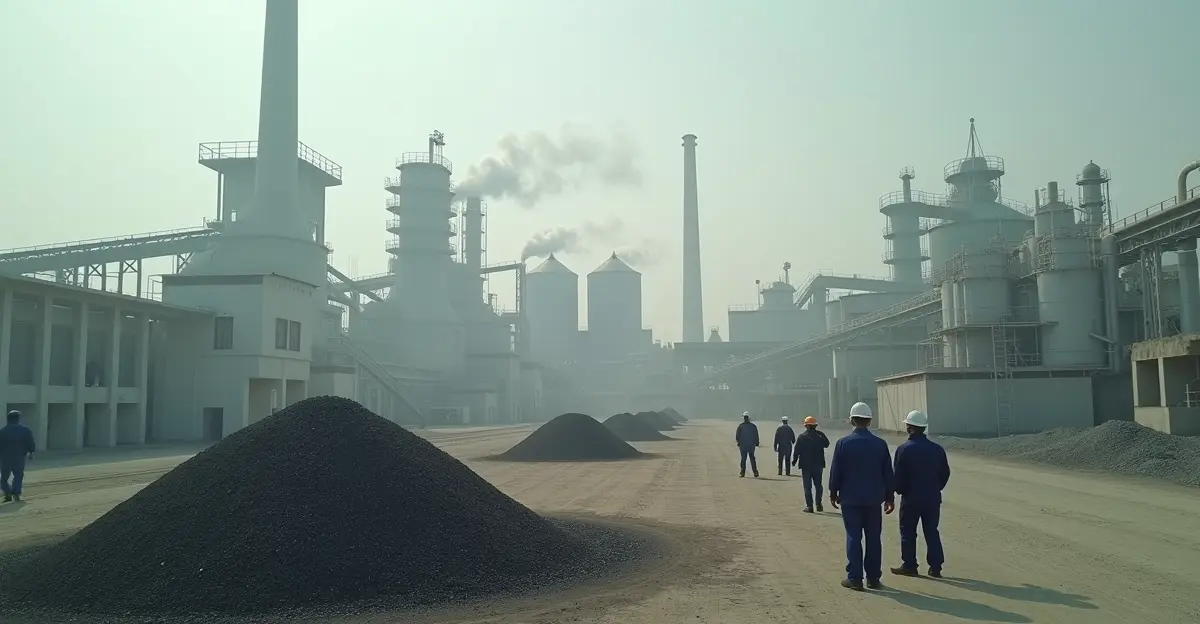
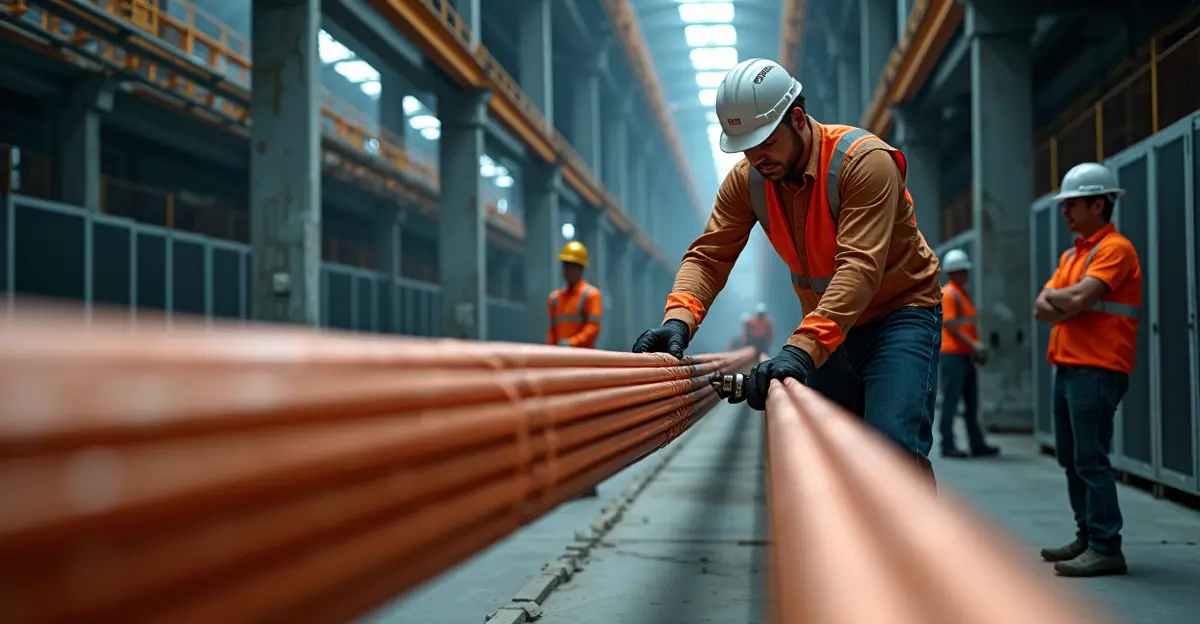
The AI infrastructure buildout requires vast quantities of critical minerals — from copper and nickel for power cables and transformers to rare earth elements for high-performance magnets in cooling systems and advanced electronics. Yet these supply chains remain dangerously concentrated.
China's Rare Earth Dominance
China controls approximately 69% of global rare earth mine production and nearly 90% of global refining capacity, according to USGS 2026 data. In October 2025, China tightened export controls on five rare earth elements, and in April 2025, it imposed fresh controls on seven medium and heavy rare earth elements, requiring MOFCOM licenses with processing times up to 45 days. These measures have caused prices for key materials like samarium and dysprosium to surge up to sixfold, disrupting Western supply chains.
DRC Cobalt Quotas
The Democratic Republic of the Congo, which supplies 74% of global cobalt mine production, implemented a quota-based export management system for 2026-2027, capping annual exports at 96,600 tonnes — less than half of 2024's production of approximately 204,000 tonnes. Cobalt prices have surged 160% from February 2025 lows to reach $26 per pound by mid-2026, reflecting structural repricing of concentrated supply risk. Actual exports may reach only 30,000-45,000 tonnes annually due to administrative bottlenecks.
The critical minerals supply chain is becoming a central arena for geopolitical competition, with nations racing to secure access to these strategic resources.
Government Interventions: Export Restrictions and Partnerships
According to UNCTAD's June 2026 Global Trade Update, nearly 100 new export measures — including licensing requirements, taxes, and bans — have been introduced on critical minerals since 2020. At the same time, critical mineral partnerships are expanding rapidly, with 58 agreements signed since 2022 out of 73 identified globally. UNCTAD warns that without stronger international coordination, critical minerals trade risks fragmenting into competing blocs.
The OECD Inventory of Export Restrictions on Critical Raw Materials 2026 documents the growing use of trade barriers as governments seek to secure domestic supply chains. The OECD export restrictions database shows a clear trend toward resource nationalism across both developed and developing economies.
The US Response: Critical Minerals Ministerial 2026
On February 4, 2026, the United States hosted the inaugural Critical Minerals Ministerial in Washington, D.C., led by Secretary of State Marco Rubio alongside Vice President JD Vance, with representatives from 54 countries and the European Commission. Key outcomes included signing 11 new bilateral critical minerals frameworks or MOUs with countries including Argentina, Morocco, Peru, and the UAE; launching the Forum on Resource Geostrategic Engagement (FORGE) as the successor to the Minerals Security Partnership; and mobilizing over $30 billion in US government support for critical minerals projects over the preceding six months.
Notably, the Export-Import Bank approved a $10 billion loan for Project Vault to establish a US Strategic Critical Minerals Reserve. The initiative emphasizes partnership with the private sector, including through Pax Silica, to build secure, diversified, and resilient end-to-end supply chains for technologies like AI, robotics, and batteries.
Economic and Geopolitical Implications
The convergence of AI-driven energy demand and critical mineral supply constraints is creating structural shifts in global trade and investment. The geopolitics of critical minerals is now a defining feature of international relations, with nations forming competing blocs around resource access.
UNCTAD warns that current mineral deal structures leave developing nations at a disadvantage, capturing only a small fraction of the value generated from their resources. The report calls for renegotiating these deals to ensure fairer terms, greater local processing, and more equitable benefit-sharing.
The fragmentation is already costing the global economy an estimated $213–$307 billion annually, according to analyses cited by the Andersen Institute. Experts advocate a hybrid resilience strategy combining stockpiles, diversified allied sourcing, recycling, and targeted domestic production as the most feasible near-term approach.
FAQ
How much electricity will AI data centers consume in 2026?
Global data center electricity consumption is projected to reach 565 TWh in 2026, a 26% increase from 2025, with AI-optimized servers accounting for 175 TWh of that total.
Which countries dominate critical mineral supply chains?
China controls 69% of rare earth mine production and ~90% of refining capacity. The DRC supplies 74% of global cobalt. Indonesia accounts for 67% of nickel mine production.
How many export restrictions have been imposed on critical minerals since 2020?
Nearly 100 new export measures have been introduced since 2020, including licensing requirements, taxes, and bans, according to UNCTAD.
What was the outcome of the 2026 US Critical Minerals Ministerial?
The February 2026 ministerial launched FORGE, signed 11 new bilateral frameworks, mobilized $30 billion in US support, and approved a $10 billion loan for a strategic critical minerals reserve.
Will grid capacity be sufficient for AI data center growth?
Gartner warns that by 2030, with consumption exceeding 1,200 TWh, grid supply will be insufficient, urging efficiency upgrades, grid access securing, and investment in high-efficiency cooling and edge computing.
Conclusion
The AI energy boom is becoming a structural driver of both energy market transformation and geopolitical competition over strategic mineral resources. With data center electricity demand growing at four times the rate of other sectors and critical mineral supply chains fragmenting into competing blocs, governments and industries face a fundamental realignment of global trade and investment strategies. The choices made now — between cooperation and fragmentation, between resource nationalism and open markets — will determine whether critical minerals become a source of conflict or a foundation for resilient global growth.



Follow Discussion