


 Deutsch
 English
 Español
 Français
 Nederlands
 Português


 Share
Share




As artificial intelligence compute demand surges exponentially, data center operators are confronting a stark new reality: securing clean energy is no longer the primary bottleneck. According to multiple independent analyses by FP Analytics and industry specialists, access to physical critical minerals — including gallium, copper, lithium, and rare earth elements — now poses the greater strategic risk for AI infrastructure in 2026. With China controlling 98% of global primary gallium production and 60% of germanium refining, the semiconductor supply chain faces acute vulnerabilities that threaten to stall the AI revolution.
The New Strategic Bottleneck
For years, the data center industry focused on procuring renewable energy to power its growing fleet of servers. But the material intensity of AI hardware has shifted the calculus. Modern AI chips require gallium for compound semiconductors, germanium for fiber optics, rare earth elements for high-performance magnets, and vast quantities of copper for electrical wiring and cooling systems. The AI hardware supply chain has become a critical chokepoint.
FP Analytics, in a July 2025 issue brief produced with support from JCDREAM, identified that even a 30% disruption in gallium supplies could cause a $600 billion reduction in U.S. economic output. The brief examined how AI development is driving demand for minerals including palladium, indium, tantalum, silicon, and high-purity alumina — all of which face significant supply risks due to geopolitical concentration.
China's Dominance and Export Controls
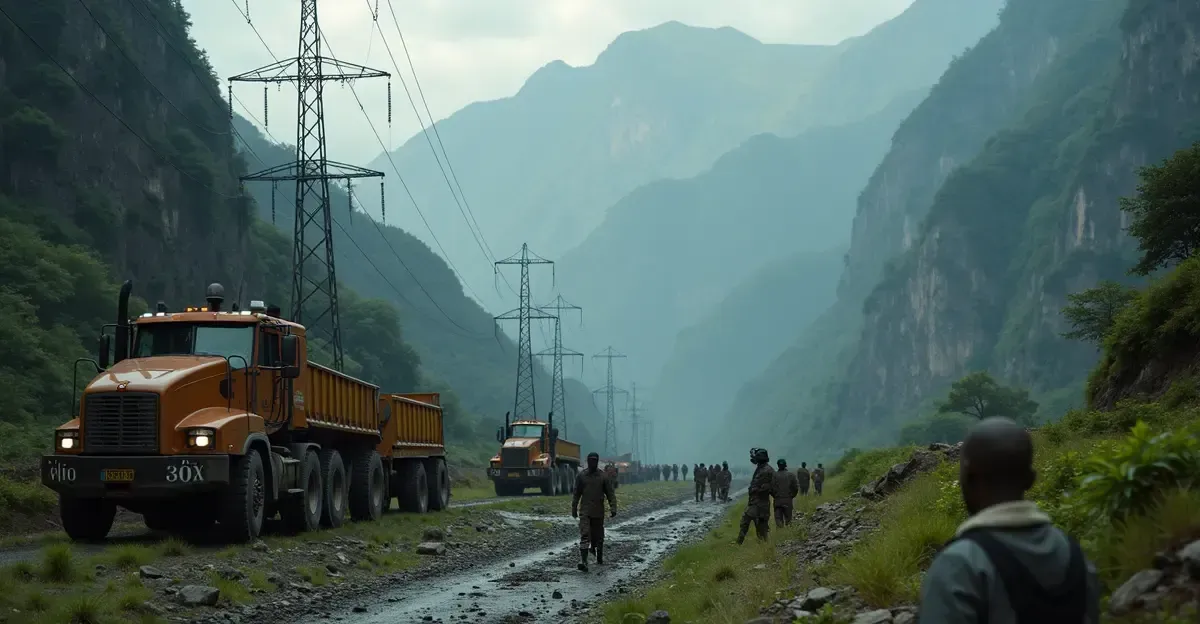
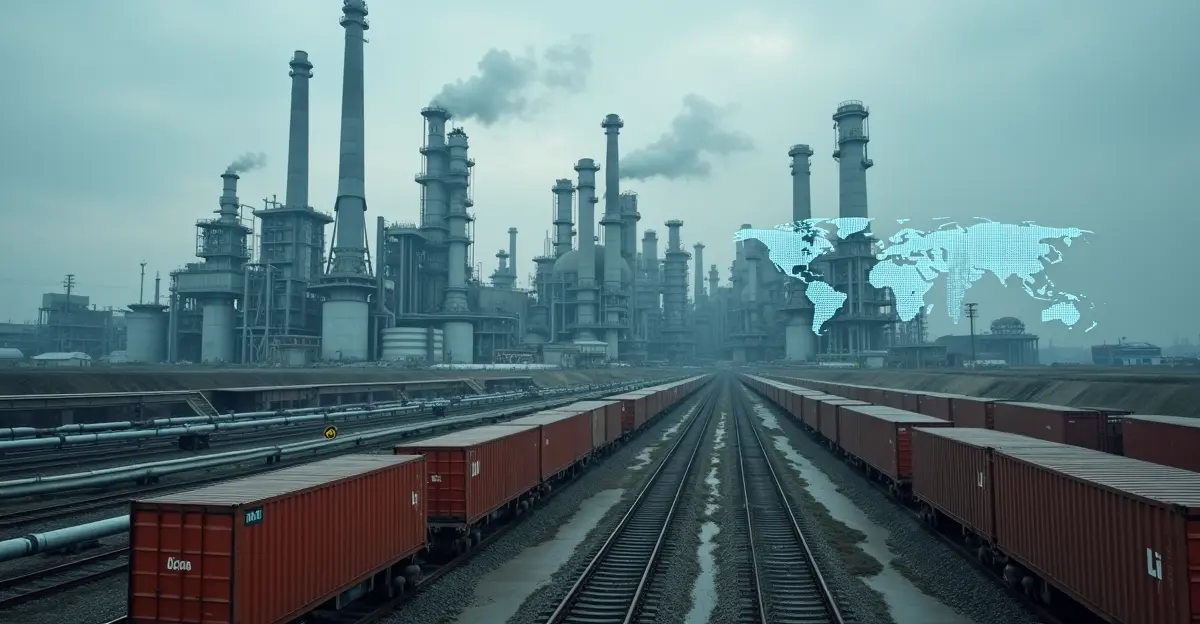
China's near-total control over critical mineral processing represents the core of the vulnerability. The country controls 98% of global primary gallium production and 60% of germanium refining, according to FP Analytics. Since August 2023, Beijing has deployed export controls on these materials, citing dual military-civilian use. In December 2024, China formalized a total ban on exporting gallium, germanium, antimony, and graphite to the United States and U.S.-linked companies — a direct retaliatory move against Washington's restrictions on advanced AI chips.
However, on November 9, 2025, China's Ministry of Commerce announced a temporary suspension of the export prohibition until November 27, 2026, for civilian trade. But the military end-use ban was never lifted, meaning defense and dual-use applications faced sustained sourcing difficulties even during the reprieve. The Tresslers Group, in a May 2026 intelligence dossier, warned that non-Chinese alternative capacity has expanded far more slowly than policy rhetoric suggested, with most Western projects still in permitting, pilot, or construction phases extending beyond the November 2026 expiration.
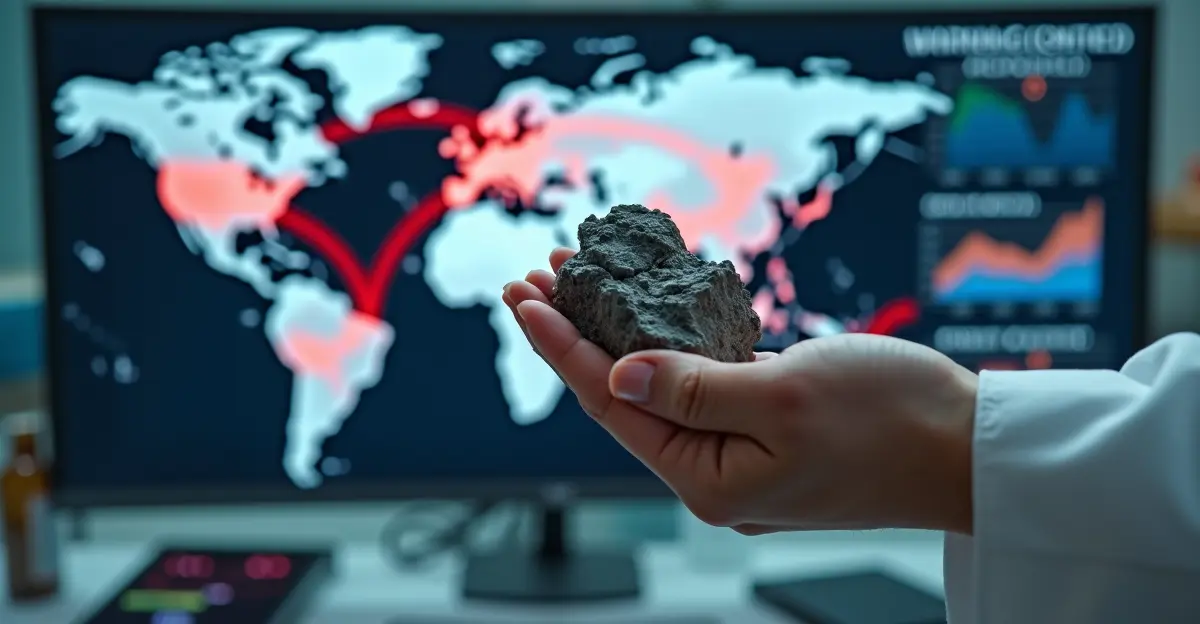
The geopolitics of critical minerals has thus become the defining challenge for AI infrastructure planners.
Multi-Billion-Dollar Responses
In response to these vulnerabilities, state-backed consortia and sovereign funds are pouring capital into critical mineral supply chains. In October 2025, the U.S. government and the Abu Dhabi government agreed to invest $1.8 billion alongside Orion Resource Partners to form the Orion Critical Mineral Consortium. Each partner contributed approximately $600 million to fund strategic mining projects across the globe, focusing on minerals essential for technology, defense, and clean energy sectors.
Canada followed suit in November 2025, announcing a C$2 billion Critical Minerals Sovereign Fund as part of its federal budget. Administered by Natural Resources Canada, the fund provides equity investments, loan guarantees, and offtake agreements. The budget also expanded the Critical Mineral Exploration Tax Credit to cover 12 additional minerals, including germanium, indium, and tantalum — directly targeting materials essential for AI hardware.
These critical mineral investment funds represent a new era of direct government intervention in supply chains.
Tech Giants Turn to Recycling
Technology companies are also taking matters into their own hands. Microsoft's Climate Innovation Fund has invested in Cyclic Materials, an advanced metals recycling company building a circular supply chain for rare earth elements. Cyclic Materials developed a patent-pending technology called CC360 that recovers rare earths from end-of-life hard drives — which are typically shredded for data destruction without recovering valuable minerals.
In a separate initiative, Microsoft launched a pilot project in April 2025 to recover rare earth elements and precious metals from obsolete hard drives collected in its data centers, collaborating with Western Digital, Critical Materials Recycling, and PedalPoint Recycling. The pilot processed 25 tons of discarded hard drives, extracting neodymium, praseodymium, dysprosium, gold, copper, aluminum, and steel. Currently, less than 10% of rare earths are recycled in the U.S., and Microsoft aims for zero waste by 2030.
Meanwhile, Australian data center operator GreenSquareDC partnered with Green Critical Minerals in April 2025 to develop heat sinks made from Very High Density (VHD) graphite for AI hardware thermal management. The material offers thermal diffusivity three times greater than aluminum and 2.6 times greater than copper, while being 80% lighter — reducing dependence on copper supplies.
Impact on AI Infrastructure Planning
The critical minerals crunch is reshaping how data centers are built and operated. The U.S. 2025 Critical Minerals List expanded to 60 commodities, adding copper, silicon, silver, and uranium — reflecting growing supply chain vulnerability across the board. Data center operators now find themselves in direct competition for raw materials with the defense, automotive, and renewable energy sectors.
According to the Tresslers Group dossier, structural dependency on Chinese processing remains permanent until alternative supply chains are established — a process requiring years to decades. The data center supply chain risks are forcing operators to secure long-term offtake agreements and invest directly in mining projects.
Expert Perspectives
"The strategic priority has shifted from procuring clean energy PPAs to actively acquiring physical minerals like copper, lithium, gallium, and graphite needed for AI servers, cooling systems, and renewable energy infrastructure," notes an analysis from Enkiai, a data center industry intelligence platform. "Securing mineral supply is now a national security imperative requiring direct government and technology company intervention."
FP Analytics emphasizes that AI itself offers potential solutions through improved mineral exploration and recycling technologies, but warns that policy action must accelerate. The brief recommends that policymakers focus on building resilient, responsible, and diversified critical mineral supply chains — particularly in regions like Washington State, home to major tech firms and data centers.
FAQ
What are critical minerals for AI data centers?
Critical minerals for AI data centers include gallium, germanium, copper, lithium, rare earth elements, palladium, indium, tantalum, silicon, and high-purity alumina. These materials are essential for semiconductors, fiber optics, cooling systems, and electrical infrastructure.
Why does China dominate critical mineral supply chains?
China controls 98% of global primary gallium production and 60% of germanium refining due to decades of strategic investment in processing capacity, lower environmental standards, and state-directed industrial policy. Western nations have largely outsourced mineral processing to China.
What is the Orion Critical Mineral Consortium?
The Orion Critical Mineral Consortium is a $1.8 billion partnership between the U.S. government, the Abu Dhabi government, and Orion Resource Partners, announced in October 2025. It invests in strategic mining projects to secure supply chains for minerals essential to technology, defense, and clean energy.
How are tech companies like Microsoft addressing the mineral shortage?
Microsoft is investing in rare earth recycling through Cyclic Materials and has launched a pilot project to recover rare earths from obsolete hard drives in its data centers. The company aims for zero waste by 2030 and is building domestic supply chains for critical minerals.
What happens after the November 2026 export control suspension?
China's temporary suspension of gallium, germanium, antimony, and superhard materials export bans expires on November 27, 2026. Without significant non-Chinese alternative capacity coming online, the resumption of controls could severely disrupt AI hardware supply chains.
Conclusion
The race to de-risk critical mineral supply chains is reshaping the geopolitics of AI infrastructure in 2026. With China's dominance unlikely to diminish in the near term, and Western alternative capacity years away from meaningful production, data center operators and governments must act decisively. Investment in recycling, diversification of sources, and strategic stockpiling will be essential to maintaining AI leadership. The era of assuming mineral availability is over — securing physical resources is now the defining challenge of the AI age.

Follow Discussion