


 Deutsch
 English
 Español
 Français
 Nederlands
 Português


 Share
Share




Critical Minerals Guide: How China's 19/20 Refining Dominance Reshapes Global Energy Security
The global energy security paradigm is undergoing a fundamental transformation as critical minerals replace traditional oil and gas as the primary strategic commodities. According to recent International Energy Agency (IEA) and World Economic Forum reports, China now controls refining for 19 out of 20 strategic minerals essential for renewable energy, electric vehicles, and advanced technologies. This concentration creates unprecedented vulnerabilities in global supply chains, with demand for these minerals projected to triple by 2030 as nations accelerate their energy transitions while simultaneously grappling with surging electricity demands from artificial intelligence data centers.
What Are Critical Minerals and Why Do They Matter?
Critical minerals are raw materials designated by governments as essential for economic and national security, particularly those with high supply chain disruption risks. These include lithium, cobalt, nickel, rare earth elements, copper, and graphite – all fundamental to clean energy technologies. The US critical materials list identifies 18 materials as "critical for energy," reflecting their strategic importance. Unlike traditional fossil fuels, these minerals are geographically concentrated, with China dominating processing and refining capacities. The IEA's 2025 Global Critical Minerals Outlook reveals that China accounts for 70% of refining for 19 strategic minerals, including 91% of rare earth separation and 94% of permanent magnet production.
China's Strategic Minerals Playbook
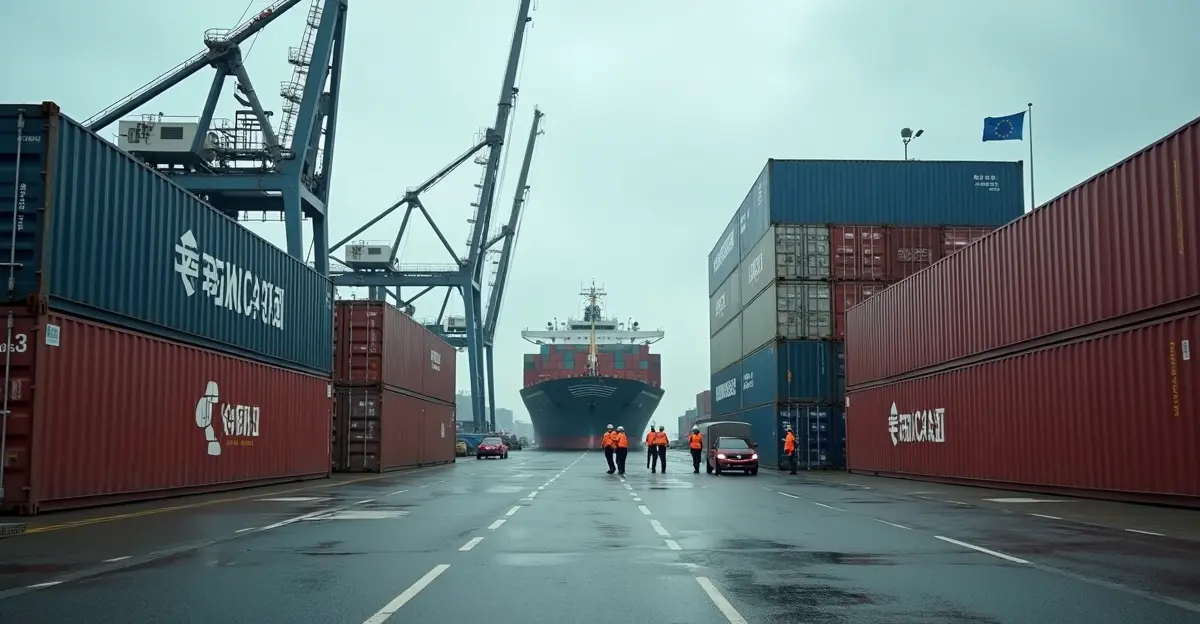
China's dominance in critical minerals represents decades of strategic planning and investment. According to a Washington Post analysis of China's critical minerals playbook, the country has systematically built control over the entire value chain – from mining to processing to manufacturing. This control gives Beijing significant geopolitical leverage, as demonstrated by recent export controls on rare earth elements and processing equipment that have already caused factory shutdowns in Europe and sent prices soaring to six times Chinese levels.
The 19/20 Refining Dominance
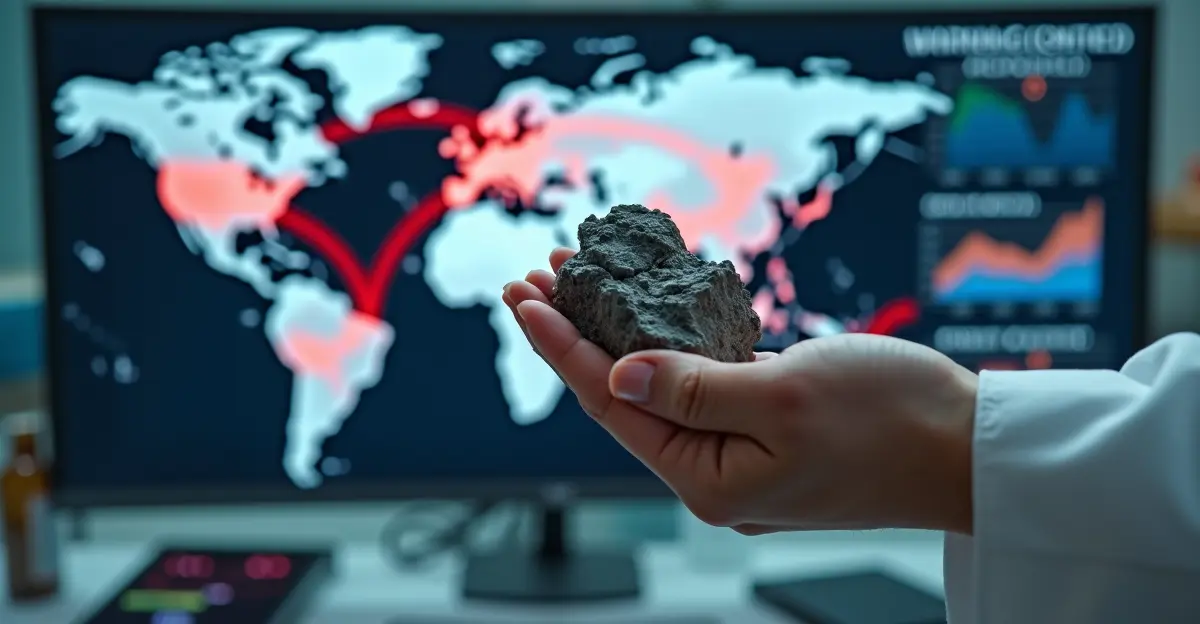
The most alarming statistic comes from IEA analysis: China dominates refining for 19 out of 20 strategic minerals. This includes:
- 91% of global rare earth separation/refining
- 94% of permanent magnet production
- 70% of cobalt refining
- 65% of lithium processing
- 44% of global copper refining
Recent export restrictions expanded in October 2025 to include "internationally made" products containing Chinese-sourced materials and five additional rare earth elements, threatening strategic sectors including energy, automotive, defense, semiconductors, aerospace, and AI data centers.
The Southern Africa Critical Minerals Corridor
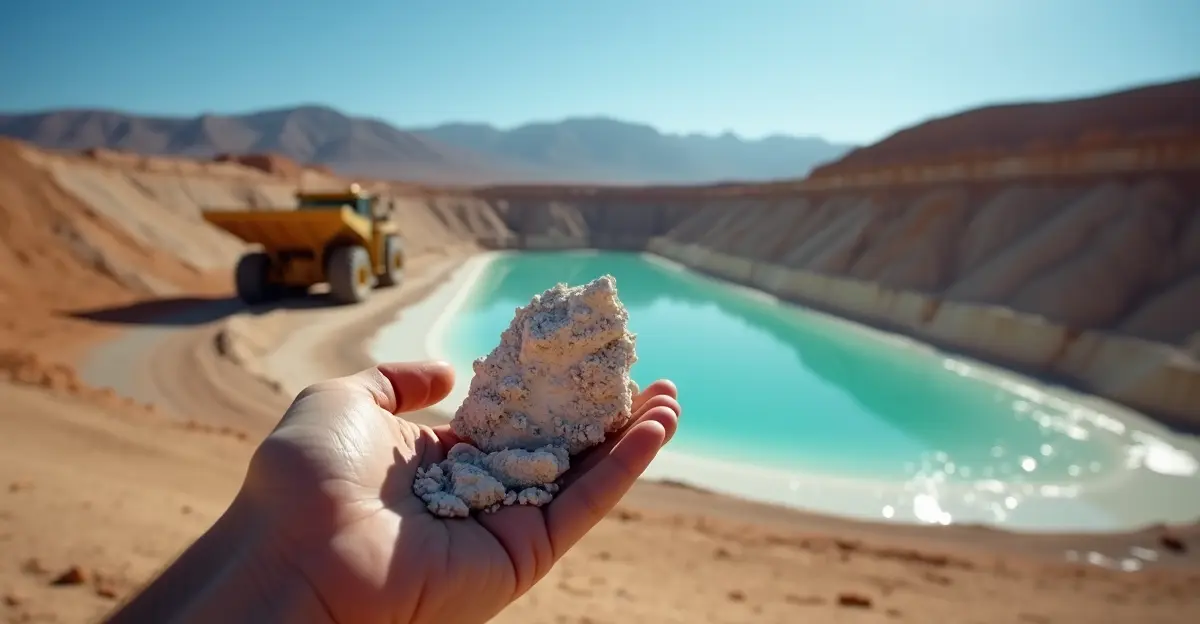
In response to China's dominance, nations are developing alternative supply chains, with Southern Africa emerging as a crucial corridor. South Africa's 2025 Critical Minerals and Metals Strategy positions the country as a key player in the global supply chain, focusing on minerals like platinum group metals, rare earth elements, and other strategic resources. The Africa critical minerals development initiative aims to leverage the continent's mineral wealth while ensuring environmental sustainability and equitable economic benefits.
Key Minerals in the Southern Africa Corridor
- Platinum group metals (South Africa holds 80% of global reserves)
- Rare earth elements (potential in Malawi, Tanzania, and South Africa)
- Lithium (Zimbabwe and Namibia emerging as significant producers)
- Cobalt (Democratic Republic of Congo remains dominant, with processing diversification efforts)
National Responses and Strategic Stockpiling
Governments worldwide are implementing comprehensive strategies to address critical minerals vulnerabilities. The United States updated its critical minerals list in November 2025, adding ten new minerals including copper, silicon, and silver while reflecting a broader strategy to reduce reliance on Chinese imports. The European Union has established its own critical raw materials list and is pursuing strategic partnerships with resource-rich nations.
Three-Pronged Response Strategy
- Strategic Stockpiling: Nations are building reserves of critical minerals, with the US Defense Logistics Agency leading efforts to secure materials essential for national security.
- Trade Agreements: Bilateral and multilateral agreements, such as the US-Australia critical minerals deal, aim to diversify supply chains and reduce dependence on single sources.
- Domestic Processing Initiatives: Countries are investing in domestic refining and processing capabilities, though building these industries takes significant time and capital.
AI Expansion and Energy Demand Intersection
The critical minerals challenge intersects with another major energy trend: surging electricity demand from artificial intelligence data centers. According to Deloitte analysis, generative AI is driving unprecedented growth in data center power consumption, which could roughly double from 536 TWh in 2025 to 1,065 TWh by 2030. AI data centers alone could consume over 40% of global data center power by 2026, reaching 90 TWh annually.
This creates a dual challenge: meeting escalating electricity demands while ensuring the minerals needed for renewable energy infrastructure remain secure. S&P Global research projects data center grid-power demand will increase by 22% in 2025 and nearly triple by 2030, placing substantial pressure on power grids and energy systems.
Geopolitical Implications and Alliance Reshaping
The concentration of critical minerals processing in China is reshaping global alliances and trade patterns. Traditional energy security frameworks focused on oil and gas are being replaced by minerals-based strategies that consider:
- Supply chain resilience and diversification
- Technological sovereignty in clean energy manufacturing
- Strategic partnerships with resource-rich nations
- Innovation in materials science and recycling technologies
The Council on Foreign Relations recommends an innovation-focused strategy to "leapfrog" China's dominance through disruptive technologies in materials science, waste recovery from mine tailings, and advanced recycling of e-waste.
Future Outlook and Policy Recommendations
As the world accelerates its energy transition while managing AI-driven electricity demand growth, critical minerals security will remain central to global policy discussions. The IEA projects demand for these minerals will triple by 2030, requiring unprecedented investments in mining, processing, and recycling infrastructure. Successful strategies will likely combine:
- Accelerated development of alternative supply chains through the Southern Africa minerals corridor
- Strategic stockpiling and international cooperation frameworks
- Investment in recycling technologies and circular economy approaches
- Innovation in substitute materials to bypass Chinese choke points
Frequently Asked Questions
What are critical minerals?
Critical minerals are raw materials designated as essential for economic and national security, particularly those with high supply chain disruption risks. They include lithium, cobalt, nickel, rare earth elements, copper, and graphite – all fundamental to clean energy technologies.
Why is China's dominance in critical minerals concerning?
China controls refining for 19 out of 20 strategic minerals, including 91% of rare earth separation and 94% of permanent magnet production. This concentration creates significant geopolitical leverage and supply chain vulnerabilities, as demonstrated by recent export controls that disrupted global industries.
How is AI expansion affecting critical minerals demand?
AI data centers are driving unprecedented electricity demand growth, which requires more renewable energy infrastructure that depends on critical minerals. AI data centers alone could consume over 40% of global data center power by 2026, creating dual pressures on both electricity generation and minerals supply chains.
What is the Southern Africa critical minerals corridor?
The Southern Africa corridor represents emerging alternative supply chains for critical minerals, with South Africa's 2025 strategy positioning the region as a key player in global minerals markets, particularly for platinum group metals and rare earth elements.
How are nations responding to critical minerals vulnerabilities?
Countries are implementing three-pronged strategies: strategic stockpiling of essential minerals, negotiating trade agreements to diversify supply chains, and investing in domestic processing capabilities to reduce dependence on single sources.


Follow Discussion