


 Deutsch
 English
 Español
 Français
 Nederlands
 Português


 Share
Share




Global Oil Reserves Hit Critical Lows as Geopolitical Risks Mount
The world's physical oil reserves have reached dangerously low levels, leaving the global market vulnerable to explosive price spikes at the slightest new geopolitical disruption, according to Lucia van Geuns, energy expert at the Hague Centre for Strategic Studies (HCSS). Speaking to BNR Nieuwsradio, van Geuns warned that both commercial and strategic oil reserves are nearly exhausted after months of coordinated releases aimed at stabilizing markets amid the Iran-Israel conflict and the closure of the Strait of Hormuz.
'We have truly hit the bottom of the physical oil reserves available in the world,' van Geuns said. 'The commercial reserve capacity has been used up, and the strategic reserves brought to market under the leadership of the International Energy Agency (IEA) are now also reaching their limits. In Europe, not entirely, but particularly in Asia.'
The Strait of Hormuz Crisis: A Market Under Pressure
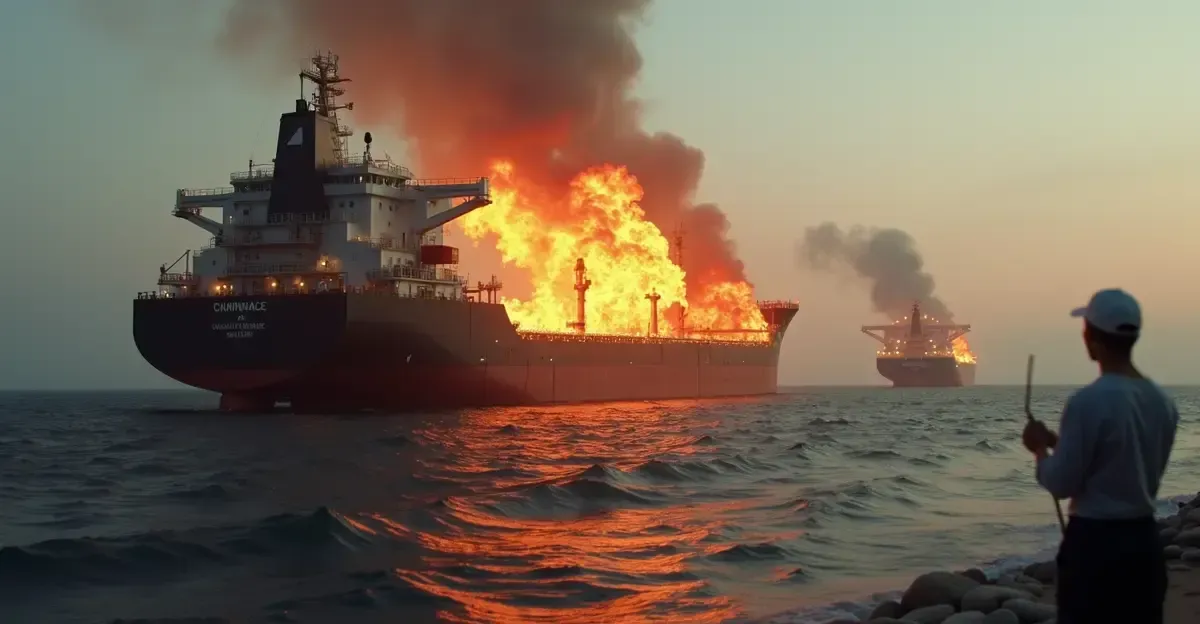
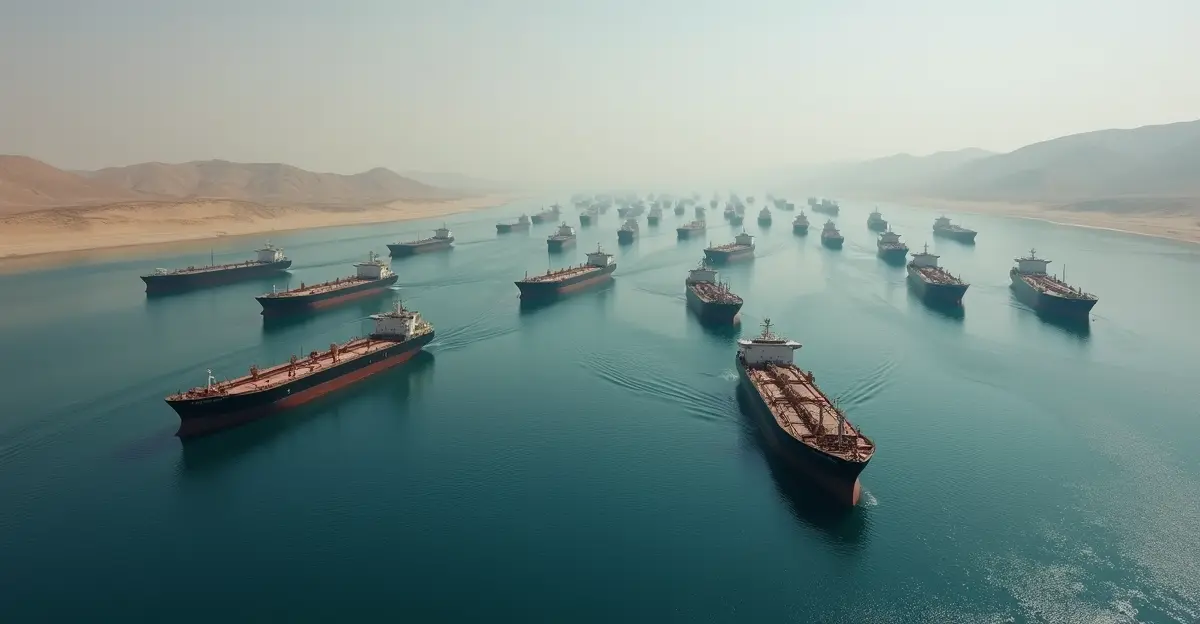
The crisis stems from ongoing tensions in the Middle East. According to Iran's state media, no further attacks on Israel are expected, but the fragile situation remains unpredictable. The Strait of Hormuz—a narrow chokepoint through which approximately 20 million barrels of oil pass daily, representing 20% of global seaborne trade—has seen transit collapse by an estimated 95% at the peak of disruptions. By March 2026, tanker loadings slowed to a trickle, causing a regional supply reduction of 8-10 million barrels per day.
The World Bank reported that Brent crude surged roughly 65% ($46 per barrel) in March 2026, the largest monthly rise in history. Global oil supply crashed by 10.1 million barrels per day due to attacks on energy infrastructure and tanker restrictions. While prices have since moderated, the market remains on a knife's edge. The Strait of Hormuz oil disruption continues to shape global energy security discussions.
Strategic Reserves Dwindle Worldwide
According to the U.S. Energy Information Administration (EIA), global strategic oil inventories totaled approximately 2.5 billion barrels by the end of 2025. However, coordinated emergency releases by IEA members in early 2026 have drawn down these buffers significantly. The United States' Strategic Petroleum Reserve (SPR) held 413 million barrels as of December 2025—down from a capacity of 714 million barrels. Japan held 263 million barrels in government inventories, South Korea 79 million barrels, and India just 21.4 million barrels.
Van Geuns emphasized that the lack of spare capacity is the core vulnerability. 'If something happens now, it could lead to explosive price increases,' she warned. 'We are talking about regional shortages, rationing, and logistical problems.' The global strategic petroleum reserve levels are now a critical concern for policymakers worldwide.
Asia Hit Hardest by Supply Crunch
Asian nations are bearing the brunt of the crisis. Over 80% of crude oil and LNG transiting the Strait of Hormuz is destined for Asian markets. Japan and South Korea import 80-90% of their crude from the Middle East with limited reserves, making them highly vulnerable. Vietnam, Singapore, India, and Indonesia are also severely affected.
'A very large part of the crude oil, but also oil products, passes through the Strait of Hormuz and heads their way,' van Geuns explained. India and Indonesia have been hit particularly hard by shortages of liquefied petroleum gas (LPG), which millions of people rely on for cooking. 'In that regard, you see that part of our globe is being hit very hard,' she added.
Demand Destruction and Market Resilience
Despite the tight supply, oil prices have remained relatively contained by historical standards, partly due to demand destruction. Higher prices are already curbing consumption. 'You do see some—what they call—demand destruction. That means there is less demand than, for example, a year ago,' van Geuns noted. The IEA projects global oil demand growth of just 0.5-1.1 million barrels per day in 2026, down from pre-crisis estimates.
However, the upcoming U.S. summer driving season—beginning in July—could reignite demand for gasoline and diesel, putting further upward pressure on prices. 'That is naturally very bad for Trump's voters,' van Geuns remarked, highlighting the political sensitivity of fuel prices in an election year. The impact of oil prices on US elections remains a key variable in market forecasts.
What Happens If the Strait Reopens?
Even if the Strait of Hormuz fully reopens, van Geuns cautioned that markets will not simply return to normal. 'It will never go back to normal,' she said. Energy flows would recover slowly, but the structural depletion of reserves means the system has lost its shock-absorbing capacity. 'Not much more needs to happen for prices to explode upward,' she warned.
Oil companies—both national and international—are already doing a great deal to keep the market functioning, according to van Geuns. Yet the margin for error has never been thinner. The IEA's coordinated release of strategic stocks, while effective in the short term, has left the world with minimal buffers against the next crisis.
FAQ: Global Oil Reserves and Price Risks
What is the current state of global oil reserves?
Global strategic oil inventories stood at approximately 2.5 billion barrels at end-2025, but emergency releases in early 2026 have significantly depleted these stocks. Commercial spare capacity is also largely exhausted.
Why are oil prices at risk of exploding?
With physical reserves at rock bottom and geopolitical tensions unresolved, any new disruption—whether in the Strait of Hormuz, production outages, or further conflict—could trigger sharp price spikes due to the lack of buffers.
Which countries are most affected by the oil shortage?
Asian nations such as Japan, South Korea, India, Vietnam, and Indonesia are the hardest hit, as they rely heavily on Middle Eastern oil and LNG transiting the Strait of Hormuz.
How high could oil prices go?
Analysts warn that Brent crude could reach $95-$115 per barrel if hostilities escalate or disruptions persist. The World Bank projects an average of $86/bbl for 2026 under a baseline scenario, but with significant upside risks.
What is demand destruction and how does it affect prices?
Demand destruction occurs when high prices reduce consumption, acting as a natural brake on price increases. Van Geuns notes that demand is already lower than a year ago, which helps balance the market somewhat.


Follow Discussion