


 Deutsch
 English
 Español
 Français
 Nederlands
 Português


 Share
Share




The effective closure of the Strait of Hormuz since 28 February 2026 has triggered the largest oil supply disruption in history, severing over 20% of the world's oil and LNG flows and sending Brent crude above $126 per barrel at its peak. This strategic chokepoint crisis, sparked by the U.S.-Israeli air war against Iran and Iran's retaliatory blockade, is now reshaping the global energy order in ways that will reverberate for years. The European Commission's Spring 2026 Economic Forecast and the World Bank's April 2026 Commodity Markets Outlook both cite the Strait of Hormuz disruption as the primary driver of the current global economic slowdown, making this the most consequential geoeconomic event of 2026.
Context: The Largest Energy Supply Disruption Since the 1970s
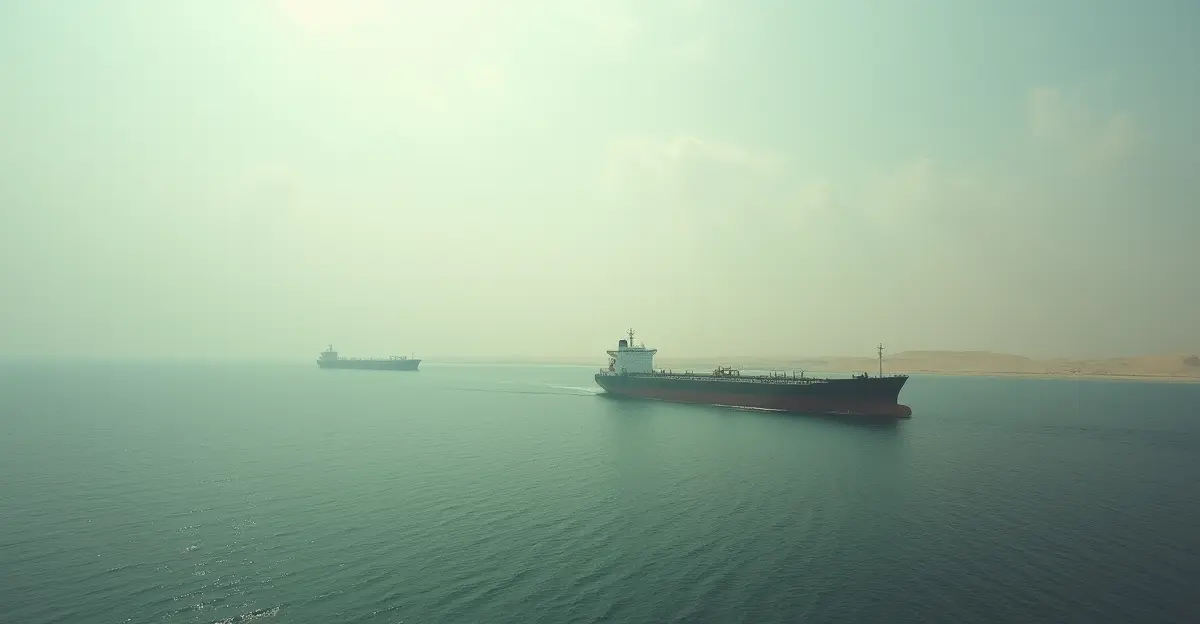
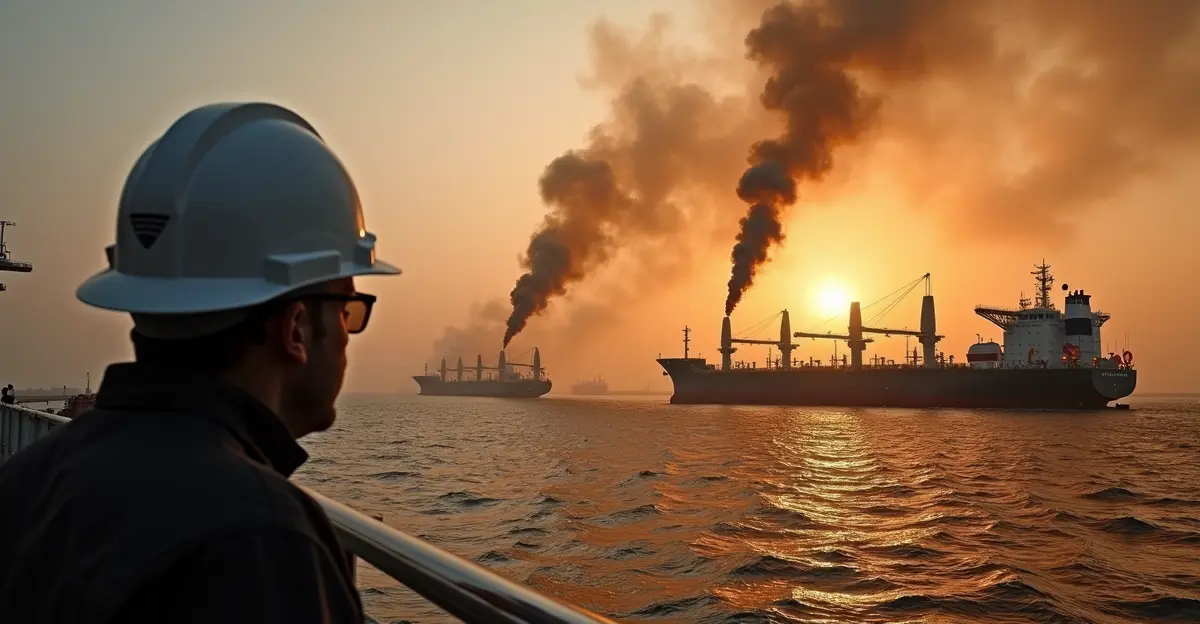
The Strait of Hormuz, a 34-kilometer-wide waterway between Iran and Oman, normally handles around 20 million barrels of oil per day — roughly 20% of global seaborne oil trade and 20% of LNG shipments. On 28 February 2026, the United States and Israel launched an air war against Iran and assassinated Supreme Leader Ali Khamenei. In retaliation, Iran's Revolutionary Guard Corps (IRGC) issued warnings forbidding passage, attacked merchant ships, and laid sea mines. Tanker traffic dropped by about 70% within days and soon fell to near zero. By 21 April, the International Maritime Organization reported that approximately 20,000 mariners and 2,000 ships were stranded in the Persian Gulf.
The crisis produced the largest-ever monthly increase in oil prices. Brent crude surpassed $100 per barrel on 8 March for the first time in four years, peaking at $126 per barrel. The Dallas Federal Reserve's analysis models three scenarios: a one-quarter closure would raise WTI to $98/barrel and lower global GDP growth by 2.9 percentage points annualized in Q2 2026; a two- or three-quarter closure could push oil to $115–$132/barrel with negative growth through year-end. Analysts from Wood Mackenzie and Vanda Insights suggest $200 oil is within sight if the strait remains closed. The 2026 global energy crisis has also disrupted aluminum, fertilizer, and helium markets.
Economic Fallout: Stagflation Grips the EU
The European Commission's Spring 2026 Economic Forecast, released on 21 May 2026, projects EU GDP growth dropping to 1.1% in 2026 — down from 1.5% in 2025 — while inflation surges to 3.1%, a full percentage point higher than previously expected. Euro area growth is even weaker at 0.9%. Consumer confidence has hit a 40-month low, and employment growth is projected to slow to 0.3%. The general government deficit is expected to widen from 3.1% to 3.6% of GDP by 2027, driven by subdued activity, higher interest spending, energy price support measures, and increased defense spending.
The World Bank's April 2026 Commodity Markets Outlook warns that the Middle East war will trigger the biggest energy price surge in four years. Overall commodity prices are forecast to rise 16% in 2026, with energy prices surging 24%. Brent oil is forecast to average $86/barrel in 2026 (up from $69 in 2025), while fertilizer prices are projected to increase 31%, threatening crop yields and food security. Under an escalation scenario, Brent could average $115/barrel and inflation in developing economies could rise to 5.8%. The EU stagflation crisis 2026 is deepening as energy costs ripple through manufacturing, transport, and agriculture.
Structural Re-routing of Energy Supply Chains
The crisis is accelerating a structural re-routing of global energy supply chains. The International Energy Agency's 2026 World Energy Investment report calls this "the largest energy security crisis the world has ever faced," with global energy investment projected to reach $3.4 trillion in 2026. Critically, $2.2 trillion is flowing to low-emissions sources, grids, and efficiency — a clear sign that the crisis is pushing import-dependent economies toward faster electrification and renewable energy deployment. Solar alone will draw $365 billion of the roughly $665 billion in renewables investment, while grid spending approaches $550 billion (up 20% year-on-year) and battery storage investment exceeds $100 billion.
Bypass Pipelines: Partial Relief, Structural Vulnerability
Gulf states are confronting the vulnerability of even their bypass pipelines. Saudi Arabia's East-West Pipeline (Petroline) runs 1,200 km to the Red Sea with a capacity of up to 7 million barrels per day, while the UAE's Habshan-Fujairah Pipeline (ADCOP) exports 1.8 million bpd directly to the Gulf of Oman. Iraq's Kirkuk-Ceyhan Pipeline to Turkey's Mediterranean port offers additional capacity. However, their combined capacity of roughly 9-10 million bpd falls far short of the 20 million barrels that previously moved through the strait. Moreover, these alternatives are themselves vulnerable — Iran attacked Saudi Arabia's pipeline and the UAE's Fujairah port during the conflict.
Proposed projects include the Iraq Basra-Haditha Pipeline (2.25-2.5 mb/d planned, possibly flowing by late 2026) and the revival of the 1.65 mb/d Iraq Pipeline through Saudi Arabia (IPSA), closed since 1990. The ambitious India-Middle-East-Europe Economic Corridor (IMEC) envisions an overland multimodal route bypassing both Hormuz and Bab al-Mandeb, but faces political challenges and a timeline toward 2030. The Middle East energy supply chain disruption has exposed the structural fragility of relying on a single chokepoint.
Fracturing the Middle East's Traditional Export Architecture
The crisis is fracturing the Middle East's traditional export architecture. Gulf states, deeply distrustful of Iran after the attacks on their pipeline infrastructure, are now seeking permanent bypass solutions. The IEA warns that the $110 trillion global economy has been held hostage by a narrow waterway, urging investment in diversified, multi-corridor export routes. However, such infrastructure requires massive investment — pipeline costs are estimated between $5 billion and $20 billion — and time, with near-term incremental expansions potentially reaching 12-13 million bpd within 3-5 years.
The dual blockade — with the US Navy blockading Iranian ports from 13 April to 29 May while Iran blockaded the Gulf — created an unprecedented standoff. President Trump's Operation Project Freedom, launched on 4 May to escort merchant ships out of the Gulf, was paused just two days later amid ceasefire negotiations. The situation remains fragile, with the ceasefire under strain and the strait only partially reopened under Iranian tolling conditions.
Expert Perspectives
"This is the largest energy security crisis the world has ever faced," said IEA Executive Director Fatih Birol, drawing parallels with the 1970s oil shocks. The Dallas Fed notes that the disruption is three to five times larger than previous geopolitical disruptions like the 1973 Yom Kippur War or the 1990 Gulf War. Economy Commissioner Valdis Dombrovskis confirmed that the EU faces a stagflationary shock, with growth potentially slowing to 0.8% in the worst case while inflation could rise by up to 1.5 percentage points above previous forecasts.
The 2026 oil supply disruption impact is being felt most acutely in import-dependent developing economies. The World Bank warns that fragile states like Lebanon, Jordan, Egypt, and several sub-Saharan African nations are particularly vulnerable to the combined shocks of higher energy, fertilizer, and food prices.
FAQ
What caused the Strait of Hormuz closure in 2026?
The closure began on 28 February 2026 after the US and Israel launched an air war against Iran and assassinated Supreme Leader Ali Khamenei. In retaliation, Iran's IRGC blocked the strait by attacking merchant ships, laying sea mines, and issuing passage bans.
How much oil flows through the Strait of Hormuz?
Normally, about 20 million barrels of oil per day pass through the strait, representing roughly 20% of global seaborne oil trade and 20% of LNG shipments.
What are the alternative routes to bypass the Strait of Hormuz?
Key alternatives include Saudi Arabia's East-West Pipeline (Petroline), the UAE's Habshan-Fujairah Pipeline (ADCOP), Iraq's Kirkuk-Ceyhan Pipeline, and the longer Cape of Good Hope detour around Africa. The India-Middle-East-Europe Corridor (IMEC) is a longer-term multimodal project.
How high could oil prices go?
Brent crude peaked at $126 per barrel in March 2026. Analysts from Wood Mackenzie and Vanda Insights suggest $200 per barrel is possible if the strait remains closed. The World Bank's baseline forecast averages $86/barrel for 2026, with an escalation scenario reaching $115/barrel.
What is the economic impact on the EU?
The European Commission's Spring 2026 Forecast projects EU GDP growth dropping to 1.1% with inflation at 3.1%. The crisis has pushed the EU into stagflation — low growth combined with rising inflation — with consumer confidence at a 40-month low.
Conclusion: A Structural Shift in the Global Energy Order
The Strait of Hormuz closure of 2026 is not merely a temporary disruption — it is accelerating a fundamental restructuring of global energy supply chains. Import-dependent economies are pushing faster toward electrification and renewables, Gulf states are confronting the vulnerability of their export architecture, and the world is waking up to the risks of relying on a single maritime chokepoint for 20% of its energy supply. The crisis has already reshaped investment patterns, with record flows into renewables, grids, and storage. Whether the strait reopens fully or not, the global energy order of 2027 will look fundamentally different from the one that existed before 28 February 2026.

Follow Discussion