


 Deutsch
 English
 Español
 Français
 Nederlands
 Português


 Share
Share




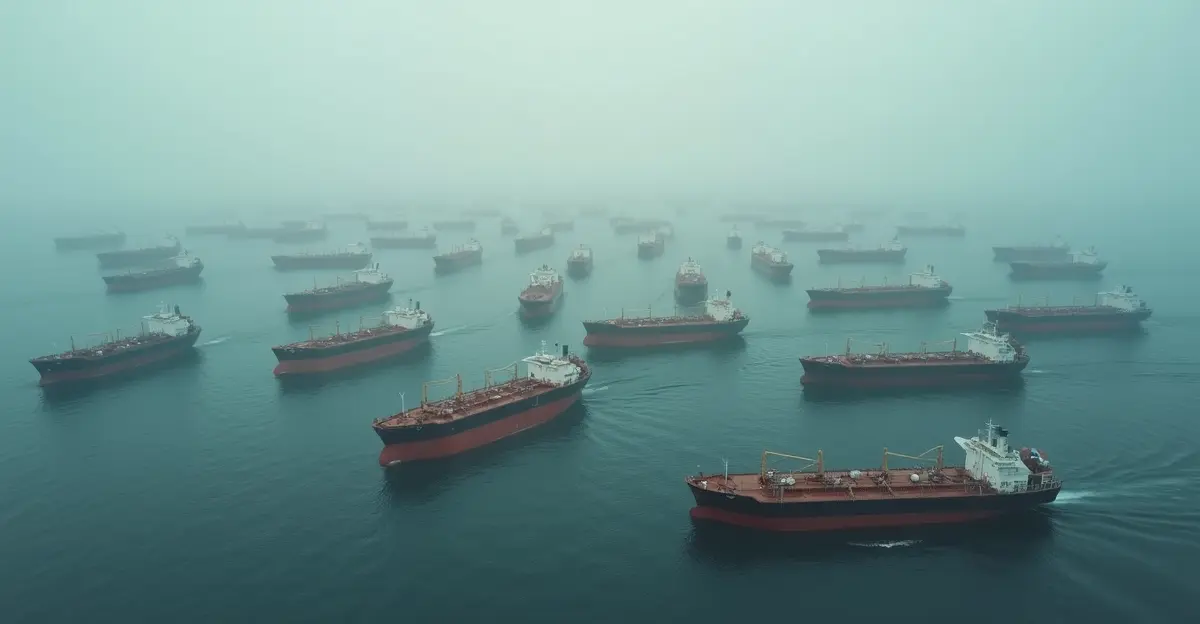
The de facto closure of the Strait of Hormuz following the February 28, 2026 US-Iran conflict has triggered the largest disruption to global oil markets in history, removing nearly 20% of global oil supply and sending shockwaves through energy, trade, and financial systems worldwide. As of April 2026, the strait — through which roughly 20 million barrels of oil and 20% of global LNG transit daily — remains effectively shut, with ship crossings plummeting from 129 per day in early February to just 6 by late March, according to UNCTAD. This article analyzes how the crisis is fundamentally recalibrating strategic assumptions behind energy security, supply chain resilience, and monetary policy in 2026.
Background: The February 28 Escalation and Immediate Fallout
The 2026 Iran war began on February 28 when the United States and Israel launched Operation Epic Fury, targeting Iranian missile sites, air defenses, military infrastructure, and leadership — killing Supreme Leader Ali Khamenei and dozens of top officials. Iran retaliated with hundreds of missiles and thousands of drones across the Middle East, targeting US embassies, military installations, and oil infrastructure, including vessels in the Strait of Hormuz. Within days, Iran effectively closed the strait by mining the waterway and threatening shipping, triggering the largest oil supply disruption since the 1973 Arab oil embargo — and three to five times larger in scale, according to the Dallas Federal Reserve.
Brent crude surged from $61 per barrel before the conflict to a peak of $138, before settling near $106 after a fragile ceasefire was agreed on April 7–8. The US Strategic Petroleum Reserve was drawn down to 243 million barrels — its lowest level since 1982. The crisis exposed what a CNN investigation described as a major intelligence failure: the Pentagon and National Security Council underestimated Iran's willingness and ability to close the strait, believing such a move would hurt Iran more than the US.
Energy Markets: The Largest Supply Shock in History
The Dallas Federal Reserve's working paper No. 2609 quantifies the impact under multiple scenarios. Under a one-quarter closure, West Texas Intermediate (WTI) crude would peak at $110 per barrel, adding 0.35 percentage points to headline PCE inflation in 2026. A two-quarter closure would push WTI to $132 per barrel (+0.79 pp to inflation), while a three-quarter closure could see WTI reach $167 per barrel (+1.47 pp to inflation). Core inflation rises more modestly but persistently, while long-term inflation expectations remain anchored — suggesting markets view the shock as supply-driven and potentially reversible.
Oil executives told the Dallas Fed in late April that there will be "no quick rebound" from the disruptions, signaling prolonged effects on global oil markets. The IMF's April 2026 World Economic Outlook presents three scenarios: a baseline (short conflict, oil at $82/barrel, global growth at 3.1%); an adverse scenario (oil at $100/barrel, growth at 2.5%, inflation at 5.4%); and a severe scenario (oil at $110–$125/barrel, disruptions into 2027, growth collapsing to 2.0% with inflation exceeding 6%). IMF Chief Economist Pierre-Olivier Gourinchas warned that the world drifts closer to the adverse scenario daily.
Beyond Oil: Fertilizers, Metals, and Petrochemicals
The crisis extends far beyond crude. The Strait of Hormuz is a critical artery for fertilizers (46% of global urea trade), sulfur, methanol, helium, and aluminum. According to UNCTAD, one-third of global seaborne fertilizer trade passes through the strait, threatening food security for vulnerable economies already struggling with debt and high import costs. The global fertilizer supply chain faces severe disruption, with prices surging and access for developing nations curtailed.
In petrochemicals, the World Petrochemical Conference 2026 reported that up to 20% of global ethylene capacity and nearly 40% of Asian naphtha supply have been disrupted. Industry leaders from Dow Inc. and LyondellBasell highlighted structural shifts including feedstock diversification away from naphtha and increased focus on energy-secure regions like the US. Even if the strait reopens, experts expect months to rebalance supply chains, with petrochemicals deprioritized behind crude oil, LNG, and refined fuels.
Aluminum prices have also spiked, as the Middle East aluminum production relies heavily on natural gas feedstocks transiting the strait. The crisis is driving a broader reassessment of supply chain dependencies on this single chokepoint.
Global Trade and Financial Stability Under Pressure
UNCTAD's April 2026 Global Trade Update projects that global trade growth will slow from 4.7% in 2025 to as low as 1.5% in 2026, with the Strait of Hormuz dispute emerging as the clearest near-term threat. Shipping disruptions are driving higher energy costs, tanker freight rates, and war-risk insurance premiums. Services trade has slowed, fuel costs are expected to raise travel expenses, and tighter digital trade restrictions could add further friction.
Financial conditions are tightening worldwide. Developing countries face falling stock prices, weakening currencies (African currencies down 2.9% against the USD, Latin America 2.3%, Developing Asia 1.0%), and rising external debt costs (yields up 0.64% in Africa, 0.70% in Developing Asia). The IMF warns of asymmetric impacts on energy importers and vulnerable economies, with difficult policy trade-offs between fighting inflation, preserving growth, and supporting those affected by rising living costs. The IMF global financial stability outlook has darkened considerably since the crisis began.
Countries closest to the conflict are hit hardest: Iran's GDP forecast was slashed by 7.2 percentage points to a contraction of 6.1%, Saudi Arabia's growth cut from 4.5% to 3.1%, and the Middle East and North Africa region's forecast dropped to 1.1%. Global inflation is now expected at 4.4%.
Strategic Recalibration: Energy Security and Supply Chain Resilience
The crisis is accelerating a structural shift toward regionalized, resilient supply chains. In response, 54 nations launched the FORGE (Forum on Resource Geostrategic Engagement) alliance to create a preferential trade zone for critical minerals, with over $30 billion mobilized in investments. The US is fast-tracking domestic energy production and strategic reserve replenishment, while European nations are accelerating renewable energy deployment and LNG import infrastructure.
McKinsey has urged procurement leaders to identify and mitigate vulnerabilities at bottleneck points, assessing supplier dependencies, building buffer capacity, and diversifying sources. The supply chain resilience strategies 2026 are being rewritten in real time as companies and governments grapple with the reality that a single chokepoint can paralyze the global economy.
Expert Perspectives
"This is the most consequential global strategic event of the year so far," said Alice Turner, geopolitical analyst. "The closure of the Strait of Hormuz has exposed deep structural vulnerabilities that policymakers and business leaders can no longer ignore."
UN Secretary-General António Guterres warned that the escalating crisis could push tens of millions into poverty, trigger a surge in global hunger, and even tip the world towards recession. UNCTAD urged de-escalation and restoration of stability, emphasizing that reducing risks requires safeguarding maritime infrastructure and maintaining secure trade corridors in line with international law.
Frequently Asked Questions
What caused the closure of the Strait of Hormuz in 2026?
The closure was triggered by the US-Israeli Operation Epic Fury against Iran on February 28, 2026, which killed Iran's Supreme Leader and targeted military infrastructure. Iran retaliated by mining the strait and threatening shipping, effectively closing the waterway to commercial traffic.
How much global oil supply has been disrupted?
Nearly 20% of global oil supply — about 20 million barrels per day — has been removed from the market, making this the largest disruption in history, three to five times larger than the 1973 Arab oil embargo.
What is the impact on global economic growth?
The IMF projects global growth could slow to between 2.0% and 3.1% in 2026 depending on the duration of the closure, down from 3.4% previously. UNCTAD warns trade growth could fall from 4.7% to as low as 1.5%.
How are developing countries affected?
Developing nations face currency depreciation, rising debt costs, higher food and energy import bills, and reduced fiscal space. African currencies have fallen 2.9% against the USD, and debt yields have risen sharply across emerging markets.
What are the long-term implications for energy security?
The crisis is accelerating diversification away from chokepoint-dependent supply chains, with nations investing in domestic energy production, renewable energy, strategic reserves, and alternative trade routes. The FORGE alliance of 54 nations is creating a preferential trade zone for critical minerals.
Conclusion and Future Outlook
The Strait of Hormuz crisis of 2026 represents a watershed moment for global economic governance. Even if the fragile April ceasefire holds and the strait gradually reopens, the structural damage to supply chains, investor confidence, and geopolitical trust will take years to repair. The 2026 geopolitical risk outlook has been permanently altered, with energy security now occupying the top of every policymaker's agenda. The world is learning a painful lesson: over-reliance on a single chokepoint is no longer a viable strategy for the 21st century global economy.
Sources
- Dallas Federal Reserve Working Paper No. 2609 (March 2026)
- IMF World Economic Outlook (April 2026)
- UNCTAD Global Trade Update (April 2026)
- UNCTAD Strait of Hormuz Disruptions Report (2026)
- McKinsey Operations Blog (April 2026)
- CNN Investigation (March 12, 2026)
- Politico (April 23, 2026)
- Britannica 2026 Iran War entry





Follow Discussion