


 Deutsch
 English
 Español
 Français
 Nederlands
 Português


 Share
Share




US Launches Third Night of Airstrikes on Iran Amid Strait of Hormuz Crisis
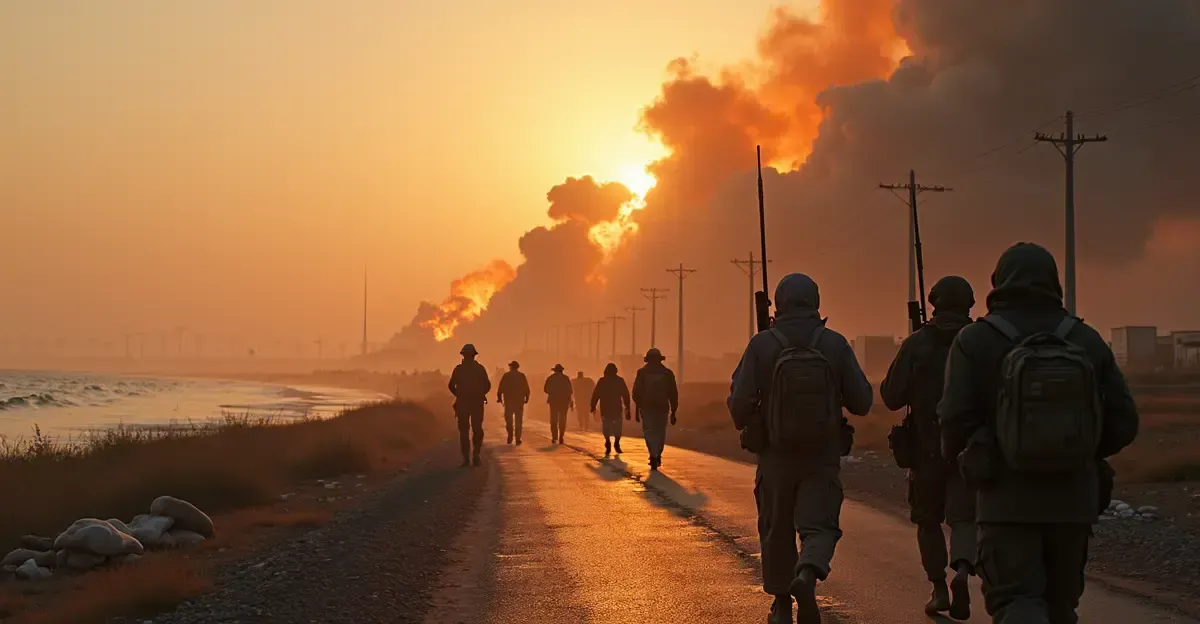
The United States military launched a third consecutive night of airstrikes against Iranian targets on July 13, 2026, escalating one of the most severe confrontations between the two nations in decades. The strikes, ordered by President Donald Trump, targeted Iranian air defense systems, coastal surveillance installations, missile batteries, and drone launch sites across southern Iran, according to U.S. Central Command. The operation comes after Iran attacked three commercial tankers in the Strait of Hormuz and closed the vital waterway, which carries approximately one-fifth of the world's oil and liquefied natural gas shipments.
Background: Collapse of the Ceasefire
The renewed hostilities mark a dramatic breakdown of the fragile interim U.S.-Iran agreement signed just last month, which was intended to reopen the Strait of Hormuz and de-escalate tensions. Under that deal, Iran was permitted to sell crude oil internationally under a special license. However, after Tehran targeted multiple vessels—including a Qatari LNG tanker—Washington revoked the license and resumed military operations. "We're either going to make a deal or we're going to finish the job," President Trump reiterated in a statement, underscoring the administration's hardline stance.
Indirect talks mediated by Qatar in Doha ended with no progress, as both sides remain entrenched in their positions. Iran has condemned the U.S. strikes as a breach of the ceasefire framework and warned of a decisive response. The escalating US-Iran conflict has drawn in regional players, with attacks reaching as far as Qatar, where three people were injured, and Bahrain, Jordan, and Oman reporting intercepted aerial threats.
Scope of the Military Operations
Targets and Tactics
According to U.S. Central Command, over 300 Iranian military targets have been struck over three nights, including 140 on July 11 alone. The strikes have focused on degrading Iran's ability to attack civilian mariners and commercial shipping. Key targets included:
- Air defense systems and radars in Sirik, Qeshm Island, and Bandar Abbas
- Coastal surveillance installations along the Persian Gulf
- Over 60 Revolutionary Guard fast-attack boats
- Missile and drone launch sites
Iranian media confirmed explosions in multiple locations, though Tehran has not released official casualty figures. The military strategy in the Middle East has shifted dramatically as the U.S. adopts a more aggressive posture to protect global shipping lanes.
Global Economic Impact
The Strait of Hormuz closure has sent shockwaves through global energy markets. Oil prices surged more than 3% on July 13, with Brent crude trading above $95 per barrel. Analysts warn that a prolonged disruption could push prices past $120, triggering a global recession. The U.S. has given Iran until July 17 to wind down oil transactions, but with hostilities ongoing, compliance appears unlikely.
Regional and International Reactions
The conflict has polarized the international community. Gulf states, including Saudi Arabia and the United Arab Emirates, have expressed concern over the instability but stopped short of condemning U.S. actions. Qatar, whose tanker was among those attacked, has blamed Iran for the escalation. Meanwhile, Russia and China have called for an immediate ceasefire, accusing Washington of violating international law. The European Union has urged restraint but has not imposed sanctions on either party.
In Iran, the situation is compounded by internal turmoil. Hundreds of thousands mourned the late Supreme Leader Ayatollah Ali Khamenei, who was killed in February 2026, in Qom. The succession process remains incomplete, leaving a power vacuum that complicates any potential diplomatic resolution.
Humanitarian Concerns
Civilians in southern Iran are bearing the brunt of the strikes. Reports from Bandar Abbas describe power outages and panic as explosions rock the city night after night. Humanitarian organizations have called for safe corridors for aid, but access remains restricted. The humanitarian crisis in the Persian Gulf is worsening as the conflict disrupts food and medical supply chains.
What's Next?
With no diplomatic breakthrough in sight, the immediate future points to further escalation. The U.S. has not ruled out ground operations, while Iran has threatened to expand its attacks to include U.S. bases in Iraq and Afghanistan. The United Nations Security Council is scheduled to hold an emergency session on July 15, but deep divisions among permanent members make a unified resolution unlikely.
Frequently Asked Questions
Why is the US striking Iran?
The U.S. launched strikes in response to Iranian attacks on commercial tankers in the Strait of Hormuz and the closure of the waterway, which threatens global oil supplies. Washington also revoked Iran's oil sales license after Tehran violated the interim ceasefire.
How many airstrikes have been conducted?
As of July 13, the U.S. has conducted three consecutive nights of airstrikes, hitting over 300 targets, including air defense systems, missile sites, and naval assets.
What is the Strait of Hormuz and why is it important?
The Strait of Hormuz is a narrow waterway between the Persian Gulf and the Gulf of Oman, through which about 20% of the world's oil and LNG passes. Its closure disrupts global energy markets and can trigger economic crises.
Is there a risk of a wider war?
Yes, the conflict has already spread to neighboring countries like Qatar, Bahrain, Jordan, and Oman. Further escalation could involve U.S. allies and draw in major powers like Russia and China.
What are the economic consequences?
Oil prices have risen over 3% and could exceed $120 per barrel if the crisis continues. Global stock markets have also declined amid uncertainty, with shipping and insurance costs spiking.
Sources
This article is based on reporting from Military Times, USA Today, The Boston Herald, and other verified news outlets. For the latest updates, follow trusted news sources and official statements from U.S. Central Command and the Iranian government.
Follow Discussion