


 Deutsch
 English
 Español
 Français
 Nederlands
 Português


 Share
Share




US Says Recent Iranian Attacks Do Not Violate Fragile Ceasefire
The United States has stated that the Iranian drone and missile attacks on the United Arab Emirates on May 4-5, 2026, do not constitute a violation of the fragile US-Iran ceasefire. During a press conference, US Defense Secretary Pete Hegseth and the highest-ranking US military officer, General Caine, confirmed that the US will not resume combat operations against Iran despite the strikes. The announcement comes as the US-led Project Freedom continues efforts to reopen the Strait of Hormuz to commercial shipping.
Background: The 2026 US-Iran War and Ceasefire
The conflict began on February 28, 2026, when the US and Israel launched airstrikes on Iran, killing its supreme leader and dozens of officials. Iran retaliated with missile and drone strikes on Israel, US bases, and allied Gulf states, and closed the Strait of Hormuz — a critical maritime chokepoint through which roughly 20% of the world's oil passes. After 40 days of hostilities, a two-week ceasefire was brokered by Pakistan on April 8, 2026. The truce has been repeatedly tested, with both sides accusing each other of violations. The 2026 Iran war ceasefire remains fragile as diplomatic efforts continue.
Iranian Attacks on the UAE: What Happened?
On May 4, Iran launched 15 missiles and drones targeting the Fujairah Oil Industry Zone, the largest commercial storage hub for refined crude in the Middle East. Three Indian nationals sustained moderate injuries. The following day, Iran struck again, hitting oil facilities around the Habshan-Fujairah oil pipeline (ADCOP) — a key alternative route bypassing the Strait of Hormuz that carries over 1 million barrels of oil daily. The UAE Defense Ministry said its air defenses intercepted 12 ballistic missiles, three cruise missiles, and four drones across the two days. The UAE condemned the attacks as a "dangerous escalation." The Iran-UAE conflict 2026 has raised regional tensions significantly.
Project Freedom: US Operation to Reopen the Strait
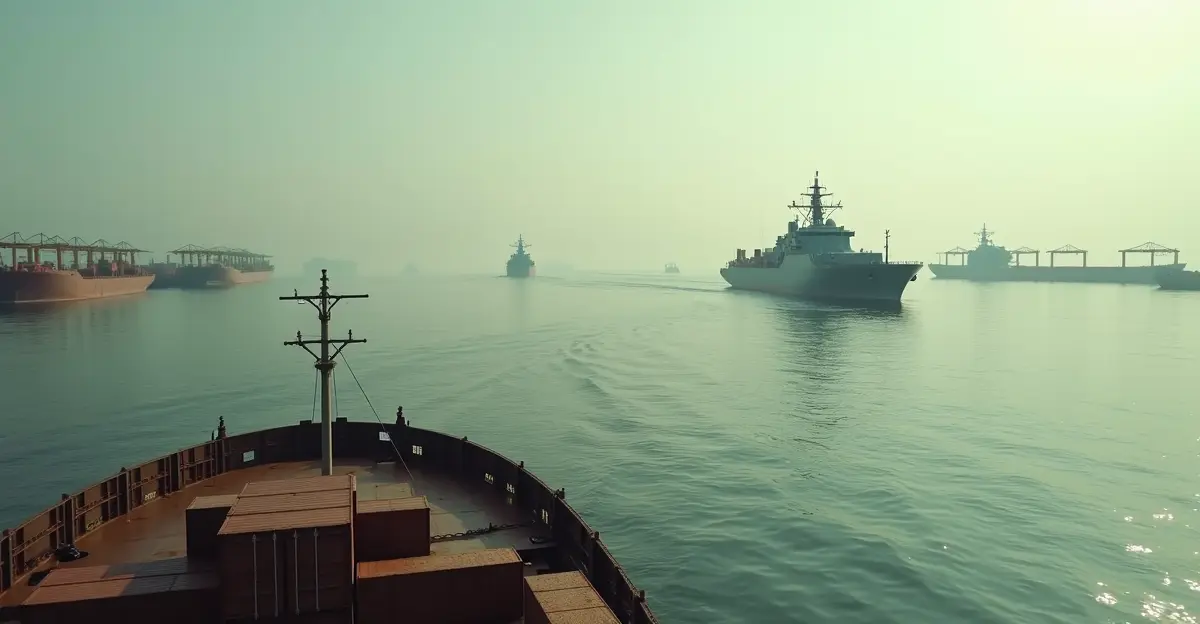
In response to Iran's blockade of the Strait of Hormuz, which has trapped over 1,550 vessels and 22,500 mariners, President Trump launched Project Freedom on May 4. The operation involves roughly 15,000 US service members, guided-missile destroyers escorting commercial ships, and a layered defense network including over 100 fighter jets, drones, and reconnaissance aircraft. On May 5, two US-flagged vessels successfully transited the strait under US naval escort. General Caine stated that the US expects to guide more stranded ships through the waterway in the coming days.
Iran's Response to Project Freedom
Iran reacted sharply to the US operation. After Trump announced the plan, Tehran warned: "Any American interference in the new maritime regime of the Strait of Hormuz will be considered a violation of the ceasefire." Iran's parliament speaker also warned of a new Iran-led order along the strait. Despite these threats, General Caine confirmed that US forces do not need to enter Iranian waters or airspace for Project Freedom, framing the mission as purely defensive.
Trump's Position: 'White Flag or Surrender'
President Trump addressed the situation from the Oval Office, stating: "Iran knows what it should not do. They must do what is smart. They must wave the white flag and surrender." He also claimed that Iran wants to make a deal with the US — a claim Tehran regularly denies, especially regarding US demands to give up its nuclear program. Trump estimated the conflict could last another two to three weeks but stopped short of declaring the ceasefire violated. On May 5, he paused further efforts to reopen the strait, citing progress in ongoing negotiations.
Global Economic Impact
The Strait of Hormuz disruption has caused severe economic fallout. According to WTO data, outbound crude oil flows through the strait have dropped by 95%, LNG by 99%, and fertilizer-related cargoes by 87% since the closure on February 28. Oil prices surged from $73 per barrel to $103 per barrel during the crisis. The UAE attacks further spooked markets, with stock markets falling sharply and oil prices rising on fears of prolonged conflict. The UAE subsequently restricted its airspace for a week, disrupting commercial flights. The global oil supply crisis 2026 continues to impact economies worldwide.
FAQ: US-Iran Ceasefire and Strait of Hormuz
What is the current status of the US-Iran ceasefire?
The ceasefire, originally a two-week truce brokered on April 8, 2026, remains in effect but is increasingly fragile. The US has stated that recent Iranian attacks on the UAE do not violate the ceasefire, though both sides have accused each other of breaches.
What is Project Freedom?
Project Freedom is a US military operation launched on May 4, 2026, to escort commercial vessels through the Strait of Hormuz, which Iran closed on February 28. The operation involves 15,000 US troops, naval destroyers, and air support to protect shipping.
Why is the Strait of Hormuz important?
The Strait of Hormuz is a narrow waterway between Iran and Oman through which approximately 20-25% of the world's oil and a significant share of LNG supplies transit. Its closure has caused global energy prices to spike and disrupted international trade.
Did Iran violate the ceasefire by attacking the UAE?
The US has stated that the attacks do not constitute a ceasefire violation. However, Iran warned that any US interference in the strait's maritime regime would be considered a violation. The UAE condemned the attacks as a dangerous escalation.
What are the US conditions for a permanent peace deal?
The US has proposed six conditions: a five-year halt to Iran's missile program; complete cessation of uranium enrichment; decommissioning of nuclear facilities at Natanz, Isfahan, and Fordow; external monitoring of centrifuges; regional arms control with a missile cap of 1,000 units; and termination of support to groups like Hezbollah, the Houthis, and Hamas.

Follow Discussion