


 Deutsch
 English
 Español
 Français
 Nederlands
 Português


 Share
Share




The United Arab Emirates (UAE) reported on May 4, 2026 that Iran launched multiple waves of missile and drone attacks against the country, wounding three Indian nationals and setting an oil refinery ablaze in Fujairah. The strikes mark the first major attack on the UAE since the US-Iran ceasefire came into effect on April 8, and have thrown the fragile truce into serious doubt.
The UAE Ministry of Defence stated that its air defense systems intercepted 12 ballistic missiles, three cruise missiles, and four drones launched from Iranian territory shortly after 5:30 PM local time. Debris from intercepted projectiles caused a fire at a petroleum processing facility in the coastal emirate of Fujairah, where three Indian migrant workers sustained moderate injuries.
Background: The Iran-US Ceasefire and Strait of Hormuz Crisis
The April 8 ceasefire between Iran and the United States ended months of direct hostilities that began with coordinated Israeli-US strikes on Iran in early 2026. However, peace negotiations in Islamabad collapsed on April 12, leading the US to impose a full naval blockade of Iranian ports using 12 warships and over 10,000 service members. Iran responded by tightening its grip on the Strait of Hormuz, through which approximately 20% of the world's oil passes. Daily vessel transits dropped from over 130 to near zero, with Iran losing an estimated $435 million per day.
The Strait of Hormuz crisis 2026 has become the largest supply disruption in global oil market history, according to the International Energy Agency, affecting 11 million barrels of oil daily. Brent crude prices surged to $96.57 per barrel, a 57% increase year-to-date.
May 4 Attacks: What Happened
Missile and Drone Barrage
According to the UAE Ministry of Defence, the attack unfolded in two waves. The first wave, around 5:30 PM, involved three cruise missiles aimed at UAE territory. A second wave followed shortly before 6:00 PM, consisting of 12 ballistic missiles and four drones. All were intercepted by UAE THAAD and Patriot defense systems. Residents across Dubai and Abu Dhabi reported hearing loud explosions as interceptor missiles engaged incoming projectiles.
Emergency alerts were sent to mobile phones across the UAE warning of a potential missile threat—the first such alert since the ceasefire began. The UAE also imposed a week-long airspace restriction, disrupting commercial flights at Dubai International Airport, one of the world's busiest travel hubs.
Attack on Oil Refinery in Fujairah
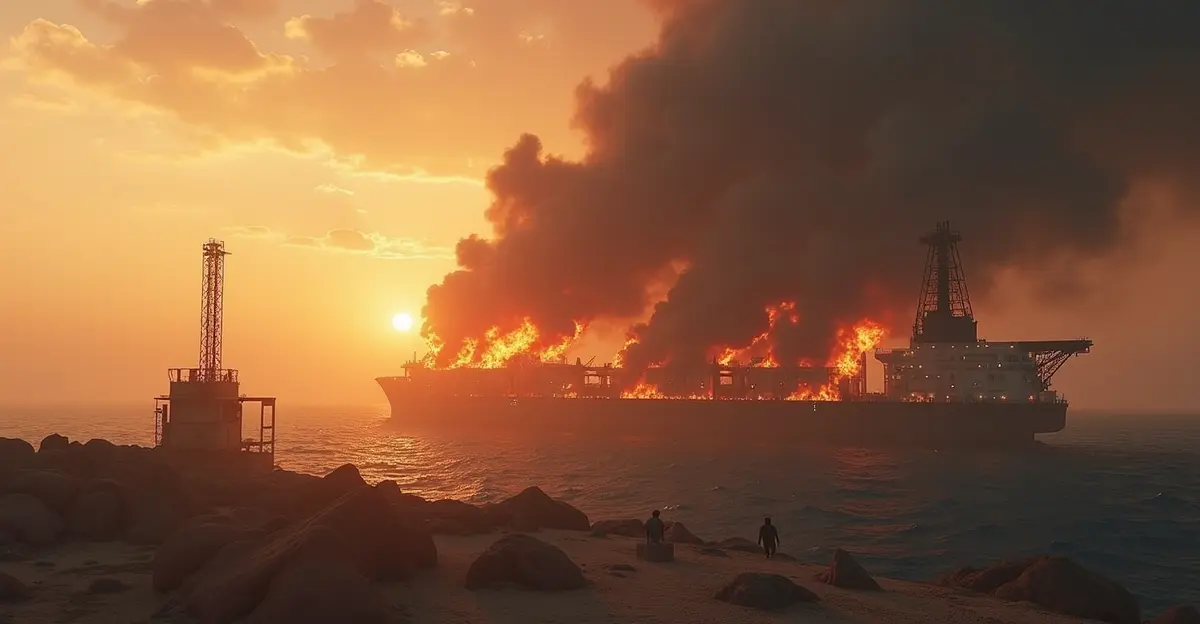
A drone strike struck an industrial area in Fujairah where petroleum is processed, causing a fire that was later brought under control. Three Indian nationals were treated for light injuries. The UAE's state oil company ADNOC confirmed that one of its affiliated tankers was also struck by a drone in the Strait of Hormuz.
US Response: Destroying Iranian Boats
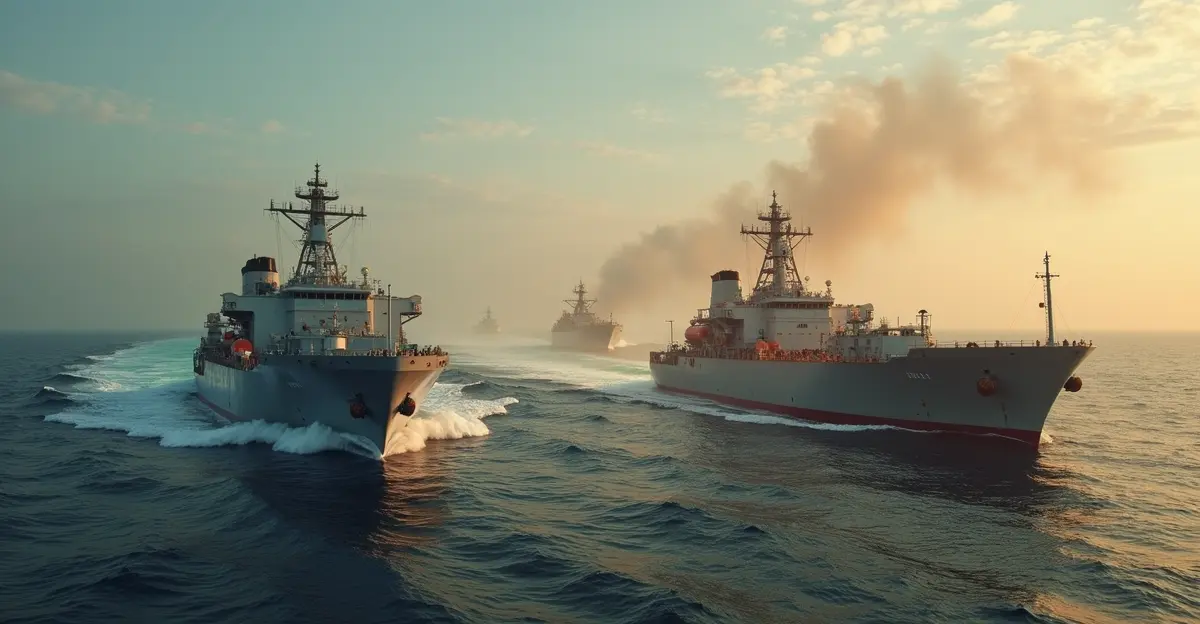
The US military announced that it destroyed six Iranian small boats that were interfering with commercial shipping in the Strait of Hormuz on the same day. Admiral Brad Cooper, head of US Central Command, stated that the IRGC launched multiple cruise missiles, drones, and small boats at US-protected vessels, all of which were defeated using defensive munitions.
"The IRGC launched multiple cruise missiles, drones, and small boats at protected ships, all of which were defeated using defensive munitions. We strongly advise Iranian forces to stay clear of US military assets," Admiral Cooper said.
President Donald Trump warned Iran that it would be "blown off the face of the earth" if it targets US ships protecting commercial vessels. The US operation to secure the Strait of Hormuz involves 15,000 troops, Navy destroyers, over 100 aircraft, and undersea assets.
Iran denied that any of its boats were sunk and dismissed the UAE's accusations, with state media quoting an anonymous official who claimed there was "no plan to attack the UAE" and blamed the incidents on "US military adventurism."
Global Reactions and Economic Fallout
The attacks drew widespread international condemnation. Saudi Arabia, Qatar, Kuwait, Bahrain, Jordan, Canada, Germany, the United Kingdom, and the European Union all denounced the strikes. The UAE warned it reserves the right to respond to the aggression.
Stock markets fell sharply on May 4, with major indices declining as investor confidence was shaken by the prospect of a renewed conflict. Oil prices spiked further, adding to inflationary pressures already affecting the global economy. The UAE moved schools to distance learning as a precautionary measure.
The Iran-US war negotiations 2026 remain deadlocked, with Iran's top negotiator warning that the country has "not even started" its standoff. President Trump indicated he would likely reject Iran's 14-point peace proposal, stating that "they have not paid a big enough price."
FAQ: Iran-UAE Attacks and Ceasefire Collapse
What did Iran launch at the UAE on May 4, 2026?
Iran launched 12 ballistic missiles, 3 cruise missiles, and 4 drones at the UAE. All were intercepted by UAE air defenses.
Were there any casualties in the UAE attacks?
Three Indian nationals sustained moderate injuries when a drone struck a petroleum processing facility in Fujairah. No fatalities were reported.
Did the US destroy Iranian boats?
Yes, the US military reported destroying six Iranian small boats that were interfering with commercial shipping in the Strait of Hormuz. Iran denied the claim.
Is the ceasefire between the US and Iran still in effect?
The April 8 ceasefire is under severe strain. Both sides have accused each other of violations, and negotiations for a permanent end to hostilities remain in deadlock.
How has the conflict affected oil prices?
Brent crude reached $96.57 per barrel on May 4, a 57% increase year-to-date, as the Strait of Hormuz crisis disrupted 11 million barrels of daily oil supply.
Sources
Information for this article was sourced from the UAE Ministry of Defence, US Central Command, CNBC, Al Jazeera, Gulf News, the Associated Press, and Reuters. Historical context draws from the 2026 Iran-UAE war timeline.

Follow Discussion