


 English
 Nederlands
 Deutsch
 Français
 Español
 Português

Daily News Summary – 2026-05-21 – en

The world faced multiple crises on May 21, 2026. The Strait of Hormuz closure continued to disrupt global energy markets, sending oil prices surging over 60% and threatening food security through fertilizer shortages. The WHO declared a Public Health Emergency for a rare Ebola outbreak in DRC and Uganda. A Pakistani court sentenced a man to death for murdering TikTok influencer Sana Yousaf. Germany arrested a couple for spying for China. North Korea's Naegohyang women's football team reached the Asian Champions League final. New marine species discoveries, AI-driven power demand, and the launch of the FORGE critical minerals alliance also marked the day. Geopolitical tensions and trade fragmentation are reshaping global supply chains.
WHO Declares Public Health Emergency as Bundibugyo Virus Spreads

The World Health Organization has declared the 2026 Ebola outbreak in the Democratic Republic of Congo and Uganda a Public Health Emergency of International Concern. The outbreak is caused by the rare Bundibugyo virus variant, with 51 confirmed cases and at least 139 suspected deaths as of May 20.
Court Verdict: Death Penalty for Umar Hayat

A Pakistani court sentenced Umar Hayat to death for the murder of 17-year-old TikTok influencer Sana Yousaf. The case sparked nationwide outrage over women's safety and online harassment. Hayat was convicted of breaking into Yousaf's home and fatally shooting her on June 2, 2025.
Historic Inter-Korean Football Match Ends with North Korean Victory

For the first time in eight years, a North Korean sports team competed on South Korean soil. Naegohyang Women's FC defeated Suwon FC Women 2-1 in the AFC Women's Champions League semifinal, advancing to the final against Tokyo Verdy Beleza.
German Authorities Arrest Munich Couple Suspected of Espionage for China

German police arrested a married couple in Munich on suspicion of spying for China, targeting scientists in aerospace, AI, and computer science. The couple allegedly posed as interpreters or car company employees to approach researchers and lure them to China under false pretenses.
Over 1,100 New Marine Species Found in Global Expeditions

Researchers discovered 1,121 new marine species over the past year as part of the Nippon Foundation-Nekton Ocean Census. Among the most remarkable finds are the drakefish (ghost shark) and a worm living inside a transparent 'glass castle'.
AI
AI Power Crunch: Data Centers Overwhelm Global Grids in 2026

In early 2026, U.S. electricity demand is projected to hit a record ~4,250 billion kWh, driven largely by AI workloads. Data centers are overwhelming electrical grids, triggering a structural crisis that utilities, regulators, and Big Tech are scrambling to address.
AI Power Demand Hits Grid Ceiling: The Nuclear Pivot

AI data centers are projected to consume over 1,000 terawatt-hours of electricity in 2026, rivaling Japan's total consumption. This is forcing a strategic pivot among Big Tech toward nuclear power, with Microsoft signing a deal to restart Three Mile Island.
Energy
Strait of Hormuz Closure: Energy and Food Crisis

The February 2026 closure of the Strait of Hormuz triggered the largest oil supply disruption in history, cutting approximately 10 million barrels per day and sending Brent crude above $90 per barrel. The crisis is also disrupting fertilizer supply chains, threatening staple crop yields.
Strait of Hormuz Closure: The Defining Energy Crisis of 2026
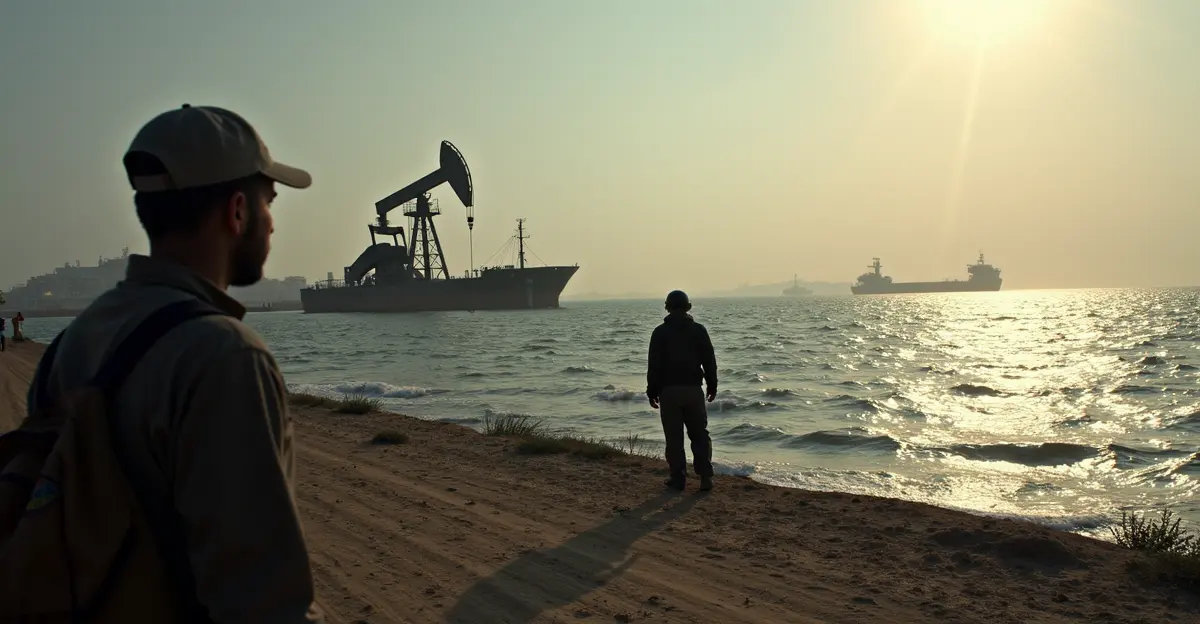
The closure has removed nearly 20% of global oil supplies, driving energy prices up 24% and triggering the largest coordinated emergency reserve release in history. The crisis is accelerating a structural pivot toward regionalized supply chains.
Strait of Hormuz Oil Surge: Global Trade at Risk

Brent crude surged 65% in March 2026, the largest monthly rise on record. The disruption is reshaping global trade patterns and accelerating the push for renewable energy independence, while developing economies face disproportionate pressure.
Hormuz Crisis: Global Supply Chain Fallout

The crisis is sending shockwaves through commodity markets, disrupting fertilizers, sulfur, methanol, helium, and aluminium. A fragile ceasefire holds but strategic oil reserves have been depleted to 1982 levels.
Hormuz Strait Closure: Global Trade and Energy Security
The near-total closure of the Strait of Hormuz has triggered the largest oil supply disruption in history, cutting global supply by roughly 10 million barrels per day and sending energy prices up 24%. Developing economies face a brutal trade-off between energy affordability and fiscal stability.
Strait of Hormuz: Global Supply Chains Under Siege

The chokepoint crisis is sending shockwaves through markets for fertilizers, sulfur, methanol, helium, and aluminium. As a fragile ceasefire holds, the crisis is rewriting the rules of global trade resilience and accelerating a structural shift toward regionalized supply chains.
Strait of Hormuz Crisis: Global Trade Growth at Risk

The energy shock has cut global trade growth projections from 4.7% in 2025 to as low as 1.5% in 2026. Developing economies face rising import bills, weaker external demand, and currency crises.
Trade War
Global Trade Fragmentation: The Rise of Rival Blocs

In 2026, global trade is fracturing into three competing regional spheres centered on the USMCA, the European Union, and RCEP. US-China bilateral trade has collapsed by roughly 30%, and supply chain costs are surging by 15-25%.
Geopolitics
FORGE Alliance: Rewiring Critical Mineral Supply Chains
The United States launched the FORGE alliance with 54 countries to create a preferential trade-and-investment zone for critical minerals, directly targeting China's near-monopoly on rare earths. Over $30 billion has been mobilized for new projects.
 Share this article



