


 Deutsch
 English
 Español
 Français
 Nederlands
 Português


 Share
Share




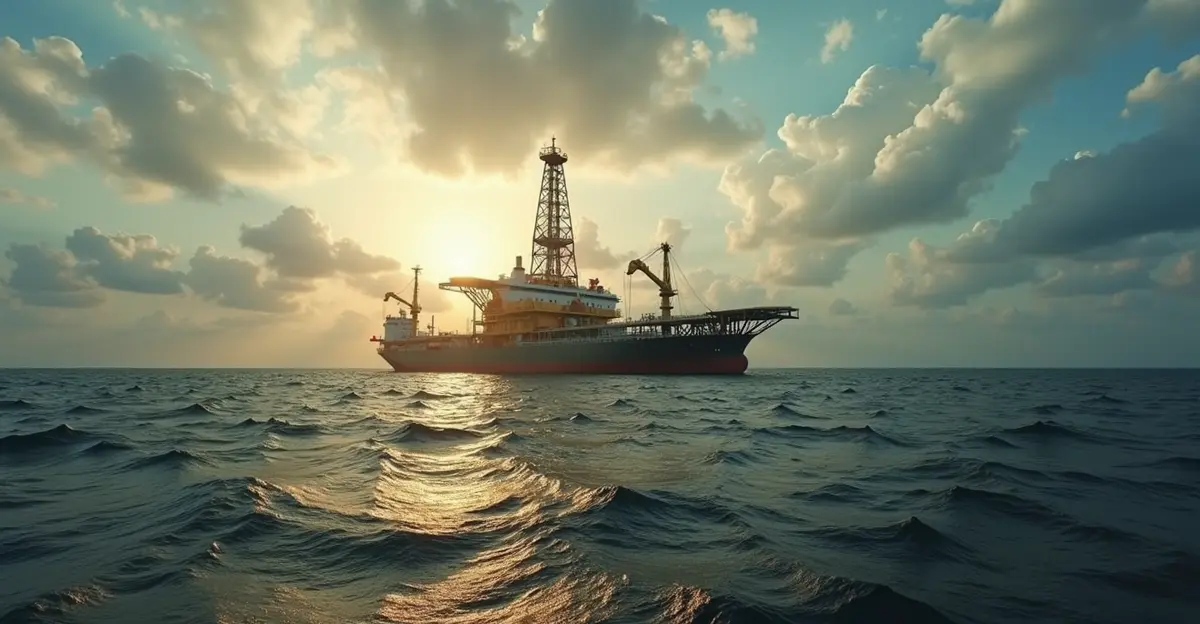
The February 2026 closure of the Strait of Hormuz has removed nearly 20% of global oil supply from markets, sending Brent crude above $120 per barrel and triggering the largest coordinated emergency reserve release in history. Beyond the immediate price shock, this crisis is accelerating a structural pivot away from globalized energy flows toward regionalized supply chains, as major importers in Asia and Europe race to diversify sources, build storage, and fast-track renewable and nuclear baseload capacity. The geopolitical and economic realignment now underway — including new energy security pacts and reshored manufacturing — may mark the definitive end of the post-Cold War globalization era.
The February 2026 Trigger: Operation Epic Fury and the Strait's Closure
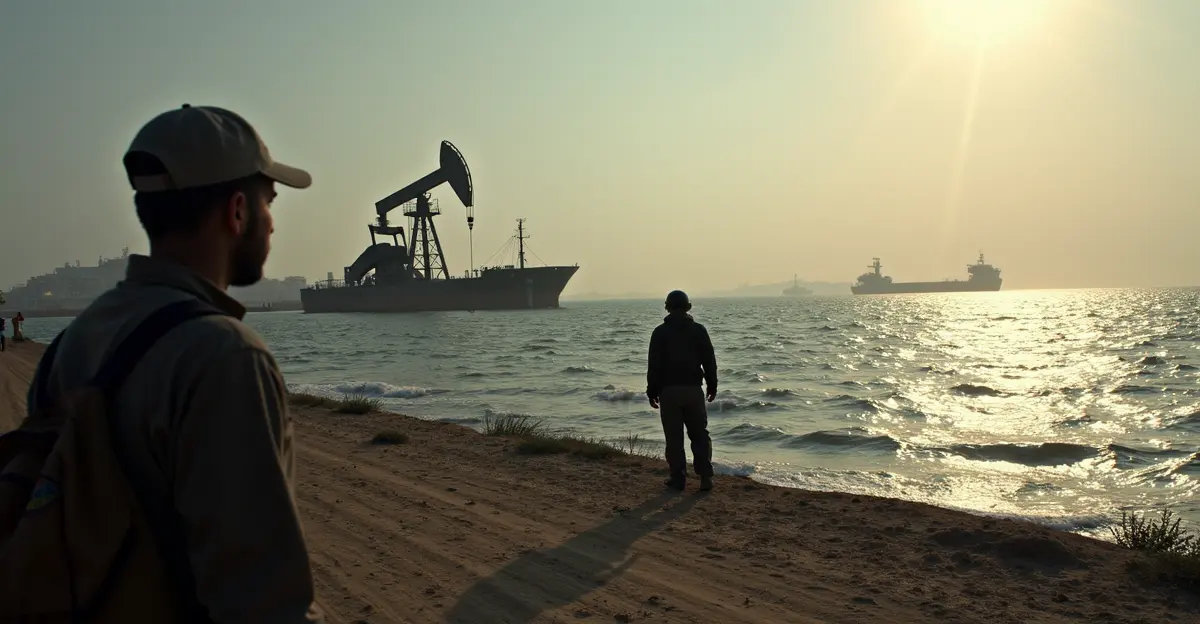
On February 28, 2026, the United States and Israel launched Operation Epic Fury, a massive air campaign against Iran that included nearly 900 strikes in 12 hours and assassinated Iran's Supreme Leader Ali Khamenei. In retaliation, Iran's Islamic Revolutionary Guard Corps (IRGC) issued warnings forbidding passage through the Strait of Hormuz, boarded and attacked merchant ships, and laid sea mines in the waterway. Within days, tanker traffic through the 34-kilometer-wide chokepoint dropped by 70%, then effectively to zero. By late March, the IRGC formally closed the strait to vessels going to and from the ports of the US, Israel, and their allies. The International Maritime Organization reported that by April 21, about 20,000 mariners and 2,000 ships were stranded in the Persian Gulf.
The strait had previously carried around 20 million barrels of oil per day — roughly 20% of global seaborne oil trade — along with 20% of the world's liquefied natural gas (LNG). The sudden removal of this supply from global markets triggered the largest disruption to world energy supply since the 1970s energy crisis. The 2026 Iran war fundamentally altered the global energy landscape within weeks.
Price Shock and Emergency Response
Brent Crude Surges Past $120
Brent crude oil futures, which started 2026 at $61 per barrel, finished the first quarter at $118 — the largest inflation-adjusted quarterly price increase since 1988, according to the U.S. Energy Information Administration. At their peak, prices reached $126 per barrel. The largest-ever monthly increase in oil prices occurred in March 2026. U.S. retail gasoline peaked near $4.30 per gallon, while diesel exceeded $5.80 per gallon. The World Bank's April 2026 Commodity Markets Outlook projected a 24% surge in energy prices for the full year, warning that under a worst-case escalation scenario, oil could average $115 per barrel and inflation in developing economies could hit 5.8%.
Largest Coordinated Reserve Release in History
On March 11, 2026, the International Energy Agency (IEA) coordinated a historic collective release of approximately 400 million barrels of oil from member-country emergency reserves — the largest such action in the agency's 52-year history. The United States committed the single largest share: 172 million barrels from its Strategic Petroleum Reserve. By mid-May, roughly 164 million of the pledged 400 million barrels had been physically released to markets. Analysts at CNBC and Reuters cautioned that strategic reserves could only offset a fraction of the roughly 15 million barrels per day supply loss, warning that prices could rise toward $150 per barrel if physical shortages emerged. The IEA emphasized that while the release provided a buffer, the key to stable flows remained resuming regular transit through the Strait of Hormuz.
The Structural Pivot: From Globalization to Regionalization
Beyond the immediate price shock, the crisis is driving a fundamental restructuring of global energy and supply chain architecture. The energy security realignment 2026 is reshaping how nations approach everything from power generation to manufacturing.
Asia's Vulnerability and Response
Asia has been hit hardest. About 80% of crude oil passing through the Strait of Hormuz is destined for Asian markets, with China, India, Japan, and South Korea as top importers. Japan imports 87% of its crude from the Middle East through the strait. The IMF projects Asia's growth will moderate from 5% in 2025 to 4.4% in 2026, with cumulative growth losses of 1-2% by 2027 under adverse scenarios. Energy emergencies have been declared in the Philippines, Thailand, Malaysia, Vietnam, and Indonesia. The ASEAN bloc faces an additional $3.36 billion per month in import costs. In response, countries are accelerating renewable energy deployment and nuclear power programs. The World Economic Forum notes that nations which invested early in renewables, like China and Vietnam, show greater resilience. Analysis suggests replacing planned gas capacity with solar and storage could save ASEAN up to $4 billion by 2030.
Europe's Nuclear Pivot
Europe, still recovering from the 2022 energy crisis triggered by Russia's invasion of Ukraine, is now pivoting back to nuclear energy after decades of hesitation. The crisis cost the EU an additional €24 billion in energy imports. European Commission President Ursula von der Leyen called it a 'strategic mistake' to turn away from nuclear power. Brussels launched AccelerateEU, a five-pillar initiative to enhance energy security through gas storage coordination, a Fuel Observatory, electrification plans, and grid modernization. The 12-nation Nuclear Alliance aims to reach 150 GW capacity by 2050 through Small Modular Reactors. The EU has classified nuclear as 'economically sustainable' under its Taxonomy and targets 90% emissions reduction by 2040 via an energy mix combining nuclear baseload reliability with renewable expansion. The EU energy diversification strategy is now inextricably linked to the crisis in the Persian Gulf.
Alternative Routes Prove Inadequate
While Saudi Arabia and the UAE operate bypass pipelines — the East-West Pipeline and the Habshan-Fujairah/ADCOP system — their combined capacity of 3.5-5.5 million barrels per day is far below the pre-war 20 million barrels per day that transited the strait. Moreover, existing alternatives have also been attacked by Iran. The IEA and experts warn that developing genuine route diversity requires massive investment, time, transnational agreements, and exit-point security. The crisis is accelerating permanent re-routing, weakening Iran's strategic leverage over the long term.
Geopolitical Realignment and New Energy Pacts
The crisis has triggered a wave of new energy security agreements. The IEA's State of Energy Policy 2026 report notes that emergency oil and gas measures are now legally in place in 60 countries, while fuel diversification efforts exist in 150 countries. Government energy spending has doubled since 2019, reaching $405 billion annually. Concerns over critical mineral concentration and clean energy technology manufacturing dependence have prompted 35 new critical mineral policies in 2025 alone. The global energy supply chain restructuring is creating new alliances and reshaping old ones.
NATO faces deep internal fractures over the crisis. European members have largely refused to join what they view as an escalation-prone mission to reopen the strait. Spain notably barred the U.S. from using its bases, while most allies quietly allow logistical support. The alliance is at a crossroads over whether to project military force into the Persian Gulf. Meanwhile, the U.S. Navy launched Operation Project Freedom on May 4 to escort merchant ships out of the Gulf, though it was paused two days later amid negotiations.
Expert Perspectives
Wood Mackenzie's analysis outlines three scenarios: Quick Peace (Strait reopens by June, Brent crude around $80/bbl by end-2026), Summer Settlement (reopening by September, shallow global recession), and Extended Disruption (Strait closed through 2026, Brent crude approaching $200/bbl, global GDP contracting by 0.4%). Under the worst case, the Middle East could see GDP contraction of 10.7%. McKinsey's 2026 economic outlook highlights that the cleantech supply chain has shifted from overcapacity to strategic consolidation and geographic realignment, with policy-driven localization as a defining theme. UNCTAD's Global Trade Update (January 2026) examines how trade patterns are being fundamentally redrawn by the crisis.
World Bank chief economist Indermit Gill warned that the war hits the global economy in waves: 'Higher energy and food prices lead to higher inflation and interest rates, making debt more expensive.' The bank forecasts that fertilizer prices will jump 31%, threatening food security for up to 45 million more people, while base metals like aluminum and copper are reaching record highs.
FAQ
What caused the Strait of Hormuz closure in 2026?
The closure was triggered by the U.S.-Israeli Operation Epic Fury on February 28, 2026, which launched nearly 900 air strikes against Iran and assassinated Supreme Leader Ali Khamenei. In retaliation, Iran blocked the strait by issuing warnings, attacking ships, and laying sea mines.
How much oil flows through the Strait of Hormuz?
Before the crisis, approximately 20 million barrels of oil per day passed through the strait, representing about 20% of global seaborne oil trade and 20% of the world's LNG supply.
How high did oil prices go?
Brent crude peaked at $126 per barrel in March 2026, up from $61 at the start of the year. The World Bank forecasts Brent to average $86 per barrel in 2026 under its baseline scenario, but warns it could reach $115 under escalation.
What was the IEA emergency release?
On March 11, 2026, the IEA coordinated the release of 400 million barrels from member-country emergency reserves — the largest such action in history. The U.S. contributed 172 million barrels from its Strategic Petroleum Reserve.
How is the crisis reshaping global supply chains?
The crisis is accelerating a structural shift from globalized to regionalized energy flows. Asian and European importers are racing to diversify sources, build strategic storage, expand renewable energy, and revive nuclear power programs. New energy security pacts and reshored manufacturing are emerging, potentially marking the end of the post-Cold War globalization era.
Conclusion: The End of an Era
The Strait of Hormuz crisis of 2026 is more than a supply disruption — it is a watershed moment for the global economic order. The post-Cold War globalization end is being accelerated by the realization that critical chokepoints can be weaponized with devastating effect. As the World Bank, IEA, and McKinsey all confirm, the structural shifts now underway — toward regionalization, energy independence, and diversified supply chains — will persist long after the strait reopens. The decisions made in 2026 around energy policy, manufacturing sourcing, and strategic alliances will shape the global economy for decades to come.




Follow Discussion