


 Deutsch
 English
 Español
 Français
 Nederlands
 Português


 Share
Share




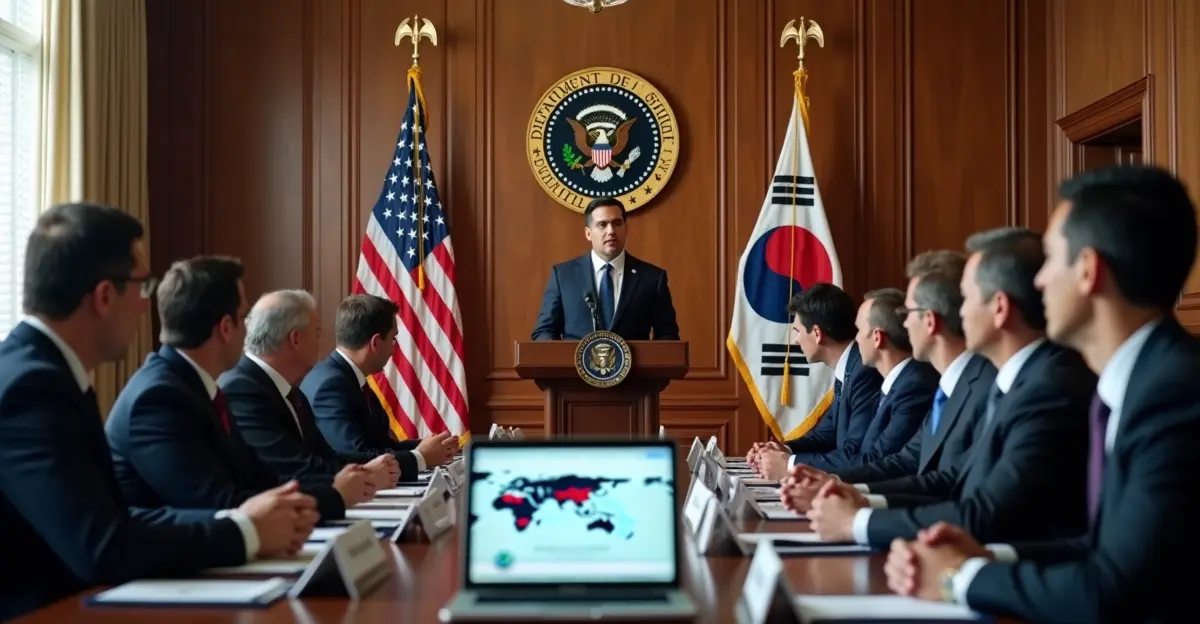
On February 4, 2026, 54 nations and the European Commission convened at the U.S. Critical Minerals Ministerial in Washington, D.C., launching FORGE (Forum on Resource Geostrategic Engagement) and Project Vault, a $10 billion Export-Import Bank-backed strategic reserve. The event produced 11 new bilateral supply frameworks and mobilized over $30 billion in commitments, marking the most significant multilateral effort to reduce dependence on Chinese-dominated processing infrastructure. But can the new architecture deliver supply chain diversification in practice?
What is FORGE and the 2026 Critical Minerals Ministerial?
FORGE succeeds the Minerals Security Partnership as a plurilateral bloc of like-minded nations. Chaired initially by South Korea through June 2026, FORGE uses coordinated price floors, sovereign loans, and Section 232 tariffs to counter China's subsidized dumping. According to the U.S. State Department, 43 ministers attended, and the U.S. signed bilateral frameworks with Argentina, Morocco, the Philippines, the UAE, the UK, and others, bringing total agreements to 21 in five months.
How Project Vault Works: The $10 Billion Strategic Reserve
Project Vault pairs a $10 billion EXIM direct loan with nearly $2 billion in private capital, creating the U.S. Strategic Critical Minerals Reserve through an independently governed public-private partnership known as VaultCo. Founding partners include Clarios, GE Vernova, Western Digital, Boeing, and commodity traders Glencore, Mercuria, Hartree, and Traxys. The EXIM fact sheet says the reserve allows companies to draw and replenish minerals during supply shocks, hedging price spikes for EV batteries and defense. Physical procurement is already live: in February 2026 Glencore acquired nearly 2,000 tonnes of cobalt worth roughly $115 million.
- Up to $10B EXIM direct lending
- Approximately $2B private capital
- Independently governed VaultCo structure
- Covers all 60 USGS-listed critical minerals
Can FORGE Actually Diversify Critical Minerals Supply Chains?
The central challenge is structural. China controls approximately 90% of rare earth processing and 80% of tungsten capacity. Rare earth processing and refining remain concentrated because of decades of state subsidies and lax environmental enforcement. Even with $30B in commitments, experts warn rebuilding capacity could take 20-30 years. Price floors and tariff mechanisms risk market distortion if not calibrated precisely. One trade analyst noted, 'Price floors and tariffs can distort markets if not carefully calibrated.'
FORGE's most controversial feature is its use of coordinated reference prices backed by adjustable tariffs. Proponents argue this counters Chinese dumping and protects nascent Western processing. Critics, including architects of the EU Critical Raw Materials Act, worry about trade fragmentation and higher consumer costs. The EU is pursuing its own critical raw materials strategy, creating potential overlap or competition.
Expert Perspectives and Market Impact
The Atlantic Council described FORGE as opening the Trump administration's 2026 critical minerals agenda, creating a preferential trade-and-investment zone covering two-thirds of the global economy. EXIM Chairman Jovanovic promoted Project Vault as a net positive for taxpayers. Analysts at PIIE and CSIS flag governance transparency, market distortion, and DRC-concentrated supply exposure as key risks. 'Physical procurement is already live,' noted a commodity trading observer, 'but strategic reserves alone cannot replace refining capacity.' For the broader energy transition, these bottlenecks matter because batteries, wind turbines, and defense systems all depend on reliable mineral access.
FAQ: FORGE and Project Vault Explained
What is FORGE?
FORGE, the Forum on Resource Geostrategic Engagement, is a 54-nation coalition launched on February 4, 2026, to diversify critical minerals supply chains and counter China's processing dominance. It replaces the Minerals Security Partnership and uses coordinated price floors and tariffs.
How much is Project Vault worth?
Project Vault totals up to $12 billion: a $10 billion EXIM direct loan plus nearly $2 billion in private capital, establishing a U.S. Strategic Critical Minerals Reserve.
Which countries signed bilateral frameworks at the 2026 Critical Minerals Ministerial?
The U.S. signed 11 new frameworks with Argentina, the Cook Islands, Ecuador, Guinea, Morocco, Paraguay, Peru, the Philippines, the UAE, the UK, and Uzbekistan.
Why does this matter for the energy transition?
Diversifying critical minerals reduces reliance on Chinese processing for EV batteries, wind turbines, and defense systems, but rebuilding refining capacity could take 20-30 years.
What are the main risks of FORGE and Project Vault?
Key risks include market distortion from price floors, governance transparency issues, and continued dependence on DRC-concentrated supply for cobalt and other minerals.
Conclusion and Future Outlook
By July 2026, the United States had assumed the FORGE chairmanship, signaling continuity. Whether FORGE and Project Vault can translate $30B into durable supply chain diversification remains uncertain, but the February ministerial has undeniably reset the global conversation on critical minerals.


Follow Discussion