


 Deutsch
 English
 Español
 Français
 Nederlands
 Português


 Share
Share




In February 2026, the United States and its allies launched a $30 billion countermove to China's rare earth stranglehold, marking the most consequential geoeconomic confrontation since the Cold War's resource wars. China controls over 90% of global rare-earth processing and more than 60% of refined lithium and cobalt capacity, wielding export controls that have sent rare-earth prices surging sixfold outside its borders. The U.S. FORGE initiative—a 54-nation coalition—and the EU's 60 Strategic Projects are racing against a 12-to-18-month window before Western supply-chain dependencies become structurally entrenched.
The Scale of China's Dominance
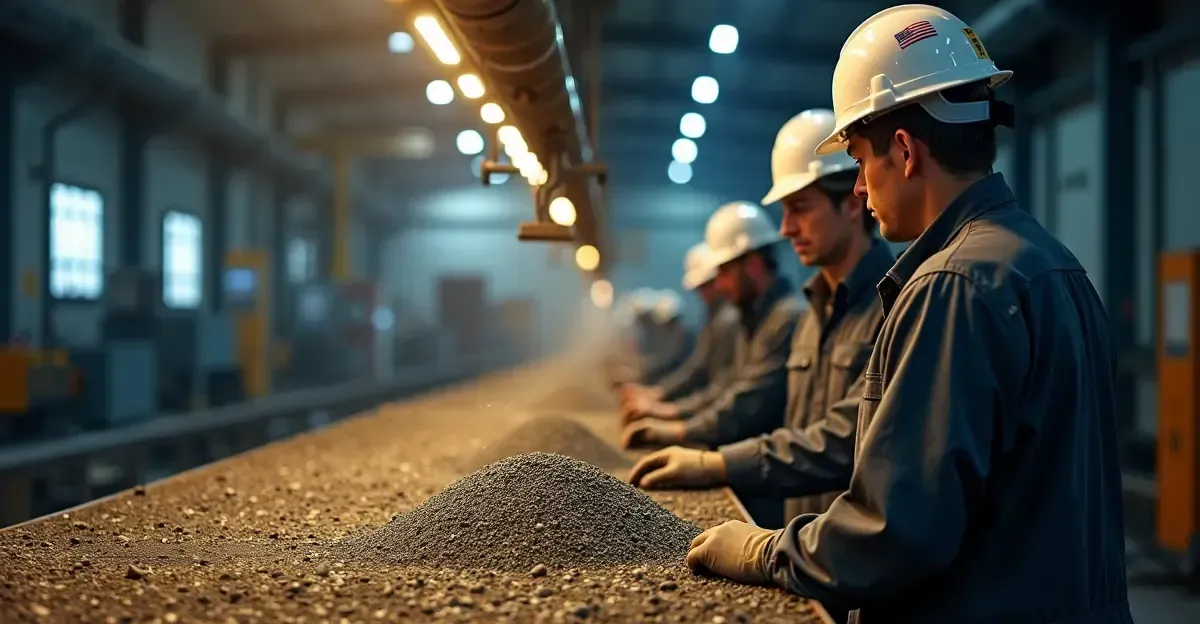
China's grip on the critical minerals supply chain is not about raw ore alone. Beijing mines roughly 70% of global rare earths, but its true leverage lies in processing: over 90% of rare-earth refining, 92% of neodymium-iron-boron (NdFeB) magnet production, and 80% of tungsten refining. In lithium and cobalt, Chinese companies control more than 60% of refined capacity, a share projected to rise further by 2035. According to Axis Intelligence Research, China's Rare Earth Chokepoint Index reads 85.3 out of 100 as of September 2026.
Export Controls and the Sixfold Price Shock
Beijing's 2025–2026 export controls cover samarium, gadolinium, lutetium, europium, and ytterbium under a non-automatic licensing system with fixed whitelists and shipment-by-shipment reviews. The result: rare-earth and antimony prices surged up to sixfold outside China, while European manufacturers' licensing approval rates fell below 25%. The controls are a calibratable rolling embargo, not a blanket ban, said one Brussels-based trade analyst. They can tighten or loosen overnight, which is precisely why Western planners are treating this as an emergency.
FORGE: The West's $30 Billion Countermove
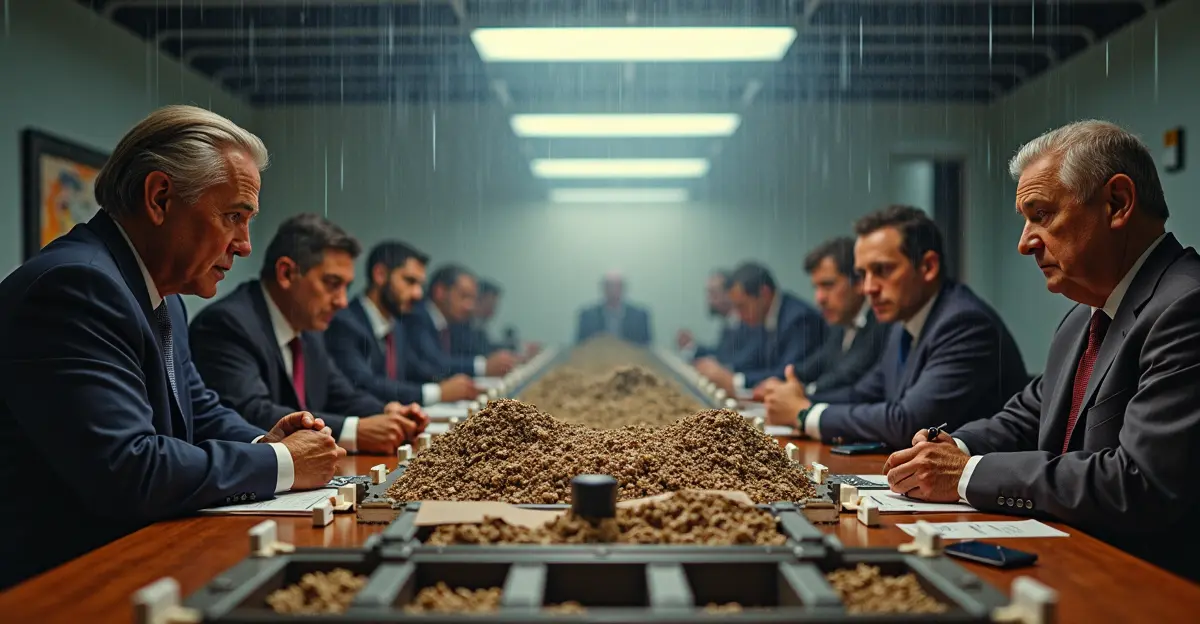
Announced on February 4, 2026, FORGE (Forum on Resource Geostrategic Engagement) replaces the Minerals Security Partnership and includes 54 countries plus the European Commission, chaired by South Korea. The U.S. is mobilizing over $30 billion in financing, backed by 11 new bilateral critical minerals agreements—bringing the total to 21 in five months—with partners such as Argentina, Morocco, the Democratic Republic of Congo, the Philippines, and Uzbekistan. The centerpiece is Project Vault, a $10 billion Export-Import Bank facility creating a Strategic Critical Minerals Reserve, allowing manufacturers like Boeing and GE Vernova to draw and replenish minerals during disruptions. The U.S. State Department confirmed the signing of frameworks with the UAE, UK, Peru, and others.
Project Vault and Coordinated Price Floors
FORGE also introduces a $110 per kilogram neodymium-praseodymium price floor and adjustable tariffs to create a preferential trade-and-investment zone. Analysts note that the strategic critical minerals reserve is designed less as a wartime stockpile and more as a market stabilizer that prevents Beijing from weaponizing price spikes. However, rebuilding Western processing capacity could take 20–30 years, so Project Vault is a stopgap, not a solution.
EU Strategic Projects and Gulf Alternatives
The European Union has designated 60 Strategic Projects under its Critical Raw Materials Act—47 inside the EU across 13 member states and 13 abroad, including in Canada, Ukraine, Zambia, and Brazil. These projects require €22.5 billion and target lithium, nickel, cobalt, manganese, and graphite, with 22 of 47 EU projects focused on lithium. Yet even with fast-tracked permits, the EU's midstream refining gap remains severe, leaving much of its lithium to be processed in China.
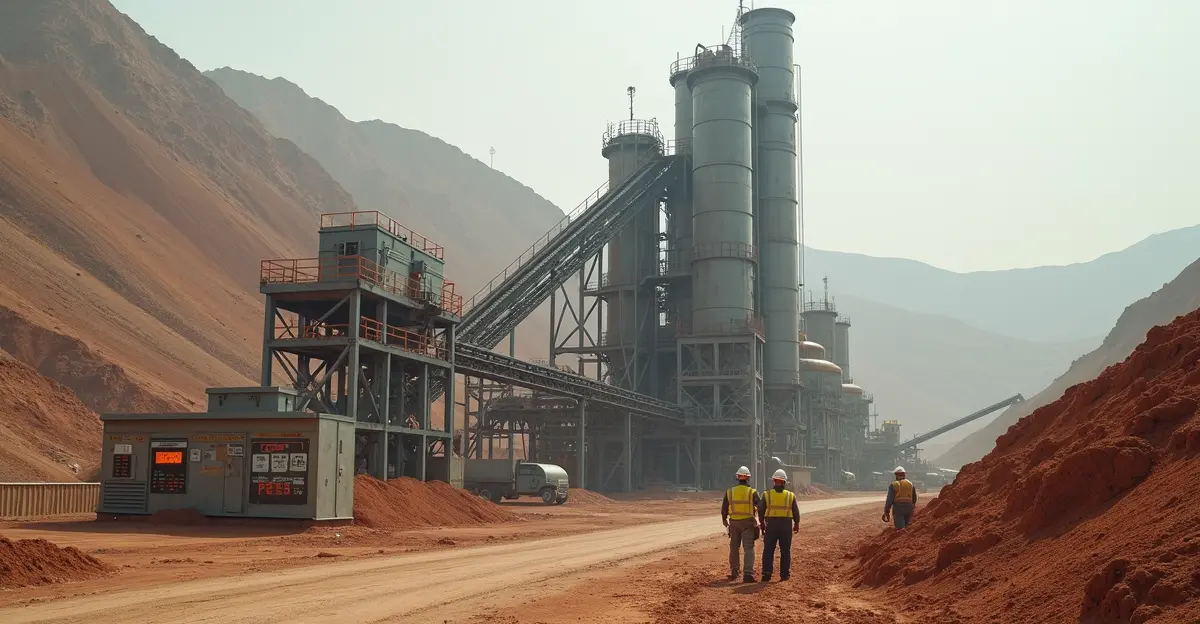
Meanwhile, Gulf states are emerging as wildcards. Saudi Arabia claims $2.5 trillion in untapped mineral wealth and has structured a rare-earth refining joint venture with Ma'aden (51%), MP Materials and the U.S. Department of Defense (combined 49%). The Gulf rare earth refinery aims to produce separated light and heavy rare-earth oxides, addressing China's 99% dominance in heavy rare-earth processing. The resource-for-technology model is the first real test of whether petrostate capital can become mineral-state capital, noted one Riyadh-based consultant.
The 12-to-18-Month Window of Vulnerability
Analysts repeatedly warn that the West has a narrow 12-to-18-month window before current supply-chain dependencies become structurally entrenched. If FORGE members cannot lock in alternative processing agreements, sign long-term offtake contracts, and complete at least pilot refining facilities by late 2027, the cost of decoupling will become prohibitive. The 2026 critical minerals race is therefore not a marathon but a sprint. Beijing's 15th Five-Year Plan doubles down on rare-earth supremacy, and its proposed '0.1% Rule' would restrict any foreign product containing even a trace of Chinese rare earths, raising the stakes for every manufacturer.
Three paths now dominate strategic debate: managed dependence (accepting Chinese dominance while diversifying marginally), costly independence (a 20–30 year rebuild), or a pragmatic hybrid model that combines stockpiling, allied processing, and Gulf-state partnerships. Most Western planners favor the hybrid approach, but it requires political capital that is in short supply.
FAQ: Critical Minerals Showdown
What is China's rare earth stranglehold?
China controls over 90% of global rare-earth processing and more than 60% of refined lithium and cobalt capacity, allowing Beijing to use export controls as geopolitical leverage.
What is the FORGE initiative?
FORGE (Forum on Resource Geostrategic Engagement) is a 54-nation coalition launched in February 2026 to counter China's mineral dominance with over $30 billion in financing, price floors, and a strategic reserve.
How much has the U.S. committed to critical minerals?
The U.S. has mobilized over $30 billion, including a $10 billion Project Vault strategic reserve and $14.8 billion in Letters of Interest, plus 21 bilateral critical minerals agreements.
How long does the West have to act?
Analysts warn of a 12-to-18-month window before Western supply-chain dependencies become structurally entrenched, making 2026–2027 a critical period for diversification.
Can Gulf states challenge China's dominance?
Gulf states like Saudi Arabia and the UAE are investing in rare-earth refining, leveraging cheap energy and capital. Saudi Arabia's Ma'aden-MP Materials joint venture is a key test, but scaling heavy rare-earth processing remains difficult.
Conclusion: A Defining Geoeconomic Battle
The February 2026 FORGE ministerial and the EU's 60 Strategic Projects signal that the West is finally treating critical minerals as a security priority, not a trade afterthought. But money and declarations are not the same as smelters and separation plants. The next 18 months will determine whether the West can build a resilient, diversified supply chain—or whether China's stranglehold becomes permanent. For now, the showdown is on, and the clock is ticking.



Follow Discussion