


 Deutsch
 English
 Español
 Français
 Nederlands
 Português


 Share
Share




Introduction: A Defining Moment for Critical Mineral Security
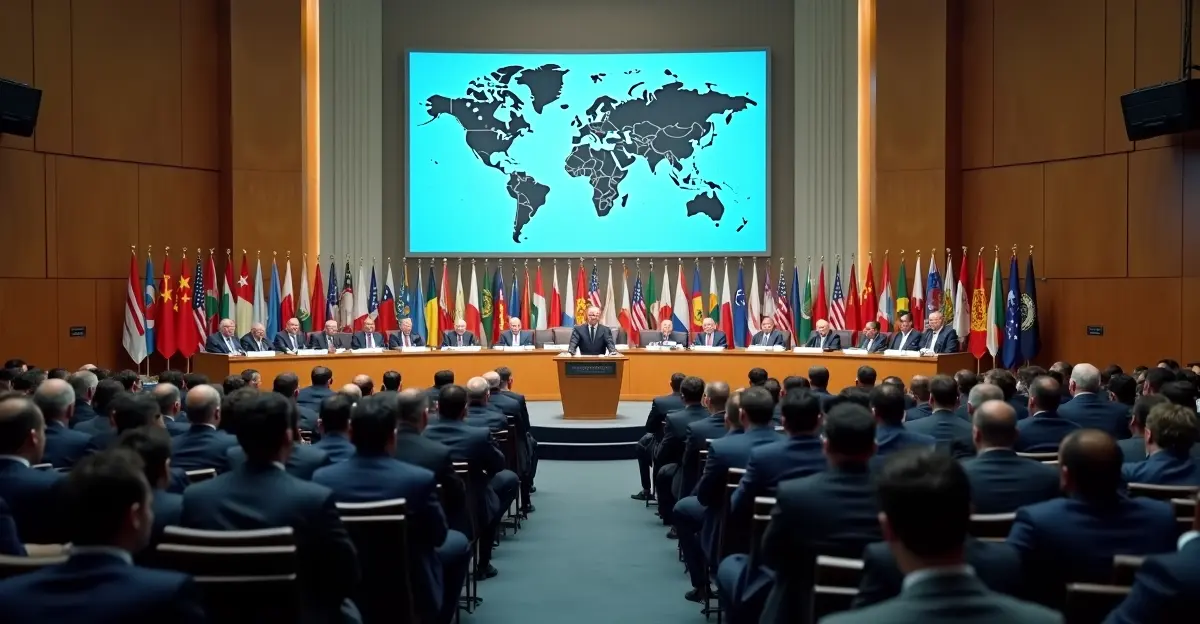
On February 4, 2026, the United States hosted the inaugural Critical Minerals Ministerial in Washington, D.C., bringing together representatives from 54 nations and the European Commission. The event marked the most coordinated Western response to date against China's stranglehold on global rare earth processing, which stands at roughly 90% of refining capacity. With China's 2025-2026 export controls triggering sixfold price spikes and slashing licensing approvals for European firms below 25%, the launch of the FORGE (Forum on Resource Geostrategic Engagement) alliance and its $30 billion financing package represents a high-stakes gambit to reshape critical mineral supply chains. But can the West meaningfully reduce dependence within a narrowing 12-to-18-month window, or will China's structural advantages in processing infrastructure and cost prove insurmountable?
China's Leverage: The Weaponization of Processing Dominance
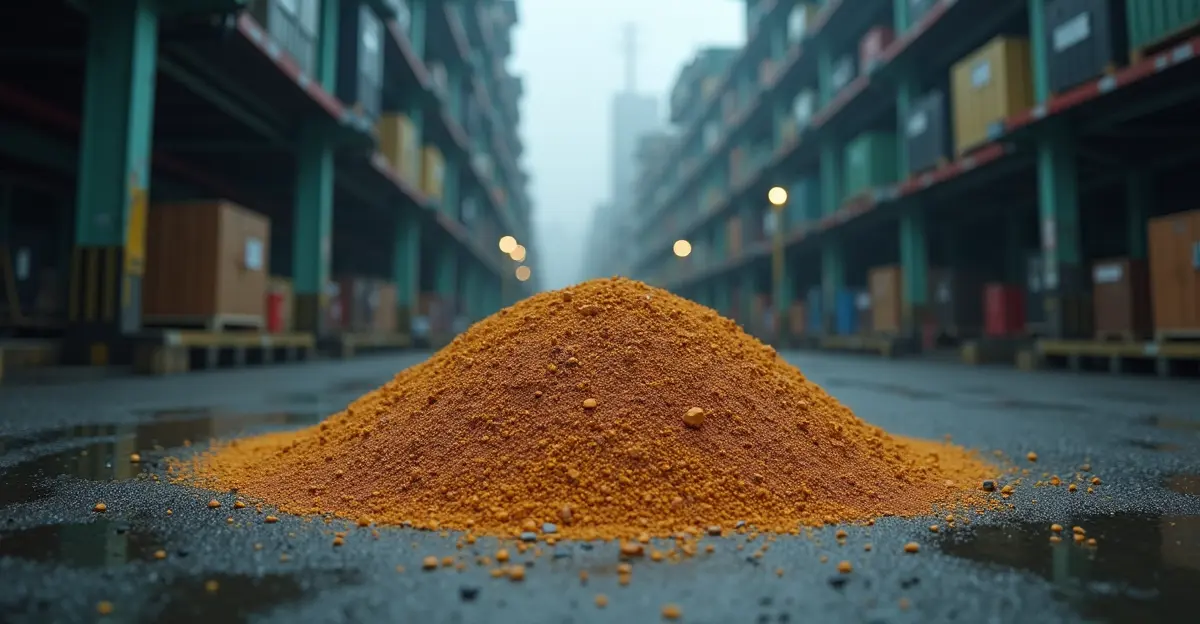
China's control over rare earths is not merely about mining—it is about processing. While China accounts for roughly 60% of global rare earth mining, its share of refining and separation exceeds 90%, according to the European Parliament Research Service. This processing bottleneck is the true chokepoint. Since 2025, Beijing has tightened export controls on 12 of 17 rare earth elements, including dysprosium, terbium, and neodymium, which are essential for permanent magnets used in EVs, wind turbines, and defense systems. The controls extend extraterritorial jurisdiction to products made abroad using Chinese technology or materials, effectively creating a global compliance burden.
The impact has been severe. A multi-institutional analysis from 2026 reports that export licensing approval rates for European firms have fallen below 25%, while prices for processed rare earths outside China have surged up to sixfold. Over 80% of European companies remain dependent on Chinese supply chains for minerals critical to defense, EVs, and renewables. The EU's critical minerals strategy has struggled to keep pace, hampered by slower permitting and higher costs.
Importantly, China is not creating scarcity—it is weaponizing control. Temporary, reversible restrictions maintain pricing power and extract strategic concessions while simultaneously discouraging Western investment in alternative supply chains. As one analyst noted, "China's strategy is to make the West believe that diversification is futile, because by the time new mines and refineries come online, Beijing can simply flood the market and undercut prices."
The Western Countermove: FORGE and the $30 Billion Pledge
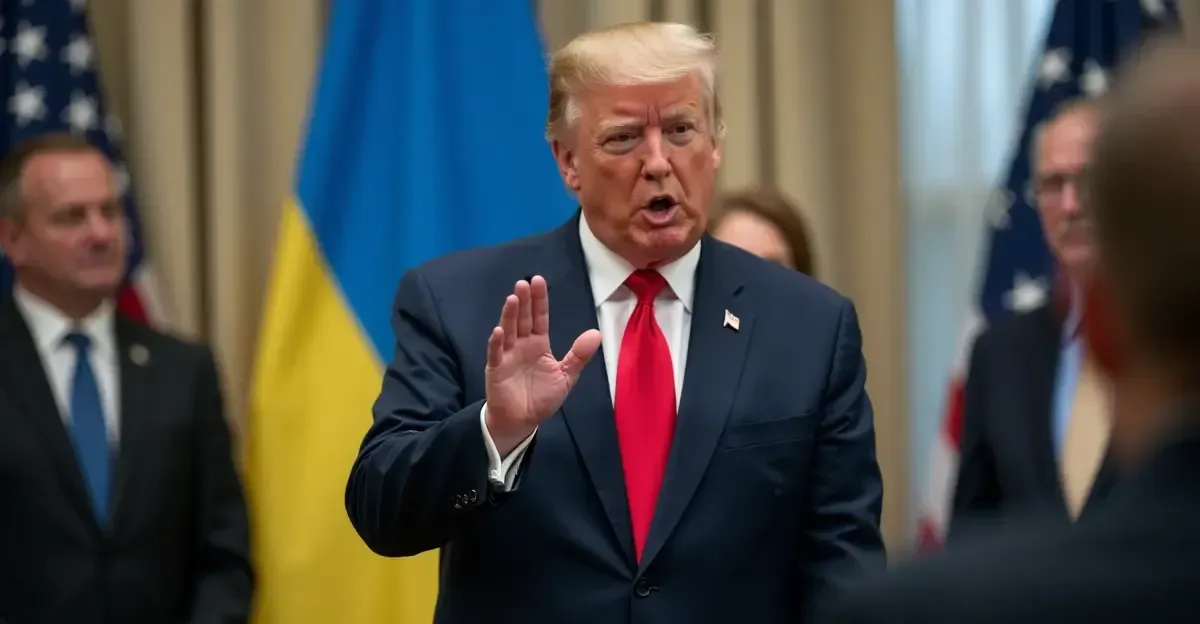
The February 2026 ministerial produced several landmark outcomes. Secretary of State Marco Rubio, joined by Vice President JD Vance, announced the creation of FORGE as the successor to the Minerals Security Partnership (MSP). Chaired by South Korea through June 2026, FORGE is designed as a plurilateral coalition creating a preferential trade-and-investment zone for critical minerals, with coordinated price floors to counter adversarial market manipulation.
The U.S. government mobilized over $30 billion in letters of interest, investments, and loans for critical mineral projects over the preceding six months. This includes the Export-Import Bank's $10 billion Project Vault, a public-private initiative to establish a U.S. Strategic Critical Minerals Reserve. The reserve will stockpile essential raw materials in secure domestic facilities to shield manufacturers from supply shocks. Additionally, 11 new bilateral critical minerals frameworks were signed with countries including Argentina, Morocco, the Philippines, and the UAE, bringing the total to 21 such deals in five months.
The Minerals Security Partnership evolution into FORGE reflects a shift from multilateralism to a more agile bilateral/minilateral approach. However, operational details remain unclear, and the alliance must still prove it can move from memoranda of understanding to actual mining and processing projects.
Structural Hurdles: Cost, Time, and Infrastructure Gaps
Despite the political momentum, the West faces daunting structural challenges. Rebuilding independent rare earth supply chains would take 20 to 30 years, far exceeding the current geopolitical window, according to the 2026 multi-institutional analysis. China's processing infrastructure benefits from decades of state investment, economies of scale, and lower environmental and labor costs. Western projects, by contrast, face higher capital expenditures, lengthy permitting processes, and community opposition.
For example, the only U.S.-based rare earth processing facility, MP Materials' Mountain Pass mine in California, still ships its concentrate to China for final separation—a stark illustration of the processing gap. While MP Materials has announced plans to build its own separation facilities, full independence remains years away. Similarly, Australia's Lynas Rare Earths operates the world's largest non-Chinese processing plant in Malaysia, but it has faced regulatory hurdles and community protests.
The global rare earth supply chain risks are compounded by the fact that China also dominates downstream magnet production, controlling over 90% of the market for neodymium-iron-boron (NdFeB) permanent magnets. Even if the West secures raw rare earth oxides, it still lacks the capacity to manufacture finished magnets at scale—a critical gap for EV motors and wind turbine generators.
Impact on Defense, EVs, and Renewables
The supply chain vulnerabilities have direct consequences for national security and the green energy transition. The U.S. Department of Defense has identified rare earths as critical for F-35 fighter jets, missile guidance systems, and night-vision goggles. European defense contractors report that Chinese export controls have already delayed production schedules. In the EV sector, Tesla and other automakers have warned that magnet supply constraints could slow the transition to electric mobility. Wind turbine manufacturers, which rely on neodymium magnets for direct-drive generators, face similar risks.
The EV battery supply chain diversification efforts have focused on lithium and cobalt, but rare earth magnets remain an overlooked vulnerability. Without a secure supply of processed rare earths, the West's climate goals could be jeopardized.
Expert Perspectives: A Narrow Window of Opportunity
Analysts are divided on whether FORGE can succeed. Supporters point to the unprecedented scale of financial commitment and political alignment. "The $30 billion mobilization and the launch of FORGE represent a genuine paradigm shift," said a senior State Department official. "We are creating a new architecture for critical mineral trade that will reduce dependence on adversarial suppliers within a decade."
Skeptics, however, note that China's cost advantage is so entrenched that Western projects may never be commercially viable without permanent subsidies or tariffs. "The West is trying to build a parallel supply chain that will always be more expensive," warned a CSIS analyst. "Unless FORGE implements robust price floors and long-term offtake agreements, private investment will remain insufficient."
The 12-to-18-month window identified by analysts is critical. If Western nations can fast-track permitting, finalize financing for key projects, and begin stockpiling through Project Vault, they may be able to weather the immediate crisis. But if China escalates controls further—or if the temporary suspension of certain restrictions expires in November 2026—the consequences could be severe.
FAQ: Critical Minerals and the FORGE Alliance
What is FORGE?
FORGE (Forum on Resource Geostrategic Engagement) is a U.S.-led plurilateral alliance launched in February 2026 to coordinate critical mineral supply chains among allied nations. It succeeds the Minerals Security Partnership and includes 54 countries plus the European Commission.
Why does China dominate rare earth processing?
China controls over 90% of global rare earth refining due to decades of state investment, lower environmental and labor costs, and a vertically integrated supply chain. It also holds a near-monopoly on permanent magnet production.
What is Project Vault?
Project Vault is a $10 billion Export-Import Bank initiative to establish a U.S. Strategic Critical Minerals Reserve, stockpiling essential raw materials to protect domestic manufacturers from supply disruptions.
Can the West reduce dependence on China within 12-18 months?
Full independence is unlikely within that timeframe. However, strategic stockpiling, accelerated permitting, and bilateral agreements could mitigate immediate risks. Long-term diversification will take 10-20 years.
How do China's export controls affect consumers?
Higher rare earth prices translate into increased costs for EVs, wind turbines, electronics, and defense systems. Supply shortages could delay production and slow the green energy transition.
Conclusion: A Race Against Time
The February 2026 Critical Minerals Ministerial and the launch of FORGE represent the West's most ambitious attempt to break China's rare earth grip. With over $30 billion in financing, a new multilateral framework, and a strategic reserve in the works, the foundations for a more secure supply chain are being laid. Yet China's structural advantages in processing cost, infrastructure maturity, and market control remain formidable. The next 12 to 18 months will determine whether the West can build enough momentum to alter the trajectory—or whether it will remain locked in a state of strategic dependence. As the competition intensifies, the outcome will shape not only the future of critical minerals but also the broader balance of economic and geopolitical power.



Follow Discussion