


 Deutsch
 English
 Español
 Français
 Nederlands
 Português


 Share
Share




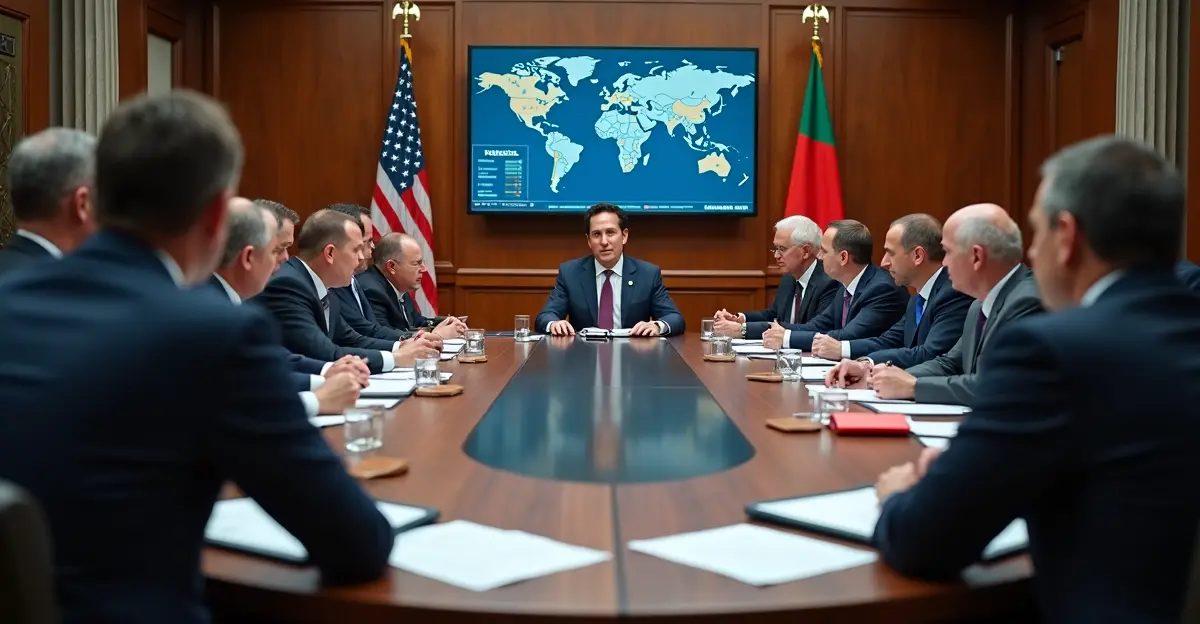
In February 2026, two events crystallized the most consequential geopolitical contest of the decade. On February 4, the United States hosted 54 nations in Washington D.C. to launch the Forum on Resource Geostrategic Engagement (FORGE), backed by over $30 billion. Within weeks, Beijing imposed sweeping export controls on rare-earth processing technology—the proprietary know-how underpinning its near-total dominance of the global critical minerals supply chain.
China processes approximately 90% of the world's rare earth elements, 80% of tungsten, and 60% of antimony—minerals essential for F-35 fighter jets, missile guidance systems, EV batteries, and wind turbines. Since April 2025, successive waves of export controls have triggered price spikes of up to sixfold for neodymium, praseodymium, and dysprosium, while European licensing approvals have fallen below 25%.
The Geopolitics of Critical Minerals
For decades, Western economies outsourced not just mining but the far more valuable midstream processing to China, which invested billions in solvent extraction technology. China's rare earth patents accounted for 81% of global filings between 2014 and 2024, creating a structural dependency that emergency funding cannot quickly unwind.
"China weaponizes control—not scarcity—using temporary, reversible restrictions to maintain pricing power and extract concessions," noted a 2026 multi-institutional analysis. The International Energy Agency warned in July 2026 that full enforcement could place $6.5 trillion of downstream production at risk.
The February 2026 controls targeted processing technology and equipment—not raw materials—aiming to freeze competitors at the earliest development stage, ensuring that even projects like MP Materials Mountain Pass cannot close the gap without Chinese know-how.
Inside FORGE: The West's New Alliance
FORGE represents the most ambitious Western response to resource coercion since the 1974 creation of the IEA. Chaired by South Korea, it operates as a preferential trade-and-investment zone with coordinated reference prices and adjustable tariffs. Vice President JD Vance outlined price floors at each production stage to stabilize long-term investment in critical minerals mining projects historically abandoned during price downturns.
The February 4 ministerial produced eleven new bilateral framework agreements with Argentina, Morocco, Peru, the Philippines, and the UAE, bringing the total to 21 agreements in five months. Two working groups—Projects Investment and Policy Coordination—will manage a shared project registry and align international policy tools.
Project Vault and RESourceEU
Project Vault, a $10 billion EXIM Bank loan, establishes the U.S. Strategic Critical Minerals Reserve as a decentralized public-private partnership. Nearly $2 billion in private investment has been committed, with backing from GE Vernova, Mercuria, and Boeing.
Europe's RESourceEU Action Plan, adopted December 2025, mobilizes €3 billion within 12 months, supports 60 Strategic Projects under the Critical Raw Materials Act, and establishes a European Critical Raw Materials Centre. Over 80% of EU companies depend on Chinese inputs, making diversification an existential economic priority.
Can the West Rebuild in Time?
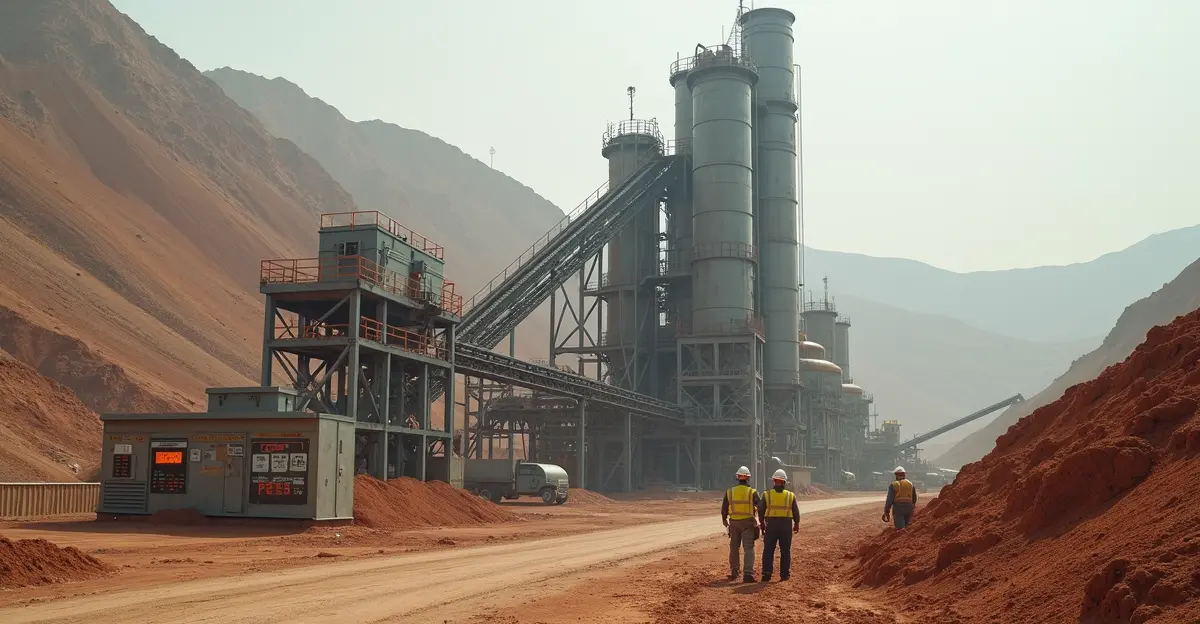
The binding constraint is processing capacity, not mining. A single rare-earth separation facility costs over $1 billion and requires five to seven years from permitting to production. The U.S. has only one operating rare-earth mine—Mountain Pass—and its output still ships to China for processing.
Every American EV contains roughly $500 in rare-earth components, and EV battery supply chain disruptions could delay the energy transition by years. The F-35 requires over 900 pounds of rare-earth materials, and precision munitions depend on neodymium magnets overwhelmingly produced in China.
Meanwhile, Indonesia, Chile, and the DRC are imposing their own export restrictions, and Gulf states have deployed over $100 billion in mineral investments. The result is a multipolar scramble in which the global energy transition is increasingly shaped by geopolitics rather than market forces. Analysts estimate a narrowing 12-to-18-month window before Chinese dominance becomes entrenched, and rebuilding independent supply chains could take 20 to 30 years.
FAQ
What is FORGE?
The Forum on Resource Geostrategic Engagement is a 54-nation alliance launched in February 2026 to counter China's critical minerals dominance, backed by over $30 billion in U.S. financing and chaired by South Korea.
Why are critical minerals strategically important?
Rare earth elements, lithium, cobalt, and tungsten are essential for defense systems, EVs, wind turbines, and AI hardware—without them, modern military and civilian technology cannot function.
How dominant is China in critical minerals processing?
China processes 90% of rare earths, 80% of tungsten, 60% of antimony, and over 60% of lithium and cobalt, and holds 81% of global rare-earth patents.
What is Project Vault?
A $10 billion U.S. EXIM Bank initiative creating a decentralized Strategic Critical Minerals Reserve through public-private partnerships.
Can Western countries build independent processing capacity?
Yes, but experts estimate 20–30 years for a fully independent supply chain; the critical window for decisive action is 12–18 months.




Follow Discussion