


 Deutsch
 English
 Español
 Français
 Nederlands
 Português


 Share
Share




On February 4, 2026, the United States unveiled the FORGE Alliance in Washington, bringing together 54 nations and the European Commission behind more than $30 billion in financing to break China's 90% stranglehold on global rare earth processing. The Forum on Resource Geostrategic Engagement replaces the 2022 Minerals Security Partnership and arrives after Beijing's tightened export controls sent prices surging sixfold outside China while domestic prices stayed stable.
What Is FORGE and Why Was It Launched?
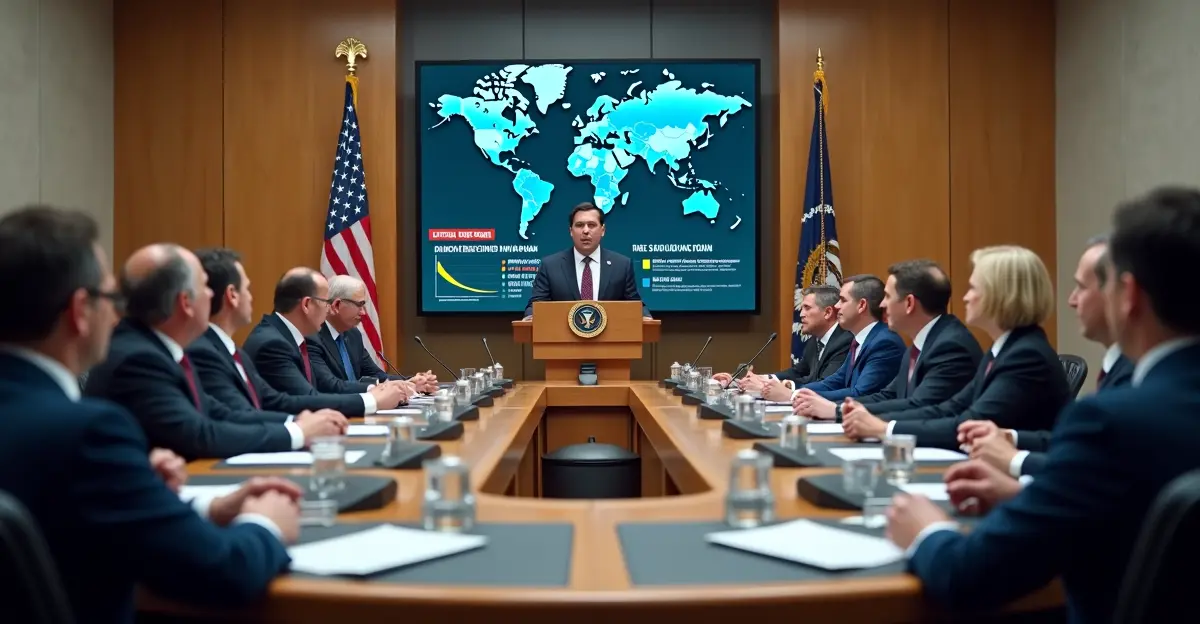
FORGE—the Forum on Resource Geostrategic Engagement—is a plurilateral coalition launched at the inaugural Critical Minerals Ministerial. It succeeds the Minerals Security Partnership, adding what the Atlantic Council calls sharper teeth through coordinated reference prices and adjustable tariffs. The U.S. signed eleven new bilateral critical minerals frameworks with Argentina, Morocco, Peru, the Philippines, the UAE, and the UK, bringing the total to 21 deals in five months, with 17 more countries negotiating. South Korea chairs FORGE through June 2026. The initiative is intended to link these critical minerals supply chains into a system covering two-thirds of the global economy, according to the U.S. State Department.
China's Processing Dominance and the Weaponization of Scarcity
China controls roughly 90% of global rare earth processing and 94% of sintered permanent magnet output, according to the International Energy Agency. It also holds 81% of rare-earth-related patents filed between 2014 and 2024. Beijing's rare earth export controls, first tightened in April 2025 and reimposed in October 2025, have weaponized this processing dominance rather than raw scarcity. Neodymium-praseodymium oxide prices surged from about $80 per kilogram in 2024 to over $480 per kilogram in early 2026—a sixfold increase—while antimony tripled past $40,000 per tonne. EU export licensing approval rates fell below 25%, and U.S. yttrium imports collapsed from 333 tonnes to just 17 tonnes in comparable eight-month periods, alarming aerospace manufacturers, according to CSIS.
Can $30 Billion Build Independent Supply Chains in 12-18 Months?
The financial firepower is real. The U.S. Export-Import Bank's $10 billion Project Vault loan anchors a $12 billion strategic minerals reserve, while FORGE's coordinated price floors—including cobalt at $25.20 per pound, lithium at $15,200 per tonne, and neodymium at $95,000 per tonne—aim to stabilize markets. Eleven new Project Vault strategic reserve frameworks and more than $30 billion in letters of interest, investments, and loans have been mobilized. Yet analysts caution that meaningful non-Chinese processing capacity may not arrive before 2028–2030, with full diversification costing $15–25 billion and taking 20–30 years. The OECD warns that the geopolitical window is narrowing to just 12–18 months, according to informedclearly.
What Project Vault Does
Project Vault is a public-private stockpile for civilian use. Participants—including GE Vernova, Clarios, and Boeing—submit needed mineral types and amounts, commit to buy later at fixed prices, and pay upfront costs and fees. This protects companies from supply disruptions and price volatility, but storage infrastructure and potential market distortion remain challenges.
Impact on AI Chips, Defense, EVs, and Renewables
Rare earths are essential to permanent magnets in AI data centers, missile guidance systems, electric vehicle motors, and wind turbines. The supply shock has already hit the semiconductor supply chain: yttrium shortages threaten aerospace alloys, while European automakers face delays. FORGE's emphasis on refining and magnet-making, not just mining, targets the midstream bottleneck where China is strongest.
Expert Perspectives
Vice President JD Vance told ministers that the international critical minerals market is failing—supply chains are brittle and highly concentrated. Atlantic Council analysts described FORGE as a critical minerals diplomacy experiment in turning bilateral leverage into genuine plurilateral coordination. The real test is execution, the council noted, pointing to sustained output, diversification, and private investment as the decisive factors.
FAQ
What is the FORGE Alliance?
FORGE, the Forum on Resource Geostrategic Engagement, is a 54-nation coalition launched in February 2026 to build independent critical mineral supply chains and counter China's processing dominance.
Why did China weaponize rare earth processing?
Beijing controls about 90% of global processing and used tightened export controls in 2025 to raise prices outside China sixfold while keeping domestic prices stable, leveraging its midstream monopoly rather than raw ore scarcity.
How much money has FORGE mobilized?
More than $30 billion, including a $10 billion EXIM loan for Project Vault, a $12 billion strategic minerals reserve, and 21 bilateral frameworks signed within five months.
Can the West build independent supply chains in 12-18 months?
Most analysts say no. Meaningful non-Chinese processing capacity is unlikely before 2028–2030, and full diversification could take 20–30 years, though the 12-18 month window is critical for policy action.




Follow Discussion