


 Deutsch
 English
 Español
 Français
 Nederlands
 Português


 Share
Share




The New Geopolitics of Critical Minerals
In early 2026, multiple major economies enacted sweeping new trade restrictions and partnership pacts for critical minerals, signaling that resource nationalism has become the defining strategic shift of the decade. As demand for lithium, rare earths, and copper surges to power the energy transition, producing nations are weaponizing export controls while consuming nations scramble to diversify supply chains. This article analyzes the emerging geopolitics of critical minerals in 2026 — from China's processing dominance to new mining alliances in Latin America, Africa, and Australia — and what this means for energy security, industrial policy, and great-power competition.
Why Critical Minerals Matter in 2026
Critical minerals — including lithium, cobalt, rare-earth elements (REEs), copper, and graphite — are essential for electric vehicle batteries, wind turbines, solar panels, and defense technologies. The International Energy Agency projects that demand for lithium could increase by over 40 times by 2040 under net-zero scenarios. Yet supply chains remain dangerously concentrated. China processes roughly 90% of rare earths and 60% of lithium chemicals globally, giving Beijing enormous leverage. In 2025, China imposed new export controls on antimony and germanium, and in early 2026, it tightened restrictions on rare-earth processing technology. The EU carbon border tax has further complicated trade dynamics, as mineral exporters face new compliance costs.
Export Controls as a Weapon
China's Dominance and Restrictions
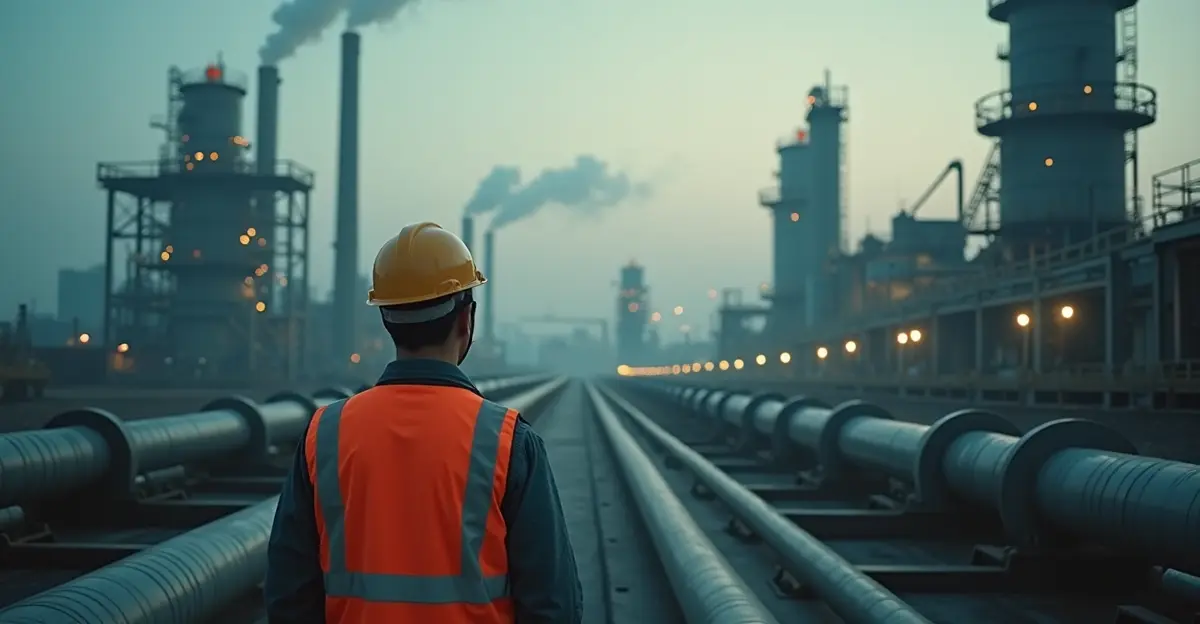
China's stranglehold on processing infrastructure is the central fact of the critical minerals landscape. In February 2026, Beijing announced licensing requirements for exports of rare-earth smelting and separation technology, effectively blocking foreign firms from acquiring the know-how to build rival processing capacity. This move followed earlier bans on exports of gallium and germanium in 2023 and antimony in 2024. "China is using its processing monopoly as a strategic asset, much like OPEC uses oil," said Dr. Elena Marchetti, a resource security analyst at the European Council on Foreign Relations. The 2025 economic crisis accelerated these trends, as nations prioritized self-sufficiency over global integration.
Other Producers Follow Suit
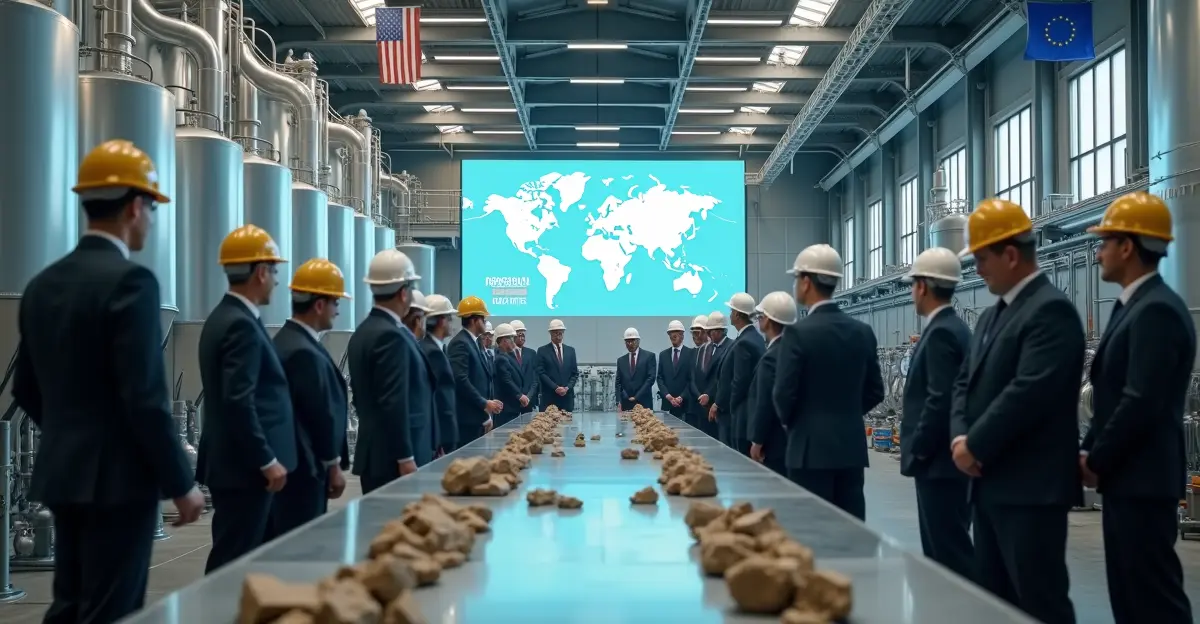
Resource nationalism is not limited to China. Indonesia, the world's largest nickel producer, maintained its export ban on nickel ore through 2026, forcing downstream processing to be built domestically. Chile and Mexico moved to nationalize lithium reserves, while the Democratic Republic of Congo raised royalties on cobalt exports. In response, consumer nations have launched a flurry of diplomatic initiatives to secure supply. The Minerals Security Partnership (MSP) was relaunched as the Forum on Resource Geostrategic Engagement (FORGE) in February 2026, with 15 member countries pledging to coordinate investment and share geological data.
New Mining Alliances Reshape the Map
Latin America: The Lithium Triangle
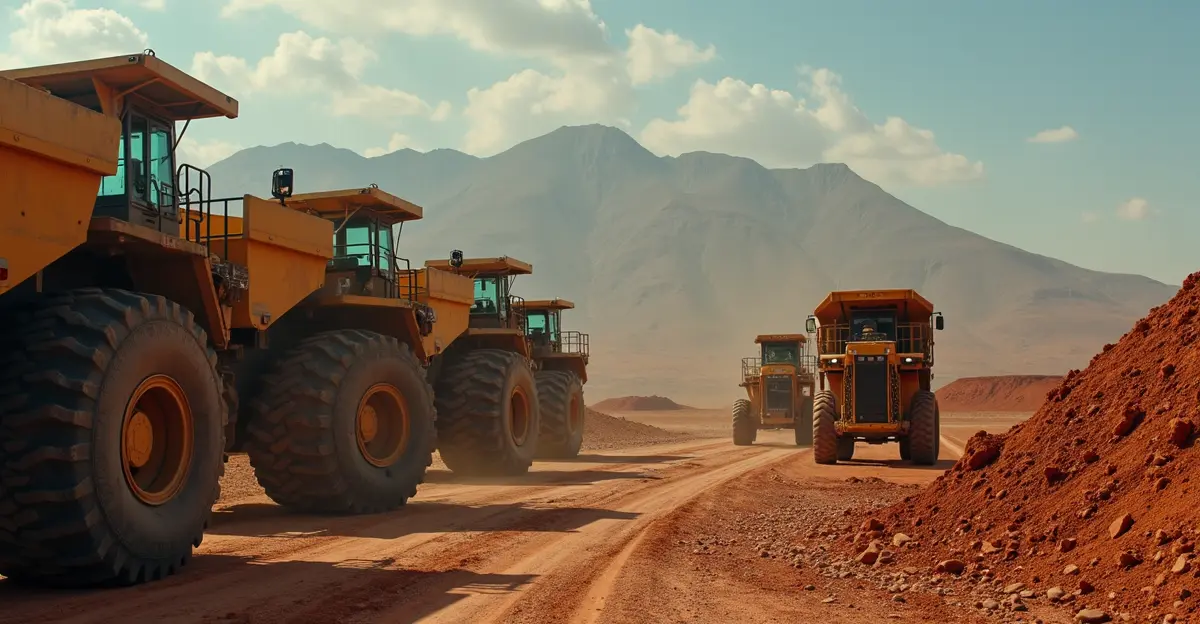
Argentina, Bolivia, and Chile — home to more than half the world's lithium reserves — have become the epicenter of a new resource scramble. In March 2026, Argentina signed a landmark deal with the European Union to supply lithium carbonate for EV batteries, bypassing Chinese processors. Australia's Pilbara Minerals partnered with Chilean miner SQM to develop a direct lithium extraction project in the Atacama Desert. However, environmental concerns and indigenous rights protests have slowed permitting. "The rush for lithium cannot come at the expense of local communities and fragile ecosystems," warned Sofia Reyes, a researcher at the Natural Resource Governance Institute.
Africa: The New Frontier
Africa holds vast untapped reserves of cobalt, graphite, and rare earths. The Democratic Republic of Congo produces over 70% of the world's cobalt, but political instability and Chinese ownership of mines have limited benefits for local populations. In 2026, the U.S. launched the "African Critical Minerals Corridor" initiative, providing $1.2 billion in infrastructure funding to develop rail and port links in Zambia, Tanzania, and the DRC. Meanwhile, Tanzania signed a deal with Japan to develop rare-earth deposits at Ngualla. The African Continental Free Trade Area could help integrate mineral supply chains, but implementation remains slow.
Australia: The Reliable Partner
Australia has emerged as a key ally for Western nations seeking to reduce dependence on China. It is the world's largest lithium producer and holds significant reserves of rare earths, cobalt, and copper. In 2025, Australia and the United States signed the Critical Minerals Cooperation Agreement, streamlining investment approvals. Australian firm Lynas Rare Earths opened a new processing plant in Kalgoorlie in early 2026, the first major rare-earth processing facility outside China in decades. However, Australia faces labor shortages and high energy costs that constrain rapid expansion.
Impact on Energy Security and Industrial Policy
The critical minerals race is reshaping industrial policy worldwide. The U.S. Inflation Reduction Act (IRA) offers tax credits for domestically sourced minerals, while the EU's Critical Raw Materials Act sets targets for 10% of extraction and 40% of processing to occur within the bloc by 2030. Japan and South Korea have launched strategic stockpiling programs. Yet these efforts face headwinds: permitting for new mines can take 10-15 years, and recycling infrastructure remains underdeveloped. The global energy transition timeline depends on whether supply can keep pace with demand.
Expert Perspectives
According to a February 2026 report by the International Forum on Mining, Metals and Sustainable Development, criticality is a moving target: minerals deemed non-critical today may become essential tomorrow as technology evolves. "We need a systems approach that combines mining, recycling, and substitution," said Dr. James Kwon, a materials scientist at MIT. "No single country can achieve full self-sufficiency. Cooperation is not optional." The Forum on Resource Geostrategic Engagement (FORGE) aims to facilitate such cooperation, but geopolitical rivalries — particularly between the U.S. and China — threaten to fragment global markets into competing blocs.
FAQ
What are critical minerals?
Critical minerals are raw materials deemed essential for a country's economy and national security, with supply chains vulnerable to disruption. They include lithium, rare earths, cobalt, copper, and graphite, among others.
Why is China dominant in critical minerals processing?
China invested heavily in processing infrastructure over the past two decades, leveraging low labor costs and lax environmental regulations. It now controls 90% of rare-earth processing and 60% of lithium chemical production.
What is FORGE?
The Forum on Resource Geostrategic Engagement (FORGE) is a U.S.-led partnership launched in February 2026 to coordinate investment and policy among allied nations to secure critical mineral supply chains. It succeeded the Minerals Security Partnership.
How will the critical minerals race affect the energy transition?
Supply constraints could slow the deployment of EVs, wind turbines, and solar panels, raising costs and delaying climate goals. Diversification of supply chains is essential to meet growing demand.
What can consumers do?
Supporting recycling programs, choosing products with recycled content, and advocating for responsible mining standards can help reduce pressure on primary mineral supply chains.
Conclusion: A Defining Challenge of the Decade
The critical minerals race of 2026 is more than an economic competition — it is a strategic struggle that will define the balance of power in the 21st century. Nations that secure reliable, sustainable access to these resources will lead the energy transition; those that fail risk economic stagnation and strategic vulnerability. The next few years will determine whether the world can build a diversified, resilient supply chain — or whether resource nationalism will fragment the global economy into hostile blocs.
Sources
- International Energy Agency, Critical Minerals Market Review 2026
- U.S. Department of State, FORGE Launch Statement, February 24, 2026
- European Commission, Critical Raw Materials Act (2024)
- Intergovernmental Forum on Mining, Minerals, Metals and Sustainable Development, Criticality Definitions Report (2025)
- Reuters, "China tightens rare earth export controls," January 2026
- Financial Times, "The new scramble for Africa's minerals," March 2026
Follow Discussion