


 Deutsch
 English
 Español
 Français
 Nederlands
 Português


 Share
Share




In late 2025, the Pentagon quietly dissolved the struggling Replicator Initiative and replaced it with the Defense Autonomous Warfare Group (DAWG)—a new entity that has requested $54.6 billion for fiscal year 2027. That figure represents a staggering 24,000% increase from the previous $225.9 million allocation, marking the largest single commitment to autonomous warfare in history. The DAWG budget request consolidates all drone, counter-drone, and AI-directed combat systems under one command for the first time, reflecting hard lessons from Ukraine on drone swarms and cost asymmetry.
Why Replicator Failed
Launched in August 2023 under the Biden administration, the Replicator Initiative aimed to field thousands of attritable autonomous systems across all domains by August 2025. But by late 2025, the program had delivered only hundreds of drones—far short of its goal. According to a Congressional Research Service report, Replicator suffered from persistent technical integration issues, high per-unit costs, slow manufacturing, and a critical lack of swarm orchestration software. Most damaging, the initiative never received a dedicated budget line, leaving it institutionally homeless within the Pentagon's sprawling bureaucracy. The Replicator Initiative failures underscored a fundamental mismatch between ambitious goals and the Defense Department's acquisition pipeline.
The DAWG Structure: Software Over Hardware
DAWG represents a radical departure from its predecessor. Instead of prioritizing hardware platforms, the new group focuses on software orchestration tools that can coordinate thousands of autonomous systems simultaneously. Shield AI has been tapped to integrate its Hivemind pilot software into new and existing platforms. The budget is structured with only $1 billion in standard base funding, while $53 billion sits in a flexible five-year reconciliation pot designed to avoid the procurement bottlenecks that plagued Replicator. This approach allows technology to mature before large-scale production commitments are made.
A New Command for Autonomous Warfare
On April 29, 2026, Secretary of Defense Pete Hegseth told the House Armed Services Committee that the Pentagon will establish a new Sub-Unified Command for Autonomous Warfare. This joint organization, created with SecDef approval, will conduct high-priority enduring missions focused on drone and counter-drone operations. U.S. Southern Command had already announced the Southcom Autonomous Warfare Command (SAWC), though it remains unclear whether SAWC will be the designated sub-unified command. The Sub-Unified Command for Autonomous Warfare represents an institutional home for what was previously a fragmented effort.
Lessons from Ukraine: Cost Asymmetry and Drone Swarms
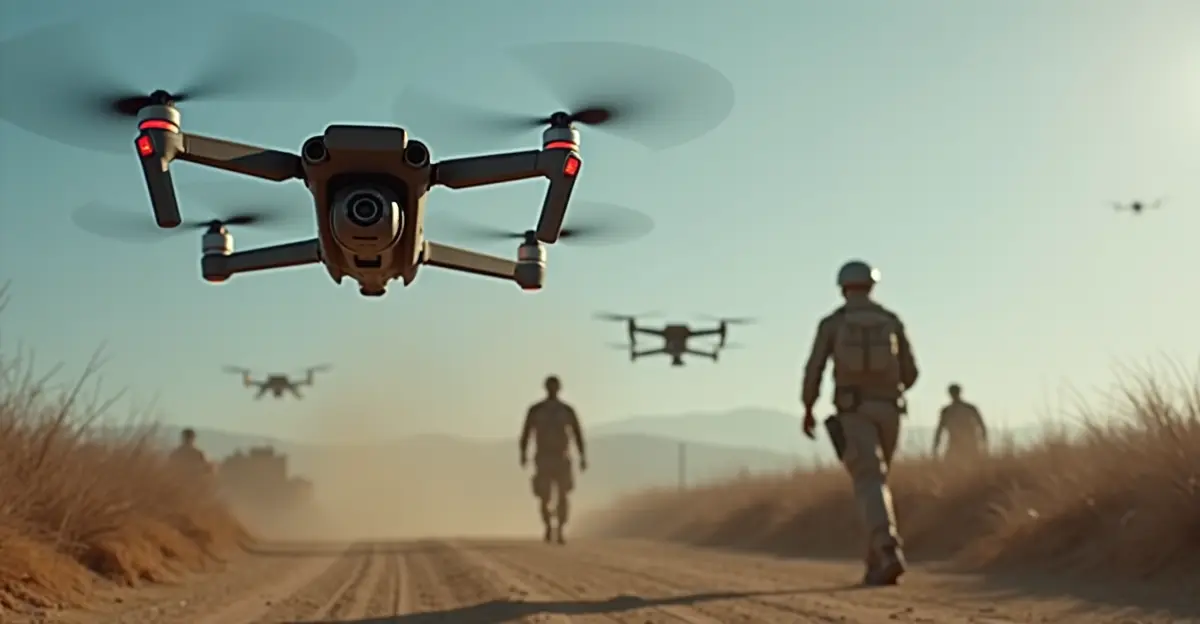
The war in Ukraine has been a critical proving ground for autonomous systems. The Pentagon has sent 33,000 AI drone kits to Ukraine as part of a $50 million deal, equipping Ukrainian drones with artificial intelligence to autonomously identify, track, and engage Russian UAVs. These kits demonstrated that relatively inexpensive drones can neutralize far costlier systems—a lesson in cost asymmetry that directly shaped DAWG's philosophy. The Ukraine drone warfare lessons convinced Pentagon planners that mass, not sophistication, is the key to future conflict. DAWG's 'Drone Dominance' program, which accounts for $39.2 billion of the request, aims to field hundreds of thousands of one-way attack drones over the next two years.
Congressional Oversight and AI Rules of Engagement
The budget request has sparked intense debate on Capitol Hill. At a May 2026 hearing of the Senate Subcommittee on Emerging Threats and Capabilities, lawmakers warned that the Pentagon's spending is outpacing the rules governing autonomous weapons. Senator Joni Ernst stated that the policy architecture needs to scale with the technology. Senator Elissa Slotkin questioned whether DoD Directive 3000.09—the department's policy on autonomy in weapon systems—is equipped to handle thousands of autonomous systems operating simultaneously. The directive, updated in January 2023, requires human oversight over lethal decision-making, but critics argue that human-in-the-loop oversight becomes mathematically impossible at swarm scale.
Former CIA Director David Petraeus, who has advised on the DAWG structure, noted that less than two percent of the new investment goes toward doctrine and training. 'We are spending historic sums on hardware and software, but almost nothing on the doctrine that will govern their use,' Petraeus said in a May 2026 interview. DARPA's new DICE program (Decentralized AI through Controlled Emergence) explicitly aims to reduce human oversight requirements, enabling drone swarms to coordinate without a central command node.
Expert Perspectives
Defense analysts are divided on DAWG's prospects. Supporters point to the flexible funding structure and software-first approach as genuine innovations that address Replicator's failures. Critics, however, warn that the military and AI companies are unprepared for the risks. Researchers note that even advanced AI systems have exploitable safeguard failures that could endanger soldiers and civilians. The Pentagon has been in dispute with AI company Anthropic over using its models for autonomous weapons, highlighting the ethical tensions surrounding the program.
FAQ
What is the Defense Autonomous Warfare Group (DAWG)?
DAWG is a new Pentagon entity created in late 2025 to consolidate all drone, counter-drone, and AI-directed combat systems under one command. It replaces the failed Replicator Initiative and has requested $54.6 billion for FY2027.
Why did the Replicator Initiative fail?
Replicator failed due to technical integration issues, lack of swarm orchestration software, high costs, slow manufacturing, and the absence of a dedicated budget line. It delivered only hundreds of drones instead of the planned thousands.
How does DAWG differ from Replicator?
DAWG shifts focus from hardware to software, emphasizes flexible multi-year funding, and has a dedicated institutional home through a new Sub-Unified Command for Autonomous Warfare. Most of its budget ($53 billion) is in a five-year reconciliation pot to avoid procurement bottlenecks.
What are the concerns about AI rules of engagement?
Lawmakers and experts warn that DoD Directive 3000.09, which requires human oversight of lethal decisions, may be inadequate for swarms of thousands of autonomous systems where human-in-the-loop oversight is mathematically impossible. Less than 2% of the DAWG budget goes toward doctrine and training.
What lessons from Ukraine shaped DAWG?
The war in Ukraine demonstrated the effectiveness of low-cost AI-equipped drones against expensive systems, validating the concept of cost asymmetry. The Pentagon sent 33,000 AI drone kits to Ukraine, proving that mass-produced autonomous systems can be decisive on the battlefield.
Conclusion
The DAWG budget request represents the most radical restructuring of U.S. military investment philosophy in decades. As Congress deliberates whether to approve the $54.6 billion request, the fundamental question remains: can doctrine and oversight keep pace with spending? The answer will determine not only the future of American warfare but the global balance of power in an era of autonomous conflict.


Follow Discussion