


 Deutsch
 English
 Español
 Français
 Nederlands
 Português


 Share
Share




In early 2026, resource nationalism over critical minerals has become the defining strategic shift of the decade, redrawing alliance maps and defense strategies. As China controls more than 60% of refined lithium and cobalt and roughly 80% of battery-grade graphite and rare earths, the United States launched FORGE (Forum on Resource Geostrategic Engagement) — a plurilateral coalition creating a preferential trade zone with coordinated price floors. The February 2026 Critical Minerals Ministerial in Washington, D.C., marked a turning point, with 54 nations and 11 new bilateral supply frameworks signed in a single day.
The race for rare earth supply chains has moved beyond mining to midstream control of refining, processing, and magnet manufacturing. Resource nationalism is rising: Indonesia slashed nickel quotas, Chile and Peru dominate copper supply, the DRC imposed a cobalt quota system, and Vietnam banned rare earth exports. This shift is reshaping how countries secure lithium, copper, cobalt, and graphite for electric vehicles, defense systems, and AI hardware.
What Is Resource Nationalism in Critical Minerals?
Resource nationalism refers to governments asserting greater control over natural resources through export restrictions, domestic processing requirements, nationalization, or forced partnerships. In 2026, this includes China's 15th Five-Year Plan, which reinforces its grip on roughly 90% of rare earth processing and 60% of lithium conversion. The EU's Critical Raw Materials Act set targets of 10% domestic extraction, 40% processing, and 25% recycling by 2030, while producer nations like Indonesia and Chile demand that more value-added processing occur within their borders.
The FORGE Coalition and Project Vault
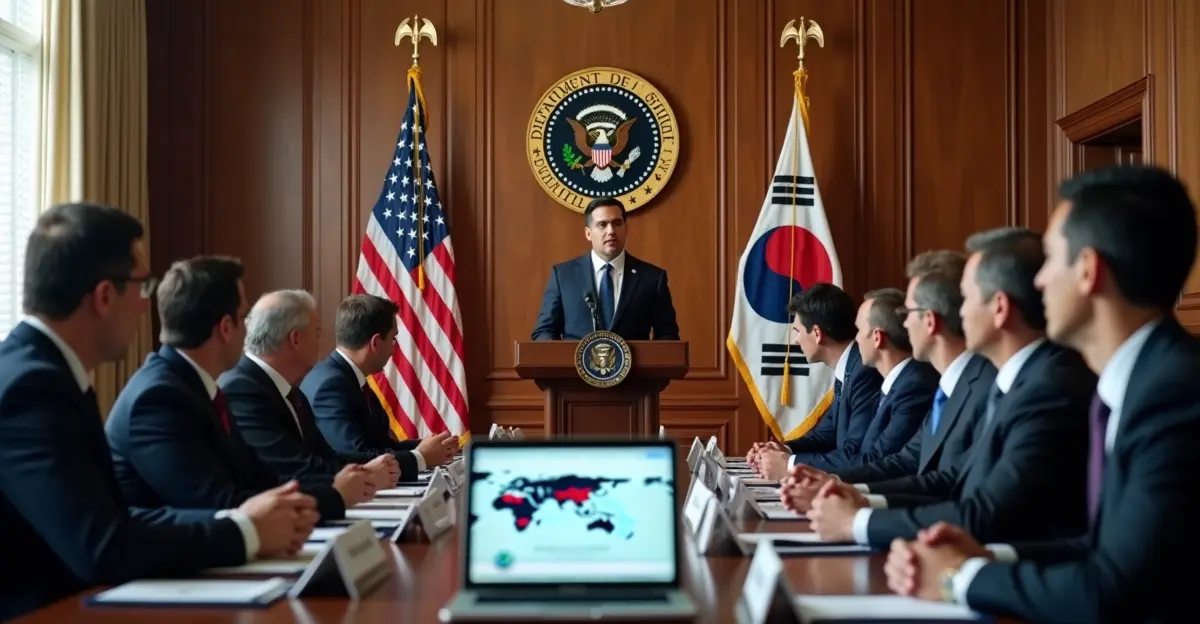
At the February 4, 2026 ministerial, U.S. Secretary of State Marco Rubio and Vice President JD Vance launched FORGE, succeeding the Minerals Security Partnership. Chaired by South Korea, FORGE aims to cover two-thirds of the global economy through a preferential trade-and-investment zone with coordinated price floors and adjustable tariffs. The United States signed 11 new bilateral frameworks with Argentina, Morocco, Peru, the Philippines, the UAE, the UK, and others, bringing the total to 21 deals in five months, and mobilized over $30 billion in investments and loans.
Central to this strategy is Project Vault, a $12 billion public-private partnership backed by a $10 billion loan from the U.S. Export-Import Bank and nearly $2 billion in private capital. Announced on February 2, 2026, Project Vault establishes the U.S. Strategic Critical Minerals Reserve, with partners including GE Vernova, Boeing, GM, and Clarios. It aims to protect American manufacturers from supply shocks, though critics warn of 'weaponized stockpiling' and voluntary participation gaps.
China's Response and the Global Chessboard
China has used temporary, reversible export controls to maintain pricing power and discourage Western investment. Its October 2025 restrictions on rare earths and lithium battery materials triggered price spikes of up to sixfold outside China, with European licensing approval rates falling below 25% in some sectors. Beijing then suspended some controls until November 2026, a tactical pause rather than a reversal. The China critical minerals export controls have pushed Japan, the EU, India, and Gulf states to accelerate diversification. Saudi Arabia and the UAE are deploying over $100 billion through sovereign funds like Manara Minerals, while India signed rare earth partnerships with Brazil and is negotiating a CEPA with Chile.
Impact on Energy Transition and AI Hardware
The concentrated supply chain threatens net-zero timelines. The IEA projects critical mineral demand will nearly double by 2040, with lithium demand up 350% and graphite up 130%. For AI hardware supply chains, rare earth magnets and gallium are essential for semiconductors, robotics, and defense systems. UNCTAD warns of a narrow 12-to-18-month window to diversify before Chinese processing dominance becomes entrenched, as new refineries take 5–10 years to build. Rebuilding independent alternatives could take 20–30 years, leaving EV, renewable, and defense sectors vulnerable. The shift toward energy transition minerals security is now a top foreign policy priority.
Expert Perspectives
'The international critical minerals market is currently failing,' Vice President JD Vance said at the ministerial, citing brittle, highly concentrated supply chains and projects that collapse when foreign supply floods the market. Rubio framed diversification as a top global priority. Analysts at the Atlantic Council note that FORGE shifts U.S. policy from bilateralism toward plurilateral coordination, internationalizing price supports to create stable investment conditions.
FAQ
What is FORGE in critical minerals?
FORGE (Forum on Resource Geostrategic Engagement) is a U.S.-led plurilateral coalition launched in February 2026, replacing the Minerals Security Partnership. It creates a preferential trade-and-investment zone with coordinated price floors among 54 nations.
How much of rare earths does China control?
China controls roughly 90% of global rare earth processing, 80% of battery-grade graphite, and over 60% of refined lithium and cobalt, according to 2026 data from UNCTAD and the IEA.
What is Project Vault?
Project Vault is a $12 billion U.S. Strategic Critical Minerals Reserve launched in February 2026, backed by a $10 billion EXIM loan and private investment, to protect manufacturers from supply disruptions.
Why is resource nationalism rising in 2026?
Producer nations like Indonesia, Chile, and the DRC are using export controls and domestic processing mandates to capture more value from mineral wealth, while major powers seek supply security amid geopolitical rivalry.
Conclusion and Future Outlook
The critical minerals chessboard will define which nations power the energy transition and AI revolution. With a decisive 12-to-18-month window, the success of FORGE, the EU's CRMA, and Project Vault depends on translating agreements into actual mines, refineries, and stockpiles. Failure risks entrenching a China-dominated supply chain for decades.




Follow Discussion