


 Deutsch
 English
 Español
 Français
 Nederlands
 Português


 Share
Share




In 2026, the Taiwan chip trap remains the most underappreciated risk in global technology: Taiwan Semiconductor Manufacturing Company (TSMC) still produces roughly 90% of the world's most advanced semiconductors and 99% of chips used to train frontier AI models—all on an island just 100 miles from a hostile power. Despite years of warnings and billions in subsidies, U.S. tech companies have failed to diversify sourcing, and Taiwan's government has formally rejected relocating 40% of chip capacity abroad. According to a February 2026 New York Times investigation, Silicon Valley has long ignored this vulnerability.
What is the Taiwan Chip Trap?
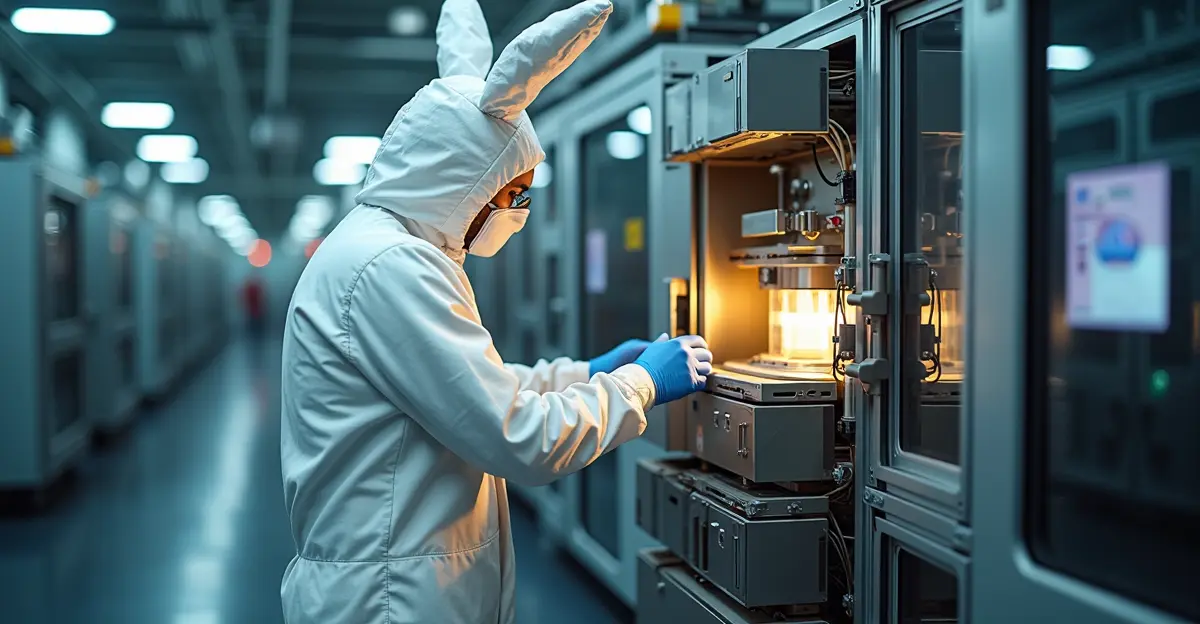
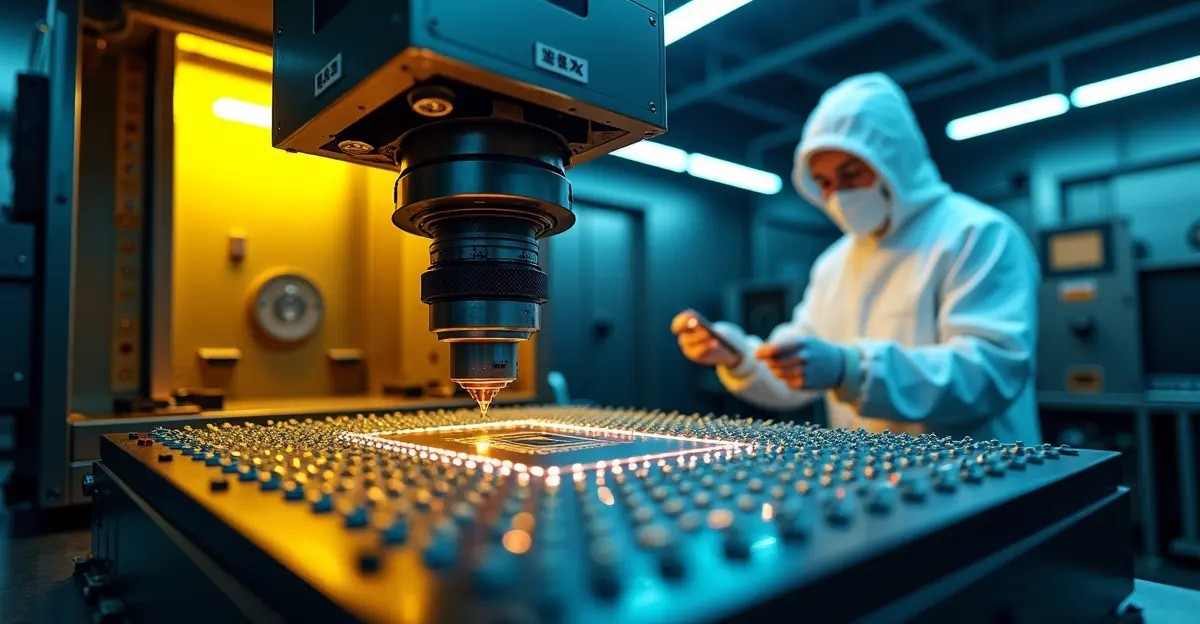
The 'Taiwan chip trap' describes the systemic fragility of a global semiconductor supply chain concentrated on a single, geopolitically vulnerable island. TSMC's leading-edge fabs in Hsinchu, Tainan, and Taichung fabricate virtually all advanced logic chips—including Nvidia GPUs, AMD accelerators, and Apple processors—using process nodes of 3nm and below. A sustained disruption, experts warn, would slash multiple percentage points off global GDP for years, dwarfing the pandemic-era chip shortage. The semiconductor supply chain risk extends far beyond manufacturing to advanced packaging, where TSMC's CoWoS capacity exceeds all competitors combined.
Why Diversification Has Failed
Taiwan's government formally rejected relocating 40% of chip capacity abroad in February 2026, with Vice Premier Cheng Li-chiun calling the plan 'impossible.' The rejection highlights three structural barriers.
The N-2 Rule and Workforce Lock-in
Taiwan enforces an export control known as the N-2 rule, requiring overseas fabs to use process technology at least two generations behind TSMC's most advanced Taiwan production. This means U.S. plants, despite a $52 billion CHIPS Act subsidy and TSMC's $165 billion Arizona commitment, will not replicate Taiwan's leading-edge output. More critically, Taiwan's 318,000-strong specialist workforce and four-decade supplier network—chemicals, gases, photomasks, and equipment—cannot be quickly replicated. The TSMC Arizona fab remains years from frontier production.
Parallel Expansion, Not Relocation
The US$250 billion U.S.-Taiwan deal is structured as parallel expansion, not capacity transfer. As Taiwan semiconductor policy makes clear, international fabs are designed to support Taiwan's ecosystem, not replace it. India's approved projects target mature 28nm nodes, three to four generations behind, while South Korea's Samsung and SK Hynix focus on memory, not leading-edge logic.
Geopolitical Scenarios That Could Trigger Disruption
Analysts identify three main triggers for a Taiwan chip crisis. First, a Chinese 'quarantine' using coast guard inspections could choke exports without firing a shot. Second, an invasion would likely destroy or sabotage fabs, given their reliance on Dutch, Japanese, and U.S. inputs and specialized engineers. Third, a natural disaster or regional conflict—such as the 2026 Strait of Hormuz crisis that threatened helium and LNG supplies—could interrupt production. Eyck Freymann, Hoover fellow and author of 'Defending Taiwan,' told Rest of World that Taiwan's 'Silicon Shield' is real but overrated. China could quarantine Taiwan via coast guard inspections, choking exports without touching a fab.
Strategic Options to Mitigate the Risk
Experts recommend a portfolio approach rather than a single fix. Multi-fab qualification—qualifying the same chip design at fabs in Arizona, Japan, and Germany—can reduce single-point dependency, though it adds cost and complexity. Reshoring advanced packaging and increasing strategic inventories of critical chips are short-term buffers. The CHIPS Act reshoring effort must accelerate, but analysts caution that no amount of money can quickly replace Taiwan's ecosystem. The AI chip supply chain remains the most exposed segment, with Nvidia securing over 60% of TSMC's advanced packaging capacity through 2026.
FAQ
How much of the world's advanced chips does Taiwan produce? Taiwan produces roughly 90% of the world's most advanced semiconductors (3nm and below) and 99% of chips used to train frontier AI models.
Why can't chip production move to the U.S. quickly? Taiwan's N-2 rule keeps overseas fabs two generations behind, and its workforce of 318,000 specialists plus a four-decade supplier network cannot be replicated quickly.
What is the Silicon Shield theory? The Silicon Shield holds that China would avoid attacking Taiwan because doing so would destroy the world's chip supply and harm China's own economy. Analysts argue it is real but overrated.
What are the main geopolitical triggers for disruption? A Chinese blockade or quarantine, military invasion, or a regional conflict disrupting energy and materials are the top scenarios.
What can companies do to reduce chip supply risk? Companies can pursue multi-fab qualification, build strategic inventories, and support diversification to Arizona, Japan, and Germany.
Conclusion
As Taiwan's government holds firm against capacity relocation and U.S. tech giants continue to depend on TSMC, the Taiwan chip trap remains unresolved. The next disruption may not be an invasion but a slower, less visible squeeze—and the global economy is not ready.



Follow Discussion