


 Deutsch
 English
 Español
 Français
 Nederlands
 Português


 Share
Share




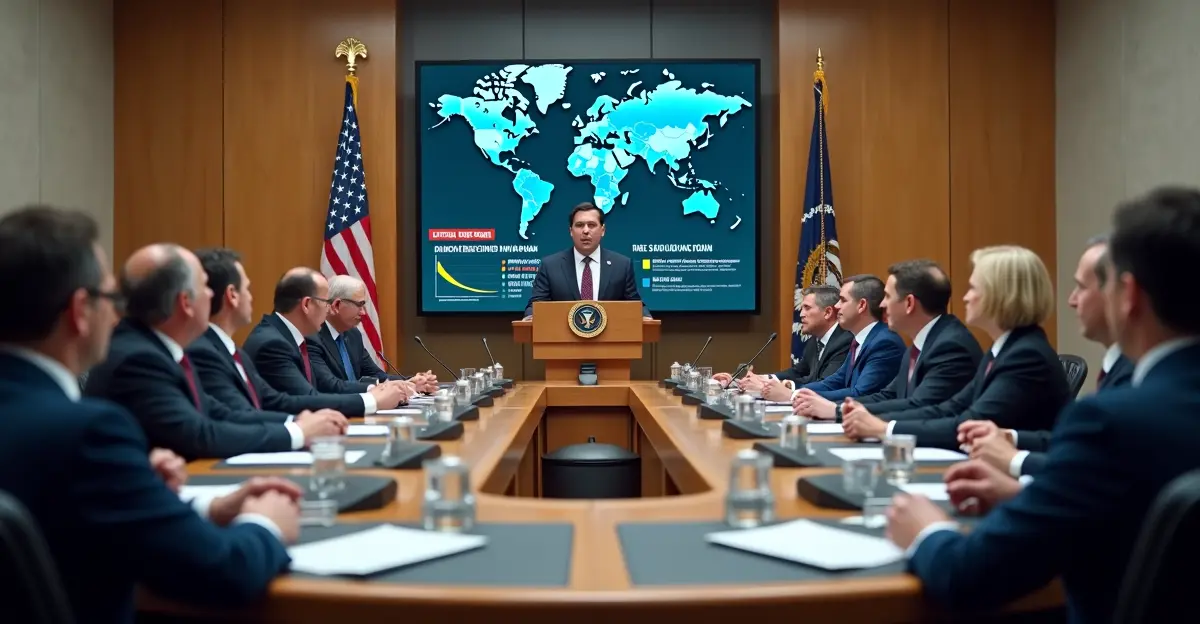
The Forum on Resource Geostrategic Engagement, or FORGE, launched on February 4, 2026 in Washington, D.C., as the successor to the Minerals Security Partnership and the centerpiece of the most sweeping critical minerals realignment in decades. At the inaugural Critical Minerals Ministerial, U.S. Secretary of State Marco Rubio announced eleven new bilateral frameworks with Argentina, Morocco, the Philippines, the United Arab Emirates, the United Kingdom, Peru, Ecuador, Guinea, Paraguay, Uzbekistan, and the Cook Islands, bringing the total to 21 deals in five months and mobilizing more than $30 billion in project financing.
What Is FORGE and Why Does It Matter?
FORGE replaces the Minerals Security Partnership with a plurilateral coalition designed to create a preferential trade-and-investment zone for critical minerals. It builds on the MSP's policy coordination but adds coordinated reference prices and adjustable tariffs to counter what U.S. officials call non-market practices by China. The forum will be chaired by South Korea through June 2026 and will operate through two working groups: one for project investment and another for policy coordination.
The urgency is clear. China controls roughly 70% of global rare earth processing, 60% of lithium refining, and up to 90% of rare earth processing, according to 2025 and 2026 analyses. A series of Chinese export controls in 2025 triggered sixfold price spikes for some rare earths, exposing the critical minerals supply chain vulnerabilities in AI hardware, electric vehicle batteries, and defense systems.
Inside the Bilateral Blitz: 11 Frameworks and $30 Billion
The eleven new agreements cover Argentina, the Cook Islands, Ecuador, Guinea, Morocco, Paraguay, Peru, the Philippines, the UAE, the UK, and Uzbekistan. They offer market access, investment protection, infrastructure development, and price stability mechanisms. Unlike the MSP's looser partnership, these bilateral deals are negotiated faster and pair resource-rich nations with U.S. financing tools.
Key financing includes the Export-Import Bank's $10 billion Project Vault strategic reserve for domestic critical minerals stockpiling, plus additional Department of Energy and Department of Defense support. A $12 billion public-private reserve backed by Boeing, GM, and GE Vernova was also highlighted. Overall, the U.S. says it has mobilized more than $30 billion in six months.
- Argentina: lithium and copper partnerships
- Morocco: phosphate, cobalt, and processing hubs
- Philippines: nickel and rare earth exploration
- UAE: refining investment and logistics corridors
Critics note that bilateral deals may lack pooled investment coordination, and some analysts warn of slow U.S. permitting that could delay projects for a decade or more.
How the Realignment Reshapes Global Power
FORGE is not just about minerals; it is a geoeconomic counterweight to China rare earth dominance. By tying trade access to resource partnerships, Washington aims to build a two-thirds-of-world-GDP bloc with secure supply chains. The EU, however, faces a €22.5 billion funding gap under its EU Critical Raw Materials Act, with 100% dependence on China for heavy rare earths. Gulf states Saudi Arabia and the UAE are deploying over $100 billion through sovereign wealth funds to become a neutral third pole.
The realignment also reshapes the energy transition timeline. With critical minerals demand projected to multiply four to six times by 2040 and mine-to-processing timelines of 10 to 15 years, analysts warn of a narrowing 12-18 month window for decisive action. Neodymium prices rose 34% in 2025, and a decade-long supply gap threatens decarbonization targets.
What Leaders Are Saying
Vice President JD Vance told ministers that modern economies still run on real things like critical minerals and that the current market is failing because supply chains are brittle and concentrated, prices are depressed, and projects collapse when foreign supply floods the market. Secretary Rubio called supply chain diversification and secure access to critical minerals a top administration and global priority.
Frequently Asked Questions
What is FORGE?
FORGE, the Forum on Resource Geostrategic Engagement, is the U.S.-led successor to the Minerals Security Partnership, launched February 4, 2026, to coordinate critical minerals investment and policy.
Which countries signed bilateral critical minerals frameworks in February 2026?
Argentina, the Cook Islands, Ecuador, Guinea, Morocco, Paraguay, Peru, the Philippines, the UAE, the UK, and Uzbekistan signed eleven new frameworks at the 2026 Critical Minerals Ministerial.
How much financing did the U.S. mobilize?
More than $30 billion in six months, including EXIM's $10 billion Project Vault domestic strategic reserve.
Why is FORGE needed?
China controls up to 90% of rare earth processing and triggered price spikes with 2025 export controls, threatening AI, EV, and defense supply chains.
What are the main criticisms of FORGE?
Critics cite slow permitting, bilateral fragmentation, and insufficient pooled investment coordination, along with concerns about ESG safeguards in partner countries.
Conclusion: A Defining Geoeconomic Test
The FORGE era has begun, but its success hinges on converting bilateral frameworks into genuine plurilateral coordination and on speeding up permitting and project finance. With China's 15th Five-Year Plan doubling down on mineral dominance, the 2026 critical minerals realignment will shape technology, defense, and energy security for the next decade.


Follow Discussion