


 Deutsch
 English
 Español
 Français
 Nederlands
 Português


 Share
Share




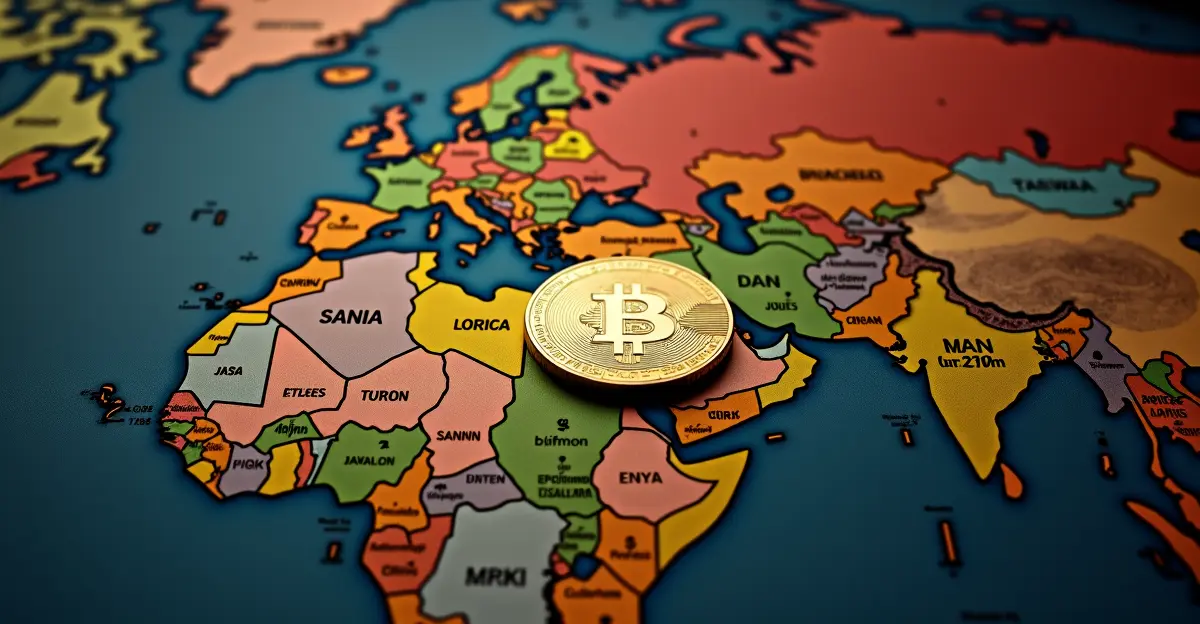
In 2026, the BRICS bloc launched 'The Unit,' a gold-backed digital settlement token that is reshaping global finance. Backed 40% by physical gold and 60% by a basket of member currencies, and built on the Cardano blockchain, the Unit represents the most concrete step yet in the bloc's de-dollarization push. Combined with the expansion of BRICS Pay and interoperable CBDC frameworks connecting Russia's SPFS, China's CIPS, and India's UPI, intra-bloc trade in local currencies has reached approximately 67%. This article analyzes whether these coordinated mechanisms represent a genuine structural shift away from dollar hegemony or remain a limited alternative for a subset of global trade, and what the implications are for reserve currency dynamics, sanctions policy, and global financial stability.
What Is the BRICS Unit?
The BRICS Unit is a prototype digital settlement token designed exclusively for cross-border trade among BRICS member nations. Announced in December 2025 by Russia's IRIAS institute, the Unit is not a retail currency but an institutional-grade settlement instrument for governments and central banks. Its value is derived from a hybrid backing: 40% physical gold reserves and 60% a basket of BRICS national currencies (Brazilian real, Chinese yuan, Indian rupee, Russian ruble, and South African rand). The token operates on a permissioned version of the Cardano blockchain, enabling atomic swaps and near-instant settlement without reliance on the SWIFT network. The Unit Foundation governs the token and has appointed an AI as its executive director to ensure neutrality in operations.
The Infrastructure Behind the Shift
BRICS Pay and Payment System Integration
BRICS Pay, slated for full operational launch at the 2026 BRICS summit in India, integrates existing national payment systems: Russia's SPFS, China's CIPS, India's UPI, and Brazil's Pix. This creates a decentralized network for cross-border transactions in local currencies, bypassing dollar-denominated clearing. As of April 2026, China's CIPS network connects over 1,500 institutions across 117 countries, with 193 direct and 1,573 indirect participants. The BRICS Pay system is designed to eventually incorporate central bank digital currencies (CBDCs), further reducing dollar dependency.
CBDC Interoperability
Project mBridge, a multi-CBDC platform connecting China, Hong Kong, Thailand, the UAE, and Saudi Arabia, reached $55.49 billion in transaction volume by late 2025. The BRICS Cross-Border Payments Initiative (BCBPI) aims to link these CBDC frameworks into a unified network. India's digital rupee and China's digital yuan (which surpassed $2.38 trillion in transactions by November 2025) are key components. This CBDC interoperability framework allows instant settlement between member central banks without dollar intermediation.
Intra-Bloc Trade in Local Currencies: 67% and Rising
According to Russian Foreign Minister Sergey Lavrov, 67% of intra-BRICS transactions are now conducted in local currencies, up from less than 30% a decade ago. Russia and China reportedly settle approximately 90% of bilateral trade in rubles and yuan. The Unit serves as a settlement anchor, reducing exchange rate volatility between member currencies. With BRICS now representing 45% of the world's population and 36% of global GDP (over $27 trillion combined), the shift is economically significant. However, India's External Affairs Minister has clarified that India has no policy to replace the dollar, stating it remains key to global economic stability.
Dollar Reserve Status: Record Low but Still Dominant
The U.S. dollar's share of global foreign exchange reserves fell to 56.3% in Q2 2025 — the lowest since 1995 — and further to 56.77% in Q4 2025, according to IMF COFER data. From a peak of 72% in 2001, the dollar has shed nearly 16 percentage points. However, 92% of the Q2 2025 decline was driven by exchange rate movements rather than active central bank selling. The dollar still settles approximately 88-89% of global forex transactions, and no credible alternative reserve currency at scale exists. Central banks have purchased over 1,000 tonnes of gold annually for three consecutive years, with gold's reserve share rising from 13% in 2017 to ~30% in 2025. The decline of dollar hegemony is better described as a loss of monopoly rather than an imminent collapse.
Implications for Sanctions Policy and Financial Stability
The 2022 freezing of Russian sovereign reserves by Western governments fundamentally changed the calculus for reserve managers globally. The BRICS Unit and associated payment systems offer a sanctions-resistant alternative for trade settlement. For countries like Russia and Iran, this is existential; for others, it provides optionality. However, the fragmentation of global payment systems creates new risks: higher transaction costs, reduced interoperability, and pressure on emerging economies to choose between blocs. US political pressure includes threats of 100% tariffs on countries pursuing de-dollarization. The sanctions policy implications are profound, as the effectiveness of financial sanctions diminishes when targets have viable alternatives.
Expert Perspectives
The Unit is a pragmatic hybrid approach — a 'crossing the river by touching the stones' strategy that could eventually lead to a gold-backed international monetary system, notes Nathan Lewis in Forbes. J.P. Morgan research highlights that de-dollarization is most visible in central bank reserves and commodity markets, where a growing share of energy is priced in non-dollar contracts. The IMF's COFER data confirms the structural but gradual nature of the shift. Russian President Putin has stated that creating a single BRICS currency is still premature, despite growing use of national currencies.
FAQ
What is the BRICS Unit?
The BRICS Unit is a gold-backed digital settlement token for cross-border trade among BRICS nations, backed 40% by gold and 60% by a basket of member currencies, operating on the Cardano blockchain.
Can individuals buy or use the BRICS Unit?
No. The Unit is an institutional-grade settlement instrument for governments and central banks, not a retail currency or investment product.
How does the BRICS Unit differ from a cryptocurrency?
Unlike decentralized cryptocurrencies, the Unit is a permissioned, asset-backed token governed by the Unit Foundation with an AI executive director, designed for official trade settlement rather than public speculation.
Is the dollar losing its reserve currency status?
The dollar's share of global FX reserves has fallen to a record low of ~56%, but it still dominates forex transactions (88-89%) and no alternative at scale exists. The shift is toward a multipolar system, not a replacement.
What are the risks of de-dollarization for global stability?
Fragmentation of payment systems could increase transaction costs, reduce interoperability, and create geopolitical pressure on emerging economies. However, gradual diversification may reduce systemic risk from over-reliance on a single currency.
Conclusion: Structural Shift or Limited Alternative?
The BRICS Unit and associated infrastructure represent the most operational de-dollarization effort to date. With 67% of intra-bloc trade in local currencies, a live settlement token, and expanding payment networks, 2026 marks the year de-dollarization moved from rhetoric to operational infrastructure. However, the dollar's deep liquidity, network effects, and institutional trust ensure it will remain dominant for the foreseeable future. The most likely outcome is a multipolar currency world where the dollar shares influence with the euro, renminbi, gold, and digital assets. For now, the BRICS Unit is a powerful symbol and a functional tool — but not yet a dollar killer.




Follow Discussion