


 Deutsch
 English
 Español
 Français
 Nederlands
 Português


 Share
Share




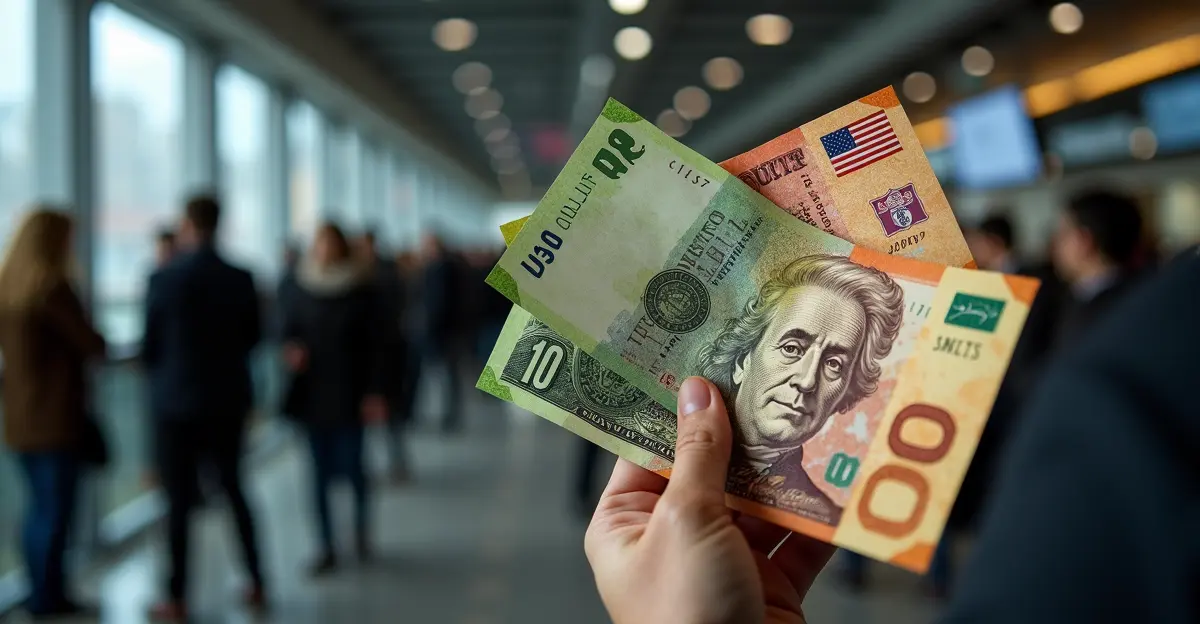
The U.S. dollar's share of global foreign exchange reserves has fallen below 57% in early 2026, reaching its lowest level since modern records began, as central banks across the world pivot aggressively toward gold and alternative settlement systems. According to the International Monetary Fund's Currency Composition of Official Foreign Exchange Reserves (COFER) survey, the dollar's share stood at 56.77% in the fourth quarter of 2025, down from 56.93% in Q3 and from over 70% two decades ago. This structural decline, driven by a coalition of BRICS+ nations and Eastern European states, signals the emergence of a multipolar reserve architecture that could weaken dollar hegemony, raise U.S. borrowing costs, and fragment the global financial system along geopolitical lines.
Why the Dollar's Dominance Is Eroding
The dollar's gradual descent from its post-war peak reflects a confluence of geopolitical and economic forces. The weaponization of US financial sanctions, particularly the freezing of $300 billion in Russian central bank reserves in 2022, fundamentally altered risk calculations for sovereign reserve managers. Central banks from Beijing to Warsaw now view gold and alternative payment networks as strategic hedges against potential asset freezes. The World Economic Forum's Global Risks Report 2026 ranks geoeconomic confrontation as the top short-term risk, with half of 1,300 surveyed leaders expecting turbulent conditions over the next two years.
IMF data confirms that total global foreign exchange reserves reached $13.14 trillion in Q4 2025, but the dollar's share has contracted as central banks diversify into non-traditional reserve currencies and gold. The combined share of 'other' currencies — including the Australian dollar, Canadian dollar, Swiss franc, and emerging market currencies — has doubled to over 10% of global reserves, surpassing the Japanese yen's share.
Central Bank Gold Rush: Poland Leads the Charge
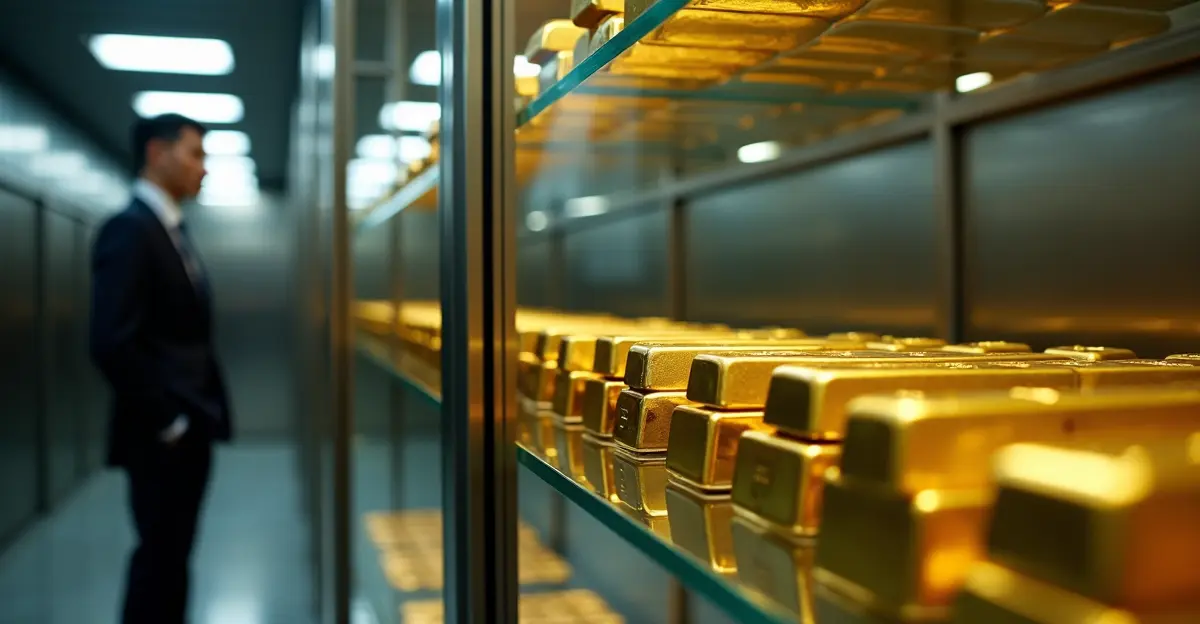
Central bank gold purchases surged to 863 tonnes in 2025, according to the World Gold Council, 82% above the historical average of 473 tonnes. The National Bank of Poland (NBP) emerged as the world's largest sovereign gold buyer for the second consecutive year, adding 102 tonnes in 2025 and bringing total holdings to 580 tonnes. NBP President Adam Glapiński has announced a formal target of 700 tonnes, which would make Poland the world's tenth-largest gold holder, surpassing the Netherlands and Turkey.
'Gold is a strategic asset free of credit risk and resistant to financial shocks,' Glapiński stated in January 2026. 'Our goal is to increase gold's share of reserves to around 30%, up from 19% a year ago.' Poland's gold reserves now exceed those of the European Central Bank, which holds approximately 506.5 tonnes. Other major buyers include India (+82 tonnes), China (+57 tonnes), Russia (+34 tonnes), and Kazakhstan (+17 tonnes). The last time central bank buying was this intense was the 1960s, just before the collapse of the Bretton Woods system.
Gold's Share of Global Reserves Rising
Gold now accounts for an estimated 30% of global central bank reserves, up from 13% in 2017. This shift has profound implications for the dollar: as central banks allocate a larger portion of reserves to bullion, the demand for U.S. Treasury securities — traditionally the primary reserve asset — diminishes. Analysts at J.P. Morgan forecast central bank gold purchases of approximately 800 tonnes in 2026, while the World Gold Council projects around 850 tonnes.
The Rise of Alternative Payment Systems
Alongside the gold pivot, China's Cross-Border Interbank Payment System (CIPS) has emerged as a viable alternative to the SWIFT network for renminbi-denominated transactions. As of March 2026, CIPS had 194 direct participants and 1,597 indirect participants across 124 countries. In 2025, the system processed approximately 180 trillion yuan (about $24.7 trillion), up from 175.49 trillion yuan in 2024 and 123 trillion yuan in 2023. The CIPS network's rapid expansion reflects China's systematic push to internationalize the renminbi and reduce reliance on dollar-based clearing systems.
BRICS+ nations have also advanced local currency settlement agreements. The bloc, which now includes Brazil, Russia, India, China, South Africa, Egypt, Ethiopia, Iran, the United Arab Emirates, and Indonesia, has seen approximately 67% of intra-BRICS trade settled in local currencies, up from under 30% a decade ago. Saudi Arabia has increased the share of yuan-priced oil exports to China from 15% to 22% in 2025, further eroding the petrodollar system.
Implications for U.S. Borrowing Costs and Financial Stability
The erosion of dollar hegemony carries direct consequences for the United States. The dollar's reserve status has historically allowed Washington to borrow more cheaply to fund its twin trade and budget deficits — a privilege French President Valéry Giscard d'Estaing famously called an 'exorbitant privilege.' As central banks diversify away from dollar assets, demand for U.S. Treasuries could weaken, potentially pushing up long-term interest rates and increasing the cost of servicing the $38.86 trillion national debt.
According to a March 2026 analysis by the International Institute for Strategic Studies, the structural decline of dollar dominance could raise U.S. borrowing costs by 50-100 basis points over the next decade, adding hundreds of billions to annual interest payments. The U.S. current account deficit, already running at over $1 trillion annually, would become harder to finance without the automatic demand from foreign central banks.
Expert Perspectives on the Multipolar Future
Economists remain divided on the speed and severity of de-dollarization. 'The dollar is losing its monopoly, not its reserve status,' notes Eswar Prasad, professor of trade policy at Cornell University and author of 'The Future of Money.' 'No single currency currently has the depth, liquidity, and institutional credibility to fully replace the dollar. But we are witnessing a slow structural decline toward a multipolar system where the dollar shares the stage with the euro, renminbi, gold, and potentially digital currencies.'
However, the dollar still dominates in other metrics: it is used in 88% of global foreign exchange transactions and accounts for 54% of export invoicing. The renminbi, despite its progress, represents only 1.95% of global reserves and 4.74% of global payments. The transition to a multipolar system is likely to take decades, but the direction of travel is clear.
Frequently Asked Questions
What is the current U.S. dollar share of global reserves?
As of Q4 2025, the U.S. dollar's share of global foreign exchange reserves stood at 56.77%, the lowest level since the IMF began tracking the data in 1995. Early 2026 estimates suggest the share has fallen below 57%.
Why are central banks buying so much gold?
Central banks are buying gold as a hedge against geopolitical risk, sanctions, and dollar depreciation. The freezing of Russian reserves in 2022 demonstrated the risks of holding dollar-denominated assets, while gold offers a store of value with no counterparty risk.
What is CIPS and how does it challenge the dollar?
CIPS (Cross-Border Interbank Payment System) is China's alternative to SWIFT for renminbi-denominated cross-border payments. With 194 direct participants and processing 180 trillion yuan in 2025, it provides a channel for international trade and investment to bypass dollar-based clearing systems.
Will the dollar lose its reserve currency status?
Most experts believe the dollar will not lose its reserve status entirely but will see its dominance gradually erode toward a multipolar system. The dollar remains dominant in forex trading and invoicing, but its reserve share has declined from 72% in 2001 to below 57% in 2026.
How does de-dollarization affect U.S. borrowing costs?
Reduced central bank demand for U.S. Treasuries could push up long-term interest rates, increasing the cost of financing the national debt. Analysts estimate this could add 50-100 basis points to U.S. borrowing costs over the next decade.
Conclusion: A New Financial Order Takes Shape
The dollar's slow erosion reflects a broader realignment of the global financial system. With geoeconomic confrontation now the top global risk according to the World Economic Forum, and central bank gold purchases at multi-decade highs, the foundations of dollar hegemony are shifting beneath our feet. While the dollar will remain the world's primary currency for the foreseeable future, the emergence of gold, the renminbi, and alternative payment systems is creating a more fragmented and multipolar reserve architecture. For investors, policymakers, and citizens alike, understanding these tectonic shifts is essential to navigating the financial landscape of 2026 and beyond.
Sources
- IMF COFER Dashboard, Q4 2025 data (March 2026)
- World Gold Council, Gold Demand Trends Full Year 2025
- World Economic Forum, Global Risks Report 2026
- Wolf Street analysis of IMF data (March 2026)
- CIPS official participant statistics (March 2026)
- Bullion Market Cap, Poland Gold Reserve Report (2026)
- ConvertZ.app, BRICS De-Dollarization Progress Tracker (April 2026)




Follow Discussion