


 Deutsch
 English
 Español
 Français
 Nederlands
 Português


 Share
Share




In February 2026, the global race for critical minerals reached a decisive inflection point. At the 2026 Critical Minerals Ministerial in Washington, representatives from 54 nations and the European Commission signed 11 new bilateral supply frameworks, launched the FORGE alliance, and mobilized over $30 billion in financing to break China's near-monopoly on rare earth processing. This article analyzes how these moves are reshaping supply chains for lithium, cobalt, rare earth elements, and copper—and what it means for defense, automotive, and technology industries.
What Is the Critical Minerals Crisis?
China controls approximately 90% of global rare earth processing, 60% of lithium chemicals, and 70% of cobalt. Since 2025, Beijing has tightened export licensing, causing neodymium-praseodymium oxide prices to surge from about $80 per kilogram in 2024 to over $480 per kilogram by early 2026. The International Energy Agency warned that $6.5 trillion of downstream production could be at risk. This concentration has transformed rare earth processing dominance from a trade issue into a national security vulnerability.
February 2026: FORGE and Project Vault Redraw the Map
At the ministerial, U.S. Secretary of State Marco Rubio and Vice President JD Vance unveiled FORGE (Forum on Resource Geostrategic Engagement), the successor to the Minerals Security Partnership. FORGE creates a preferential trading bloc among allied nations with coordinated price floors and adjustable tariffs to counter China's artificially cheap exports. South Korea will chair FORGE through June 2026. The U.S. also announced Project Vault, a $10 billion Export-Import Bank-backed strategic reserve, with nearly $2 billion in private capital from OEMs like Boeing, GE Vernova, and Western Digital.
How FORGE Changes the Game
FORGE's 'membership by trade' model links market access to participation in the bloc, aiming to make prices predictable and encourage investment in non-Chinese mining and processing. Vance told delegates: "The international critical minerals market is failing. Supply chains remain brittle and exceptionally concentrated." He added that economies "ultimately run on real things like oil and critical minerals."
Project Vault: A Domestic Stockpile
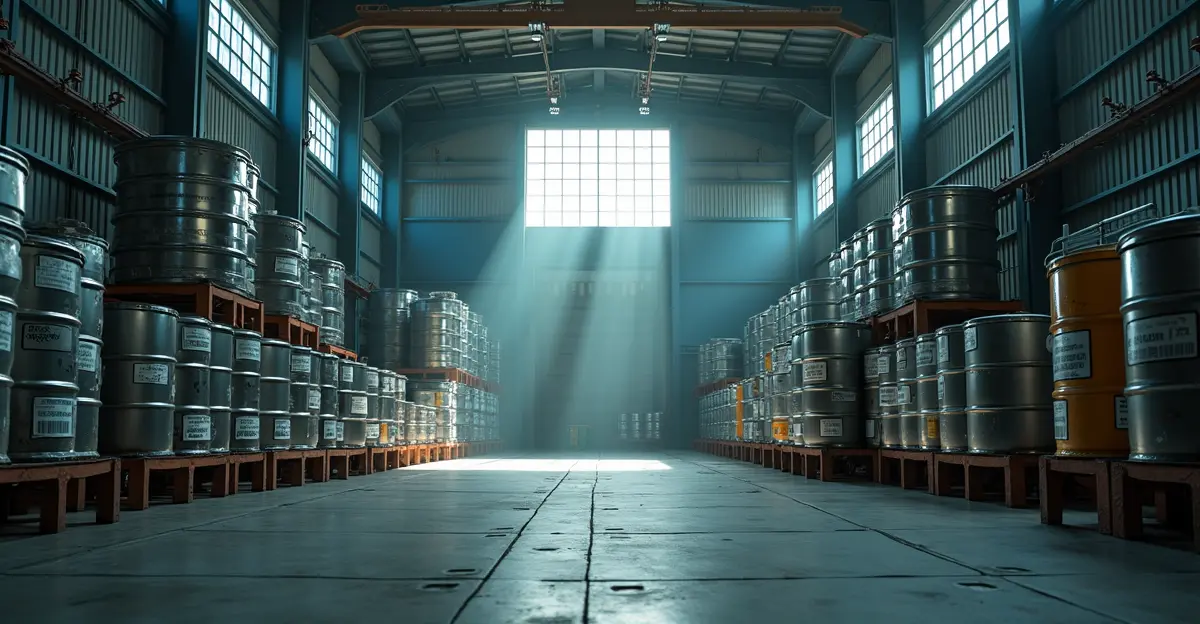
Project Vault will store raw materials for U.S. manufacturers, insulating them from price spikes and supply shocks. Combined with 11 new bilateral frameworks—with Argentina, Morocco, the Philippines, UAE, UK, and others—the U.S. now has 21 such deals. This marks a shift from talk to action in building strategic mineral reserves outside China's orbit.
Impact on Defense, EVs, and AI Supply Chains
The realignment is forcing defense contractors, automakers, and AI hardware firms to diversify. Rare earth magnets are essential for F-35 fighter jets, EV motors, and data center cooling systems. Without alternative supplies, production timelines for EV battery supply chains and defense systems could slip by years. Analysts warn that rebuilding Western processing capacity will take 20–30 years, leaving a critical 12-to-18-month window for coordinated action.
Expert Perspectives and Parallel Blocs
The EU is advancing its Critical Raw Materials Act, targeting 10% extraction, 40% processing, and 25% recycling by 2030, while Australia emerges as a hub via Lynas's Mount Weld and a $1.2 billion strategic reserve. A US-EU critical minerals action plan signed in April 2026 explores border-adjusted price floors. As Vance noted, "Allies must work together, remain self-reliant, and recognize that economies ultimately run on real things." China has criticized the bloc as protectionist, but member nations see managed dependence as the only realistic near-term outcome.
FAQ: Critical Minerals 2026
What happened at the February 2026 Critical Minerals Ministerial? 54 nations and the EU met in Washington, signed 11 bilateral frameworks, launched FORGE, and mobilized $30 billion to diversify critical mineral supply chains.
Why is China so dominant in rare earths? China controls about 90% of rare earth processing and 60% of lithium chemicals, using export controls to pressure rivals.
What is Project Vault? A $10 billion U.S. strategic reserve backed by EXIM and private capital to stockpile critical minerals for domestic manufacturers.
How long will it take to reduce dependence on China? Experts say 20–30 years to rebuild full processing capacity, with a critical 12–18 month window to lock in alternative suppliers.
Which countries are leading diversification? The U.S., EU, Australia, South Korea, and partners in Africa and South America are building new mining and processing hubs.
Conclusion: A New Mineral World Order
The February 2026 ministerial marked the end of passive acceptance of Chinese dominance. With FORGE, Project Vault, and 21 bilateral deals, the West is constructing parallel mineral blocs that will define industrial competitiveness for decades. The race is far from over, but the chessboard has been reset.




Follow Discussion