


 Deutsch
 English
 Español
 Français
 Nederlands
 Português


 Share
Share




AI-Powered Regional Supply Chains: The 2026 Strategic Calculus Explained
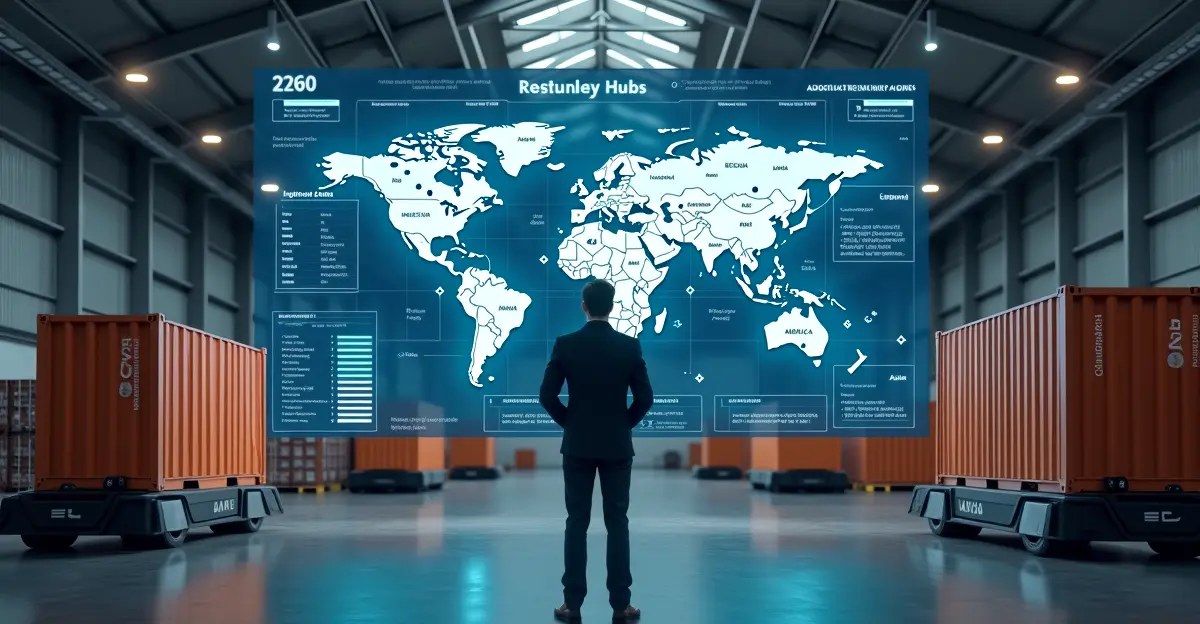
As global trade architecture undergoes its most significant transformation in decades, artificial intelligence is fundamentally reshaping supply chains from globally integrated networks to intelligent, regionally autonomous ecosystems. According to recent World Economic Forum analysis, over 90% of executives expect AI to significantly reshape supply chains by 2030, with about 20% of organizations having already transitioned to regional operations, making 2026 a pivotal inflection point for this structural transformation. This shift represents more than just technological adoption—it's a complete reimagining of how goods flow across borders, how decisions are made, and how nations position themselves in the emerging global economic order.
From Global Integration to Regional Autonomy
The traditional model of globally integrated supply chains, optimized for cost efficiency through decades of globalization, is giving way to a new paradigm centered on regional resilience and AI-driven intelligence. The COVID-19 pandemic disruptions exposed critical vulnerabilities in extended global networks, prompting companies to reconsider their operational footprints. McKinsey's 2026 research reveals that while global trade defied predictions of retrenchment in 2025, growing faster than the global economy, the underlying patterns have fundamentally shifted. AI-related trade emerged as the primary growth engine, with semiconductors and data-center equipment accounting for one-third of global trade growth.
This regionalization trend is accelerating as companies build distributed ecosystems to reduce exposure to concentrated sourcing. According to BearingPoint's research cited by the World Economic Forum, only 8% of organizations have fully integrated AI-driven planning despite overwhelming executive expectations. The gap between anticipation and implementation highlights both the complexity of this transition and the strategic opportunity it represents for early adopters.
AI-Driven Decision Autonomy: Beyond Visibility
What distinguishes the emerging supply chain paradigm is the transition from mere visibility to genuine decision autonomy. Traditional supply chain management focused on tracking goods and identifying bottlenecks, but AI-powered systems now enable predictive analytics, automated decision-making, and self-optimizing networks. "The next phase of globalization will be more regional in structure and intelligence-driven, moving from visibility to decision autonomy," notes the World Economic Forum analysis.
The Three Pillars of AI Supply Chain Transformation
1. Predictive Intelligence: AI systems analyze vast datasets from IoT sensors, market trends, and geopolitical developments to forecast disruptions before they occur. This represents a fundamental shift from reactive to proactive supply chain management.
2. Automated Optimization: Machine learning algorithms continuously optimize routing, inventory levels, and production schedules based on real-time conditions, reducing human intervention while improving efficiency.
3. Risk Simulation: Advanced AI models simulate geopolitical scenarios, climate events, and market fluctuations to stress-test supply chain resilience and develop contingency plans.
Geopolitical Implications of Regional Trade Blocs
The rise of AI-powered regional supply chains carries profound geopolitical implications. As regional trade blocs become more self-sufficient through technology, traditional power dynamics are being reshaped. McKinsey's research shows that while US-China trade fell by 30% due to tariffs, China expanded its role as a 'factory to the factories,' increasing exports of industrial components and capital goods to emerging economies. Southeast Asia has deepened its manufacturing role, India gained ground in selected sectors, and Brazil expanded commodity exports to China.
This technological regionalization creates what experts call 'digital spheres of influence,' where data sovereignty regulations and AI capabilities determine trade relationships as much as traditional economic factors. The emerging landscape features competing regional standards and protocols that could either facilitate global interoperability or lead to fragmented, incompatible systems.
Governance Challenges: Data Standards and Digital Trade Frameworks
Perhaps the most critical challenge facing the transition to AI-powered regional supply chains is the development of governance frameworks for data standards and digital trade. The International Chamber of Commerce's Digital Standards Initiative has launched a comprehensive framework for supply chain digitalization through its Key Trade Documents and Data Elements project. This breakthrough initiative analyzes 36 key trade documents, providing a unified framework for digitalizing business-to-business and business-to-government processes across global supply chains.
However, significant challenges remain. The project found that while 21 of the 36 documents already have standardized electronic versions, the remaining 15 present opportunities for further alignment. This fragmentation risk is particularly acute in AI-powered systems, where incompatible data formats and protocols could create digital trade barriers more formidable than traditional tariffs.
Key Governance Questions for 2026
• How will data sovereignty regulations intersect with supply chain optimization algorithms?
• What standards will ensure interoperability between regional AI systems?
• How can digital trust be established across different regulatory jurisdictions?
• What governance models will prevent the emergence of incompatible regional digital ecosystems?
The Sustainability Imperative
Beyond efficiency and resilience, sustainability is becoming embedded in core supply chain operations through AI optimization. The World Economic Forum reports that 44% of executives now treat circularity as a strategic priority. AI systems optimize routes to reduce emissions, manage reverse logistics for recycling and reuse, and ensure compliance with increasingly complex environmental regulations across different jurisdictions. This represents a significant evolution from sustainability as a compliance issue to sustainability as a competitive advantage in regional supply chain design.
Expert Perspectives on the 2026 Inflection Point
Industry analysts emphasize that 2026 represents a critical juncture in supply chain evolution. "We're witnessing the convergence of multiple transformative trends—geopolitical realignment, technological advancement, and sustainability imperatives—all reshaping how goods move across borders," explains a supply chain strategist familiar with the World Economic Forum research. "The companies that master AI-powered regional optimization in the next 18-24 months will establish competitive advantages that could last for decades."
The transition also raises important questions about inclusion and equity. As noted in the World Economic Forum analysis, while autonomy and intelligence will drive competitiveness, their long-term value depends on creating systems that remain inclusive, interoperable, and trusted across regions to prevent fragmentation into incompatible regional systems.
FAQ: AI-Powered Regional Supply Chains in 2026
What is AI-powered regional supply chain optimization?
AI-powered regional supply chain optimization uses artificial intelligence to create self-optimizing, resilient regional networks that balance efficiency, resilience, and sustainability while reducing dependence on extended global networks.
How does AI decision autonomy differ from traditional supply chain visibility?
While traditional systems track goods and identify problems, AI decision autonomy enables predictive analytics, automated optimization, and self-correcting systems that make decisions without human intervention based on real-time data analysis.
What percentage of companies have transitioned to regional operations?
Approximately 20% of organizations have fully transitioned to regional operations according to 2026 World Economic Forum research, with over 90% of executives expecting significant AI-driven transformation by 2030.
What are the main governance challenges for AI-powered supply chains?
Key challenges include establishing interoperable data standards, navigating conflicting data sovereignty regulations, creating digital trust frameworks, and preventing fragmentation into incompatible regional systems.
How does sustainability factor into AI-powered supply chains?
Sustainability is increasingly integrated through AI optimization of routes for emissions reduction, management of circular economy flows, and compliance with environmental regulations, with 44% of executives treating circularity as strategic priority.
Conclusion: Navigating the 2026 Transformation
The strategic calculus of AI-powered regional supply chains represents one of the most significant economic transformations of our time. As companies and nations position themselves for the 2026 inflection point, success will depend on balancing technological capability with governance foresight, regional resilience with global connectivity, and operational efficiency with sustainable development goals. The emerging landscape promises both unprecedented opportunities for innovation and complex challenges requiring international cooperation and forward-thinking leadership.





Follow Discussion