


 Deutsch
 English
 Español
 Français
 Nederlands
 Português


 Share
Share




In 2026, the artificial intelligence infrastructure boom has collided with a stark physical reality: the electrical grid cannot keep pace. Nearly half of planned U.S. AI data centers have been delayed or canceled, creating a 7 GW capacity gap, as transformer and switchgear lead times stretch to five years. With Alphabet, Amazon, Meta, and Microsoft on track to spend over $650 billion combined on AI infrastructure, capital is fully committed but the power to energize it is years behind schedule. This article analyzes the systemic bottleneck — from utility interconnection delays to equipment shortages — and its implications for AI growth, energy policy, and grid modernization globally.
The Scale of the Crisis: A 7 GW Capacity Gap
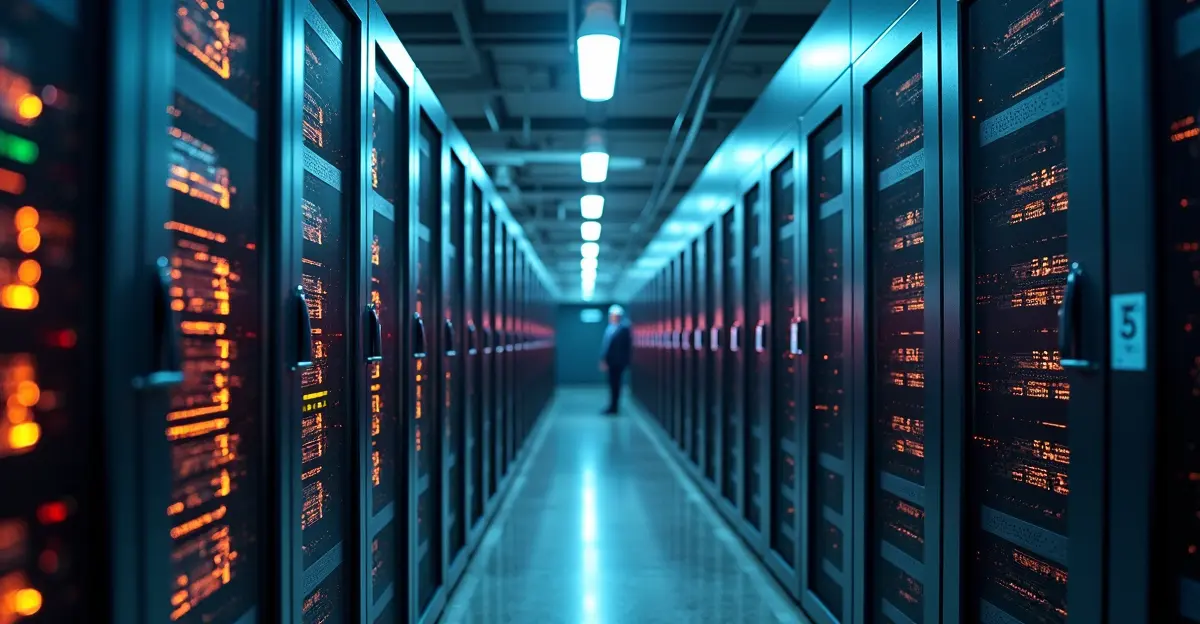
According to Bloomberg and Sightline Climate reporting, of the roughly 12–16 GW of new data center capacity expected in the U.S. in 2026, only about 5 GW — roughly one-third — is under active construction. The remaining 7 GW faces delays or outright cancellations. The bottleneck has shifted decisively from GPU chip supply to physical power infrastructure. Transformer delivery lead times now average 128 weeks, with generator step-up units requiring up to 144 weeks. Switchgear and battery systems face similar backlogs, creating a multi-year lag between capital commitment and energized capacity.
The AI data center power crisis is most acute in regions with the highest concentration of planned builds. Northern Virginia, the world's largest data center market, reports a 0.72% vacancy rate with 87% of 2025–2026 inventory already preleased. In Texas, ERCOT's large-load interconnection queue surged from 63 GW to 226 GW in a single year — and by April 2026, that figure had reached 410 GW, with approximately 87% of requests coming from data centers.
Why the Grid Can't Keep Up
Transformer and Equipment Shortages
The global supply chain for large power transformers is constrained by a combination of factors: a decades-long underinvestment in U.S. manufacturing, rising demand from renewable energy projects, and tariffs on Chinese electrical equipment. The U.S. now relies on imports for over 80% of its large power transformers, with lead times stretching to 2–4 years. Switchgear, circuit breakers, and specialized cooling systems face similar shortages. A single data center campus can require dozens of transformers, each custom-engineered and subject to multi-year queues.
Interconnection Delays
Utility interconnection processes were designed for an era of flat electricity demand. Today, they are overwhelmed. FERC Order 2023 attempted to reform interconnection procedures, but implementation varies widely by region. In PJM, capacity prices have spiked nearly tenfold, with data centers driving a $9.33 billion increase in capacity payments. Grid studies that once took 6–12 months now take 2–3 years, and some projects face decade-long timelines for new transmission lines. The grid interconnection reform efforts are moving too slowly to match the pace of AI infrastructure buildout.
Community Opposition and Regulatory Hurdles
Local communities are pushing back against data center development, citing noise, water usage, and aesthetic concerns. Towns across Georgia, Indiana, Missouri, and Washington have demanded tech companies fund their own grid infrastructure upgrades. In some cases, moratoriums on new data center connections have been imposed. These grassroots movements add another layer of uncertainty to project timelines.
The $650 Billion Bet: Big Tech's Unprecedented Capex
Despite the grid constraints, Alphabet, Amazon, Meta, and Microsoft are pressing ahead with the largest corporate investment cycle in history. Amazon leads with approximately $200 billion in planned 2026 capex, followed by Alphabet at $175–185 billion, Microsoft at $145 billion annualized, and Meta at $115–135 billion. Combined, the four companies are on track to spend over $650 billion — a 60% increase from $410 billion in 2025.
This spending flows into GPU procurement (Nvidia remains dominant with $197 billion in data center revenue), custom chips, data center construction, and networking. But a growing share is directed toward securing power. Microsoft signed a deal to restart Three Mile Island Unit 1 at a cost of $1.6 billion, while Amazon, Google, and Oracle are pursuing small modular reactor technology. Bridgewater Associates estimates this AI capex contributed roughly 50 basis points to U.S. GDP growth in 2025 and could reach 100 basis points in 2026 — comparable to the Dotcom boom era. However, Bridgewater warns the AI boom has entered a "more dangerous phase" with meaningful downside risk if demand forecasts don't materialize.
The Big Tech AI infrastructure spending is creating a widening gap between announced capex and energized megawatts, raising questions about returns on investment. Amazon CEO Andy Jassy called AI a "once-in-a-lifetime opportunity," but the power deficit means many data centers will sit dark for years after construction completes.
Implications for AI Growth and Energy Policy
AI Development Bottlenecks
The power gap is already constraining AI model training and deployment. Without energized data centers, new GPU clusters cannot come online, limiting the compute capacity available for training larger models. This could slow the pace of AI advancement, particularly for frontier models that require massive clusters. Some analysts predict that AI companies will increasingly compete for existing colocation space, driving up prices and favoring incumbents with pre-negotiated power agreements.
Energy Policy and Grid Modernization
The crisis is forcing a rethinking of energy policy at both federal and state levels. The U.S. may need up to $2 trillion in grid modernization by 2030, according to some estimates. Utilities are racing to build new substations, high-voltage lines, and dedicated corridors. Dominion Energy in Virginia is pursuing a major transmission expansion, while ERCOT is exploring demand response programs that can enforce mandatory cuts for facilities over 75 MW. FERC's Order 2023 aims to streamline interconnection, but implementation lags.
Nuclear power is emerging as a key solution. Microsoft's Three Mile Island restart, along with Amazon and Google's investments in small modular reactors, signal a shift toward carbon-free baseload power for AI workloads. However, new nuclear projects face their own regulatory and construction timelines, often exceeding a decade. The AI data center nuclear power deals may provide long-term solutions, but they will not close the 2026 gap.
Global Ramifications
The power bottleneck is not unique to the United States. Europe faces similar challenges, with grid connection queues in Ireland, the Netherlands, and Germany stretching to 5–7 years. In Asia, Singapore has imposed a moratorium on new data centers, while Japan and South Korea are racing to build dedicated AI power parks. The global competition for grid capacity is intensifying, with implications for national AI competitiveness and energy security.
Expert Perspectives
"The bottleneck for AI infrastructure is no longer silicon or real estate — it is the electrical grid itself," said a senior analyst at MGRID, a grid research firm. "Grid connection timelines now exceed AI hardware refresh cycles, raising fundamental questions about data center investment economics."
Charlotte Garcia, energy policy analyst and author of this report, notes: "The gap between announced AI capital expenditure and energized megawatts is at a record high in mid-2026, making this the defining infrastructure story of the year. Markets, technology competitiveness, and energy transition strategy all hinge on how quickly we can close this power gap."
FAQ
What is causing the AI data center power shortage in 2026?
The shortage is driven by a combination of surging electricity demand from AI workloads, multi-year lead times for transformers and switchgear, overwhelmed utility interconnection queues, and community opposition to new data center construction.
How much are Big Tech companies spending on AI infrastructure in 2026?
Alphabet, Amazon, Meta, and Microsoft are on track to spend over $650 billion combined on AI infrastructure in 2026, a 60% increase from 2025.
What is the 7 GW capacity gap?
The 7 GW gap refers to the difference between planned U.S. data center capacity for 2026 (12–16 GW) and the amount actually under active construction (about 5 GW). The remaining capacity faces delays or cancellations due to power infrastructure bottlenecks.
How are tech companies responding to the power shortage?
Companies are investing in nuclear power (e.g., Microsoft's Three Mile Island restart), pursuing small modular reactors, funding grid upgrades, and negotiating flexible interconnection agreements. Some are also exploring on-site generation and battery storage.
What are the long-term implications for AI development?
The power gap could slow AI model training and deployment, increase costs, and favor incumbents with existing power agreements. It may also accelerate grid modernization and nuclear energy investment, but the 2026–2027 window will see significant constraints on new AI compute capacity.
Conclusion and Future Outlook
The $650 billion power gap represents a fundamental challenge to the AI industry's growth trajectory. While capital is abundant, the physical infrastructure to deliver electricity is not. Closing this gap will require unprecedented coordination between tech companies, utilities, regulators, and communities. Grid modernization efforts are underway, but they will take years to bear fruit. In the near term, the AI industry must navigate a world where power — not chips — is the scarcest resource. The decisions made in 2026 will shape the energy landscape and AI competitiveness for decades to come.



Follow Discussion